Aluminum foil plays an important role in modern air-conditioning systems, particularly in the manufacture of heat exchanger fins.
These thin aluminum components are installed around or between heat exchanger tubes to increase the surface area exposed to airflow, allowing heat to transfer more efficiently between the refrigerant and surrounding air.
In residential air conditioners, commercial HVAC equipment, refrigeration systems, and automotive cooling applications, aluminum fin stock is widely used because it combines good thermal conductivity, geringe Dichte, Korrosionsbeständigkeit, und ausgezeichnete Formbarkeit.
Compared with many traditional metal materials, aluminum offers an attractive balance between heat-transfer performance and structural weight.
It can also be rolled into thin, uniform strips and processed into complex fin shapes through high-speed stamping, corrugating, and louver-forming operations.
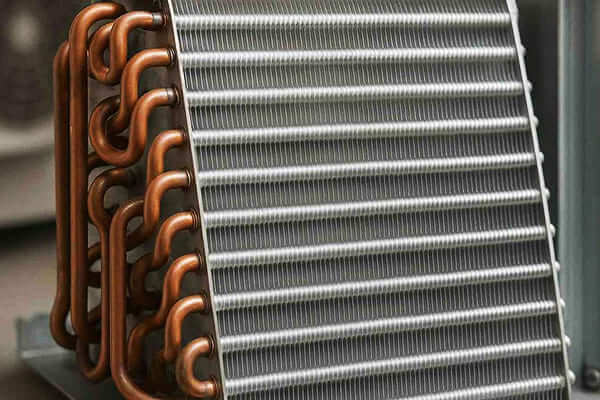
Aluminum Foil for Air Conditioner Radiator
Aluminum foil for air conditioner radiators is generally known as aluminum fin stock.
It is a thin-gauge aluminum strip or coil used to manufacture the fins in air-conditioning radiators and heat exchangers.
Während der Produktion, aluminum fin stock passes through specialized fin presses, where it is stamped, gewellt, or formed into specific geometries.
These fins are then assembled with heat exchanger tubes to create a larger heat-transfer surface.
The fins increase the contact area between the heat exchanger and the surrounding air.
This helps improve heat exchange without significantly increasing the overall weight or size of the equipment.
An air conditioner heat exchanger is an assembled structure consisting of several components.
Although aluminum is widely used in these products, different components perform different functions and require different material specifications.
| Komponente | Hauptfunktion | Common Material Forms | Hauptanforderungen |
| Aluminum fin stock | Increases heat-transfer surface area | Thin aluminum strip or coil | Wärmeleitfähigkeit, umformbarkeit, Korrosionsbeständigkeit |
| Heat exchanger tubes | Carry refrigerant or cooling fluid | Aluminum or copper tubes | Pressure resistance, Korrosionsbeständigkeit, joining compatibility |
| Headers and manifolds | Distribute refrigerant or fluid | Aluminum tubes, Extrusionen, or formed components | Stärke, pressure resistance, brazing compatibility |
| Brazing sheet | Joins heat exchanger components | Aluminum sheet or clad coil | Lötbarkeit, controlled melting behavior, joint strength |
| Side plates and supports | Provide structural support | Aluminum sheet or formed parts | Stärke, Maßhaltigkeit, Korrosionsbeständigkeit |
Aluminum fin stock can be classified according to its surface condition and functional coating.
Bare Aluminum Fin Stock
Bare fin stock has a mill-finished aluminum surface without an additional functional coating.
It is suitable for heat exchangers where the base alloy provides sufficient corrosion resistance and surface performance.
Its advantages include a relatively simple material structure, gute Wärmeleitfähigkeit, and compatibility with various fin-forming processes.
Hydrophile Aluminiumfolie
Hydrophilic aluminum foil has a surface coating that improves water wettability.
In air conditioner evaporators, moisture condenses on the cold fin surfaces during operation.
A hydrophilic coating helps condensate spread into a thinner water film and drain more easily.
This can reduce water bridging between closely spaced fins and help maintain airflow.
Hydrophobic foil has a surface designed to repel water rather than spread it. Condensate tends to form droplets instead of a continuous water film.
Its suitability depends on the heat exchanger structure, fin spacing, airflow conditions, and drainage design.
Anti-Corrosion Aluminum Fin Stock
Anti-corrosion fin stock uses a protective coating or specially selected alloy to improve resistance to moisture, salt, und andere ätzende Substanzen.
It is particularly relevant for outdoor air-conditioning units and heat exchangers operating in humid or coastal environments.
The choice between bare, hydrophil, hydrophobic, and anti-corrosion fin stock should be based on the actual operating conditions and heat exchanger design rather than coating type alone.
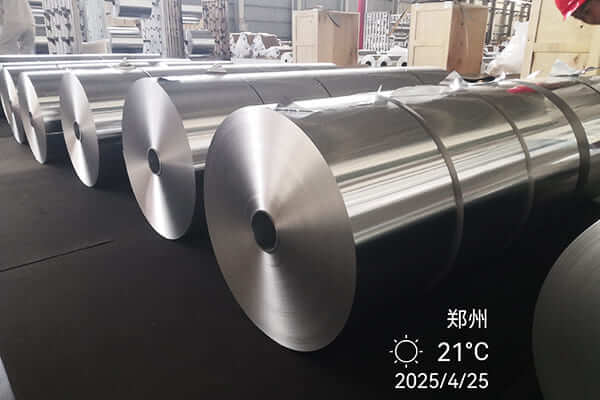
Huawei Aluminum Foil Display
Alloy selection affects the thermal conductivity, Stärke, umformbarkeit, and corrosion resistance of aluminum fin stock.
Common alloys used in air conditioner heat exchangers include 1100, 1200, 3003, und 3102.
1100 aluminum is a commercially pure aluminum alloy with a minimum aluminum content of 99.00%.
It offers good thermal conductivity, ausgezeichnete Korrosionsbeständigkeit, and high ductility.
Key characteristics:
Typische Anwendungen: General air conditioner fins, refrigeration heat exchangers, and other heat-transfer components.
1200 aluminum is another commercially pure aluminum alloy. It provides good thermal conductivity, Verarbeitbarkeit, und Korrosionsbeständigkeit, making it suitable for selected heat exchanger applications.
Key characteristics:
Typische Anwendungen: HVAC fins, refrigeration components, and general heat-transfer applications.
3003 aluminum is an aluminum-manganese alloy with higher strength than commercially pure 1xxx-series aluminum.
It maintains good formability and corrosion resistance, making it a popular choice for heat exchanger fin materials.
Key characteristics:
Typische Anwendungen: Air conditioner condenser fins, evaporator fins, and refrigeration heat exchangers.
3102 aluminum is an aluminum-manganese alloy commonly used in HVAC and refrigeration heat exchangers.
It offers a good balance of strength, umformbarkeit, und Korrosionsbeständigkeit.
Key characteristics:
Typische Anwendungen: Air conditioner evaporator fins, condenser fins, and refrigeration equipment.
Aluminum foil for air conditioner radiators, also known as aluminum fin stock, is available in different thicknesses, Breiten, Launen, und Oberflächenveredelungen.
Specifications can be customized according to fin design, stamping requirements, and heat exchanger production processes.
| Parameter | Typische Spezifikationen |
| Produktname | Aluminum Fin Stock / Aluminum Foil for Air Conditioner Radiators |
| Legierung | 1100, 1200, 3003, 3102 |
| Temperament | Ö, H22, H24, H26 |
| Dicke | 0.08–0,30 mm |
| Gemeinsame Dicke | 0.08, 0.09, 0.10, 0.11, 0.12, 0.15, 0.18, 0.20, 0.25, 0.30 mm |
| Breite | 100–1630 mm |
| Spuleninnendurchmesser (ID) | 150, 200, 305, 508 mm |
| Außendurchmesser der Spule (AUS) | Angepasst |
| Spulengewicht | Angepasst |
| Oberflächenzustand | Nackt, hydrophil, hydrophobic, anti-corrosion coated |
| Oberflächenfinish | Sauber, glatt, and uniform |
| Beschichtungstyp | Hydrophil, hydrophobic, Epoxid, Acryl, or other protective coatings |
| Fin Configuration | Flat, gewellt, or louvered |
| wird bearbeitet | Schlitzen, rollen, Stempeln, corrugating, und Beschichtung |
| Verpackung | Feuchtigkeitsbeständige Exportverpackung, wooden pallets, or customized packaging |
| Standards | ASTM B209, IN 485 Serie, or agreed technical specifications where applicable |
Aluminum foil for air conditioner radiators, commonly known as aluminum fin stock, must provide good thermal conductivity, umformbarkeit, Korrosionsbeständigkeit, und Dimensionsstabilität.
These properties help manufacturers produce consistent fins and maintain reliable heat exchanger performance.
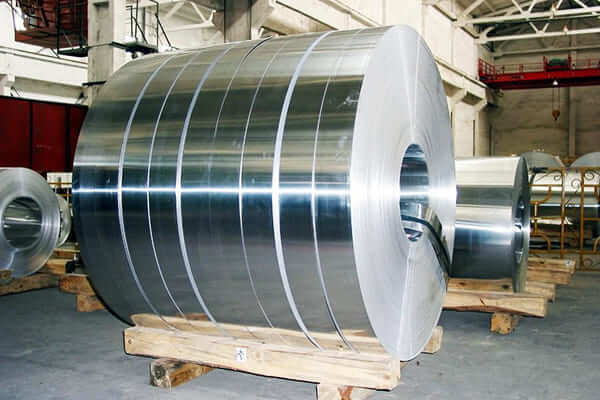
Residential Air Conditioners Aluminum Foil
Aluminum transfers heat efficiently between the refrigerant tubes and surrounding air.
Its high thermal conductivity helps fins distribute heat across their surfaces, supporting effective heat exchange in air conditioner evaporators and condensers.
Fin stock must withstand high-speed stamping, Stanzen, biegen, and corrugating without cracking or excessive deformation.
Aluminum alloys such as 1100, 1200, 3003, und 3102 offer different combinations of ductility and strength to meet various fin-forming requirements.
Air conditioner fins are frequently exposed to moisture, Kondensation, and airborne contaminants.
Aluminum naturally forms a protective oxide layer that helps resist corrosion.
For equipment operating in coastal, humid, or polluted environments, additional anti-corrosion coatings may provide improved surface protection.
Aluminum has a low density compared with many other heat exchanger metals.
Using aluminum fin stock helps reduce the weight of heat exchanger assemblies while maintaining a large heat-transfer surface area.
This is particularly useful in residential air conditioners, commercial HVAC systems, and automotive cooling equipment.
Fin stock needs sufficient strength to maintain its shape during stamping, assembly, and operation.
The appropriate alloy and temper help prevent fin deformation, Knicken, and damage during production and handling.
Eine saubere, glatt, and consistent surface supports stable stamping and coating performance.
Uniform thickness and reliable surface quality also help manufacturers maintain consistent fin dimensions and reduce production defects.
Surface treatments improve the functional performance of aluminum fin stock, particularly its resistance to corrosion, condensate behavior, und Oberflächenbeständigkeit.
The appropriate treatment depends on the heat exchanger design and operating environment.
Bare aluminum fin stock has no additional functional coating.
Its natural oxide layer provides basic corrosion protection, while its thermal conductivity and formability make it suitable for general HVAC and refrigeration applications.
Hauptmerkmale:
Hydrophilic coating makes the aluminum surface easier for water to spread across.
Instead of forming large droplets, condensation forms a thin water film that can drain more easily from the fin surface.
Main benefits:
Hydrophilic aluminum foil is widely used for air conditioner evaporator fins, where condensation occurs during cooling operation.
Hydrophobic coating creates a water-repellent surface that encourages condensation to form droplets rather than spread into a continuous film.
It may be selected for heat exchanger designs that benefit from water repellency and specific drainage behavior.
Its actual performance depends on coating properties, fin spacing, airflow, und Betriebsbedingungen.
Anti-corrosion coatings provide an additional protective barrier against moisture, salt, und andere ätzende Substanzen.
They are particularly useful for air conditioning equipment installed in coastal areas, industrial environments, and locations with high humidity.
Common coating systems include epoxy, Acryl, and other specialized protective formulations.
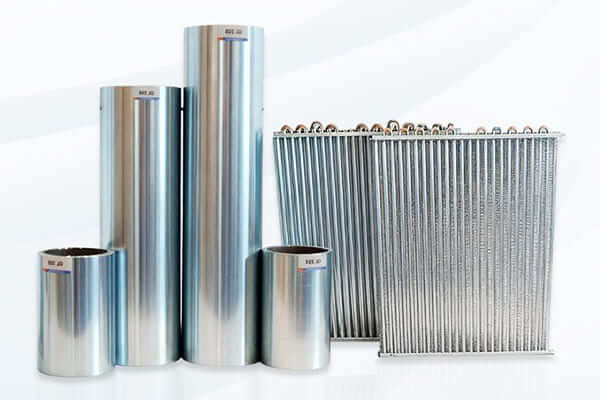
Hydrophile Aluminiumfolie
The production of aluminum fin stock involves several stages, from aluminum casting and rolling to final slitting and inspection.
Each stage affects the material’s thickness accuracy, mechanische Eigenschaften, Oberflächenqualität, and suitability for fin forming.
Aluminum ingots and alloying elements are melted according to the required alloy composition, wie zum Beispiel 1100, 1200, 3003, oder 3102.
The molten aluminum is refined and filtered to reduce impurities and inclusions before casting.
The molten aluminum is cast into slabs or other suitable forms.
After homogenization when required, the material undergoes hot rolling to reduce its thickness and prepare it for subsequent cold rolling.
Cold rolling gradually reduces the aluminum material to the required fin-stock thickness.
This process also helps control thickness uniformity, Oberflächenbeschaffenheit, und mechanische Eigenschaften.
Annealing adjusts the material’s hardness, Stärke, und Duktilität.
Depending on the alloy and customer requirements, the fin stock can be supplied in O, H22, H24, H26, or other suitable tempers.
The correct temper is important because the material must withstand high-speed stamping and fin forming without cracking or excessive deformation.
For bare fin stock, the material undergoes appropriate cleaning and surface inspection. For coated products, additional processes may include:
These processes help achieve consistent coating adhesion and surface performance.
The aluminum coil is slit to the required width and rewound into smaller coils. Slitting quality is important for smooth feeding into fin stamping equipment.
Manufacturers also control coil tension, winding tightness, Kantenzustand, and coil alignment to reduce problems during downstream processing.
Aluminum foil for air conditioner radiators is mainly used to manufacture fins in heat exchangers.
These fins increase the surface area available for heat transfer between the refrigerant or cooling medium inside the tubes and the surrounding air.
Different aluminum alloys, Launen, Dicken, and coatings are selected according to equipment design and operating conditions.
Residential split air conditioners and window units use aluminum fin stock in both evaporators and condensers.
Hydrophilic coated aluminum foil is often selected for evaporator fins to promote condensate drainage.
Commercial HVAC equipment uses aluminum fins in larger heat exchanger assemblies, including air handling units, rooftop air conditioners, and central cooling systems.
These applications require consistent fin dimensions, reliable mechanical properties, and suitable corrosion protection to support long-term operation.
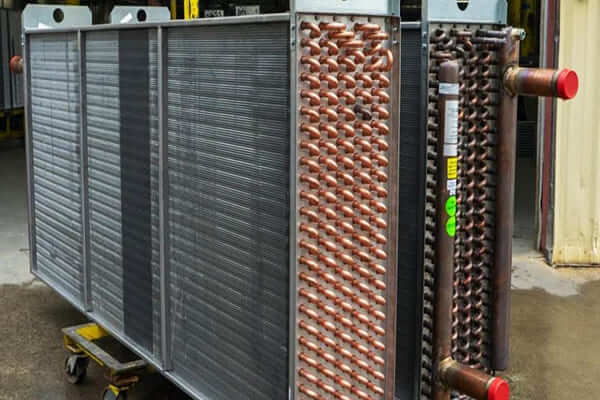
HVAC Systems Used Aluminum Foil
Aluminum fin stock is used in refrigeration evaporators, condensers, display cabinets, Gefriermaschinen, and cold storage equipment.
Its lightweight structure, Wärmeleitfähigkeit, and formability make it suitable for producing compact finned heat exchangers.
Coating requirements depend on humidity, Kondensation, cleaning conditions, and the operating environment.
Automotive air conditioning systems use aluminum fins in condensers and evaporators to support efficient heat exchange within compact assemblies.
Material selection focuses on formability, Korrosionsbeständigkeit, Dimensionskonsistenz, and compatibility with the heat exchanger’s joining and manufacturing processes.
Heat pumps and industrial cooling equipment also use aluminum fin stock in their heat exchanger assemblies.
Abhängig von der Anwendung, manufacturers may require higher corrosion resistance, Spezialbeschichtungen, or specific mechanical properties to withstand outdoor exposure and demanding operating conditions.
| Vergleich | Aluminum Fin Stock | Kupfer | Aluminum Brazing Sheet |
| Hauptfunktion | Increases heat-transfer surface area | Used in heat exchanger tubes, Spulen, and fins | Used to manufacture components joined by brazing |
| Wärmeleitfähigkeit | Gut | Höher als Aluminium | Similar to its aluminum core alloy |
| Dichte | Niedrig (ca.. 2.70 g/cm³) | Hoch (ca.. 8.96 g/cm³) | Niedrig (ca.. 2.70 g/cm³) |
| Gewicht | Leicht | Relatively heavy | Leicht |
| Korrosionsbeständigkeit | Gut, depending on alloy and surface treatment | Good in many environments, but susceptible to certain corrosion conditions | Depends on core alloy, Verkleidung, und Betriebsumgebung |
| Formbarkeit | Excellent for stamping, corrugating, and louvering | Gut, depending on material form and processing | Suitable for forming components before brazing |
| Materialkosten | Generally economical | Generell höher | Depends on alloy and cladding structure |
| Herstellungsprozess | Rollen, Längstrennung, Stempeln, and fin forming | Zeichnung, rollen, biegen, und beitreten | Rollen, Bildung, and brazing |
| Typische Anwendungen | AC evaporator fins, condenser fins, and refrigeration heat exchangers | Heat exchanger tubes, Spulen, and selected fin structures | Heat exchanger tubes, headers, and other brazed components |
| Schlüsselvorteil | Leicht, kostengünstig, and easy to form into fins | Hohe Wärmeleitfähigkeit | Designed for reliable brazed joints |
| Main Consideration | Legierung, Temperament, Beschichtung, and fin geometry must match application requirements | Higher density and material cost | Brazing compatibility and cladding quality must be controlled |
Choosing a reliable aluminum supplier is important for maintaining consistent material quality, stable production, and dependable delivery.
Buyers should evaluate not only alloy and dimensional specifications but also manufacturing capabilities, Qualitätskontrolle, Anpassung, und technischer Support.
Henan Huawei Aluminium Co., GmbH., established in 2001, is a Chinese manufacturer specializing in aluminum rolled products.
Its product range includes aluminum sheets, Platten, Spulen, Folien, Streifen, and circles.
Mit mehr als 20 years of industry experience and exports to 72 Länder, Huawei Aluminum serves customers across different industrial sectors.
The company focuses on product quality, customized specifications, and international customer service.
For air conditioner radiator and heat exchanger applications, material selection should be based on the customer’s production requirements.
Huawei Aluminum can discuss customized aluminum material specifications, einschließlich:
For fin-stock applications, buyers should confirm the required alloy, Temperament, Dickentoleranz, Oberflächenzustand, and coating requirements before ordering.
If you are sourcing aluminum fin stock or other aluminum materials for air conditioning heat exchangers, contact Huawei Aluminum to discuss your requirements and confirm product availability.
Aluminum foil for air conditioner radiators, commonly known as aluminum fin stock, plays an important role in heat exchanger performance.
Seine thermische Leitfähigkeit, leichte Eigenschaften, Korrosionsbeständigkeit, and formability make it suitable for manufacturing flat, gewellt, and louvered fins.
Common alloy options include 1100, 1200, 3003, und 3102. The right choice depends on fin design, stamping requirements, Betriebsumgebung, and joining process.
Dicke, Temperament, Oberflächenzustand, and coating performance should also be considered when selecting fin stock.
For reliable production, buyers should work with an experienced aluminum supplier that can provide consistent material quality, customized specifications, and appropriate technical support.
1. What is aluminum foil for air conditioner radiators?
It is thin aluminum strip or coil, also known as aluminum fin stock, used to manufacture heat exchanger fins. These fins increase the heat-transfer surface area.
2. Which aluminum alloys are commonly used for air conditioner fins?
Zu den gängigen Legierungen gehören: 1100, 1200, 3003, und 3102. Selection depends on strength, Wärmeleitfähigkeit, umformbarkeit, and corrosion resistance requirements.
3. What is the typical thickness of aluminum fin stock?
The common thickness range is approximately 0.08–0.30 mm, depending on fin design and stamping requirements.
4. What is the difference between bare and hydrophilic aluminum foil?
Bare aluminum has no functional coating, while hydrophilic aluminum has a special surface coating that helps condensate spread and drain more easily.
5. What tempers are available for air conditioner aluminum fin stock?
Gemeinsame Gemüter sind O., H22, H24, and H26. Each provides a different balance of strength and formability.
6. Is aluminum better than copper for air conditioner radiators?
Aluminum is lighter and generally more economical, while copper offers higher thermal conductivity. The best material depends on heat exchanger design and performance requirements.
7. Can aluminum fin stock be customized?
Ja. Legierung, Temperament, Dicke, Breite, Spulenabmessungen, and surface treatment can be specified according to customer requirements.
8. What should buyers consider when purchasing aluminum fin stock?
Key factors include alloy, Temperament, Dickentoleranz, mechanische Eigenschaften, Oberflächenqualität, Beschichtungsleistung, and compatibility with the fin-forming process.
9. How can I get a quotation for aluminum foil for air conditioner radiators?
Stellen Sie die erforderliche Legierung bereit, Temperament, Dicke, Breite, Oberflächenbehandlung, Spulenabmessungen, and order quantity to Huawei Aluminum for a customized quotation.
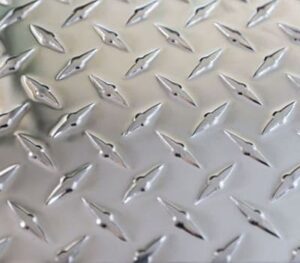
Diamantplatten-Aluminiumbleche 4x8 sind in den Größen 6061-T6 und 3003-H14 erhältlich. sie haben eine höhere Festigkeit, Verschleißfestigkeit, Belastbarkeit, Bearbeitbarkeit, Korrosionsbeständigkeit, usw. Deswegen, beliebt im Baugewerbe, Herstellung, Fahrzeuge, Schiffe und verschiedene Bereiche.
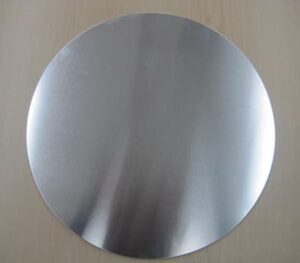
3004 Aluminium-Kreis ,auch benannt 3004 Aluminiumscheibe,3004 Aluminiumscheibe, es wird durch Stempeln hergestellt 3004 Aluminium-Spulen.
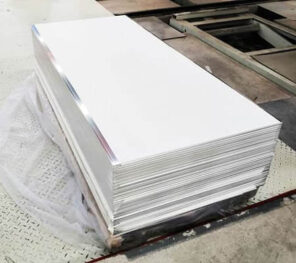
5083 H116-Aluminiumblech in Marinequalität bietet eine hervorragende Meerwasserkorrosionsbeständigkeit, hohes Verhältnis von Festigkeit zu Gewicht, und ausgezeichnete Schweißbarkeit für Schiffs- und Offshore-Strukturen.
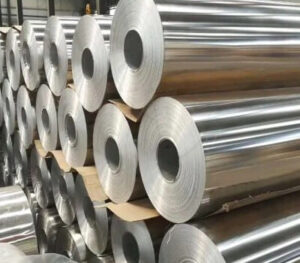
Als professioneller Hersteller und Exporteur von Jumbo-Rollendichtungen aus Aluminiumfolie in China. Wir sind in diesem Bereich seit mehr als 20 Jahre, Wir haben eine Fabrik und staubfreie Werkstatt von mehr als 100,000 Quadratmeter
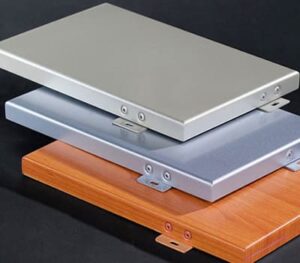
3003 Vorhangfassaden-Aluminiumblech ist die Außenwand eines Gebäudes. Es ist eine leichte Wand großer Hochhäuser und hat eine gewisse dekorative Wirkung.
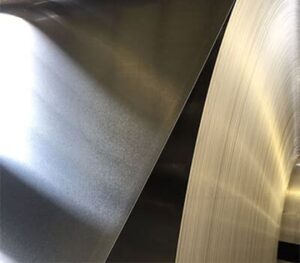
1050 Aluminium-Spule gehört zu den kommerziell reinen Schmieden 1000 Reihe von Legierungen mit einer Reinheit von 99.5% Aluminium. Diese Legierung wird normalerweise zum Kaltwalzen oder Strangpressen verwendet. Es hat die Eigenschaften einer hohen Plastizität, Korrosionsbeständigkeit, elektrische Leitfähigkeit, und Wärmeleitfähigkeit.
No.52, Dongming Straße, Zhengzhou (in der Nähe von Zhengzhou), Henan (Henan), China
Henan Huawei Aluminium Co., GmbH, Einer der größten Aluminiumlieferanten in China Henan,Wir sind im Jahr 2001 gegründet, und wir haben reiche Erfahrung im Import und Export und hochwertige Aluminiumprodukte
Mo – Sa, 817 – 17 Uhr
Sonntag: Geschlossen
No.52, Dongming Straße, Zhengzhou (in der Nähe von Zhengzhou), Henan (Henan), China
© Urheberrecht © 2023 Henan Huawei Aluminium Co., GmbH

neueste Kommentare
Lieber Herr, Please offer your best FOB Prices specs are as under ALUMINIUM STRIP (AL=99,50 % MIN) GRÖSSE:450 X32 X6 MM. DEINS 570 EN-AW 1050 EIN, MENGE=3400KG
Hallo, Wären Sie so freundlich, den folgenden Artikel anzubieten?: Spule 0,6х1250 (1000)mm EN AW-3105 5tons
Hallo, Können Sie mir Aluminiumplatten anbieten?? Eigentlich brauche ich: 110mm x 1700mm x 1700mm 5083 H111 - 21 pcs Next year planed is 177 Pcs
Großartiger Artikel. ich war erfreut, Ich habe diesen Artikel gefunden. Viele Leute scheinen es zu tun, dass sie genaue Kenntnisse darüber haben, aber oft ist es das nicht. Daher meine angenehme Überraschung. Ich bin beeindruckt. Ich werde diesen Ort auf jeden Fall weiterempfehlen und öfter wiederkommen, um Neues zu sehen.
Anforderung an Aluminiumstreifen