Discover 8011 aluminum sheet for bottle caps with smooth surface quality, excellent stamping performance, paglaban sa kaagnasan, and reliable sealing for closures.
8011 aluminum sheet is a widely used material for aluminum bottle caps because it combines magandang formability, controlled strength, paglaban sa kaagnasan, and excellent surface quality.
It is commonly used for ROPP caps, pilfer-proof caps, wine and spirits closures, Mga Cap ng Inumin, and pharmaceutical closures.
Bottle-cap production requires consistent material performance during blanking, pagguhit, skirt forming, and thread rolling.
Kaya nga, closure-grade 8011 aluminum focuses not only on alloy composition but also on thickness consistency, mekanikal na mga katangian, earing control, patag na, and surface condition.
8011 is commonly supplied in tempers such as H14 and H16, with thicknesses often around 0.15–0.30 mm.
The appropriate temper and thickness depend on the cap design, forming depth, required rigidity, and production process.
With suitable processing and quality control, 8011 aluminum provides a reliable combination of pagiging formable, dimensional stability, lightweight performance, and coating compatibility for high-volume bottle-cap manufacturing.
8011 is a wrought aluminum alloy in the 8xxx serye ng mga. It belongs to the non-heat-treatable aluminum alloy family and relies mainly on cold working and annealing to achieve the required mechanical properties.
The alloy primarily contains controlled amounts of iron and silicon, together with smaller quantities of other elements.
The exact chemical limits depend on the applicable alloy standard and product specification.
For bottle-cap applications, gayunpaman, the alloy designation alone does not determine whether the material will perform well.
The manufacturing process also has a significant influence on the final material.
Rolling reduction, Intermediate pagsusubo, final temper, istraktura ng butil, and texture control can all affect the sheet’s forming behavior.
Kaya nga, closure-grade 8011 should be considered a combination of alloy chemistry and controlled processing, rather than simply a generic 8011 aluminyo sheet.
8011 Aluminum Sheet for Bottle Caps
Bottle caps require aluminum that can undergo forming without excessive cracking while maintaining sufficient strength after forming.
8011 provides a useful balance between these requirements.
Good Formability
8011 aluminum can withstand common forming operations such as blanking, pagguhit, skirt formation, and thread-related forming when the alloy, Pamahiin, and processing conditions are properly matched.
Good formability is particularly important for closures with relatively deep skirts or complex geometries.
Controlled Earing
Earing is an important quality characteristic for drawn aluminum products.
Excessive earing can produce an uneven edge around the finished cap and increase trimming requirements.
Proper control of rolling and annealing conditions can help reduce and stabilize earing, improving dimensional consistency and material utilization.
Suitable Strength
8011 can achieve different strength levels through cold working. H14 and H16 tempers are commonly considered for closure applications because they provide different balances between formability and rigidity.
H14 generally offers better forming capability, while H16 provides higher strength and rigidity.
The appropriate temper depends on the specific cap design rather than simply choosing the higher-strength condition.
Good Surface Characteristics
Bottle caps often require coating, paglilimbag, or other decorative treatments.
A clean and uniform aluminum surface provides a better foundation for subsequent coating and printing processes.
Surface quality also affects the visual appearance of the finished closure.
Mga gasgas, oil contamination, oksihenasyon, and other surface defects can become more noticeable after coating or printing.
Paglaban sa Kaagnasan
Aluminum naturally develops a thin oxide layer that provides protection against many environmental conditions.
This makes aluminum suitable for beverage, Wine, parmasyutiko, cosmetic, and other packaging applications.
Additional lacquer or coating systems can provide further surface protection when required by the application.

Bottle Caps Display
The specification of 8011 aluminum sheet should match the design and forming requirements of the finished bottle cap.
There is no single thickness or temper that applies to every closure.
The following table summarizes common commercial specifications for bottle-cap applications:
| Parameter | Typical Specification |
| haluang metal | 8011 |
| Aluminum Series | 8xxx |
| Common Tempers | H14, H16, H24, H26 |
| Typical Thickness | 0.15–0.30 mm |
| Lapad ng katawan | Na customize na |
| Product Form | Sheet, Maghubad, Coil |
| Ibabaw | Tapos na ang Mill, Lubricated, Pretreated, or Lacquered |
| Pag-hikaw | Commonly controlled to ≤2–3%, depending on specification |
| Kapal ng Tolerance | According to thickness and customer requirements |
| Flatness | Controlled according to forming requirements |
| Mga Aplikasyon | ROPP Caps, Pilfer-Proof Caps, Beverage Caps, Wine Closures, Pharmaceutical Closures |
8011 aluminum is an Al-Fe-Si alloy in the 8xxx series.
Iron and silicon are the main alloying elements, while copper, mangganeso, magnesiyo, kromo, sink, and titanium remain at controlled levels.
This composition gives 8011 a useful balance of strength, pagiging formable, and processing stability for bottle-cap applications.
A typical chemical composition is shown below:
| Elemento | Karaniwang Komposisyon (wt.%) |
| Silicon (Si Si) | 0.50–0.90 |
| bakal na bakal (Fe) | 0.60–1.00 |
| Tanso (Cu) | ≤0.10 |
| Mga mangganeso (Mn) | ≤0.20 |
| Magnesium (Mg) | ≤0.05 |
| Chromium (Cr) | ≤0.05 |
| Sink (Zn) | ≤0.10 |
| Titanium (Ti) | ≤0.08 |
| Iba pang mga Elemento | Controlled according to applicable standard |
| Aluminyo (Al) | Balanse |
Ang mekanikal na katangian ng 8011 aluminum sheet depend mainly on Pamahiin, kapal naman, and processing history.
For bottle caps, the material needs an appropriate balance between strength and ductility to withstand forming while providing sufficient rigidity in the finished closure.
Tensile strength generally increases as the degree of cold working increases.
Higher strength can improve the rigidity of the finished cap, but excessive hardness may reduce the material’s forming margin.
Kaya nga, bottle-cap material should not simply use the highest available strength.
The target should match the cap geometry and forming process.
Yield strength indicates the stress at which permanent deformation begins.
It is particularly relevant to the rigidity and dimensional stability of the finished cap.
A higher temper generally provides higher yield strength, while a softer temper offers greater ductility and easier forming.
Elongation indicates how much the material can stretch before fracture. It is an important consideration for drawing and forming operations.
Sa pangkalahatan, lower-strength tempers provide higher elongation, while harder tempers provide greater strength but reduced ductility.
For bottle-cap production, tensile strength and elongation alone cannot fully describe material performance.
The material must also provide stable forming behavior and controlled earing.
Earing occurs when different crystallographic directions in the rolled sheet deform at different rates during drawing, producing an uneven edge.
Proper control of rolling and annealing conditions helps achieve a more uniform grain structure and predictable forming performance.
Different bottle-cap designs can require different material properties.
A standard ROPP cap, a deep-drawn wine closure, and a pharmaceutical closure may not require exactly the same combination of strength and ductility.
Kapag bumili ng 8011 aluminyo sheet, buyers should define:
The actual mechanical properties should be verified through a Mill Test Certificate (MTC) or equivalent inspection documentation for the supplied material.
H14 and H16 are both strain-hardened tempers of 8011 aluminyo, but they provide different balances between strength and formability.
The appropriate temper should be selected according to the bottle-cap design and forming process.
| Tampok | 8011 H14 | 8011 H16 |
| Work Hardening | Katamtaman | Mas Mataas |
| Lakas ng loob | Katamtaman | Mas Mataas |
| Formability | Mas mahusay na | Lower than H14 |
| Ductility | Mas Mataas | Mas mababa |
| Tigas na tigas | Mabuti na lang | Mas Mataas |
| Drawing Performance | Generally better | More demanding |
| Karaniwang Paggamit | Standard forming applications | Higher-rigidity closures |
Sa simpleng mga salita:
8011 H14 offers better formability and a wider forming margin, habang ang 8011 H16 provides higher strength and rigidity.
The final selection should be based on the actual cap design and production conditions.
For new designs, forming trials can help confirm the most suitable temper before full-scale production.
The choice between H14 and H16 should consider:
Para sa deeper or more demanding forming, H14 may provide better forming flexibility.
For closures requiring higher rigidity and resistance to deformation, H16 may be a better option.
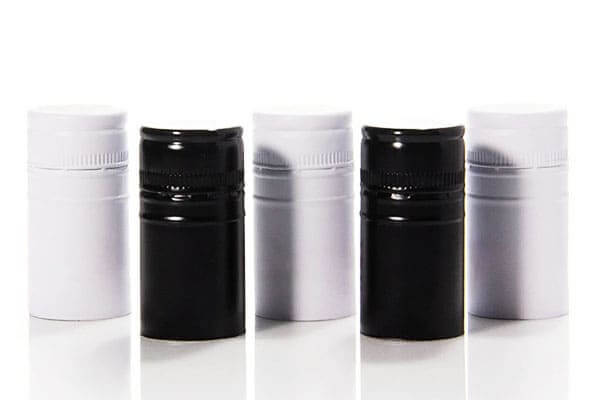
Bakit nga ba 8011 Aluminum Used for Bottle Caps
8011 aluminum is widely used for bottle caps because it offers a good balance of pagiging formable, lakas ng loob, paglaban sa kaagnasan, lightweight performance, at kalidad ng ibabaw.
These properties make it suitable for high-speed stamping, pagguhit, skirt forming, and thread rolling.
Bottle caps often require several forming operations, including blanking, shallow drawing, skirt forming, and thread rolling.
8011 aluminum in suitable tempers, especially H14, provides sufficient ductility for these operations while maintaining dimensional stability.
Good formability also helps reduce cracking, tearing, and excessive deformation during production.
Bottle caps need sufficient strength to maintain their shape during handling, transportasyon, and application.
8011 aluminum can achieve different strength levels through cold rolling and temper control.
H14 provides a good balance between strength and ductility, while H16 offers higher strength and rigidity for applications with greater structural requirements.
Aluminum has a density of approximately 2.7 g/cm³, making it much lighter than steel. This helps reduce closure weight and material consumption.
For high-volume beverage, Wine, spirits, and other packaging applications, even a small reduction in cap weight can contribute to lower packaging and transportation costs.
8011 aluminum naturally forms a thin oxide layer that protects the surface from further oxidation.
This property makes it suitable for closures exposed to moisture and humid storage conditions.
When additional protection is required, manufacturers can apply suitable lacquers or coatings according to the application.
Bottle-cap production requires a clean and uniform aluminum surface because the material may undergo printing, lacquering, patong na patong, or other finishing processes.
Mataas na kalidad 8011 closure stock should provide consistent surface appearance, patag na, cleanliness, and controlled surface roughness.
Bottle-cap manufacturers often process large volumes of aluminum strip at high production speeds.
Consistent thickness, mekanikal na mga katangian, patag na, and earing behavior help maintain stable forming conditions.
This consistency can reduce material waste, tooling adjustments, and production interruptions.
8011 aluminum is commonly used for ROPP (Roll-On Pilfer-Proof) Mga Cap, wine and spirits closures, Mga Cap ng Inumin, and other formed aluminum closures.
The final alloy, Pamahiin, kapal naman, and surface condition should match the specific cap design and forming process. A single specification does not suit every bottle-cap application.
Paggawa 8011 aluminum sheet for bottle caps requires precise control of komposisyon ng kemikal, kapal naman, mekanikal na mga katangian, patag na, earing, at kalidad ng ibabaw.
A typical production process includes the following steps.
The manufacturer prepares aluminum and alloying elements according to the required 8011 komposisyon.
The molten metal then undergoes controlled casting to produce slabs or cast coils.
Melt cleanliness and casting quality help reduce defects in the final material.
Hot rolling reduces the cast material to a suitable intermediate thickness and prepares it for cold rolling.
Cold rolling then achieves the required final thickness while controlling strength, patag na, at kalidad ng ibabaw.
Intermediate or final annealing adjusts hardness and ductility according to the required temper.
Final rolling establishes common bottle-cap tempers such as H14 or H16, providing the required balance of strength and formability.
Pagkatapos ng paggulong, the aluminum sheet undergoes trimming, leveling, paglilinis, and slitting.
Manufacturers can supply the material in coils or strips according to the customer’s cap-making equipment.
Before shipment, manufacturers check key parameters such as komposisyon ng kemikal, kapal naman, lakas ng paghatak, pagpapahaba ng panahon, earing, patag na, at kalidad ng ibabaw.
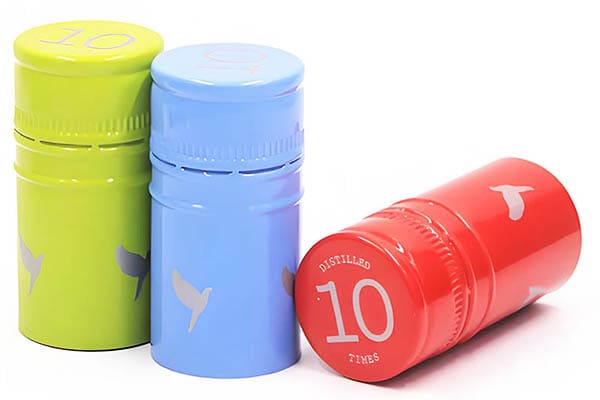
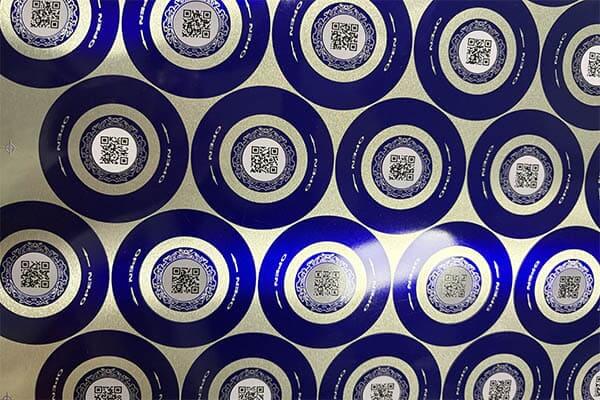
Printed 8011 Aluminum Sheet Bottle Caps
Surface treatment plays an important role in bottle-cap production because the aluminum surface may need to support paglilimbag, proteksiyon coatings, lubrication, dekorasyon, and corrosion protection.
The appropriate surface treatment depends on the cap design, forming process, coating system, and final packaging requirements.
Lacquering adds a protective layer to the aluminum surface. Depende sa application, manufacturers may apply internal lacquer, external lacquer, o pareho.
Internal lacquer can help protect the aluminum from contact with the packaged product, while external lacquer can improve appearance and provide additional surface protection.
For food, inumin, or pharmaceutical packaging, the coating system should meet the applicable regulatory and customer requirements.
Many aluminum bottle caps carry brand names, mga logo, product information, or decorative graphics.
A suitable coating or primer can improve ink adhesion and provide a consistent printing surface.
Surface cleanliness and coating uniformity are particularly important for high-quality multi-color printing.
Lubrication can reduce friction between the aluminum sheet and forming tools during blanking and forming.
Proper lubrication helps minimize surface damage, improve material flow, and maintain stable production.
The lubricant should also be compatible with subsequent cleaning, patong na patong, and printing processes.
Depending on the final cap design, manufacturers can apply colored coatings, printed finishes, or other compatible surface systems.
The selected treatment should provide adequate adhesion and flexibility so that the coating remains intact during drawing, skirt forming, and thread rolling.
For bottle-cap applications, manufacturers generally control the following surface characteristics:
| Surface Requirement | Kahalagahan |
| Cleanliness | Supports coating and printing adhesion |
| Uniform Appearance | Improves finished-cap appearance |
| Low Defect Level | Reduces visible defects and rejection |
| Coating Adhesion | Prevents peeling during forming |
| Controlled Roughness | Supports stable forming and finishing |
| Oil/Lubricant Control | Prevents coating and printing problems |
Surface treatment should be considered together with the cap-forming process.
Coating flexibility, pagdikit, lubrication, paglilinis, paglilimbag, and forming depth can all affect final performance.
Halimbawa na lang, a coating may perform well on flat aluminum sheet but crack or lose adhesion when the material undergoes drawing or thread rolling.
Kaya nga, manufacturers should evaluate the 8011 haluang metal, Pamahiin, kapal naman, surface condition, coating system, and forming process as a complete system.
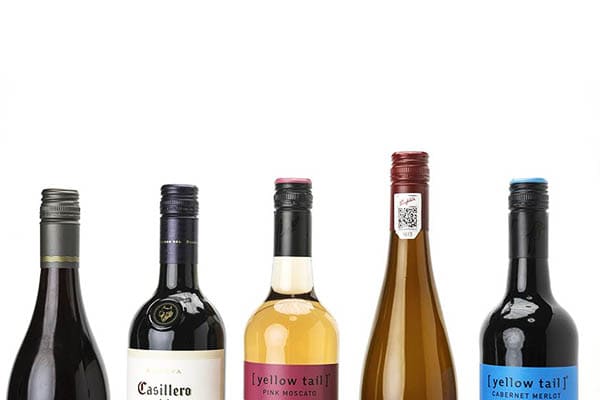
Aluminum Bottle Caps for Wine
8011 aluminum sheet is widely used for aluminum closures because it combines magandang formability, controlled strength, lightweight performance, paglaban sa kaagnasan, and good surface quality.
The required temper and thickness depend on the cap design and forming process.
ROPP (Roll-On Pilfer-Proof) caps are one of the main applications for 8011 aluminyo sheet.
The material needs to withstand skirt forming and thread rolling while maintaining a uniform cap shape.
8011 H14 and H16 are commonly used, with the final choice depending on cap dimensions, forming depth, and required rigidity.
Aluminum closures provide a lightweight and attractive solution for wine and spirits packaging.
8011 aluminum supports forming, paglilimbag, and coating processes required for these closures.
Good surface quality is especially important when the finished cap requires high-quality graphics or decorative finishes.
8011 aluminum can be used for closures on water, soft drinks, and other beverages.
Its lightweight characteristics help reduce closure weight, while its corrosion resistance supports use in humid packaging and storage environments.
The coating or lining system should match the beverage and applicable packaging requirements.
8011 aluminum sheet can be used for certain pharmaceutical and healthcare closures where lightweight performance and formability are required.
Gayunpaman, these applications may require specific requirements for material composition, cleanliness, mga patong na patong, and regulatory compliance.
The complete packaging system should meet the applicable standards.
Depende sa design, 8011 aluminum can also be used for closures in pagkain, mga pampaganda, personal care, and other packaging applications.
Ang haluang metal, Pamahiin, kapal naman, and surface treatment should match the specific product and forming requirements.
| Comparison Item | 8011 | 3105 | 3003 | 5052 |
| Alloy System | Al-Fe-Si | Al Mn | Al Mn | Al Mg |
| Strength Level | Katamtaman | Katamtaman | Katamtaman | Mataas na |
| Formability | Mabuti na lang | Mabuti na lang | Mabuti na lang | Katamtaman |
| Paglaban sa Kaagnasan | Mabuti na lang | Napakaganda | Mabuti na lang | Napakahusay |
| Earing Control | Mabuti na lang | Mabuti na lang | Mabuti na lang | Application dependent |
| Kalidad ng Ibabaw | Napakahusay | Mabuti na lang | Mabuti na lang | Mabuti na lang |
| Common Tempers | H14, H16, H24, H26 | H14, H16, H24, H26 | H14, H16, H18 | H32, H34, H36 |
| Typical Closure Applications | ROPP caps, Wine, spirits, beverage closures | Bottle caps, beverage and general closures | Formed packaging and selected closures | Specialized closures |
| Forming Performance | Napakaganda | Mabuti na lang | Mabuti na lang | Katamtaman |
| Main Advantage | Balanced strength, pagiging formable, at kalidad ng ibabaw | Good corrosion resistance and forming performance | Good strength and formability | Mataas na lakas at kaagnasan paglaban |
| Typical Selection | General-purpose closure stock | Corrosion-resistant closure applications | Selected formed closures | Higher-strength applications |
8011 aluminum sheet provides a reliable material solution for many bottle-cap applications because it combines magandang formability, controlled strength, lightweight performance, paglaban sa kaagnasan, and suitable surface quality.
Temper selection is also important. H14 generally provides better formability, while H16 offers higher strength and rigidity.
Ang kapal, earing, patag na, and surface condition also affect cap-forming performance.
For stable production, buyers should evaluate the complete material specification, kasama na ang haluang metal, Pamahiin, kapal naman, mekanikal na mga katangian, earing, patag na, kalidad ng ibabaw, coil dimensions, and applicable standards.
Ay 8011 aluminum good for bottle caps?
Oo nga. 8011 aluminum combines good formability, lakas ng loob, lightweight performance, paglaban sa kaagnasan, at kalidad ng ibabaw, making it suitable for many aluminum bottle-cap applications.
What temper of 8011 aluminum is used for bottle caps?
H14 and H16 are common choices. H14 generally provides better formability, while H16 provides higher strength and rigidity. The appropriate temper depends on the cap design and forming process.
What thickness is used for 8011 Mga cap ng bote ng aluminyo?
Typical closure stock is often around 0.15–0.30 mm, with approximately 0.15–0.25 mm commonly used for many applications. The actual thickness should match the cap design, forming depth, at mga kagamitan sa produksyon.
Ay 8011 better than 3105 for bottle caps?
Neither alloy is universally better. 8011 offers a good balance of formability and strength, habang ang 3105 also provides good corrosion resistance and closure-forming performance. The best choice depends on the specific application.
Maaari bang 8011 aluminum be used for ROPP caps?
Oo nga. 8011 aluminum is commonly used for ROPP (Roll-On Pilfer-Proof) closures because it provides the formability required for skirt forming and thread rolling while maintaining sufficient rigidity.
What should I check when buying 8011 aluminum sheet for bottle caps?
Important parameters include haluang metal, Pamahiin, kapal naman, lakas ng paghatak, magbunga ng lakas, pagpapahaba ng panahon, earing, patag na, kalidad ng ibabaw, coil dimensions, and applicable standards. Coating compatibility should also be considered for coated or printed caps.
Why is earing important for aluminum bottle caps?
Earing refers to uneven height around the edge of a formed aluminum component. Excessive earing can result in uneven cap skirts, increased trimming, and material waste. Controlled earing helps improve forming consistency and finished-cap quality.
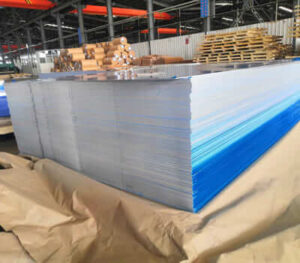
6082 aluminyo sheet ay maaaring init ginagamot, pinalakas at may magandang formability, weldability at machinability, kilala rin bilang structural haluang metal.
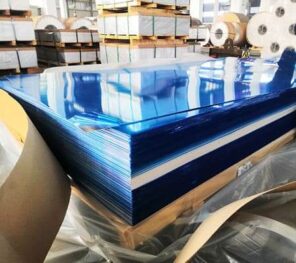
3004 Aluminum Sheet for PP Caps provides excellent formability, paglaban sa kaagnasan, and surface quality for producing PP cap liners, bottle closures, and packaging components. Ideal for food, inumin, and pharmaceutical applications.
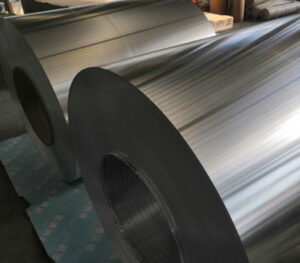
Makipag ugnay sa amin ngayon upang malaman ang higit pa tungkol sa aming 5083 aluminyo likawin handog at kung paano namin maaaring matugunan ang iyong mga tiyak na mga kinakailangan.
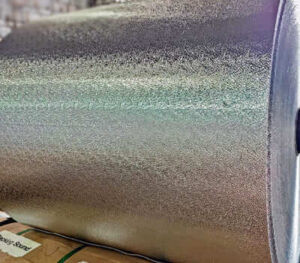
Ang aming embossed aluminyo foil produkto ay na-export sa higit sa 60 mga bansa at rehiyon sa European Union, ang Gitnang Silangan, Timog Silangang Asya, at Timog Amerika, at tamasahin ang isang magandang reputasyon sa internasyonal na merkado na may pinakamahusay na serbisyo at mataas na kalidad na mga produkto.
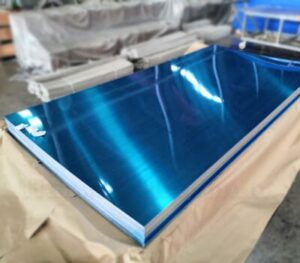
5052 Ang aluminyo sheet ay bahagi ng 5000 serye ng aluminyo. Ang mga grado sa seryeng ito ay haluang metal na may magnesium (2.5%) at may medium to high strength properties.
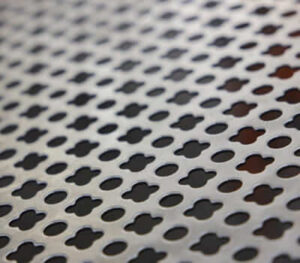
3003 Ang Aluminum Perforated Sheets ay nakuha sa pamamagitan ng pagsuntok 3003 aluminyo haluang metal sheet at ay madalas na ginagamit sa arkitektura dekorasyon, makinarya sa pagproseso ng pagkain at iba pang mga patlang.
No.52, Dongming Road, Zhou Zhengzhou, Henan, Tsina
Henan Huawei Aluminyo Co., Ltd, Isa Sa Ang Pinakamalaking Aluminum Supplier Sa China Henan,Kami ay Itinatag Sa 2001, At Mayroon kaming mayaman na karanasan sa pag-import at pag-export at mataas na kalidad na mga produkto ng aluminyo
Mo – Sat, 8SA – 5PM
Linggo: Username or email address *
© Disclaimer © 2023 Henan Huawei Aluminium Co., Ltd

Pinakabagong Mga Komento
Mahal na Sir, Please offer your best FOB Prices specs are as under ALUMINIUM STRIP (AL=99.50% MIN) SUKAT:450 X32 X6 MM. DIN EN 570 EN-AW 1050 A, QUANTITY=3400KG
Hello po, Gusto mo bang maging kaya mabait upang mag alok ng item tulad ng sumusunod: Coil 0,6х1250 (1000)mm EN AW-3105 5tons
Hello po, Maaari mo bang i alok sa akin ang mga plato ng Aluminium? Actally kailangan ko: 110mm x 1700mm x 1700mm 5083 H111 - 21 pcs Next year planed is 177 mga pc
Mahusay na artikulo. natuwa naman ako, na search ko ang article na ito. Maraming tao ang tila, na mayroon silang maaasahang kaalaman sa paksa, Ngunit ito ay madalas na hindi ang kaso. Kaya ang aking kaaya ayang sorpresa. Bilib na bilib ako. Tiyak na irerekomenda ko ang lugar na ito at i drop sa pamamagitan ng mas madalas, para makakita ng mga bagong bagay.
kinakailangan ng aluminium strip