High-quality aluminum foil for air conditioner radiators, available in 1100, 1200, 3003, at 3102 mga haluang metal. Customized thickness, Pamahiin, and coatings. Get a quote!
Aluminum foil plays an important role in modern air-conditioning systems, particularly in the manufacture of heat exchanger fins.
These thin aluminum components are installed around or between heat exchanger tubes to increase the surface area exposed to airflow, allowing heat to transfer more efficiently between the refrigerant and surrounding air.
In residential air conditioners, commercial HVAC equipment, refrigeration systems, and automotive cooling applications, aluminum fin stock is widely used because it combines good thermal conductivity, mababang density, paglaban sa kaagnasan, at mahusay na kakayahang umangkop.
Compared with many traditional metal materials, aluminum offers an attractive balance between heat-transfer performance and structural weight.
It can also be rolled into thin, uniform strips and processed into complex fin shapes through high-speed stamping, corrugating, and louver-forming operations.
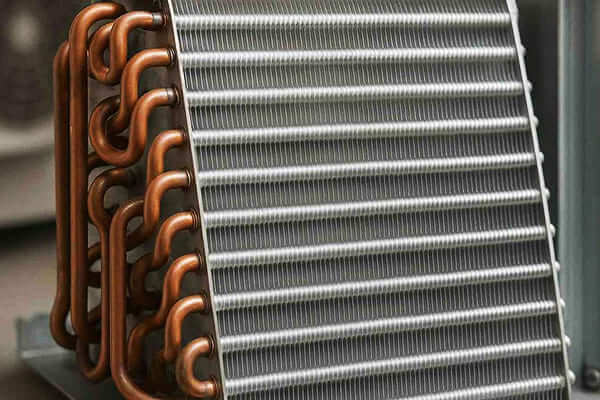
Aluminum Foil for Air Conditioner Radiator
Aluminum foil for air conditioner radiators is generally known as aluminum fin stock.
It is a thin-gauge aluminum strip or coil used to manufacture the fins in air-conditioning radiators and heat exchangers.
During production, aluminum fin stock passes through specialized fin presses, where it is stamped, mga corrugated, or formed into specific geometries.
These fins are then assembled with heat exchanger tubes to create a larger heat-transfer surface.
The fins increase the contact area between the heat exchanger and the surrounding air.
This helps improve heat exchange without significantly increasing the overall weight or size of the equipment.
An air conditioner heat exchanger is an assembled structure consisting of several components.
Although aluminum is widely used in these products, different components perform different functions and require different material specifications.
| Component | Main Function | Common Material Forms | Key Requirements |
| Aluminum fin stock | Increases heat-transfer surface area | Thin aluminum strip or coil | Thermal kondaktibiti, pagiging formable, paglaban sa kaagnasan |
| Heat exchanger tubes | Carry refrigerant or cooling fluid | Aluminum or copper tubes | Pressure resistance, paglaban sa kaagnasan, joining compatibility |
| Headers and manifolds | Distribute refrigerant or fluid | Aluminum tubes, mga paglabas, or formed components | Lakas ng loob, pressure resistance, brazing compatibility |
| Brazing sheet | Joins heat exchanger components | Aluminum sheet or clad coil | Brazability, controlled melting behavior, joint strength |
| Side plates and supports | Provide structural support | Aluminum sheet or formed parts | Lakas ng loob, dimensional accuracy, paglaban sa kaagnasan |
Aluminum fin stock can be classified according to its surface condition and functional coating.
Bare Aluminum Fin Stock
Bare fin stock has a mill-finished aluminum surface without an additional functional coating.
It is suitable for heat exchangers where the base alloy provides sufficient corrosion resistance and surface performance.
Its advantages include a relatively simple material structure, magandang thermal kondaktibiti, and compatibility with various fin-forming processes.
Hydrophilic Aluminum Foil
Hydrophilic aluminum foil has a surface coating that improves water wettability.
In air conditioner evaporators, moisture condenses on the cold fin surfaces during operation.
A hydrophilic coating helps condensate spread into a thinner water film and drain more easily.
This can reduce water bridging between closely spaced fins and help maintain airflow.
Hydrophobic foil has a surface designed to repel water rather than spread it. Condensate tends to form droplets instead of a continuous water film.
Its suitability depends on the heat exchanger structure, fin spacing, airflow conditions, and drainage design.
Anti-Corrosion Aluminum Fin Stock
Anti-corrosion fin stock uses a protective coating or specially selected alloy to improve resistance to moisture, salt, at iba pang mga kinakaing unti-unti sangkap.
It is particularly relevant for outdoor air-conditioning units and heat exchangers operating in humid or coastal environments.
The choice between bare, hydrophilic, hydrophobic, and anti-corrosion fin stock should be based on the actual operating conditions and heat exchanger design rather than coating type alone.
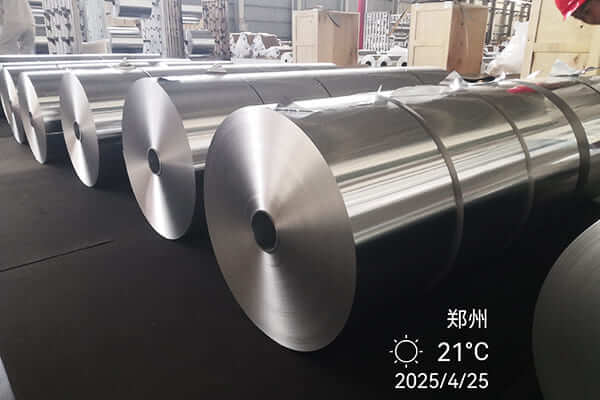
Huawei Aluminum Foil Display
Alloy selection affects the thermal conductivity, lakas ng loob, pagiging formable, and corrosion resistance of aluminum fin stock.
Common alloys used in air conditioner heat exchangers include 1100, 1200, 3003, at 3102.
1100 aluminum is a commercially pure aluminum alloy with a minimum aluminum content of 99.00%.
It offers good thermal conductivity, mahusay na kaagnasan paglaban, and high ductility.
Key characteristics:
Karaniwang mga aplikasyon: General air conditioner fins, refrigeration heat exchangers, and other heat-transfer components.
1200 aluminum is another commercially pure aluminum alloy. It provides good thermal conductivity, kakayahang magtrabaho, at paglaban sa kaagnasan, making it suitable for selected heat exchanger applications.
Key characteristics:
Karaniwang mga aplikasyon: HVAC fins, refrigeration components, and general heat-transfer applications.
3003 aluminum is an aluminum-manganese alloy with higher strength than commercially pure 1xxx-series aluminum.
It maintains good formability and corrosion resistance, making it a popular choice for heat exchanger fin materials.
Key characteristics:
Karaniwang mga aplikasyon: Air conditioner condenser fins, evaporator fins, and refrigeration heat exchangers.
3102 aluminum is an aluminum-manganese alloy commonly used in HVAC and refrigeration heat exchangers.
It offers a good balance of strength, pagiging formable, at paglaban sa kaagnasan.
Key characteristics:
Karaniwang mga aplikasyon: Air conditioner evaporator fins, condenser fins, and refrigeration equipment.
Aluminum foil for air conditioner radiators, also known as aluminum fin stock, is available in different thicknesses, mga lapad, mga temper, and surface finishes.
Specifications can be customized according to fin design, stamping requirements, and heat exchanger production processes.
| Parameter | Typical Specifications |
| Pangalan ng Produkto | Aluminum Fin Stock / Aluminum Foil for Air Conditioner Radiators |
| haluang metal | 1100, 1200, 3003, 3102 |
| Temper | O, H22, H24, H26 |
| Ang kapal | 0.08–0.30 mm |
| Common Thickness | 0.08, 0.09, 0.10, 0.11, 0.12, 0.15, 0.18, 0.20, 0.25, 0.30 mm |
| Lapad ng katawan | 100–1630 mm |
| Coil Inner Diameter (ID) | 150, 200, 305, 508 mm |
| Coil Outer Diameter (OD) | Na customize na |
| Coil Timbang | Na customize na |
| Surface Condition | Hubad na hubad, hydrophilic, hydrophobic, anti-corrosion coated |
| Tapos na sa ibabaw | Clean, makinis na, and uniform |
| Uri ng patong | Hydrophilic, hydrophobic, epoxy, acrylic, or other protective coatings |
| Fin Configuration | Flat, mga corrugated, or louvered |
| Pagproseso ng | Pagputol ng hiwa, pagulong gulong, pag stamp ng, corrugating, at patong |
| Packaging | Moisture-proof export packaging, wooden pallets, or customized packaging |
| Mga Pamantayan | ASTM B209, EN 485 serye ng mga, or agreed technical specifications where applicable |
Aluminum foil for air conditioner radiators, commonly known as aluminum fin stock, must provide good thermal conductivity, pagiging formable, paglaban sa kaagnasan, and dimensional stability.
These properties help manufacturers produce consistent fins and maintain reliable heat exchanger performance.
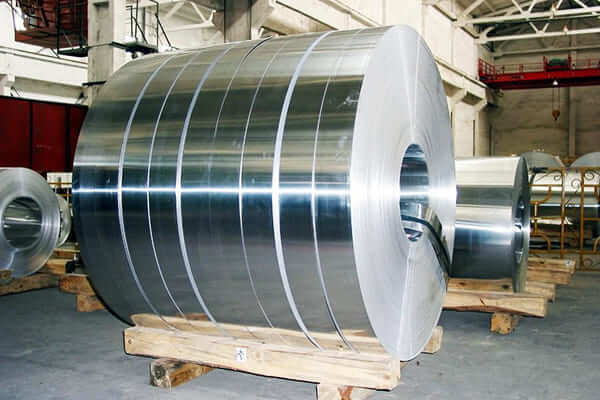
Residential Air Conditioners Aluminum Foil
Aluminum transfers heat efficiently between the refrigerant tubes and surrounding air.
Its high thermal conductivity helps fins distribute heat across their surfaces, supporting effective heat exchange in air conditioner evaporators and condensers.
Fin stock must withstand high-speed stamping, pagsuntok sa, pagbaluktot, and corrugating without cracking or excessive deformation.
Aluminum alloys such as 1100, 1200, 3003, at 3102 offer different combinations of ductility and strength to meet various fin-forming requirements.
Air conditioner fins are frequently exposed to moisture, kondensasyon, and airborne contaminants.
Aluminum naturally forms a protective oxide layer that helps resist corrosion.
For equipment operating in coastal, humid, or polluted environments, additional anti-corrosion coatings may provide improved surface protection.
Aluminum has a low density compared with many other heat exchanger metals.
Using aluminum fin stock helps reduce the weight of heat exchanger assemblies while maintaining a large heat-transfer surface area.
This is particularly useful in residential air conditioners, commercial HVAC systems, and automotive cooling equipment.
Fin stock needs sufficient strength to maintain its shape during stamping, assembly, and operation.
The appropriate alloy and temper help prevent fin deformation, Buckling, and damage during production and handling.
A clean, makinis na, and consistent surface supports stable stamping and coating performance.
Uniform thickness and reliable surface quality also help manufacturers maintain consistent fin dimensions and reduce production defects.
Surface treatments improve the functional performance of aluminum fin stock, particularly its resistance to corrosion, condensate behavior, and surface durability.
The appropriate treatment depends on the heat exchanger design and operating environment.
Bare aluminum fin stock has no additional functional coating.
Its natural oxide layer provides basic corrosion protection, while its thermal conductivity and formability make it suitable for general HVAC and refrigeration applications.
Main characteristics:
Hydrophilic coating makes the aluminum surface easier for water to spread across.
Instead of forming large droplets, condensation forms a thin water film that can drain more easily from the fin surface.
Main benefits:
Hydrophilic aluminum foil is widely used for air conditioner evaporator fins, where condensation occurs during cooling operation.
Hydrophobic coating creates a water-repellent surface that encourages condensation to form droplets rather than spread into a continuous film.
It may be selected for heat exchanger designs that benefit from water repellency and specific drainage behavior.
Its actual performance depends on coating properties, fin spacing, airflow, and operating conditions.
Anti-corrosion coatings provide an additional protective barrier against moisture, salt, at iba pang mga kinakaing unti-unti sangkap.
They are particularly useful for air conditioning equipment installed in coastal areas, industrial environments, and locations with high humidity.
Common coating systems include epoxy, acrylic, and other specialized protective formulations.
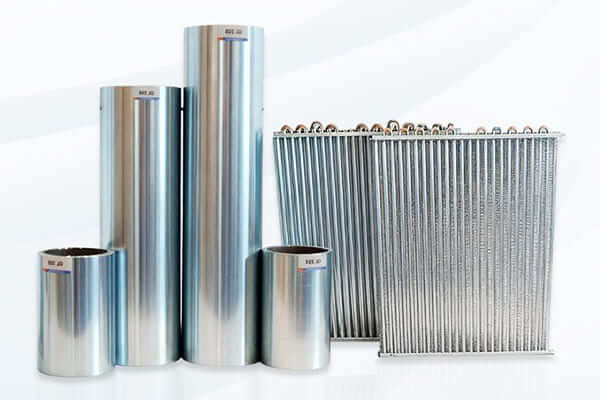
Hydrophilic Aluminum Foil
The production of aluminum fin stock involves several stages, from aluminum casting and rolling to final slitting and inspection.
Each stage affects the material’s thickness accuracy, mekanikal na mga katangian, kalidad ng ibabaw, and suitability for fin forming.
Aluminum ingots and alloying elements are melted according to the required alloy composition, tulad ng 1100, 1200, 3003, o 3102.
The molten aluminum is refined and filtered to reduce impurities and inclusions before casting.
The molten aluminum is cast into slabs or other suitable forms.
After homogenization when required, the material undergoes hot rolling to reduce its thickness and prepare it for subsequent cold rolling.
Cold rolling gradually reduces the aluminum material to the required fin-stock thickness.
This process also helps control thickness uniformity, tapos sa ibabaw, at mekanikal na mga katangian.
Annealing adjusts the material’s hardness, lakas ng loob, at ductility.
Depending on the alloy and customer requirements, the fin stock can be supplied in O, H22, H24, H26, or other suitable tempers.
The correct temper is important because the material must withstand high-speed stamping and fin forming without cracking or excessive deformation.
For bare fin stock, the material undergoes appropriate cleaning and surface inspection. For coated products, additional processes may include:
These processes help achieve consistent coating adhesion and surface performance.
The aluminum coil is slit to the required width and rewound into smaller coils. Slitting quality is important for smooth feeding into fin stamping equipment.
Manufacturers also control coil tension, winding tightness, edge condition, and coil alignment to reduce problems during downstream processing.
Aluminum foil for air conditioner radiators is mainly used to manufacture fins in heat exchangers.
These fins increase the surface area available for heat transfer between the refrigerant or cooling medium inside the tubes and the surrounding air.
Different aluminum alloys, mga temper, mga kapal, and coatings are selected according to equipment design and operating conditions.
Residential split air conditioners and window units use aluminum fin stock in both evaporators and condensers.
Hydrophilic coated aluminum foil is often selected for evaporator fins to promote condensate drainage.
Commercial HVAC equipment uses aluminum fins in larger heat exchanger assemblies, including air handling units, rooftop air conditioners, and central cooling systems.
These applications require consistent fin dimensions, reliable mechanical properties, and suitable corrosion protection to support long-term operation.
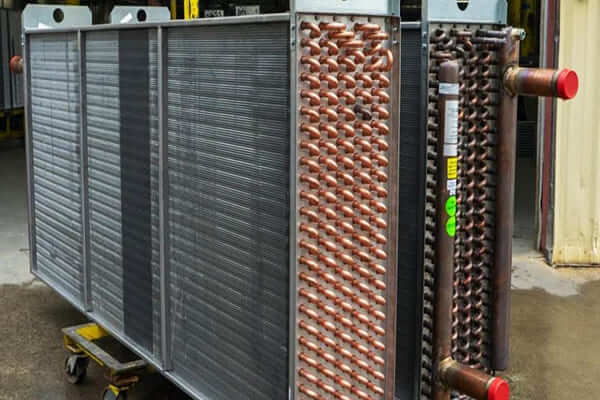
HVAC Systems Used Aluminum Foil
Aluminum fin stock is used in refrigeration evaporators, condensers, display cabinets, mga freezer, and cold storage equipment.
Its lightweight structure, thermal kondaktibiti, and formability make it suitable for producing compact finned heat exchangers.
Coating requirements depend on humidity, kondensasyon, cleaning conditions, and the operating environment.
Automotive air conditioning systems use aluminum fins in condensers and evaporators to support efficient heat exchange within compact assemblies.
Material selection focuses on formability, paglaban sa kaagnasan, dimensional consistency, and compatibility with the heat exchanger’s joining and manufacturing processes.
Heat pumps and industrial cooling equipment also use aluminum fin stock in their heat exchanger assemblies.
Depende sa application, manufacturers may require higher corrosion resistance, specialized coatings, or specific mechanical properties to withstand outdoor exposure and demanding operating conditions.
| Comparison | Aluminum Fin Stock | Tanso | Aluminum Brazing Sheet |
| Main Function | Increases heat-transfer surface area | Used in heat exchanger tubes, mga coils, and fins | Used to manufacture components joined by brazing |
| Thermal kondaktibiti | Mabuti na lang | Mas mataas kaysa sa aluminyo | Similar to its aluminum core alloy |
| Densidad ng katawan | Mababa ang (approx. 2.70 g/cm³) | Mataas na (approx. 8.96 g/cm³) | Mababa ang (approx. 2.70 g/cm³) |
| Timbang | Magaan ang timbang | Relatively heavy | Magaan ang timbang |
| Paglaban sa Kaagnasan | Mabuti na lang, depending on alloy and surface treatment | Good in many environments, but susceptible to certain corrosion conditions | Depends on core alloy, mga cladding, and operating environment |
| Formability | Excellent for stamping, corrugating, and louvering | Mabuti na lang, depending on material form and processing | Suitable for forming components before brazing |
| Gastos sa Materyal | Generally economical | Generally higher | Depends on alloy and cladding structure |
| Proseso ng Paggawa | Paggulong, Captcha *, pag stamp ng, and fin forming | Drawing, pagulong gulong, pagbaluktot, and joining | Paggulong, pagbuo ng, and brazing |
| Mga Karaniwang Aplikasyon | AC evaporator fins, condenser fins, and refrigeration heat exchangers | Heat exchanger tubes, mga coils, and selected fin structures | Heat exchanger tubes, headers, and other brazed components |
| Pangunahing bentahe | Magaan ang timbang, matipid sa gastos, and easy to form into fins | Mataas na thermal kondaktibiti | Designed for reliable brazed joints |
| Main Consideration | haluang metal, Pamahiin, patong na patong, and fin geometry must match application requirements | Higher density and material cost | Brazing compatibility and cladding quality must be controlled |
Choosing a reliable aluminum supplier is important for maintaining consistent material quality, stable production, and dependable delivery.
Buyers should evaluate not only alloy and dimensional specifications but also manufacturing capabilities, quality control, Customize, and technical support.
Henan Huawei Aluminyo Co., Ltd., established in 2001, is a Chinese manufacturer specializing in aluminum rolled products.
Its product range includes aluminum sheets, mga plato, mga coils, mga foil, mga guhit, and circles.
With more than 20 years of industry experience and exports to 72 mga bansa, Huawei Aluminum serves customers across different industrial sectors.
The company focuses on product quality, customized specifications, and international customer service.
For air conditioner radiator and heat exchanger applications, material selection should be based on the customer’s production requirements.
Huawei Aluminum can discuss customized aluminum material specifications, kasama na ang:
For fin-stock applications, buyers should confirm the required alloy, Pamahiin, thickness tolerance, surface condition, and coating requirements before ordering.
If you are sourcing aluminum fin stock or other aluminum materials for air conditioning heat exchangers, contact Huawei Aluminum to discuss your requirements and confirm product availability.
Aluminum foil for air conditioner radiators, commonly known as aluminum fin stock, plays an important role in heat exchanger performance.
Ang thermal conductivity nito, magaan na mga katangian, paglaban sa kaagnasan, and formability make it suitable for manufacturing flat, mga corrugated, and louvered fins.
Common alloy options include 1100, 1200, 3003, at 3102. The right choice depends on fin design, stamping requirements, operating environment, and joining process.
Ang kapal, Pamahiin, surface condition, and coating performance should also be considered when selecting fin stock.
For reliable production, buyers should work with an experienced aluminum supplier that can provide consistent material quality, customized specifications, and appropriate technical support.
1. What is aluminum foil for air conditioner radiators?
It is thin aluminum strip or coil, also known as aluminum fin stock, used to manufacture heat exchanger fins. These fins increase the heat-transfer surface area.
2. Which aluminum alloys are commonly used for air conditioner fins?
Kabilang sa mga karaniwang haluang metal ang 1100, 1200, 3003, at 3102. Selection depends on strength, thermal kondaktibiti, pagiging formable, and corrosion resistance requirements.
3. What is the typical thickness of aluminum fin stock?
The common thickness range is approximately 0.08–0.30 mm, depending on fin design and stamping requirements.
4. What is the difference between bare and hydrophilic aluminum foil?
Bare aluminum has no functional coating, while hydrophilic aluminum has a special surface coating that helps condensate spread and drain more easily.
5. What tempers are available for air conditioner aluminum fin stock?
Kabilang sa mga karaniwang pag-uugali ang O, H22, H24, and H26. Each provides a different balance of strength and formability.
6. Is aluminum better than copper for air conditioner radiators?
Aluminum is lighter and generally more economical, while copper offers higher thermal conductivity. The best material depends on heat exchanger design and performance requirements.
7. Can aluminum fin stock be customized?
Oo nga. haluang metal, Pamahiin, kapal naman, lapad ng katawan, coil dimensions, and surface treatment can be specified according to customer requirements.
8. What should buyers consider when purchasing aluminum fin stock?
Key factors include alloy, Pamahiin, thickness tolerance, mekanikal na mga katangian, kalidad ng ibabaw, coating performance, and compatibility with the fin-forming process.
9. How can I get a quotation for aluminum foil for air conditioner radiators?
Provide the required alloy, Pamahiin, kapal naman, lapad ng katawan, ibabaw ng paggamot, coil dimensions, and order quantity to Huawei Aluminum for a customized quotation.
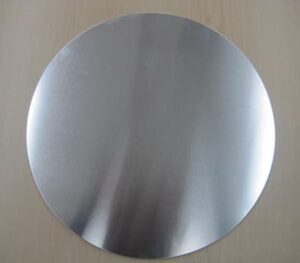
3004 bilog ng aluminyo ,pinangalanan din ang 3004 aluminium disc,3004 aluminyo disk, ito ay ginawa sa pamamagitan ng pagtatak 3004 aluminyo coils.
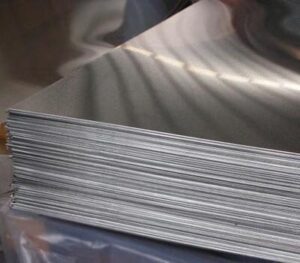
5754 aluminyo sheet ay may mga katangian ng mahusay na processability, magandang paglaban sa kaagnasan, weldability at madaling pagbuo. Bilang isang wrought haluang metal, 5754 aluminyo sheet ay maaaring nabuo sa pamamagitan ng rolling, paglabas ng mga, at pagkukubli, pero hindi sa pamamagitan ng casting.
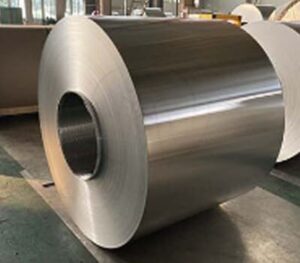
3105 aluminyo coil ay isang 3000 serye aluminyo haluang metal: ang pangunahing alloying karagdagan ay mangganeso, na kung saan ay formulated para sa pangunahing pagbuo sa mga pekeng mga produkto.
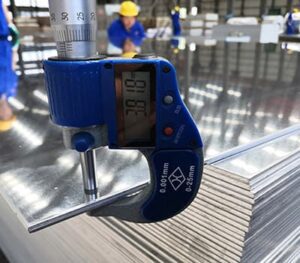
Kabilang sa iba't ibang mga aluminyo haluang metal na magagamit, ang 2014 aluminyo plate ay inukit ng isang niche para sa kanyang sarili, lalo na sa mga application na humihingi ng mataas na lakas, mahusay na machinability, at paglaban sa pagkapagod.
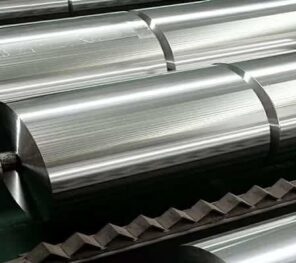
8006 aluminyo foil ay isang tiyak na haluang metal na kilala para sa kanyang mahusay na mga katangian ng barrier, paggawa ng ito mainam para sa packaging application. Nagbibigay ito ng epektibong proteksyon laban sa kahalumigmigan, liwanag, at oxygen, pagtulong upang mapanatili ang pagiging sariwa at kalidad ng mga produkto ng pagkain.
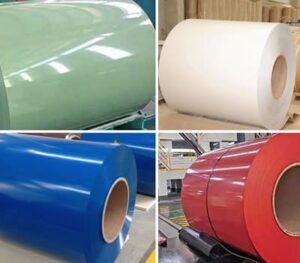
Pininturahan aluminyo likawin (Pinahiran aluminyo likawin) ay isang popular na materyal na pagpipilian para sa konstruksiyon, transportasyon, at signage dahil sa magaan na timbang nito, tibay ng katawan, at maraming nalalaman.
No.52, Dongming Road, Zhou Zhengzhou, Henan, Tsina
Henan Huawei Aluminyo Co., Ltd, Isa Sa Ang Pinakamalaking Aluminum Supplier Sa China Henan,Kami ay Itinatag Sa 2001, At Mayroon kaming mayaman na karanasan sa pag-import at pag-export at mataas na kalidad na mga produkto ng aluminyo
Mo – Sat, 8SA – 5PM
Linggo: Username or email address *
© Disclaimer © 2023 Henan Huawei Aluminium Co., Ltd

Pinakabagong Mga Komento
Mahal na Sir, Please offer your best FOB Prices specs are as under ALUMINIUM STRIP (AL=99.50% MIN) SUKAT:450 X32 X6 MM. DIN EN 570 EN-AW 1050 A, QUANTITY=3400KG
Hello po, Gusto mo bang maging kaya mabait upang mag alok ng item tulad ng sumusunod: Coil 0,6х1250 (1000)mm EN AW-3105 5tons
Hello po, Maaari mo bang i alok sa akin ang mga plato ng Aluminium? Actally kailangan ko: 110mm x 1700mm x 1700mm 5083 H111 - 21 pcs Next year planed is 177 mga pc
Mahusay na artikulo. natuwa naman ako, na search ko ang article na ito. Maraming tao ang tila, na mayroon silang maaasahang kaalaman sa paksa, Ngunit ito ay madalas na hindi ang kaso. Kaya ang aking kaaya ayang sorpresa. Bilib na bilib ako. Tiyak na irerekomenda ko ang lugar na ito at i drop sa pamamagitan ng mas madalas, para makakita ng mga bagong bagay.
kinakailangan ng aluminium strip