Aluminum Sheet Cold Rolled VS Hot Rolled

Home » Blog » Aluminum Sheet Cold Rolled VS Hot Rolled

Aluminum sheet cold rolled vs hot rolled core differences explore — from surface finish and strength to cost and applications. Make the right material choice for your next project.

Panimula

The main differences between hot-rolled aluminum sheets and cold-rolled aluminum sheets are reflected in the production process, performance characteristics and application areas.

Hot-rolled aluminum sheets use high-temperature rolling process and have better ductility and mechanical properties;

Cold-rolled aluminum sheets are processed at room temperature, with lower production costs but weaker mechanical strength.

Hot rolling refers to rolling above the recrystallization temperature of the metal (usually 480-540℃), while cold rolling is carried out below the recrystallization temperature.

This basic temperature difference leads to a series of differences between the two in the processing process.

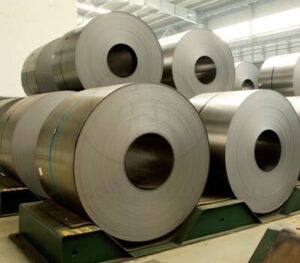
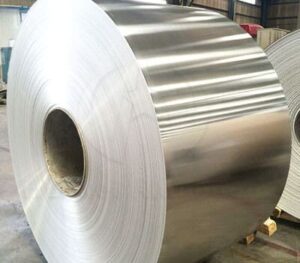
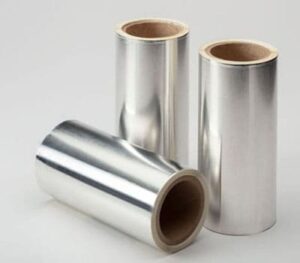
Aluminum Sheet Cold Rolled VS Hot Rolled

Aluminum Sheet Cold Rolled VS Hot Rolled

Rolling process of Aluminum Sheet Cold Rolled VS Hot Rolled

Hot-rolled aluminum sheet:

Aluminum ingot → high-temperature smelting → casting into flat ingot → milling → annealing → hot rolling (thickness 400-500mm → target thickness).

Cold-rolled aluminum sheet:

Cast-rolled coil (initial thickness 8mm) → cold rolling mill processing → finished product.

Features Aluminum Sheet Cold Rolled VS Hot Rolled

  1. Hot-Rolled Aluminum Sheet
    • Processing Temperature: Rolled at a temperature above its recrystallization point (humigit-kumulang 300 °C–400 °C), karaniwan sa pagitan ng 400 °C and 500 °C.
    • Deformation Mode: At high temperature, aluminum exhibits good plasticity and low rolling resistance, allowing a large thickness reduction in a single pass.
    • Cooling Method: Pagkatapos ng mainit na paggulong, the sheet is usually allowed to cool naturally or with water spray, but no further rolling is performed.
    • Mga kalamangan & Mga disadvantages: The process is relatively simple, highly efficient, and lower in cost. Gayunpaman, because the microstructure coarsens at high temperature, the sheet’s surface develops more oxide scale; thickness tolerances and surface finish are comparatively poorer.
  2. Cold-Rolled Aluminum Sheet
    • Processing Temperature: Rolled at or near room temperature, starting from a slab that has usually already undergone hot rolling.
    • Deformation Mode: High-pressure cold rolling further reduces thickness and improves surface quality. Because it is done below the recrystallization temperature, work hardening occurs.
    • Annealing Sequence: After a certain amount of cold rolling, an annealing step is needed to restore ductility and refine grain structure before subsequent rolling passes. This alternating cold rolling and annealing yields a uniform microstructure and tailored mechanical properties.
    • Mga kalamangan & Mga disadvantages: Cold rolling achieves very tight dimensional tolerances (thickness variation within ±0.02 mm), excellent surface finish, at mas mataas na lakas. Gayunpaman, it involves more processing steps, higher equipment investment, greater energy consumption, lower throughput per ton, and therefore higher cost.
Aluminum sheet hot rolling process

Aluminum sheet hot rolling process

Metallurgical Structure and Performance Differences

Pag-aari Hot-Rolled Aluminum Sheet Cold-Rolled Aluminum Sheet
Grain Structure Rolled at high temperature—recrystallization is active—grains tend to be coarser; overall uniformity is moderate. Alternating cold rolling and annealing produce finer, more uniform grains.
Work Hardening Work-hardening effect is weak, resulting in lower hardness and strength; ductility and elongation are high. Significant work hardening occurs during cold rolling, increasing yield and tensile strength but reducing ductility; intermediate annealing can restore ductility.
Kalidad ng Ibabaw Surface is covered by oxide scale, appears darker, and often shows mill marks or scale defects; secondary finishing (hal., pagsusuklay ng mga, pagputok ng buhangin) is usually needed for a better appearance. Rolled directly between polished rolls in a clean environment, yielding a bright, flat surface with minimal oxide or mechanical blemishes.
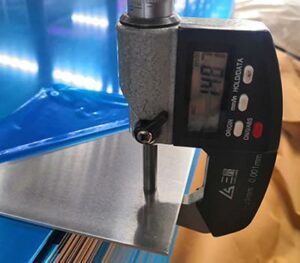
Dimensional Tolerance Thicker gauge tolerance (typically ±0.05 mm or greater); less stringent width and flatness requirements. Extremely tight thickness tolerance (within ±0.02 mm) and can achieve precise control of width and flatness—ideal for applications demanding tight tolerances.
Mga Katangian ng Mekanikal Lower yield strength and tensile strength (about 80–120 MPa), with elongation often exceeding 20%. After cold rolling, yield strength and tensile strength can rise to approximately 150–200 MPa, while elongation may decrease to 5–15% (depending on alloy and temper); annealing allows adjustment between strength and ductility.
Internal Defects Hot rolling may produce coarse pores, mga inclusions, or lamellar defects; acceptable for applications without stringent quality requirements, though additional processing is needed for high-quality parts. Repeated rolling and annealing tend to close up or eliminate many internal defects, resulting in a denser, more reliable microstructure.

3. Common Alloys and Tempers

Both cold-rolled and hot-rolled aluminum sheets are produced in various alloys—commonly from the 1000, 3000, 5000, at 8000 serye ng mga.

Each alloy and temper (hal., O temper for fully annealed, H tempers for work‐hardened or partially annealed states) behaves differently after rolling.

Below is an example using the 3003 aluminyo sheet (Al–Mn series), frequently used for containers and cookware, to illustrate the difference:

  • 3003-O Hot-Rolled Sheet
    • The slab is hot-rolled to near-final thickness and then allowed to cool naturally without further cold rolling or annealing.
    • The material remains in a fully annealed condition (O kahinahunan), which yields excellent ductility and easy formability, but relatively low hardness. It’s often used where deep drawing is required.
    • The surface appears somewhat dull and typically requires post‐processing (brushing or other finishing) if a decorative finish is needed.
  • 3003-H14 Cold-Rolled Sheet
    • After initial hot rolling, the sheet undergoes additional cold rolling, with intermediate annealing to achieve the H14 temper (medium work hardening).
    • The yield strength rises from roughly 70–80 MPa in the hot-rolled O state to about 120–140 MPa in the H14 cold-rolled state, while elongation decreases slightly.
    • The surface is smooth and bright, making it suitable for decorative uses—appliances, electronic enclosures, etc.—without further finishing.

Application of Aluminum Sheet Cold Rolled VS Hot Rolled

  1. Hot-Rolled Aluminum Sheet
    • Makapal na, Heavy‐Duty Applications: Because hot rolling is well-suited for large thickness reductions, it’s used in industrial plates, pag cladding ng arkitektura, bridge components, paggawa ng barko, and similar applications that require thicker gauge but do not demand a pristine surface or tight tolerances.
    • Raw Material for Further Processing: Hot-rolled plates often serve as feedstock for downstream cold rolling, paglabas ng mga, or casting operations. They are also used where basic bending, hinang, and cutting are required without premium surface finish.
    • Cost‐Sensitive Uses: Since hot rolling is less expensive, it’s chosen for parts whose strength is lower, and cosmetic appearance is unimportant—e.g., some automotive chassis brackets, simple industrial fittings, or structural supports.
  2. Cold-Rolled Aluminum Sheet
    • Precision Components: Used for electronics housings, laptop and smartphone panels, and appliance decorative panels—applications that require excellent surface flatness, uniformity, and accurate thickness.
    • Lightweight Automotive Parts: Ideal for body panels, instrument panel supports, atbp., where high strength and tight dimensional accuracy are critical.
    • Pag-print & Packaging: Food packaging trays, thin‐wall containers, and aluminum foil laminates demand thin gauges with very good flatness and surface finish, which cold rolling provides.
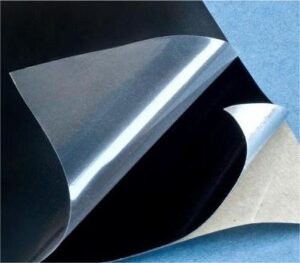
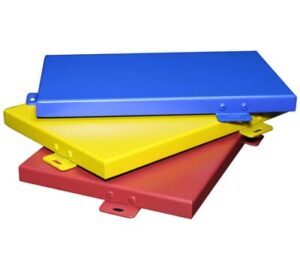
    • Composite‐Backing Panels: Aluminum-plastic composite panels and coated sheets require a smooth, defect-free base material, making cold-rolled sheet the material of choice.
Aluminum sheet for tank

Aluminum sheet for tank

Konklusyon

Aspekto Hot-Rolled Aluminum Sheet Cold-Rolled Aluminum Sheet
Processing Temperature Above recrystallization (400 °C–500 °C) Below recrystallization (close to room temperature), with intermediate/after annealing
Dimensional Tolerance ±0.05 mm or more ±0.02 mm or tighter
Tapos na sa ibabaw Oxide scale, mill marks; usually requires secondary finishing Maliwanag na, patag na, malinis na; can often be used as-is without additional finishing
Mga Katangian ng Mekanikal Mas mababang lakas (yield ~80–120 MPa), good ductility Mas mataas na lakas (yield ~150–200 MPa after work hardening), lower ductility—can adjust via annealing
Gastos Mas mababa Mas Mataas (more complex processing, higher energy use, larger equipment investment)
Mga Karaniwang Gamit Industrial plates, construction cladding, raw feedstock, cost-focused purposes Electronics housings, automotive panels, packaging foils, decorative applications requiring tight tolerances

Selection Guidelines

  1. If cost is the primary factor and you do not need very tight thickness tolerances or a high‐quality surface finish, choose hot-rolled aluminum sheet—especially when thickness is ≥ 3 mm or for large-area applications.
  2. If you require a high level of surface appearance, tight thickness control, and greater strength, choose cold-rolled aluminum sheet. This is particularly common in electronics, Mga Kagamitan, and lightweight automotive parts.
  3. If you need both moderate thickness and enhanced surface finish/strength, consider a combined process: first hot-roll to a coarse thickness, then cold-roll to achieve desired final thickness, kalidad ng ibabaw, at mekanikal na mga katangian.
  4. Select the appropriate alloy and temper (halimbawa na lang, 3003-O vs. 3003-H14, 5052-H32, 6061-T6) based on requirements for strength, paglaban sa kaagnasan, weldability, etc.—then determine whether hot rolling or cold rolling (plus any subsequent solution treatment, Pag-iipon, or annealing) is optimal.


Mag-iwan ng Tugon

Hindi ilalathala ang iyong email address. Ang mga kinakailangang field ay minarkahan *

Pinakabagong Mga Komento

  • Sabi ni AKBAR SAJJAD:
    Mahal na Sir, Please offer your best FOB Prices specs are as under ALUMINIUM STRIP (AL=99.50% MIN) SUKAT:450 X32 X6 MM. DIN EN 570 EN-AW 1050 A, QUANTITY=3400KG
  • Sviatlana Kapachenia Sinabi:
    Hello po, Gusto mo bang maging kaya mabait upang mag alok ng item tulad ng sumusunod: Coil 0,6х1250 (1000)mm EN AW-3105 5tons
  • Sabi ni MILES:
    Hello po, Maaari mo bang i alok sa akin ang mga plato ng Aluminium? Actally kailangan ko: 110mm x 1700mm x 1700mm 5083 H111 - 21 pcs Next year planed is 177 mga pc
  • Sabi ng Photographer:
    Mahusay na artikulo. natuwa naman ako, na search ko ang article na ito. Maraming tao ang tila, na mayroon silang maaasahang kaalaman sa paksa, Ngunit ito ay madalas na hindi ang kaso. Kaya ang aking kaaya ayang sorpresa. Bilib na bilib ako. Tiyak na irerekomenda ko ang lugar na ito at i drop sa pamamagitan ng mas madalas, para makakita ng mga bagong bagay.
  • kishor wagh Sinabi:
    kinakailangan ng aluminium strip
  • Mainit na mga produkto

    Ito ang aming pinakamahusay na nagbebenta ng mga produkto

    aluminum foil for air duct

    Aluminum Foil Para sa Air Duct

    Ang mga karaniwang haluang metal ng aluminyo foil para sa air duct ay 1000 serye ng mga, 3000 serye at 8000 serye aluminyo foil, na kung saan ay may malakas na kaagnasan paglaban at kahalumigmigan paglaban.

    Diamond plate aluminum sheets 4x8

    Diamond plate aluminyo sheet 4×8

    Ang mga sheet ng aluminyo ng diamond plate 4x8 ay magagamit sa 6061-T6 at 3003-H14 na sukat. mas mataas ang lakas nila, magsuot ng paglaban, may dalang load, machinability, paglaban sa kaagnasan, atbp. Kaya nga, tanyag sa konstruksyon, pagmamanupaktura, mga sasakyan, mga barko at iba't ibang larangan.

    1100 aluminum sheet

    1100 Aluminum Sheet

    1100 Ang aluminyo sheet ay isa sa mga kinatawan ng 1 serye purong aluminyo plate, at ito rin ang pinaka malawak na ginagamit na haluang metal.

    Reflective aluminum sheet display

    Reflective Aluminum Sheet

    Ang reflective aluminum sheet ay isang metal sheet na may mataas na reflectivity at malawakang ginagamit sa optika, mga electronics, konstruksiyon at iba pang mga patlang. Ipapakilala sa artikulong ito ang mga alituntunin, mga katangian at mga application ng Reflective aluminyo sheet.

    5454 aluminum circle supplier

    5454 bilog ng aluminyo

    5454 aluminum circles ay may lahat ng mga katangian ng 5454 aluminyo haluang metal at ay madalas na ginagamit sa lata sealing, mga di-stick na bottom ng palayok, mga karatula ng trapiko, mga lampshade, atbp.

    5000 series aluminum alloy sheet-1

    5000 serye aluminyo haluang metal

    5000 serye aluminyo haluang metal ay isang Al Mg haluang metal serye na may mataas na lakas at mahusay na kaagnasan paglaban. Ito ay karaniwang ginagamit sa pagmamanupaktura ng marine, mga tangke ng langis, mga barko, Autoplay Loop, mga materyales sa gusali at iba pang mga patlang.

    Opisina namin

    No.52, Dongming Road, Zhou Zhengzhou, Henan, Tsina

    HWALU

    Henan Huawei Aluminyo Co., Ltd, Isa Sa Ang Pinakamalaking Aluminum Supplier Sa China Henan,Kami ay Itinatag Sa 2001, At Mayroon kaming mayaman na karanasan sa pag-import at pag-export at mataas na kalidad na mga produkto ng aluminyo

    Mga Oras ng Pagbubukas:

    Mo – Sat, 8SA – 5PM

    Linggo: Username or email address *

    Contact

    No.52, Dongming Road, Zhou Zhengzhou, Henan, Tsina

    +86 181 3778 2032

    [email protected]

    Mag-iwan ng Tugon

    Hindi ilalathala ang iyong email address. Ang mga kinakailangang field ay minarkahan *

    © Disclaimer © 2023 Henan Huawei Aluminium Co., Ltd

    Username

    Email Us

    Whatsapp

    Pagtatanong