5083 H116 marine grade aluminium sheet offers outstanding seawater corrosion resistance, mataas na ratio ng lakas sa timbang, and excellent weldability for marine and offshore structures.


5083 H116 marine grade aluminium sheet stands as the definitive material for saltwater structural applications, combining the highest strength-to-weight ratio among non-heat-treatable alloys with exceptional corrosion resistance and cryogenic toughness.
This Al-Mg-Mn-Cr alloy delivers 305–385 MPa ultimate tensile strength while maintaining weldability and guaranteed immunity to intergranular corrosion through proprietary stabilization heat treatment.
The H116 temper specifically addresses the sensitization vulnerability inherent in high-magnesium aluminium alloys, controlling β-phase (Al₈Mg₅) precipitation to discrete, non-continuous morphologies that eliminate galvanic corrosion cells.
Dahil dito, 5083 H116 achieves over 10,000 hours exposure in ASTM G85 salt spray without pitting, serves in LNG containment systems at -162°C without embrittlement, and carries classification society certifications from Lloyd’s Register, DNV GL, ABS nga ba, and Bureau Veritas for hull construction, superstructures, at presyon vessels.
5083 H116 Marine Grade Aluminium Sheet
| Elemento | Pagtutukoy (wt%) | Functional Role |
| Aluminyo (Al) | Balanse (≥94.0%) | Base matrix; paglaban sa kaagnasan |
| Magnesium (Mg) | 4.0–4.9 | Primary strengthening; solid solution hardening |
| Mga mangganeso (Mn) | 0.40–1.0 | Grain refinement; Al₆(Mn,Fe) dispersoid formation |
| Chromium (Cr) | 0.05–0.25 | Recrystallization control; grain boundary stabilization |
| bakal na bakal (Fe) | ≤0.40 | Controlled impurity; Al₃Fe phase limitation |
| Silicon (Si Si) | ≤0.40 | Controlled impurity; Mg₂Si prevention |
| Sink (Zn) | ≤0.25 | Limitation; galvanic corrosion prevention |
| Titanium (Ti) | 0.05–0.15 | Grain refinement in casting |
Tensile and Yield Characteristics (ASTM B928)
| Pag-aari | 5083-H116 | 5083-O | 5083-H321 |
| tunay na lakas ng paghatak (MPa) | 305–385 | 270–345 | 305–385 |
| Yield Lakas 0.2% (MPa) | 215–305 | 115–200 | 215–305 |
| Pagpapahaba (%) | 10–16 | 16–22 | 10–16 |
| nababanat na modulus (GPa) | 70.3 | 70.3 | 70.3 |
Fracture and Fatigue Performance
| Pag-aari | Halaga | Paraan ng Pagsusulit |
| Plane Strain Fracture Toughness (K_IC) | 35–45 MPa√m | ASTM E399 |
| Lakas ng Pagkapagod (10⁷ cycles, R=0.1) | 110–130 MPa (makinis na) | ASTM E466 |
| Lakas ng Pagkapagod (hinangin) | 70–90 MPa | ASTM E466 |
| Charpy V-Notch (longitudinal) | 25–35 J | ASTM E23 |
Cryogenic Properties
Unlike ferrous materials, 5083 H116 Marine Grade Aluminium Sheet shows no ductile-to-brittle transition. At -196°C (liquid nitrogen temperature):
These characteristics enable LNG containment membrane systems operating at -162°C, where material failure risks catastrophic cargo release.
Bending Test of 5083 H116 Aluminium Sheet
| Pag-aari | Halaga | Application Impact |
| Densidad ng katawan | 2.66 g/cm³ | 66% lighter than steel; critical for stability |
| Saklaw ng Pagtunaw | 574–638°C | Welding parameter selection |
| Thermal kondaktibiti | 120 W/(m·K) at 20°C | Heat dissipation in engine compartments |
| Koepisyent ng Thermal Expansion | 23.8×10⁻⁶/°C | Design allowance: 2.4 mm/m for 100°C ΔT |
| Electrical kondaktibiti | 29% IACS | Cathodic protection current distribution |
| Tiyak na Init | 900 J/(kg· K) | Thermal mass calculations |
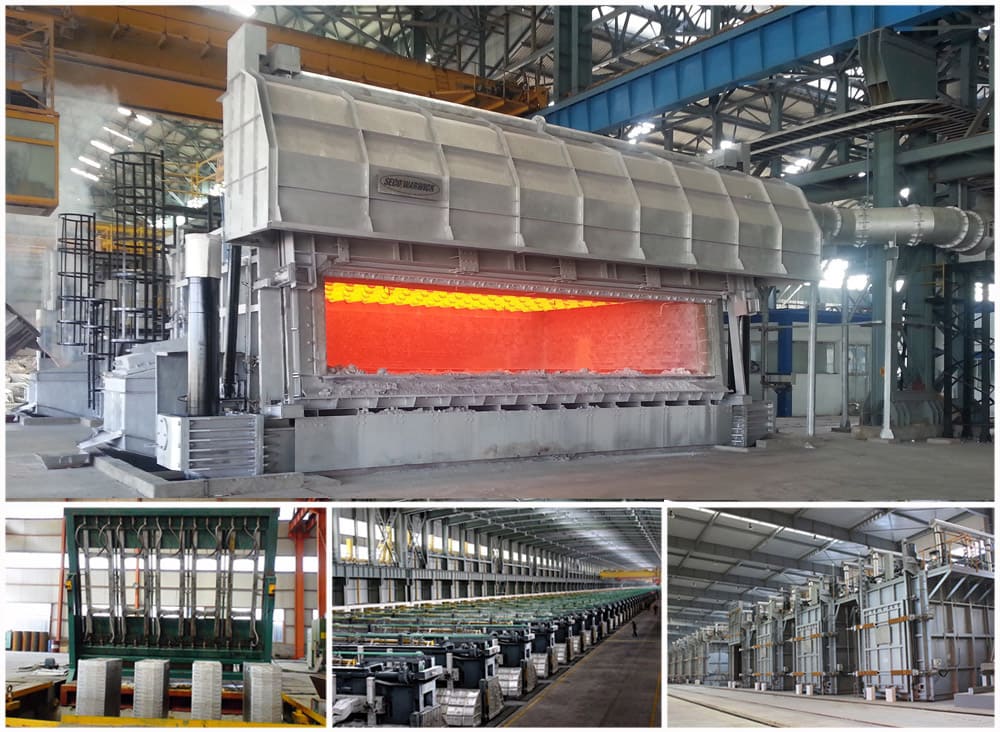
Paggawa 5083 aluminyo sheet begins with vertical direct chill (D at T) casting of 400–600 mm thick ingots. Critical process parameters include:
Grain Refinement: Titanium diboride (TiB₂) inoculation at 0.01–0.05% Ti and 0.005–0.01% B achieves ASTM 2–4 as-cast grain size (180–360 μm), preventing cast grain coarseness that would persist through subsequent thermomechanical processing.
Cooling Control: Water flow rates of 2.0–3.5 m³/min per meter of periphery extract heat at 100–200°C/min, preventing magnesium macrosegregation that would create property variations across final plate thickness.
Hydrogen Management: Degassing reduces hydrogen content to <0.15 ml/100g Al, eliminating porosity that nucleates corrosion and reduces fatigue strength.
mainit na pagulong: Breakdown rolling at 400–500°C reduces 600 mm cast slabs to 6–12 mm intermediate gauge, achieving 95%+ reduction. This stage develops the crystallographic texture (cube component) that persists through cold working.
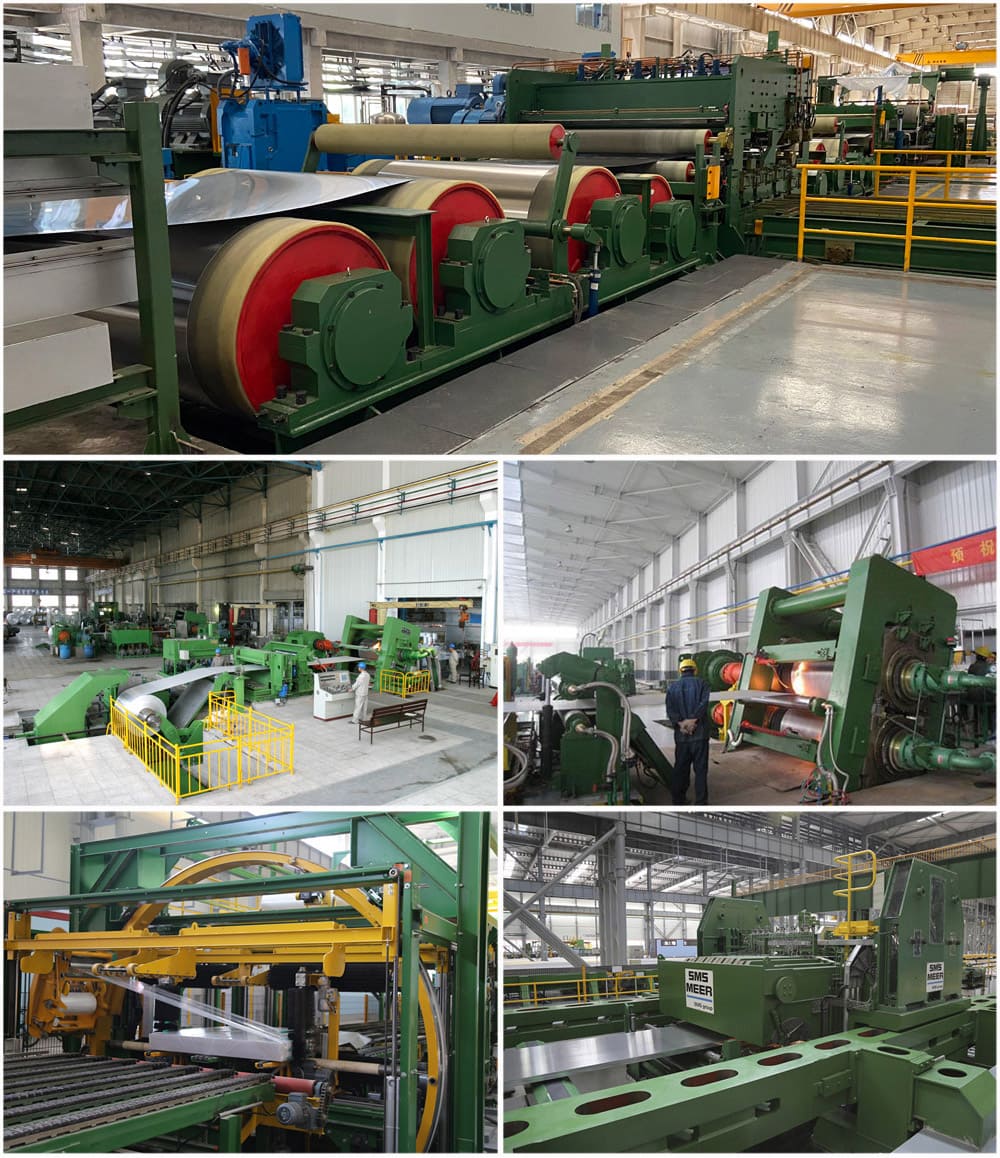
malamig na paggulong: Room temperature reduction of 60–85% to final gauge (1.5–150 mm) introduces work hardening dislocations that elevate strength from 110 MPa (O-temper) toward H116 targets.
Critical Thickness Effects: Plato <12 mm thick achieves uniform properties through-thickness. Thicker sections (>25 mm) exhibit centerline property reductions due to incomplete work penetration; specialized cross-rolling or heavy reduction schedules mitigate this.
The defining manufacturing stage for marine service creates H116 temper through:
Strain Hardening: 15–20% cold reduction from O-temper establishes dislocation density and stored energy.
Stabilization: 343–371°C (650–700°F) for 2–4 hours precipitates β-phase (Al₈Mg₅) at grain boundaries in controlled morphology.
Microstructural Outcome: Discrete, spheroidized β-phase particles 0.5–2.0 μm diameter, spaced 5–20 μm apart, rather than continuous film networks. This distribution eliminates galvanic coupling between grain interiors and boundaries.
Quench Requirement: Rapid air cooling post-stabilization prevents over-aging and β-phase coarsening that would reduce strength and corrosion resistance.
Stretcher Leveling: 0.5–3.0% permanent elongation in tension eliminates residual stresses from rolling, achieving flatness of <10 I-units (ASTM B209) essential for automated hull panel assembly.
Tapos na sa ibabaw: Tapos na ang gilingan (as-rolled, Ra 1.0–2.5 μm) suffices for most structural applications. Shot-blasting (Sa 2.5) prepares surfaces for adhesive bonding in sandwich constructions.
Ultrasonic Inspection: 100% scanning per ASTM B594 detects internal discontinuities (mga inclusions, mga laminations) >2 mm equivalent diameter in plate >15 mm makapal na makapal. Classification society rules mandate this for hull structural applications.

5083 H116 Marine Grade Aluminium Sheet for Ship
The H116 Stabilization Achievement:
Sa 2.66 g/cm³ density, 5083 H116 marine grade aluminium sheet delivers specific strength (UTS/density) of 115–145 MPa·cm³/g, versus 55–70 for mild steel and 90–110 for 6061-T6. Ito 65% weight reduction versus steel enables:
Marine used 5083 Sheet ng Aluminyo
The H116 temper certification eliminates the uncertainty of H321 material, where improper stabilization creates IGC vulnerability. Shipbuilders receive guaranteed performance rather than material-dependent risk.
| Pag-aari | 5083-H116 | 6061-T6 | bakal na bakal |
| Welding processes | MIG, TIG, FSW, SAW | Limitado (HAZ softening) | All conventional |
| Filler compatibility | 5183, 5356, 5556 | 4043, 5356 | Matching consumables |
| Joint efficiency | 70–80% | 50–60% | 85–100% |
| HAZ softening | Katamtaman (30%) | Severe (50%) | None |
5083 welds without preheat (unless <5°C ambient), requires no post-weld heat treatment, and maintains ductility in HAZ that prevents brittle fracture.
The absence of ductile-to-brittle transition enables LNG containment at -162°C, where steel would require expensive nickel alloying or risk brittle fracture.
5083-H116 serves in Mark III and NO96 membrane containment systems for 170,000+ m³ LNG carriers.
Relative magnetic permeability μᵣ = 1.003 (paramagnetic) versus >1000 for steel enables:
| Cost Element | 5083-H116 | bakal na bakal (DH36) | Mga Tala |
| Material cost ($/kg) | 4.5–6.0 | 0.8–1.2 | 4–5× premium |
| Fabrication labor | 0.7× steel | 1.0× | Faster welding, no coating |
| Pagpapanatili (30 mga taon) | Minimal | 15–25% replacement | Steel requires recoating |
| Fuel (30 mga taon) | 0.85× steel | 1.0× | Lightweight hull efficiency |
| Total lifecycle | 0.9–1.1× steel | 1.0× | Parity or advantage for high-speed craft |
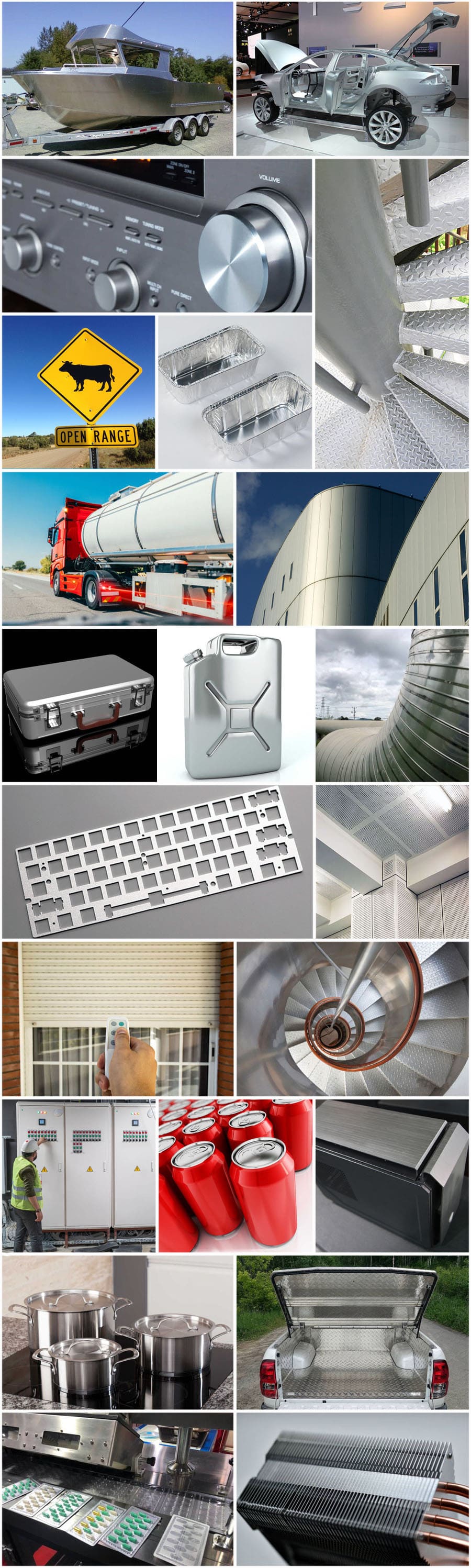
High-Speed Craft: Hulls, mga deck, and superstructures of ferries (35–50 knots), crew transfer vessels for offshore wind farms, and patrol boats. The weight-strength optimization enables planing hull designs impossible with steel construction.
LNG Carriers: Secondary barrier membranes (Mark III system: corrugated 5083-H116 waffle panels), primary barrier supports, and cargo containment system structural elements. Cryogenic toughness mandatory for -162°C service.
Mega-Yachts: Superstructure weight reduction (aluminum above main deck, steel below) lowers center of gravity, improving seakeeping and enabling larger superstructures within stability limits.
Mine Countermeasures Vessels (MCMV): Glass-reinforced plastic (GRP) hulls with 5083-H116 decks and superstructures combining non-magnetic signature with structural integrity.
Littoral Combat Ships: Aluminum trimaran hulls (USS Independence class) exploiting speed and shallow draft; 5083-H116 critical for welded structure fatigue resistance.
Submarine Rescue Vehicles: Pressure hulls to 600m depth; fracture toughness prevents catastrophic implosion from manufacturing defects or impact damage.
Living Quarters Modules: Magaan ang timbang, corrosion-resistant accommodation platforms; fire resistance superior to GRP alternatives.
Helicopter Decks: Friction-enhanced surfaces (alumina grit embedding) providing non-skid for aviation operations; corrosion resistance to aviation fuel and seawater.
Seawater Systems: Piping, heat exchanger tube sheets, and desalination plant components where copper alloys would suffer dealloying.
Research Submersibles: Deep-diving hulls (Alvin, Limiting Factor) utilizing 5083’s yield strength and damage tolerance for manned operations to 10,000+ mga metro.
Arctic Vessels: Ice-class hull plating; cryogenic toughness maintains integrity at -40°C air temperatures and ice impact loading.
Common standards and references that govern material selection, testing and documentation:
Procurement note: buyers should demand Mill Test Certificates (Mga MTC), heat numbers, and certs indicating acceptance to the applicable class rules and temper.
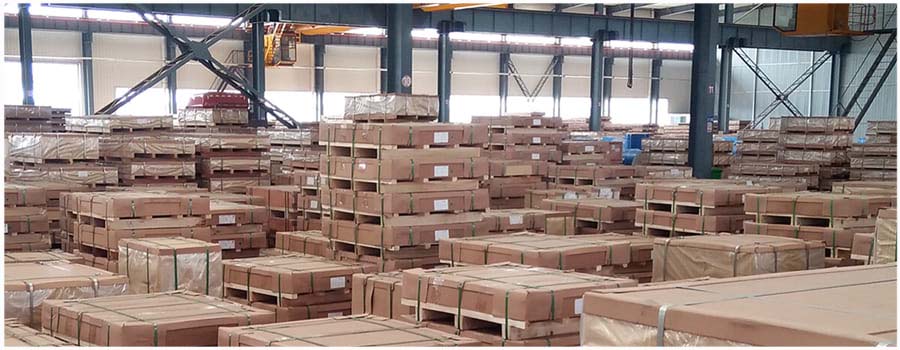
Huawei Aluminium Sheet Warehouse
| Pag-aari / criterion | 5083-H116 | 5086-H116 | 5052-H32 | 5456-H116 | 6061-T6 | Mild steel (hal., A36) |
| Material class | Al Mg (5xxx) | Al Mg (5xxx) | Al Mg (5xxx) | Al Mg (5xxx, higher Mg) | Al Mg-Si (6xxx) | Fe-C |
| Densidad ng katawan (g·cm⁻³) | 2.66 | 2.66 | 2.68 | 2.67 | 2.70 | 7.85 |
| Yield Rp0.2 (MPa) | ≥215 (typ.) | ~215–265 | ~140–160 | ~250–280 | ~275 | ~250 |
| Tensile Rm (MPa) | 305–385 | ~300–350 | ~210–260 | ~340–380 | 310–350 | 400–550 |
| Pagpapahaba, A (%) | ≥10–12 | ≥12 | 8–18 | ≥10–12 | ~8–12 | ~15–25 |
| Weldability (fabrication) | Napakahusay (MIG/TIG/FSW) | Napakahusay | Napakahusay | Good–Excellent | Weldable but loses strength in HAZ; filler recommended | Napakahusay |
| Seawater corrosion resistance | Napakahusay (immersion & splash) | Napakahusay (very close to 5083) | Mabuti na lang (limited immersion use) | Napakahusay; often superior to 5083 | Katamtaman (requires coatings) | Mga Maralita (needs coatings/cathodic protection) |
| SCC (pag-crack ng kaagnasan ng stress) susceptibility | Mababa ang (in H116) | Mababa ang | Low–moderate | Mababa ang | Low–moderate (environment dependent) | Mababa ang (different mechanism) |
| Formability / cold work | Napakaganda (esp. O) | Napakaganda | Napakahusay (napaka ductile) | Mabuti na lang | Fair (6xxx stiff) | Katamtaman (ductile but heavy) |
| Fatigue performance | Mabuti na lang (weld detail sensitive) | Mabuti na lang | Katamtaman | Napakaganda | Mabuti na lang (design dependent) | Napakahusay (higher fatigue strength) |
| Typical marine uses | Hull plating, mga deck, mga tangke, superstructure | Hulls, structural plates, highly similar to 5083 | Mga tangke ng gasolina, formed parts, interiors | Higher-strength hull plates, structural members | Mga Frame, mga angkop na bagay, structures where high static strength needed | Heavy hulls, where weight not critical, offshore structural members |
| Relative material cost | Katamtaman | Katamtaman | Low–Medium | Mas Mataas (premium) | Medium–High | Mababa ang (material cheap, lifecycle cost higher) |
| Recommendation summary | Prime choice for welded hull plating & underwater service | Alternative to 5083 with comparable marine performance | Use where formability and economy matter, not primary immersed hull | Use where higher plate strength is required and H116 processing requested | Use where heat-treatable strength needed and adequate corrosion protection applied | Use if weight is not a constraint and coating/cathodic protection is feasible |
Sourcing genuine, certified 5083-H116 is critical. A leading global supplier like Henan Huawei Aluminyo Co., Ltd (HWALU) ensures this through a multi-layered quality assurance system.
5083 H116 marine grade aluminium sheet represents the culmination of sixty years of metallurgical development specifically targeting saltwater structural applications.
The alloy’s unique combination—305–385 MPa strength, guaranteed IGC immunity through H116 stabilization, cryogenic toughness to -196°C, and weldability without post-weld heat treatment—establishes it as the default material for weight-critical marine construction.
As the marine industry confronts decarbonization imperatives, 5083-H116 enables the lightweight, efficient vessels and offshore structures essential for reduced fuel consumption and extended range.
Classification society certifications from LR, DNV GL, ABS nga ba, and Bureau Veritas provide independent verification that material meets these critical demands.
Manufacturers like Henan Huawei Aluminyo Co., Ltd translate these standards into certified product, supported by comprehensive testing and technical service that ensures structural integrity across decades of saltwater service.
Q1 — What does the H116 temper mean?
A: H116 is a controlled temper applied to 5xxx alloys that ensures specific mechanical and corrosion resistance characteristics after fabrication and welding. Classification societies accept H116 for marine applications because it shows improved resistance to exfoliation and intergranular corrosion.
Q2 — Can 5083-H116 be used for the entire hull?
A: Yes — many high-speed craft and leisure/commercial vessels use 5083 extensively for hull plating, but designers must account for fatigue, joining details and cathodic protection as appropriate.
Q3 — How much weight can a ship save by switching from steel to 5083?
A: Savings vary with design; as a rule of thumb, aluminium structures can weigh roughly one-third of comparable steel structures by volume. Sa pagsasanay, whole-vessel weight savings often range from several tons for small craft to tens or even ~100 t for larger vessels, depending on configuration.
Q4 — What welding method is best for 5083?
A: MIG/GMAW and TIG/GTAW are common and reliable. Friction stir welding (FSW) provides excellent joint properties for plates where applicable. Control heat input and use correct filler alloys to maintain post-weld performance.
Q5 — What documentation should a purchaser demand?
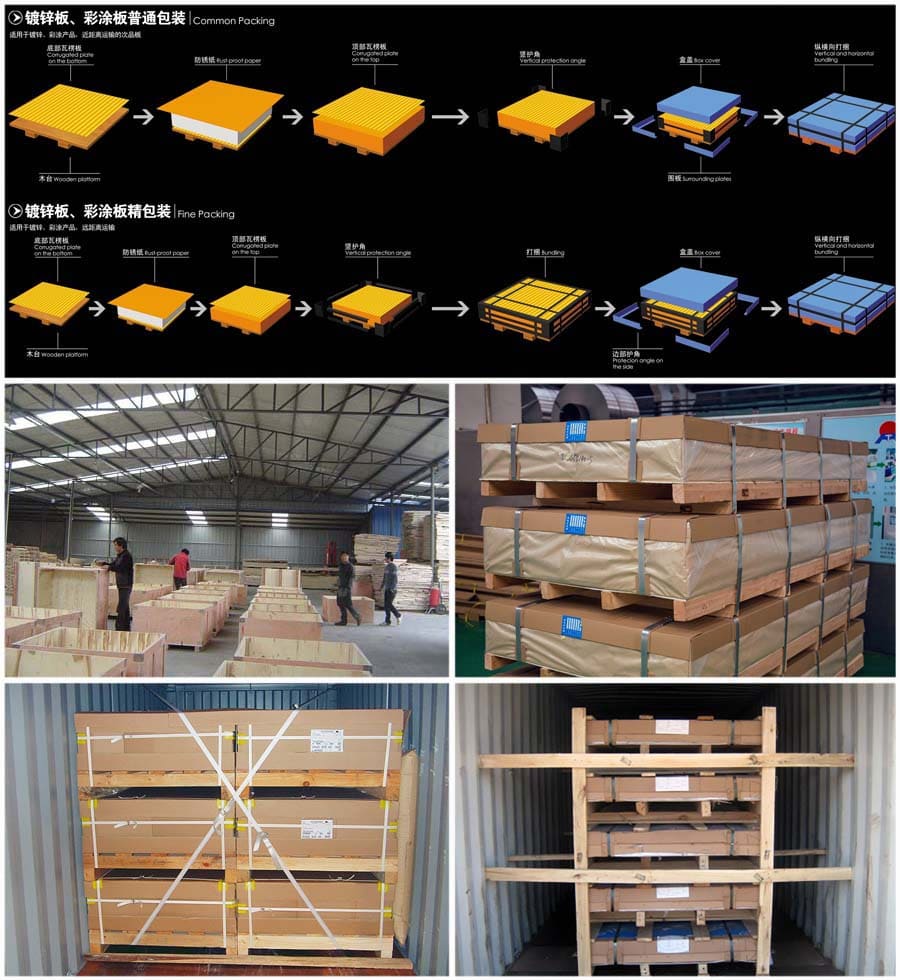
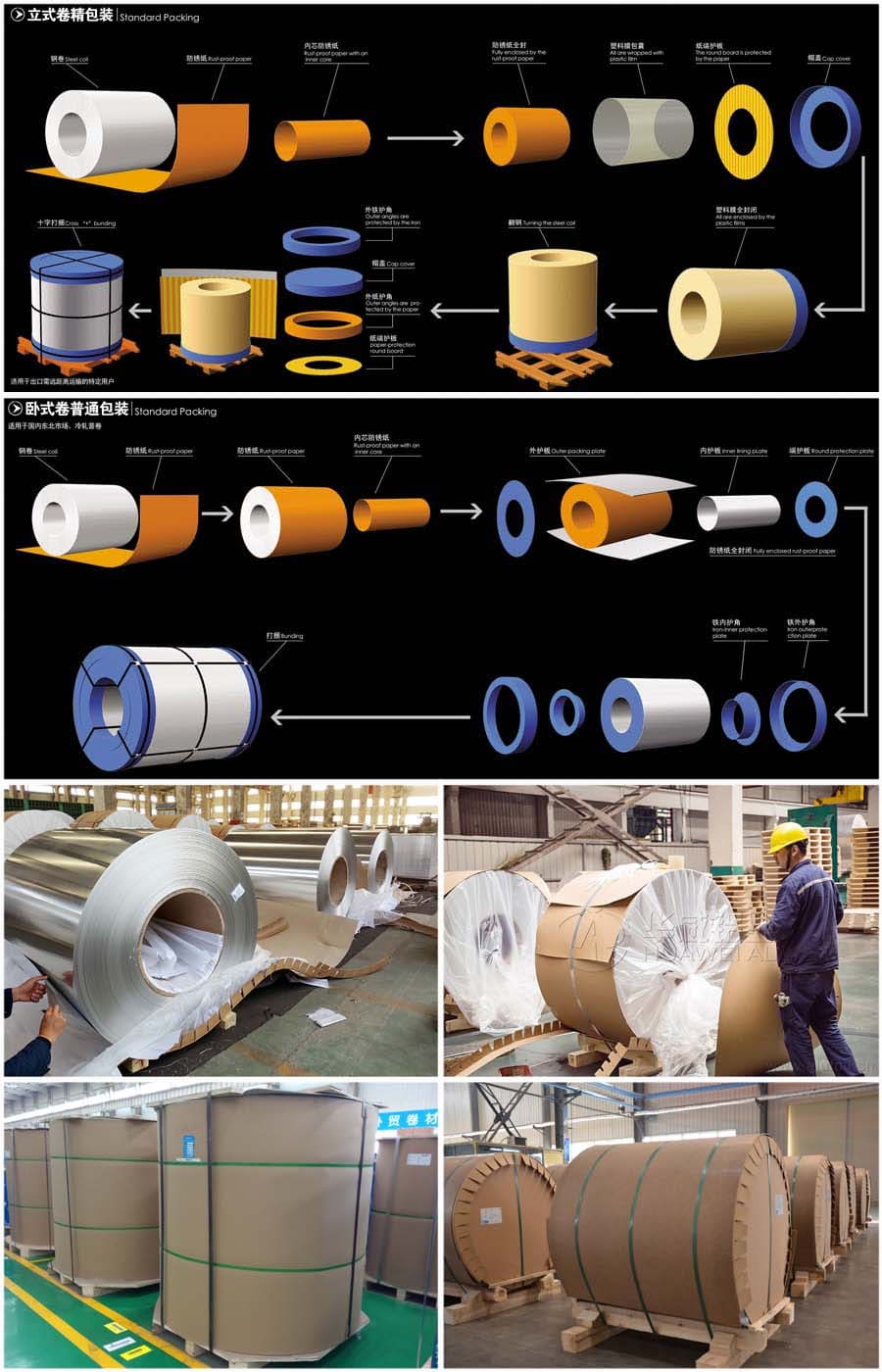
A: Mill Test Certificate (Chemical + mekanikal), heat/coil traceability, classification society approval or acceptance evidence, WPS/PQR for welding, and test data for exfoliation/intergranular corrosion proving H116 acceptance.
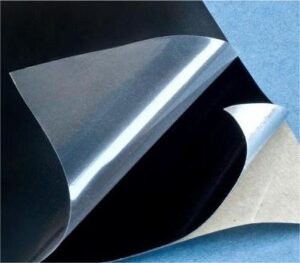
Kaagnasan lumalaban Black Aluminum Foil para sa Pagbebenta, China Aluminum Foil Manufacturer Mababang Presyo Promotion, Kulay Pinahiran Aluminum Foil Anodized Foil Raw Material Supplier

Discover LDPE composite aluminum foil, designed for superior moisture resistance, thermal pagkakabukod, and versatile applications in packaging, konstruksiyon, at marami pang iba.
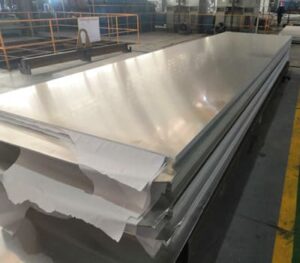
Sa pangkalahatan, aluminyo sheet na mas makapal kaysa sa 6mm (0.25 pulgada) ay itinuturing na makapal.
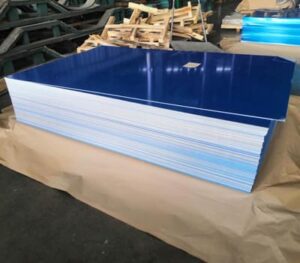
5454 aluminyo sheet ay may malakas na anti kalawang kakayahan at nabibilang sa 5000 serye aluminyo-magnesium haluang metal. 5454 aluminyo sheet ay din ng isang hindi init malunasan haluang metal at ay 20% mas malakas pa sa 5052 aluminyo sheet. Ito ay madalas na ginagamit sa mga pipeline ng mga pasilidad ng dagat, aluminyo tangke kotse katawan at iba pang mga patlang.
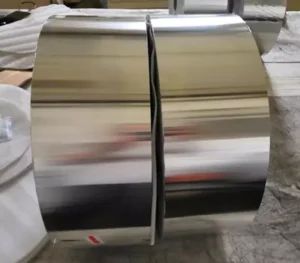
Aluminum Foil For Hair Salon Ang pinaka karaniwang 8011 haluang metal O Temper, dahil sa mahusay na lakas, kakayahang umangkop, at paglaban sa init, Henan Huawei ay nagbibigay sa iyo ng pinakamahusay na kalidad 8011-0 Aluminum foil para sa hair salon.
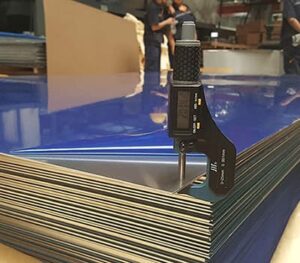
3005 aluminyo plate ay kabilang sa Al-Mn haluang metal. Ang lakas ng 3005 aluminyo plate ay tungkol sa 20% mas mataas pa sa ng 3003 plato ng aluminyo, at mas maganda rin ang resistensya ng corrosion nito.
No.52, Dongming Road, Zhou Zhengzhou, Henan, Tsina
Henan Huawei Aluminyo Co., Ltd, Isa Sa Ang Pinakamalaking Aluminum Supplier Sa China Henan,Kami ay Itinatag Sa 2001, At Mayroon kaming mayaman na karanasan sa pag-import at pag-export at mataas na kalidad na mga produkto ng aluminyo
Mo – Sat, 8SA – 5PM
Linggo: Username or email address *
© Disclaimer © 2023 Henan Huawei Aluminium Co., Ltd

Pinakabagong Mga Komento
We need some t111 aluminium plate. We are looking for quarter inch by 4'x8' sheets
Aluminyo 5754 H111 หนา 8 mm กว้าง x ยาว : 4 x 6 ฟุต
سلام بسیار عالی ،،من از ایران تماس میگیرم فویل طلا ۱۲میکرون عرض ۶۱سانت نیاز داریم حدودا هرماه ۳۵هزار متر
Dear Sales Team, I hope you are doing well. We are looking to source aluminum products from your company and would appreciate receiving your best quotation for the following: Aluminum Sheets Thickness: 2 mm, 3 mm, 4 mm, at 5 mm Please provide your available standard sheet sizes. Kindly quote the price per sheet and the price per metric ton. Aluminum Coils Thickness: 2 mm, 3 mm, 4 mm, at 5 mm Please provide your available coil widths, standard coil weights, and inner diameter specifications. Kindly quote the price per metric ton. For both sheets and coils, please include: Available alloys (e.g. 1050, 3003, 5052) Temper options Mill finish or other available surface finishes Minimum Order Quantity (MOQ) Production lead time Payment terms Please provide your quotation based on: CIF Jebel Ali Port, UAE (including sea freight), or alternatively provide both FOB China and CIF Jebel Ali Port, UAE prices. If available, please also send: Product catalogue Mill Test Certificate (MTC) sample Photos of the products and packaging. We are interested in establishing a long-term business relationship. Our initial purchase volume is expected to be 100+ metric tons, with the potential for larger and recurring orders if your pricing, kalidad, and service meet our requirements. Thank you for your time. We look forward to receiving your quotation and hope to build a successful long-term partnership. Best regards, Eng.Yousef
アルミハニカムパネルについてお聞きしたいのですが L1500×W700×厚みで曲げに対して200kgg耐えられるには厚みはどのくらいでしょうか ※簡単に言いますと約1000mmの側溝に渡して真ん中で200kg耐えられるかという事になります 又、そのような製品があるようでしたらその重量、価格をおしえていただけますか 現在はコンパネ板を使用してますが腐ると折れてしまい人が側溝に落ちてけがをしてます 出来ましたらメールでお返事をいただけますか