High-quality aluminum foil for air conditioner radiators, available in 1100, 1200, 3003, et 3102 Alliages. Épaisseur personnalisée, caractère, et revêtements. Get a quote!
Aluminum foil plays an important role in modern air-conditioning systems, particularly in the manufacture of heat exchanger fins.
These thin aluminum components are installed around or between heat exchanger tubes to increase the surface area exposed to airflow, allowing heat to transfer more efficiently between the refrigerant and surrounding air.
In residential air conditioners, commercial HVAC equipment, refrigeration systems, and automotive cooling applications, aluminum fin stock is widely used because it combines good thermal conductivity, Faible densité, résistance à la corrosion, et excellente formabilité.
Compared with many traditional metal materials, aluminum offers an attractive balance between heat-transfer performance and structural weight.
It can also be rolled into thin, uniform strips and processed into complex fin shapes through high-speed stamping, corrugating, and louver-forming operations.
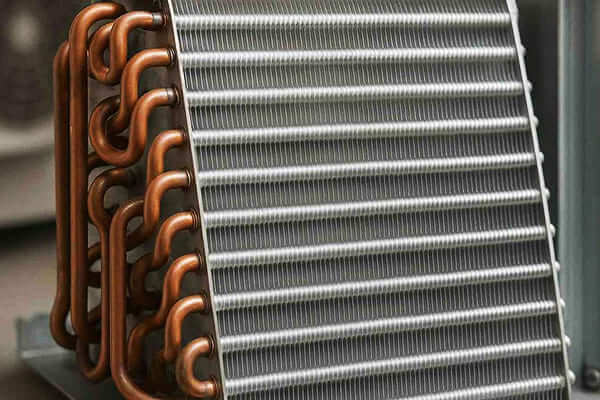
Aluminum Foil for Air Conditioner Radiator
Aluminum foil for air conditioner radiators is generally known as aluminum fin stock.
It is a thin-gauge aluminum strip or coil used to manufacture the fins in air-conditioning radiators and heat exchangers.
Pendant la production, aluminum fin stock passes through specialized fin presses, where it is stamped, ondulé, or formed into specific geometries.
These fins are then assembled with heat exchanger tubes to create a larger heat-transfer surface.
The fins increase the contact area between the heat exchanger and the surrounding air.
This helps improve heat exchange without significantly increasing the overall weight or size of the equipment.
An air conditioner heat exchanger is an assembled structure consisting of several components.
Although aluminum is widely used in these products, different components perform different functions and require different material specifications.
| Composant | Fonction principale | Common Material Forms | Exigences clés |
| Aluminum fin stock | Increases heat-transfer surface area | Thin aluminum strip or coil | Conductivité thermique, Formabilité, résistance à la corrosion |
| Heat exchanger tubes | Carry refrigerant or cooling fluid | Aluminum or copper tubes | Pressure resistance, résistance à la corrosion, joining compatibility |
| Headers and manifolds | Distribute refrigerant or fluid | Aluminum tubes, profilés, or formed components | Force, pressure resistance, brazing compatibility |
| Brazing sheet | Joins heat exchanger components | Aluminum sheet or clad coil | Brasabilité, controlled melting behavior, joint strength |
| Side plates and supports | Provide structural support | Aluminum sheet or formed parts | Force, précision dimensionnelle, résistance à la corrosion |
Aluminum fin stock can be classified according to its surface condition and functional coating.
Bare Aluminum Fin Stock
Bare fin stock has a mill-finished aluminum surface without an additional functional coating.
It is suitable for heat exchangers where the base alloy provides sufficient corrosion resistance and surface performance.
Its advantages include a relatively simple material structure, bonne conductivité thermique, and compatibility with various fin-forming processes.
Feuille d'aluminium hydrophile
Hydrophilic aluminum foil has a surface coating that improves water wettability.
In air conditioner evaporators, moisture condenses on the cold fin surfaces during operation.
A hydrophilic coating helps condensate spread into a thinner water film and drain more easily.
This can reduce water bridging between closely spaced fins and help maintain airflow.
Hydrophobic foil has a surface designed to repel water rather than spread it. Condensate tends to form droplets instead of a continuous water film.
Its suitability depends on the heat exchanger structure, fin spacing, airflow conditions, and drainage design.
Anti-Corrosion Aluminum Fin Stock
Anti-corrosion fin stock uses a protective coating or specially selected alloy to improve resistance to moisture, salt, et autres substances corrosives.
It is particularly relevant for outdoor air-conditioning units and heat exchangers operating in humid or coastal environments.
The choice between bare, hydrophile, hydrophobic, and anti-corrosion fin stock should be based on the actual operating conditions and heat exchanger design rather than coating type alone.
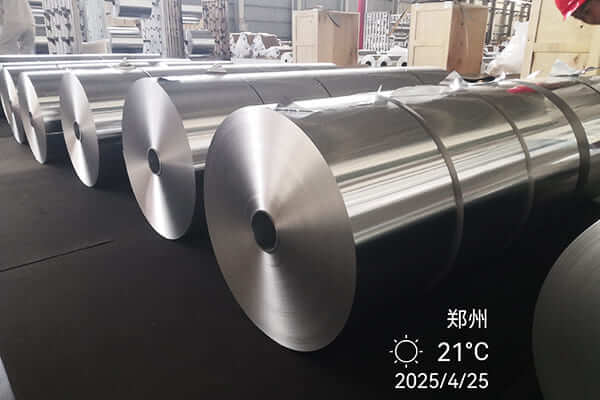
Huawei Aluminum Foil Display
Alloy selection affects the thermal conductivity, force, Formabilité, and corrosion resistance of aluminum fin stock.
Common alloys used in air conditioner heat exchangers include 1100, 1200, 3003, et 3102.
1100 aluminum is a commercially pure aluminum alloy with a minimum aluminum content of 99.00%.
It offers good thermal conductivity, Excellente résistance à la corrosion, and high ductility.
Key characteristics:
Applications typiques: General air conditioner fins, refrigeration heat exchangers, and other heat-transfer components.
1200 aluminum is another commercially pure aluminum alloy. It provides good thermal conductivity, maniabilité, et résistance à la corrosion, making it suitable for selected heat exchanger applications.
Key characteristics:
Applications typiques: HVAC fins, refrigeration components, and general heat-transfer applications.
3003 aluminum is an aluminum-manganese alloy with higher strength than commercially pure 1xxx-series aluminum.
It maintains good formability and corrosion resistance, making it a popular choice for heat exchanger fin materials.
Key characteristics:
Applications typiques: Air conditioner condenser fins, evaporator fins, and refrigeration heat exchangers.
3102 aluminum is an aluminum-manganese alloy commonly used in HVAC and refrigeration heat exchangers.
It offers a good balance of strength, Formabilité, et résistance à la corrosion.
Key characteristics:
Applications typiques: Air conditioner evaporator fins, condenser fins, and refrigeration equipment.
Aluminum foil for air conditioner radiators, also known as aluminum fin stock, is available in different thicknesses, largeurs, Tempère, et finitions de surface.
Specifications can be customized according to fin design, stamping requirements, and heat exchanger production processes.
| Paramètre | Spécifications typiques |
| Nom du produit | Aluminum Fin Stock / Aluminum Foil for Air Conditioner Radiators |
| Alliage | 1100, 1200, 3003, 3102 |
| Caractère | O, H22, H24, H26 |
| Épaisseur | 0.08–0,30mm |
| Épaisseur commune | 0.08, 0.09, 0.10, 0.11, 0.12, 0.15, 0.18, 0.20, 0.25, 0.30 millimètre |
| Largeur | 100–1630 mm |
| Diamètre intérieur de la bobine (ID) | 150, 200, 305, 508 millimètre |
| Diamètre extérieur de la bobine (OD) | Personnalisé |
| Poids de la bobine | Personnalisé |
| État des surfaces | Nu, hydrophile, hydrophobic, anti-corrosion coated |
| Finition de surface | Faire le ménage, lisse, and uniform |
| Type de revêtement | Hydrophile, hydrophobic, époxy, acrylique, or other protective coatings |
| Fin Configuration | Flat, ondulé, or louvered |
| Traitement | Refendage, roulant, estampillage, corrugating, et revêtement |
| Emballage | Emballage d'exportation résistant à l'humidité, wooden pallets, or customized packaging |
| Normes | ASTM B209, DANS 485 série, or agreed technical specifications where applicable |
Aluminum foil for air conditioner radiators, commonly known as aluminum fin stock, must provide good thermal conductivity, Formabilité, résistance à la corrosion, et stabilité dimensionnelle.
These properties help manufacturers produce consistent fins and maintain reliable heat exchanger performance.
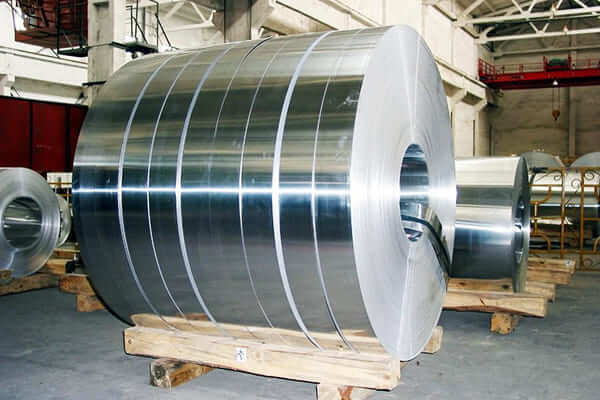
Residential Air Conditioners Aluminum Foil
Aluminum transfers heat efficiently between the refrigerant tubes and surrounding air.
Its high thermal conductivity helps fins distribute heat across their surfaces, supporting effective heat exchange in air conditioner evaporators and condensers.
Fin stock must withstand high-speed stamping, Poinçonnage, pliant, and corrugating without cracking or excessive deformation.
Aluminum alloys such as 1100, 1200, 3003, et 3102 offer different combinations of ductility and strength to meet various fin-forming requirements.
Air conditioner fins are frequently exposed to moisture, condensation, and airborne contaminants.
Aluminum naturally forms a protective oxide layer that helps resist corrosion.
For equipment operating in coastal, humid, or polluted environments, additional anti-corrosion coatings may provide improved surface protection.
Aluminum has a low density compared with many other heat exchanger metals.
Using aluminum fin stock helps reduce the weight of heat exchanger assemblies while maintaining a large heat-transfer surface area.
This is particularly useful in residential air conditioners, commercial HVAC systems, and automotive cooling equipment.
Fin stock needs sufficient strength to maintain its shape during stamping, assembly, and operation.
The appropriate alloy and temper help prevent fin deformation, flambage, and damage during production and handling.
Un nettoyage, lisse, and consistent surface supports stable stamping and coating performance.
Uniform thickness and reliable surface quality also help manufacturers maintain consistent fin dimensions and reduce production defects.
Surface treatments improve the functional performance of aluminum fin stock, particularly its resistance to corrosion, condensate behavior, et durabilité de la surface.
The appropriate treatment depends on the heat exchanger design and operating environment.
Bare aluminum fin stock has no additional functional coating.
Its natural oxide layer provides basic corrosion protection, while its thermal conductivity and formability make it suitable for general HVAC and refrigeration applications.
Principales caractéristiques:
Hydrophilic coating makes the aluminum surface easier for water to spread across.
Instead of forming large droplets, condensation forms a thin water film that can drain more easily from the fin surface.
Main benefits:
Hydrophilic aluminum foil is widely used for air conditioner evaporator fins, where condensation occurs during cooling operation.
Hydrophobic coating creates a water-repellent surface that encourages condensation to form droplets rather than spread into a continuous film.
It may be selected for heat exchanger designs that benefit from water repellency and specific drainage behavior.
Its actual performance depends on coating properties, fin spacing, airflow, et conditions de fonctionnement.
Anti-corrosion coatings provide an additional protective barrier against moisture, salt, et autres substances corrosives.
They are particularly useful for air conditioning equipment installed in coastal areas, industrial environments, and locations with high humidity.
Common coating systems include epoxy, acrylique, and other specialized protective formulations.
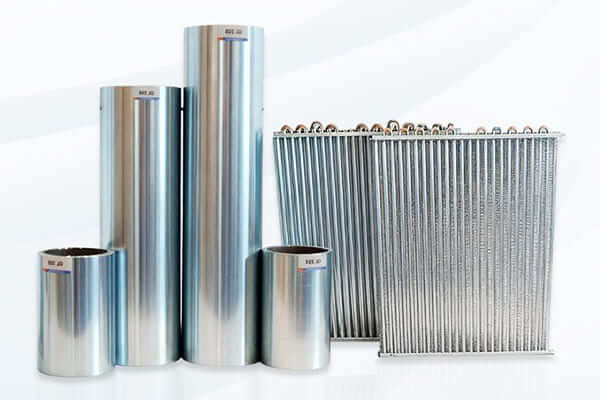
Feuille d'aluminium hydrophile
The production of aluminum fin stock involves several stages, from aluminum casting and rolling to final slitting and inspection.
Each stage affects the material’s thickness accuracy, propriétés mécaniques, Qualité de surface, and suitability for fin forming.
Aluminum ingots and alloying elements are melted according to the required alloy composition, tel que 1100, 1200, 3003, ou 3102.
The molten aluminum is refined and filtered to reduce impurities and inclusions before casting.
The molten aluminum is cast into slabs or other suitable forms.
After homogenization when required, the material undergoes hot rolling to reduce its thickness and prepare it for subsequent cold rolling.
Cold rolling gradually reduces the aluminum material to the required fin-stock thickness.
This process also helps control thickness uniformity, état de surface, et propriétés mécaniques.
Annealing adjusts the material’s hardness, force, et ductilité.
Depending on the alloy and customer requirements, the fin stock can be supplied in O, H22, H24, H26, or other suitable tempers.
The correct temper is important because the material must withstand high-speed stamping and fin forming without cracking or excessive deformation.
For bare fin stock, the material undergoes appropriate cleaning and surface inspection. For coated products, additional processes may include:
These processes help achieve consistent coating adhesion and surface performance.
The aluminum coil is slit to the required width and rewound into smaller coils. Slitting quality is important for smooth feeding into fin stamping equipment.
Manufacturers also control coil tension, winding tightness, état des bords, and coil alignment to reduce problems during downstream processing.
Aluminum foil for air conditioner radiators is mainly used to manufacture fins in heat exchangers.
These fins increase the surface area available for heat transfer between the refrigerant or cooling medium inside the tubes and the surrounding air.
Different aluminum alloys, Tempère, Épaisseurs, and coatings are selected according to equipment design and operating conditions.
Residential split air conditioners and window units use aluminum fin stock in both evaporators and condensers.
Hydrophilic coated aluminum foil is often selected for evaporator fins to promote condensate drainage.
Commercial HVAC equipment uses aluminum fins in larger heat exchanger assemblies, including air handling units, rooftop air conditioners, and central cooling systems.
These applications require consistent fin dimensions, reliable mechanical properties, and suitable corrosion protection to support long-term operation.
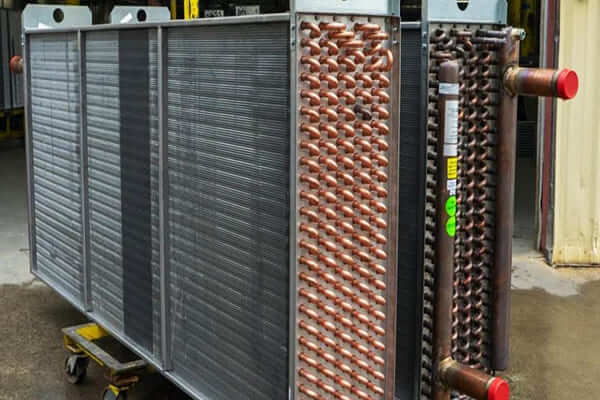
HVAC Systems Used Aluminum Foil
Aluminum fin stock is used in refrigeration evaporators, condensers, display cabinets, Congélateurs, and cold storage equipment.
Its lightweight structure, Conductivité thermique, and formability make it suitable for producing compact finned heat exchangers.
Coating requirements depend on humidity, condensation, cleaning conditions, and the operating environment.
Automotive air conditioning systems use aluminum fins in condensers and evaporators to support efficient heat exchange within compact assemblies.
Material selection focuses on formability, résistance à la corrosion, cohérence dimensionnelle, and compatibility with the heat exchanger’s joining and manufacturing processes.
Heat pumps and industrial cooling equipment also use aluminum fin stock in their heat exchanger assemblies.
Selon la demande, manufacturers may require higher corrosion resistance, revêtements spécialisés, or specific mechanical properties to withstand outdoor exposure and demanding operating conditions.
| Comparaison | Aluminum Fin Stock | Cuivre | Aluminum Brazing Sheet |
| Fonction principale | Increases heat-transfer surface area | Used in heat exchanger tubes, Bobines, and fins | Used to manufacture components joined by brazing |
| Conductivité thermique | Bien | Plus élevé que l'aluminium | Similar to its aluminum core alloy |
| Densité | Bas (environ. 2.70 g/cm³) | Haut (environ. 8.96 g/cm³) | Bas (environ. 2.70 g/cm³) |
| Poids | Léger | Relatively heavy | Léger |
| Résistance à la corrosion | Bien, depending on alloy and surface treatment | Good in many environments, but susceptible to certain corrosion conditions | Depends on core alloy, Revêtement, et environnement opérationnel |
| Formabilité | Excellent for stamping, corrugating, and louvering | Bien, depending on material form and processing | Suitable for forming components before brazing |
| Coût du matériel | Generally economical | Généralement plus élevé | Depends on alloy and cladding structure |
| Processus de fabrication | Roulement, Refendage, estampillage, and fin forming | Dessin, roulant, pliant, et rejoindre | Roulement, formage, and brazing |
| Applications typiques | AC evaporator fins, condenser fins, and refrigeration heat exchangers | Heat exchanger tubes, Bobines, and selected fin structures | Heat exchanger tubes, headers, and other brazed components |
| Avantage clé | Léger, rentable, and easy to form into fins | Conductivité thermique élevée | Designed for reliable brazed joints |
| Main Consideration | Alliage, caractère, enrobage, and fin geometry must match application requirements | Higher density and material cost | Brazing compatibility and cladding quality must be controlled |
Choosing a reliable aluminum supplier is important for maintaining consistent material quality, stable production, and dependable delivery.
Buyers should evaluate not only alloy and dimensional specifications but also manufacturing capabilities, contrôle de qualité, personnalisation, et support technique.
Henan Huawei Aluminium Co., Ltée., established in 2001, is a Chinese manufacturer specializing in aluminum rolled products.
Its product range includes aluminum sheets, Plaques, Bobines, déjoue, bandes, and circles.
Avec plus de 20 years of industry experience and exports to 72 pays, Huawei Aluminum serves customers across different industrial sectors.
The company focuses on product quality, customized specifications, and international customer service.
For air conditioner radiator and heat exchanger applications, material selection should be based on the customer’s production requirements.
Huawei Aluminum can discuss customized aluminum material specifications, y compris:
For fin-stock applications, buyers should confirm the required alloy, caractère, tolérance d'épaisseur, condition de surface, and coating requirements before ordering.
If you are sourcing aluminum fin stock or other aluminum materials for air conditioning heat exchangers, contact Huawei Aluminum to discuss your requirements and confirm product availability.
Aluminum foil for air conditioner radiators, commonly known as aluminum fin stock, plays an important role in heat exchanger performance.
Sa conductivité thermique, propriétés légères, résistance à la corrosion, and formability make it suitable for manufacturing flat, ondulé, and louvered fins.
Common alloy options include 1100, 1200, 3003, et 3102. The right choice depends on fin design, stamping requirements, environnement de fonctionnement, and joining process.
Épaisseur, caractère, condition de surface, and coating performance should also be considered when selecting fin stock.
For reliable production, buyers should work with an experienced aluminum supplier that can provide consistent material quality, customized specifications, and appropriate technical support.
1. What is aluminum foil for air conditioner radiators?
It is thin aluminum strip or coil, also known as aluminum fin stock, used to manufacture heat exchanger fins. These fins increase the heat-transfer surface area.
2. Which aluminum alloys are commonly used for air conditioner fins?
Les alliages courants comprennent 1100, 1200, 3003, et 3102. Selection depends on strength, Conductivité thermique, Formabilité, and corrosion resistance requirements.
3. What is the typical thickness of aluminum fin stock?
The common thickness range is approximately 0.08–0.30 mm, depending on fin design and stamping requirements.
4. What is the difference between bare and hydrophilic aluminum foil?
Bare aluminum has no functional coating, while hydrophilic aluminum has a special surface coating that helps condensate spread and drain more easily.
5. What tempers are available for air conditioner aluminum fin stock?
Les tempéraments communs incluent o, H22, H24, and H26. Each provides a different balance of strength and formability.
6. Is aluminum better than copper for air conditioner radiators?
Aluminum is lighter and generally more economical, while copper offers higher thermal conductivity. The best material depends on heat exchanger design and performance requirements.
7. Can aluminum fin stock be customized?
Oui. Alliage, caractère, épaisseur, largeur, dimensions de la bobine, and surface treatment can be specified according to customer requirements.
8. What should buyers consider when purchasing aluminum fin stock?
Key factors include alloy, caractère, tolérance d'épaisseur, propriétés mécaniques, Qualité de surface, performances du revêtement, and compatibility with the fin-forming process.
9. How can I get a quotation for aluminum foil for air conditioner radiators?
Fournir l'alliage requis, caractère, épaisseur, largeur, traitement de surface, dimensions de la bobine, and order quantity to Huawei Aluminum for a customized quotation.
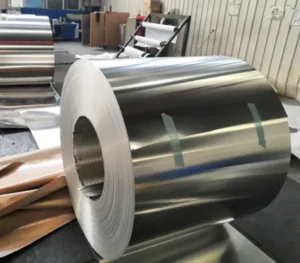
Huawei Aluminium est votre partenaire fiable pour 1070 Produits en bobine d'aluminium. Avec notre engagement envers la qualité, personnalisation, et des prix compétitifs, notre objectif est de répondre et de dépasser vos attentes.
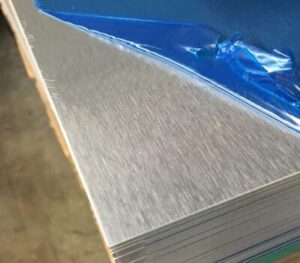
3003 La tôle d’aluminium est un alliage avec une très bonne résistance à la corrosion et une résistance modérée, La raison pour laquelle ce métal est largement utilisé est parce qu’il est abordable et solide.
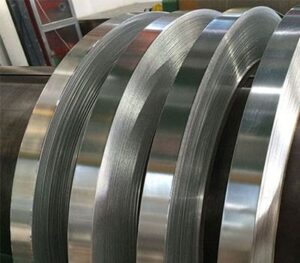
La 3003 La bande d’aluminium est faite de 3003 alliage d’aluminium. La 3 L’alliage d’aluminium de série est également appelé alliage aluminium-manganèse.
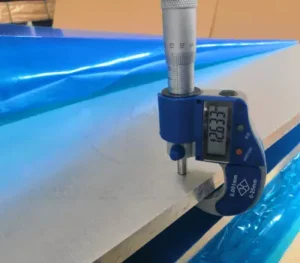
3004 La feuille d’aluminium est un alliage d’aluminium de force moyenne avec du manganèse et du magnésium comme principaux éléments d’alliage. Sa force est supérieure à 3003 Tôle d’aluminium, mais la ductilité est plus faible.
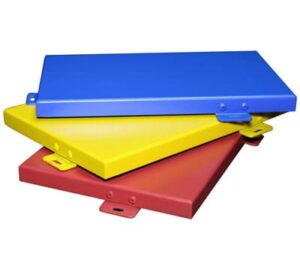
La tôle d'aluminium enduite de poudre fait référence à la tôle d'aluminium traitée par un procédé de pulvérisation de poudre;
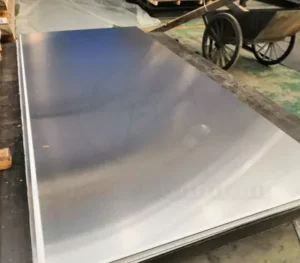
Pareil que 1050 Tôle d’aluminium, 1060 la tôle d'aluminium appartient également à 1 feuille d'aluminium pur de série,Couramment utilisé dans la connexion souple de la batterie au lithium, barre de bus, panneau de signalisation, pile de chargement, joint en aluminium, décoration de mur extérieur de bâtiment de panneau d'affichage,et ainsi de suite.
N°52, Route de Dongming, Zhengzhou, Henan, Chine
Henan Huawei Aluminium Co., Ltée, L’un des plus grands fournisseurs d’aluminium en Chine Henan,Nous sommes établis en 2001, et nous avons une riche expérience dans l’importation et l’exportation et les produits en aluminium de haute qualité
Lun – Sam, 8AM – 17h
Dimanche: Fermé
© Copyright © 2023 Henan Huawei Aluminium Co., Ltée

Derniers Commentaires
Cher Monsieur, Please offer your best FOB Prices specs are as under ALUMINIUM STRIP (AL=99.50% MIN) TAILLE:450 X32 X6MM. LE TIENS 570 FR-AW 1050 UN, QUANTITE=3400KG
Bonjour, Seriez-vous si aimable d'offrir l'article comme suit: Bobine 0,6х1250 (1000)mm EN AW-3105 5tons
Bonjour, Pouvez-vous me proposer des plaques en aluminium ?? Agir J’ai besoin: 110mm x 1700mm x 1700mm 5083 N° H111 - 21 pcs Next year planed is 177 Pc
Excellent article. Je fus ravi, j'ai trouvé cet article. Beaucoup de gens semblent, qu'ils ont une connaissance précise à ce sujet, mais souvent ce n'est pas le cas. D'où ma bonne surprise. Je suis impressionné. Je recommanderai certainement cet endroit et reviendrai plus souvent, voir de nouvelles choses.
exigence de bande d'aluminium