1050 Aluminiumsirkel for kjøkkenindustrien er en av de mest brukte aluminiumsråvarene for produksjon av kokekar og kjøkkenutstyr på grunn av sin utmerkede kombinasjon av høy aluminiumsrenhet, overlegen varmeledningsevne, enestående dyptegningsytelse, korrosjonsbestandighet, og kostnadseffektivitet.
Som en typisk 1000-serie ren aluminiumslegering, 1050 aluminium inneholder minst 99.5% aluminium, gir den utmerket duktilitet og formingsevne.
Disse egenskapene gjør den spesielt egnet for produksjon av produkter som krever omfattende formingsprosesser.
Sammenlignet med mange legerte aluminiumskvaliteter, 1050 aluminiumssirkel gir bedre varmeledningsevne og lettere formingsytelse.
Selv om dens mekaniske styrke er lavere enn varmebehandlebare legeringer som f.eks 6061 eller forsterkende legeringer som f.eks 5052, sine fordeler i dyptegning, overflatekvalitet, og behandlingseffektivitet gjør den svært verdifull for kjøkkenapplikasjoner.

1050 Aluminiumsirkel for kjøkkenindustrien
1050 Aluminiumsirkel for kjøkkenindustrien er et sirkulært aluminiumsemne produsert av AA 1050 aluminiumslegeringsplate eller spole gjennom presisjonsskjæring, stansing, eller blanking-prosesser.
Den fungerer som en nøkkelråvare for produksjon av ulike kjøkkenprodukter, spesielt kokekar som krever utmerket formingsytelse, effektiv varmeoverføring, og pålitelig korrosjonsbestandighet.
I motsetning til vanlige rektangulære aluminiumsplater, aluminiumsirkler er ferdigkuttet til runde former som matcher geometrien til mange kjøkkenprodukter.
Denne utformingen reduserer materialavfall betydelig under stempling og dyptrekkingsprosesser, gjør dem til en kostnadseffektiv løsning for produksjon av store mengder kokekar.
1050 aluminium tilhører 1000 serie kommersielt ren aluminium familie.
I henhold til internasjonale standarder for aluminiumslegeringer, AA1050 inneholder et minimum aluminiuminnhold på 99.5%, med bare små mengder legeringselementer som jern og silisium.
På grunn av sin høye renhet, 1050 aluminium har utmerkede fysiske egenskaper, spesielt i applikasjoner hvor formbarhet og termisk ytelse er viktigere enn maksimal styrke.
Grunnleggende spesifikasjoner for 1050 Aluminiumssirkel
| Punkt | Beskrivelse |
| Legering | AA1050 |
| Aluminium serien | 1000 Serien rent aluminium |
| Innhold av aluminium | ≥99,5 % |
| Tetthet | Omtrent 2.70 g/cm³ |
| Smeltepunkt | Omtrent 650°C |
| Termisk ledningsevne | Omtrent 220–230 W/m·K |
| Vanlige lynne | O, H12, H14, H18 |
| Produktskjema | Sirkel / plate / Rund Blank |
| Produksjonsprosess | Stansing, blanking, stempling |
| Hovedapplikasjon | Kokekar og kjøkkenprodukter |
Kombinasjonen av høy renhet og utmerket duktilitet tillater 1050 aluminium sirkler å gjennomgå betydelig deformasjon uten å sprekke, som er avgjørende for dyptrukne kjøkkenprodukter.
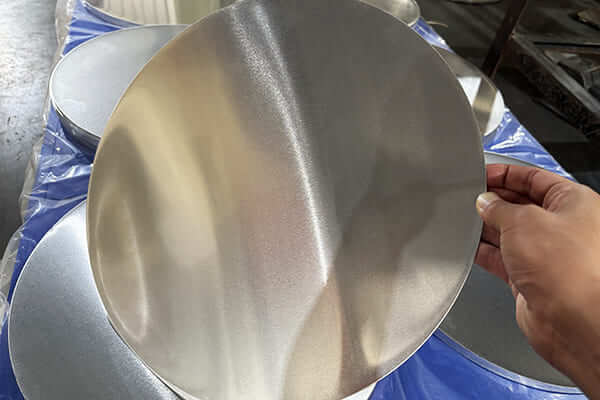
Huawei 1050 Sirkelskjerm i aluminium
Å velge riktig råmateriale er avgjørende for produsenter av kjøkkenprodukter fordi kokekar og kjøkkenutstyr må oppfylle flere krav samtidig, inkludert effektiv varmeoverføring, utmerket formingsytelse, korrosjonsbestandighet, matkontaktsikkerhet, lett design, og kostnadskontroll.
Blant ulike aluminiumslegeringer, 1050 Aluminiumsirkel for kjøkkenindustrien har blitt et av de mest valgte materialene fordi det gir en ideell balanse mellom produksjonsytelse og økonomisk effektivitet.
Skjønt 1050 aluminium har ikke den høyeste mekaniske styrken sammenlignet med legeringer som f.eks 5052 eller 6061, sine fordeler i termisk ledningsevne, duktilitet, og dyptegningsytelse gjør den spesielt egnet for produksjon av kokekar.
En av de viktigste grunnene til at produsenter velger 1050 aluminiumsirkler er deres utmerkede evne til å overføre varme.
1050 aluminium har en varmeledningsevne på ca:
220–230 W/m·K
Denne verdien er betydelig høyere enn mange vanlige kokekarmaterialer.
| Materiale | Termisk ledningsevne (Ca.) | Relativ varmeoverføringsytelse |
| 1050 Aluminium | 220–230 W/m·K | Glimrende |
| 3003 Aluminium | 160–190 W/m·K | Veldig bra |
| Kopper | 380–400 W/m·K | Glimrende |
| Rustfritt stål 304 | 14–16 W/m·K | Lav |
| Støpejern | 50–80 W/m·K | Moderat |
Kjøkkenprodukter krever ofte komplekse formingsoperasjoner. A flat aluminum blank must transform into a three-dimensional shape without cracking or surface defects.
Typical forming processes include:
1050 aluminum circles perform exceptionally well in these processes because of their high purity and excellent ductility.
Typisk forlengelse:
20–40%
This means the material can undergo significant deformation before failure.
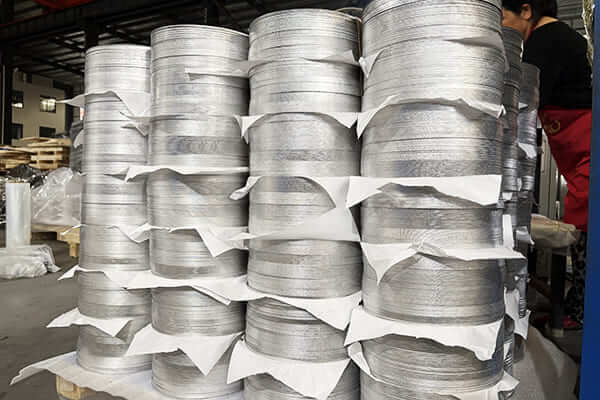
Produksjon av 1050 Aluminiumsirkel for kjøkkenindustrien
Kitchen products are frequently exposed to:
1050 aluminum provides reliable corrosion resistance because it naturally forms a dense aluminum oxide film on the surface.
This protective layer helps:
Compared with many steel materials, 1050 aluminum does not require additional corrosion protection for general kitchen applications.
For modern kitchen products, appearance quality is increasingly important.
1050 aluminiumsirkler gir utmerkede overflateegenskaper på grunn av deres høye aluminiumrenhet.
Viktige fordeler inkluderer:
De kan behandles gjennom:
| Overflatebehandling | Hensikt |
| Polering | Forbedre lysstyrke og utseende |
| Anodisering | Forbedre korrosjonsbestandigheten og overflatehardheten |
| Non-stick belegg | Forbedre matlagingsytelsen |
| Maleri | Gir dekorative effekter |
Dette gjør 1050 aluminiumsirkler egnet for både funksjonelle og premium kjøkkenprodukter.
Tettheten av aluminium er ca:
2.70 g/cm³
som er omtrent en tredjedel av stål.
| Materiale | Tetthet (g/cm³) |
| 1050 Aluminium | 2.70 |
| Rustfritt stål | 7.9–8,0 |
| Karbonstål | 7.85 |
Bruker 1050 aluminiumsirkler lar kokekarprodusenter produsere:
Samtidig, lett design bidrar til å redusere materialforbruk og støtter bærekraftig produksjon.
For masseproduserte kjøkkenprodukter, materialkostnader og produksjonseffektivitet er avgjørende.
1050 aluminum provides economic advantages because:
Compared with higher-strength aluminum alloys such as 5052 eller 6061, 1050 aluminum is more economical for applications where extreme strength is unnecessary.
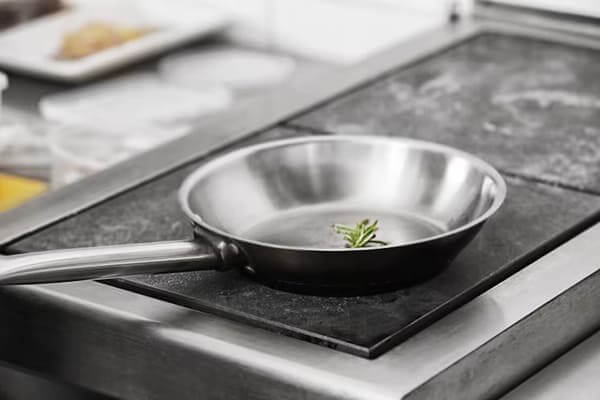
1050 Aluminum Circle for Cooking Pot
1050 aluminum belongs to the commercially pure aluminum family. Its excellent forming characteristics come from its extremely high aluminum content.
| Element | Komposisjon (%) |
| Aluminium (Al) | ≥99,50 |
| Silisium (Og) | ≤0,25 |
| Stryke (Fe) | ≤0,40 |
| Kopper (Cu) | ≤0,05 |
| Mangan (Mn) | ≤0,05 |
| Magnesium (Mg) | ≤0,05 |
| Sink (Zn) | ≤0,05 |
| Titanium (Av) | ≤0,03 |
| Andre elementer | ≤0,03 |
Mechanical properties depend strongly on temper conditions.
I motsetning til varmebehandlebare legeringer, 1050 aluminum gains strength mainly through cold working.
| Eiendom | Typisk verdi |
| Tetthet | 2.70 g/cm³ |
| Strekkstyrke | 75–145 MPa |
| Yield Styrke | 20–120 MPa |
| Forlengelse | 20–40% |
| Elastisk modul | 69 GPa |
| Termisk ledningsevne | 220–230 W/m·K |
The relatively high elongation makes 1050 aluminum especially suitable for deep drawing.
The O temper represents fully annealed aluminum.
Kjennetegn:
Søknader:
Kjennetegn:
Søknader:
Kjennetegn:
Søknader:
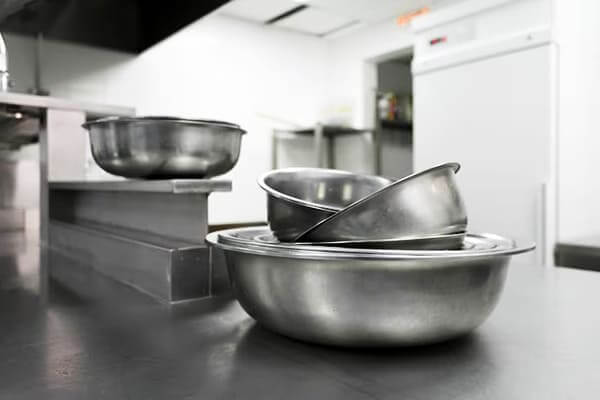
1050 Aluminiumsirkel for matbeholder
Å produsere høykvalitets aluminiumsirkler krever streng prosesskontroll.
Prosessen begynner med:
Produsenter kontrollerer nøye urenhetsnivåene for å opprettholde 1050 legeringskrav.
Varmvalsing reduserer platetykkelsen og forbedrer:
Kaldrulling gir:
Gløding gjenoppretter duktiliteten ved å redusere indre stress.
Fordeler:
Aluminiumsplater eller spoler bearbeides til sirkler ved hjelp av:
Kvalitetsparametere inkluderer:
Spesifikasjonene til 1050 Aluminiumsirkel for kjøkkenindustrien bestemmes hovedsakelig av kravene til det ferdige kjøkkenproduktet, inkludert formingsdybde, mekanisk styrke, varmeoverføringsytelse, og produksjonsprosessen.
For bruk på kokekar, produsenter velger vanligvis forskjellige diametre, tykkelser, temperament, og overflateforhold i henhold til produktdesignet.
| Punkt | Typisk spesifikasjon | Beskrivelse |
| Legering | 1050 Aluminium | Høyrent aluminiumslegering med ≥99,5 % Al-innhold |
| Temperament | O, H12, H14, H18 | O temperament er mest vanlig for dyptrekkende kokekar |
| Tykkelse | 0.5–4,0 mm | Valgt i henhold til produktstyrke og formingskrav |
| Diameter | 100–800 mm | Tilpassede størrelser tilgjengelig i henhold til kokekarets dimensjoner |
| Tetthet | 2.70 g/cm³ | Brukes til vektberegning og materialberegning |
| Overflatefinish | Møllefinish, lys finish, polert finish | Egnet for belegg, anodisering, og dekorativ bearbeiding |
| Kanttilstand | Glatt kant, gratfri | Forhindrer sprekker under stempling og forbedrer sikkerheten |
| Emballasje | Trekasse, pall, eksportpakke | Beskytter overflatekvaliteten under transport |
| Kjøkkenapplikasjon | Anbefalt tykkelsesområde | Vanlig temperament | Nøkkelkrav |
| Stekepanne | 0.8–3,0 mm | 1050-O / H12 | Utmerket dyptrekking og varmefordeling |
| Kokegryte | 1.0–3,5 mm | 1050-O | God formingsytelse og strukturell stabilitet |
| Trykkkoker | 1.5–4,0 mm | 1050-O / H12 | Høyere tykkelse for sikkerhet og holdbarhet |
| Stekebrett | 0.6–2,0 mm | H12 / H14 | Lett og god overflatekvalitet |
| Matbeholder | 0.5–2,0 mm | O / H12 | Enkel forming og korrosjonsbestandighet |
| Kjøkkenutstyr | 0.8–2,5 mm | O / H14 | Godt utseende og behandlingsytelse |
| Produkttype | Typisk diameter | Applikasjonseksempel |
| Lite kjøkkenutstyr | 100–250 mm | Små beholdere, boller, lokk |
| Middels kokekar | 250–500 mm | Stekepanner, kasseroller |
| Stort kokekar | 500–800 mm | Store potter, storkjøkkenutstyr |
| Sluttprodukt | Anbefalt 1050 Spesifikasjon av aluminiumsirkel |
| Husholdningsstekepanne | 1050-O, 1.0–2,5 mm tykkelse, 200–400 mm diameter |
| Dyp kokekar | 1050-O, 1.5–3,5 mm tykkelse, 300–600 mm diameter |
| Trykkkokerhus | 1050-O, 2.0–4,0 mm tykkelse, 300–500 mm diameter |
| Stekebrett i aluminium | 1050-H12/H14, 0.8–1,5 mm tykkelse |
| Matbeholder | 1050-O, 0.5–1,5 mm tykkelse |
Når du velger aluminiumsirkler for kjøkkenapplikasjoner, produsenter sammenligner vanligvis 1050 aluminium med andre vanlig brukte legeringer som f.eks 3003, 5052, og 6061.
Hver legering har forskjellige fordeler når det gjelder styrke, termisk ledningsevne, formbarhet, korrosjonsbestandighet, og kostnad.
For kokekar og kjøkkenprodukter, 1050 Aluminiumsirkel for kjøkkenindustrien er generelt foretrukket når det er utmerket dyptrekkingsytelse, varmeoverføringseffektivitet, og kostnadskontroll er hovedkravene.
| Eiendom | 1050 Aluminiumssirkel | 3003 Aluminiumssirkel | 5052 Aluminiumssirkel | 6061 Aluminiumssirkel |
| Alloy-serien | 1000 Serie (Rent aluminium) | 3000 Serie (Al-Mn legering) | 5000 Serie (Al-Mg legering) | 6000 Serie (Al-Mg-Si legering) |
| Hovedlegeringselementer | Al ≥99,5 % | Mn | Mg | Mg + Og |
| Tetthet (g/cm³) | 2.70 | 2.73 | 2.68 | 2.70 |
| Strekkstyrke (MPa) | 75–145 | 120–160 | 210–260 | 260–310 |
| Termisk ledningsevne (W/m·K) | 220–230 | 160–190 | 130–160 | 150–170 |
| Formbarhet | Glimrende | Glimrende | God | Moderat |
| Deep Drawing Performance | Glimrende | Veldig bra | God | Begrenset |
| Korrosjonsbestandighet | Glimrende | Glimrende | Overlegen | God |
| Sveisbarhet | Glimrende | Glimrende | Glimrende | God |
| Bearbeidbarhet | Moderat | Moderat | God | Glimrende |
| Overflatekvalitet | Glimrende | Veldig bra | God | God |
| Relativ kostnad | Lav | Medium | Høyere | Høyere |
| Typiske kjøkkenapplikasjoner | Stekepanner, potter, stekebrett, containere | Slitesterk kokekar, trykkokere | Kraftig kokekar, marine produkter | Strukturelle komponenter, presisjonsdeler |
For produsenter av kjøkkenutstyr, kvaliteten på aluminiumsirkler påvirker direkte formende ytelse, produksjonseffektivitet, produktets utseende, og sluttproduktets pålitelighet.
Som en profesjonell aluminiumsprodusent, Henan Huawei Aluminium Co., Ltd anvender et omfattende kvalitetskontrollsystem gjennom hele produksjonsprosessen 1050 Aluminiumsirkel for kjøkkenindustrien, fra råvarevalg til sluttkontroll.
Den kjemiske sammensetningen av 1050 aluminium bestemmer direkte dens renhet, formingsevne, korrosjonsbestandighet, og overflateytelse.
Henan Huawei Aluminium gjennomfører kjemisk sammensetningsanalyse på råvarer og ferdige produkter for å sikre samsvar med internasjonale standarder som f.eks.:
Nøkkelelementer kontrollert inn 1050 Aluminium
| Element | Typisk krav (%) | Kvalitetspåvirkning |
| Aluminium (Al) | ≥99,50 | Bestemmer renhet, duktilitet, og ledningsevne |
| Stryke (Fe) | ≤0,40 | For mye Fe kan redusere overflatekvaliteten |
| Silisium (Og) | ≤0,25 | Påvirker formingsytelse og mikrostruktur |
| Kopper (Cu) | ≤0,05 | Kontrollert for å opprettholde korrosjonsbestandighet |
| Mangan (Mn) | ≤0,05 | Forbedrer materialstabiliteten |
| Magnesium (Mg) | ≤0,05 | Opprettholder rene aluminiumsegenskaper |
Nøyaktig kjemisk sammensetningskontroll bidrar til å sikre:
Skjønt 1050 aluminium er ikke en høyfast legering, dens mekaniske egenskaper er kritiske for stemplings- og dyptegningsprosesser.
Henan Huawei Aluminum performs mechanical tests to verify that aluminum circles meet customer requirements.
Main Mechanical Tests
| Test Item | Hensikt |
| Tensile Strength Test | Evaluate material strength under load |
| Yield Strength Test | Determine deformation resistance |
| Elongation Test | Verify forming capability |
| Hardhetstest | Check temper consistency |
Typiske mekaniske egenskaper ved 1050 aluminiumssirkel:
| Eiendom | Typisk verdi |
| Strekkstyrke | 75–145 MPa |
| Yield Styrke | 20–120 MPa |
| Forlengelse | 20–40% |
| Tetthet | 2.70 g/cm³ |
Accurate dimensions are essential for automatic stamping lines and high-volume cookware production.
Even small variations in thickness or diameter can influence:
Henan Huawei Aluminum performs strict dimensional inspections on every production batch.
Surface quality is a key factor for kitchen products because aluminum circles often undergo:
Dårlig overflatekvalitet kan forårsake defekter i det endelige utseendet på kokekaret.
Henan Huawei Aluminium inspiserer nøye aluminiumsirkeloverflater for å sikre:
Vanlige overflateinspeksjonsartikler
| Inspeksjonsartikkel | Behov |
| Riper | Kontrollert eller eliminert |
| Oljeflekker | Ikke tillatt |
| Oksidasjonsmerker | Unngås |
| Svarte flekker | Strengt kontrollert |
| Kant sprekker | Ikke tillatt |
| Overflateruhet | Styres etter applikasjon |
1050 Aluminiumsirkel for kjøkkenindustrien er fortsatt et av de viktigste aluminiumsmaterialene for produksjon av kokekar fordi det gir en utmerket balanse mellom:
Selv om legeringer som f.eks 3003 og 5052 gi høyere styrke, 1050 aluminium fortsetter å dominere applikasjoner der formingsytelse og varmeoverføring er viktigere enn maksimal styrke.
For produsenter av kjøkkenutstyr, velge en pålitelig leverandør og den riktige spesifikasjonen – inkludert legeringstempering, tykkelse, diameter, og overflatetilstand – er avgjørende for å forbedre produksjonseffektiviteten og redusere produksjonskostnadene.
Med profesjonell produksjonserfaring og streng kvalitetsstyring, leverandører som f.eks Henan Huawei Aluminium Co., Ltd gi pålitelig 1050 aluminiumsirkler som oppfyller de krevende kravene til globale kjøkkenindustrikunder.
Q1: Hvorfor er det 1050 aluminiumssirkel mye brukt til kokekar?
Fordi den har utmerket varmeledningsevne, dyptegningsevne, korrosjonsbestandighet, og god overflatekvalitet.
Q2: Hvilket temperament er vanligvis brukt for kjøkken aluminium sirkler?
Det vanligste temperamentet er 1050-O fordi det gir maksimal duktilitet og utmerket formingsytelse.
Q3: Hvilken tykkelse er egnet for stekepanner?
Typisk tykkelse varierer fra 0.8 mm til 3.0 mm, avhengig av produktdesign og styrkekrav.
Q4: Er 1050 matsikker i aluminium?
Ja. Høyrent aluminium som f.eks 1050 er mye brukt i matrelaterte applikasjoner når de behandles i henhold til relevante standarder.
Q5: Hva er forskjellen mellom 1050 og 3003 aluminiumssirkel?
1050 gir bedre varmeledningsevne og formbarhet, mens 3003 gir høyere styrke og holdbarhet.
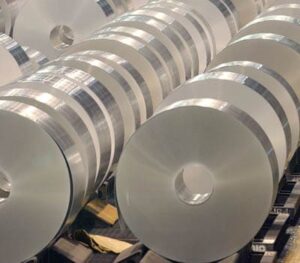
Aluminiumslist for transformator betyr at aluminiumslist brukes som ledende materiale i høy- og lavspentviklingene til tørrtransformatorer og oljesenkede transformatorer.

Oppdag førsteklasses PVDF fargebelagte aluminiumsplater med utmerket holdbarhet, UV motstand, og bevaring av levende farger. Perfekt for arkitektonisk, industriell, og dekorative applikasjoner.
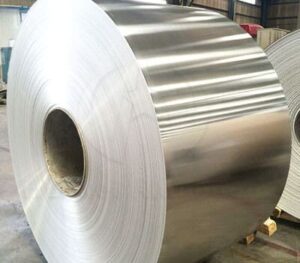
1060 Aluminium Coil er sammensatt av 99.6% aluminium, som ligner på 1050 legering av samme familie, men aluminiuminnholdet avviker med 0.1%.
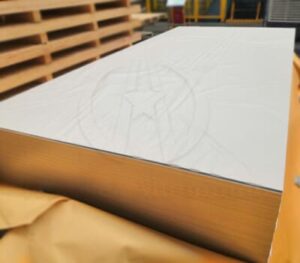
5083 Aluminiumsplater er kjent for sin overlegne ytelse i ekstreme miljøer. 5083 Aluminium er svært motstandsdyktig mot korrosjon fra sjøvann og industrielle kjemiske miljøer.
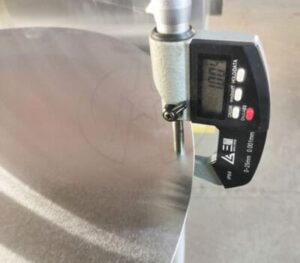
1100 aluminiumssirkel er rullet fra 1100 aluminiumsspole som råmateriale, som tilhører vanlig industriell ren aluminium med aluminiuminnhold på 99.0%.
Samme som 1050 aluminiumsplate, 1060 aluminiumsplate hører også til 1 serie ren aluminiumsplate,Vanligvis brukt i myk litiumbatteri, bus bar, veiskilt, ladehaug, aluminiumspakning, billboard bygning ytre veggdekorasjon,og så videre.
Nr.52, Dongming Road, Zhengzhou, Henan, Kina
Henan Huawei Aluminium Co., Ltd, En av de største aluminiumsleverandørene i Kina Henan,Vi er etablert i 2001, og vi har rik erfaring innen import og eksport og høykvalitets aluminiumsprodukter
man – lør, 8AM – 17:00
søndag: Lukket
© Copyright © 2023 Henan Huawei Aluminium Co., Ltd

Siste kommentarer
Kjære Sir, Please offer your best FOB Prices specs are as under ALUMINIUM STRIP (AL=99,50 % MIN) STØRRELSE:450 X32 X6 MM. DIN EN 570 EN-AW 1050 EN, ANTALL=3400KG
Hallo, Vil du være så snill å tilby varen som følger: Spole 0,6х1250 (1000)mm EN AW-3105 5tons
Hallo, Kan du tilby meg aluminiumsplater? Egentlig trenger jeg: 110mm x 1700 mm x 1700 mm 5083 H111 - 21 pcs Next year planed is 177 stk
Flott artikkel. Jeg var henrykt, at jeg fant denne artikkelen. Mange tror det, at de har pålitelig kunnskap om dette emnet, men dette er ofte ikke tilfelle. Derfor min hyggelige overraskelse. Jeg er imponert. Jeg vil definitivt anbefale dette stedet og komme tilbake oftere, å se nye ting.
krav til aluminiumslist