Source 30 Micron 8011 H18 Pharma Blister Foil with customized roll widths, coating options, and consistent quality for blister packaging applications. Contact Huawei Aluminum today.
30 Micron 8011 H18 Pharma Blister Foil is an aluminum foil material designed for pharmaceutical packaging applications, particularly tablet and capsule blister lidding.
With a nominal thickness of 30 M, this foil combines the barrier properties of aluminum with the mechanical characteristics of the 8011 alloy in H18 temper.
Pharmaceutical packaging must protect medicines from moisture, oxygen, liwanag, and external contamination while maintaining reliable sealing performance throughout storage and distribution.
Aluminum foil provides an effective barrier layer, while appropriate coatings and sealing systems help create a dependable package.
Ang 8011 alloy is widely used in packaging foil because its iron-silicon composition supports foil rolling and practical converting requirements.
The H18 temper indicates a hard, strain-hardened condition that provides stiffness and handling stability.
These characteristics make 30-micron 8011 H18 foil a candidate for applications requiring consistent feeding, paglilimbag, patong na patong, and heat sealing.
Gayunpaman, foil performance depends on more than alloy and thickness.
Pinhole levels, surface cleanliness, dimensional consistency, coating quality, and compatibility with the blister forming web all influence the finished package.
Buyers should therefore evaluate the foil as part of the complete packaging system rather than as an isolated material.
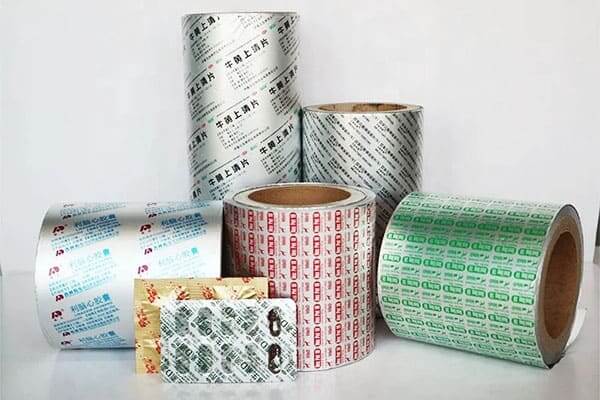
30 Micron 8011 H18 Pharma Blister Foil
30 Micron 8011 H18 Pharma Blister Foil is a thin aluminum foil made from 8011 haluang metal, supplied in H18 temper, with a nominal aluminum thickness of 30 mga micron.
Manufacturers commonly use this type of foil as the lidding layer in pharmaceutical blister packs for tablets and capsules.
The product designation contains three essential elements: haluang metal, Pamahiin, at kapal naman.
Each describes a different aspect of the material and helps buyers establish the correct purchasing specification.
8011 aluminyo foil belongs to the 8xxx series of aluminum alloys and primarily contains iron and silicon as alloying elements.
These elements influence the alloy’s processing characteristics and mechanical performance during foil production.
Typical composition limits for 8011 include approximately 0.50–0.90% silicon and 0.60–1.00% iron, with aluminum making up the balance and other elements controlled according to the applicable standard.
The exact limits should be verified against the relevant alloy specification and the supplier’s material certificate.
For pharmaceutical packaging, 8011 offers a practical combination of rollability, mechanical consistency, and suitability for surface finishing.
Manufacturers can supply it as plain foil or process it into a coated or printed product, depending on the packaging design.
The alloy designation alone does not guarantee pharmaceutical suitability.
Buyers must also assess surface cleanliness, pinhole quality, coating compatibility, and compliance with requirements for the intended packaging application.
H18 is a strain-hardened, matigas na pag-uugali. Manufacturers achieve this condition primarily through controlled cold working, which increases strength and hardness while reducing elongation.
For lidding foil, this hard condition helps the material maintain dimensional stability during unwinding, Captcha *, paglilimbag, and high-speed packaging operations.
It can also support clean cutting and consistent handling when the foil specification matches the machine requirements.
H18 foil has limited ductility compared with softer tempers. It is therefore important to distinguish flat blister lidding foil from aluminum used to form blister cavities.
The forming web and lidding foil perform different functions, and each requires a material specification suited to its role.
Mechanical properties vary with thickness, production route, and applicable specification.
Buyers should request actual tensile-strength and elongation data rather than rely on a universal value for all 8011 H18 foil.
A thickness of 30 mga micron (30 M) equals 0.03 mm. This value refers to the nominal aluminum foil thickness unless the supplier explicitly states that the measurement includes coatings.
Thickness influences material weight, stiffness, handling behavior, and the foil’s ability to withstand processing stresses.
A 30 μm foil is heavier per unit area than a 20 o 25 Μm Foil, which may provide a different balance of handling stability and material cost.
Gayunpaman, increasing thickness does not automatically guarantee better package integrity.
Pinholes, coating defects, seal conditions, and the properties of the blister forming web also affect the performance of the final package.
When placing an order, specify whether the required 30 μm refers to the bare aluminum substrate or whether the commercial specification uses another defined measurement basis.
This distinction prevents confusion when comparing coated products.
Technical specifications define the material’s dimensions, mechanical condition, kalidad ng ibabaw, and suitability for downstream processing.
A complete specification helps pharmaceutical packaging manufacturers maintain consistent production and avoid unnecessary line adjustments.
| Parameter | Typical Specification |
| aluminyo haluang metal | 8011 |
| Temper | H18 |
| Nominal Foil Thickness | 30 M (0.030 mm) |
| Kapal ng Tolerance | ±5% (subject to agreement) |
| Roll Width | 60–1,000 mm, napapasadyang |
| Core Panloob na Diameter | 76.2 mm / 152.4 mm |
| Roll Outer Diameter | 500–800 mm, napapasadyang |
| Aluminum Density | Humigit-kumulang. 2.70 g/cm³ |
| Theoretical Aluminum Weight | Humigit-kumulang. 81 g / m² |
| Ibabaw | 1 side bright / 1 side matte |
| Heat-Seal Lacquer Weight | Humigit-kumulang. 3–7 g/m², depending on specification |
| Primer Coating Weight | Humigit-kumulang. 1 g / m², kung kinakailangan |
| Lakas ng Paghatak | ≥150 MPa, subject to product specification |
| Pagpapahaba | ≥1%, subject to product specification |
| Typical Structure | OP / Ink / Al / HSL |
| Main Application | Pharmaceutical tablet and capsule blister lidding |
Aluminum foil provides an effective barrier against moisture, oxygen, at liwanag, helping protect pharmaceutical products from environmental exposure.
Ang 30 μm aluminum layer offers reliable barrier potential when it remains free from significant defects and forms a proper seal with the blister film.
The H18 temper gives 8011 aluminum foil high strength and stiffness compared with softer tempers of the same alloy.
These properties support stable unwinding, Captcha *, paglilimbag, and automated packaging.
Proper tension control and edge quality help prevent wrinkles and tearing during processing.
Heat-seal lacquer enables the foil to bond with a compatible blister forming web, such as PVC or PVC/PVDC.
Seal performance depends on coating compatibility, coating uniformity, temperatura, presyon, and dwell time.
Testing under actual production conditions helps verify package integrity.
A clean, uniform foil surface supports consistent printing, coating adhesion, and packaging appearance.
Manufacturers should control scratches, mga mantsa sa langis, mga wrinkles, and coating defects to maintain product quality and reliable downstream processing.
Consistent thickness, lapad ng katawan, and roll winding help maintain stable web tension and accurate machine feeding.
Clear dimensional tolerances and inspection procedures can reduce production interruptions and material waste.
With a nominal thickness of 30 M, aluminum foil provides a thin barrier layer with an estimated aluminum mass of approximately 81 g / m², excluding coatings.
This helps buyers calculate material consumption and packaging costs accurately.
Reliable performance requires control of thickness, mekanikal na mga katangian, pinholes, surface cleanliness, coating quality, and heat-seal strength.
Buyers should confirm the foil’s compatibility with the selected blister film and applicable pharmaceutical packaging requirements.
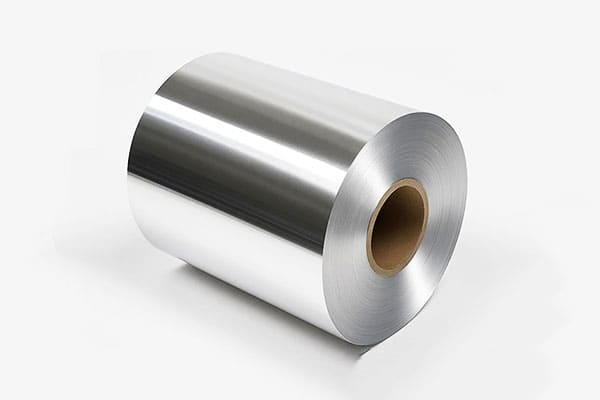
Huawei 30 Micron 8011 H18 Aluminum Foil
The structure of 30 Micron 8011 H18 Pharma Blister Foil depends on whether the product is supplied as plain aluminum foil or as finished, coated lidding foil.
In pharmaceutical blister packaging, manufacturers commonly apply printing and heat-seal lacquer to the aluminum substrate to meet identification, sealing, and handling requirements.
A common printed blister lidding structure is OP / Ink / Al / HSL, where OP refers to overprint lacquer, Ink is the printing layer, Al is the aluminum foil, and HSL is heat-seal lacquer.
| Istraktura | Layer Configuration | Main Purpose |
| Plain aluminum foil | Al | Basic aluminum substrate for further processing |
| Coated foil | Al / HSL | Provides a heat-sealable surface for a compatible blister film |
| Printed lidding foil | OP / Ink / Al / HSL | Combines printed information with heat-sealing capability |
| Primed printed foil | OP / Ink / Primer / Al / HSL, depending on design | Supports ink adhesion and protects printed graphics |
The exact layer sequence varies with the coating system and converter’s process.
The specification should clearly identify the aluminum thickness, coating type, coating weight, printing requirements, and intended sealing substrate.
Layer ng aluminyo foil
Ang 30 M 8011 H18 aluminum substrate forms the main metallic barrier.
It helps protect the packaged medicine from light, kahalumigmigan, at oxygen, provided that the foil and final package remain free from significant defects.
Panimulang Layer
A primer may improve the adhesion of printing inks or other coatings to the aluminum surface.
Its use depends on the ink system and the manufacturer’s coating process.
Pagpi-print ng Layer ng Tinta
Printing ink carries product names, Impormasyon sa Dosis, manufacturer details, batch information, and other required markings.
The ink system should provide clear printing and suitable adhesion throughout converting and packaging.
Overprint Lacquer Layer
Overprint lacquer protects the printed surface from abrasion and helps maintain the legibility of printed information.
Its formulation should match the printing ink and the intended packaging process.
Heat-Seal Lacquer Layer
Heat-seal lacquer bonds the aluminum lidding foil to a compatible forming web, such as PVC or PVC/PVDC.
Its formulation and coating weight influence the sealing window and final seal strength.
30 Micron 8011 H18 Pharma Blister Foil is primarily used as a lidding material in pharmaceutical blister packaging.
Its hard temper, metallic barrier layer, and compatibility with suitable coatings make it useful for packaging systems that require controlled sealing, clear product identification, and consistent web handling.
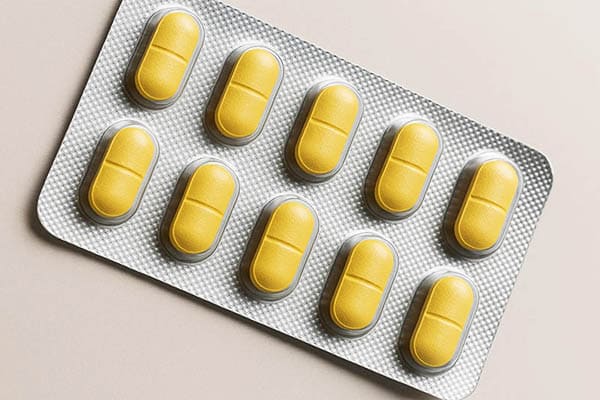
Tablet Blister Packaging
Tablets are one of the main applications for pharmaceutical lidding foil.
The aluminum layer helps protect tablets from moisture, liwanag, at oxygen, while the heat-seal lacquer bonds the foil to the blister forming film.
A 30 μm gauge may suit applications that require a particular balance of handling strength, sealing performance, and opening behavior.
The final choice should account for tablet geometry, forming-web properties, machine settings, and patient access requirements.
Capsule packaging also uses aluminum lidding foil to help preserve product quality during storage and distribution.
Reliable sealing is particularly important for capsules whose formulation or shell properties may be sensitive to environmental conditions.
Packaging manufacturers should evaluate the foil together with the forming web and verify seal integrity under the intended production conditions.
The required protection level depends on the medicine’s stability characteristics and its approved packaging design.
Printed 8011 H18 lidding foil supports the presentation of product names, Impormasyon sa Dosis, batch codes, Mga petsa ng pag expire, and brand identity.
A typical printed structure combines an aluminum substrate with printing ink, optional protective lacquer, and a heat-seal layer.
Good surface quality and coating adhesion help maintain print clarity and prevent defects during high-speed converting.
Selected unit-dose and specialty blister systems may also use 8011 H18 lidding foil.
Suitability depends on the package design, required barrier performance, sealing substrate, and opening method.
For medicines with stringent moisture or oxygen sensitivity, manufacturers should assess the complete packaging system through appropriate compatibility and stability studies.
A thicker foil alone does not guarantee a longer shelf life.
In conventional push-through blister packs, the patient presses the tablet or capsule through the lidding foil.
The foil must protect the product during handling while allowing the package to open as intended.
Thickness and temper influence puncture behavior and opening force.
Packaging designers should balance protection, seal integrity, and ease of access, particularly where children, older adults, or users with limited hand strength may use the package.
Selecting pharmaceutical aluminum foil requires consideration of alloy, Pamahiin, kapal naman, barrier requirements, converting performance, at gastos.
Kahit na 8011, 8021, at 8079 are all used in pharmaceutical or related packaging applications, they do not serve identical functions in every packaging structure.
| Comparison Factor | 8011 H18, 30 M | 8011 H18, 20–25 μm | 8021 Aluminum Foil | 8079 Aluminum Foil |
| Serye ng haluang metal | 8xxx | 8xxx | 8xxx | 8xxx |
| Typical Thickness | 30 M | 20–25 μm | Application-dependent | Application-dependent |
| Typical Temper for Comparison | H18 | H18 | Often O for cold-forming applications | Often O for cold-forming applications |
| Main Advantage | Greater gauge and handling stiffness | Lower material consumption | Common choice for demanding cold-forming structures | Used in selected high-performance packaging structures |
| Lidding Applications | Suitable with compatible coatings | Suitable with compatible coatings | Depends on temper and structure | Depends on temper and structure |
| Deep-Forming Suitability | Limited in H18 condition | Limited in H18 condition | Generally good in suitable soft temper | Generally good in suitable soft temper |
| Material Consumption | Higher per unit area | Lower per unit area | Depends on thickness | Depends on thickness |
| Main Selection Factor | Handling, package design, and opening behavior | Cost and line requirements | Forming performance and package design | Forming performance and barrier requirements |
Tala: This table provides general material-selection guidance. Exact performance depends on alloy composition, Pamahiin, kapal naman, coating system, and the complete packaging structure. O-temper forming foil should not be treated as mechanically equivalent to H18 lidding foil.

30 Micron 8011 H18 Pharma Blister Foil for Capsule
Paggawa 30 Micron 8011 H18 Pharma Blister Foil requires precise control of alloy composition, rolling thickness, Pamahiin, kalidad ng ibabaw, and coating performance.
Each stage helps ensure consistent quality and reliable performance in pharmaceutical packaging.
Manufacturers melt aluminum and add alloying elements according to the 8011 composition requirements.
After composition checks, they cast the molten metal into rolling stock.
Good melt cleanliness and casting quality help reduce defects during subsequent processing.
Hot rolling reduces the cast material to an intermediate thickness.
Cold rolling then progressively reduces the aluminum to the target thickness of 30 μm while controlling gauge uniformity, tapos sa ibabaw, and dimensional accuracy.
Controlled cold working establishes the H18 hard temper, increasing strength and stiffness while reducing elongation.
Manufacturers monitor the rolling schedule and verify mechanical properties to ensure the foil meets the agreed specification.
Before coating, manufacturers remove rolling residues and prepare the surface for further processing.
Depende sa application, they may apply primer, printing ink, protective lacquer, and heat-seal lacquer.
Coating uniformity, pagdikit, and curing conditions are important for print quality and reliable bonding to the selected blister forming web.
The foil is slit into customer-specified widths and wound into rolls.
Manufacturers control edge quality, winding tension, alignment, and roll dimensions to support stable feeding on packaging lines.
Final inspection verifies thickness, lapad ng katawan, mekanikal na mga katangian, surface condition, and pinhole quality.
For coated foil, additional checks may include coating weight, pagdikit, print quality, and heat-seal performance.
Testing should follow the agreed specifications and use the intended blister film where sealing performance is evaluated.
Finished rolls receive protective packaging to prevent moisture exposure, kontaminasyon, and physical damage during storage and transportation.
Clear labeling, batch identification, and agreed quality documents help maintain traceability.
Ang presyo ng 30 Micron 8011 H18 Pharma Blister Foil depends on aluminum market prices, material specifications, coating requirements, order quantity, and quality standards.
Understanding these factors helps pharmaceutical packaging manufacturers control costs while maintaining consistent packaging performance.
Aluminum ingot prices are a major factor in the final cost of pharmaceutical blister foil.
Market fluctuations, alloy processing costs, and supplier purchasing conditions can affect the quotation.
Dahil 30 μm foil uses a defined amount of aluminum per unit area, changes in raw material prices directly influence production costs.
The nominal thickness is 30 M, but thickness tolerance, roll width, roll diameter, and core size can affect production efficiency and material utilization.
Tighter tolerances or customized dimensions may require additional process controls, increasing the overall cost.
Plain aluminum foil generally costs less than coated or printed foil.
Primer, heat-seal lacquer, proteksiyon coatings, and customized printing add material and processing costs.
The coating system must also match the intended blister packaging material and sealing conditions.
Large orders often benefit from better production efficiency and lower processing costs per unit.
Small batches, special widths, customized printing, and non-standard roll configurations may increase unit prices because of setup, changeover, and inspection requirements.
Pharmaceutical packaging requires consistent thickness, kalidad ng ibabaw, pinhole control, coating adhesion, and sealing performance.
Additional testing, batch traceability, and quality documentation may affect the final quotation.
Buyers should confirm which tests and documents the supplier includes.
Moisture-resistant packaging and suitable roll protection help prevent contamination and physical damage during transportation.
Freight costs, destination, order weight, delivery schedule, and Incoterms also influence the total procurement cost.
Selecting a reliable supplier is essential for maintaining stable production and consistent pharmaceutical packaging quality.
Huawei Aluminum supplies aluminum foil products for industrial and packaging applications, with product specifications tailored to customer requirements.
Established in 2001, Huawei Aluminum has more than 20 years of experience in aluminum alloy production and sales.
This experience supports its understanding of material selection, foil processing, and the dimensional requirements of different industrial applications.
Different blister packaging lines may require specific roll widths, core sizes, winding conditions, and coating structures.
Buyers can communicate their technical requirements to Huawei Aluminum to confirm whether the requested 30 M 8011 H18 foil specification is available and suitable for their application.
For pharmaceutical lidding foil, consistent thickness, clean surfaces, controlled pinholes, and stable roll quality are important.
Coated products also require suitable coating uniformity, pagdikit, and heat-sealing performance.
Buyers should request relevant inspection records and technical data before placing an order.
Huawei Aluminum has export experience serving customers in multiple international markets.
Clear communication about specifications, pag iimpake, shipping arrangements, and documentation helps buyers coordinate procurement and production schedules.
30 Micron 8011 H18 Pharma Blister Foil combines a nominal thickness of 30 μm with the strength and stiffness of the H18 temper.
It is commonly used as lidding foil for pharmaceutical blister packs, where barrier performance, kalidad ng ibabaw, printability, and reliable heat sealing are essential.
The final performance depends not only on the aluminum alloy and temper but also on coating selection, sealing compatibility, manufacturing control, and packaging validation.
Buyers should evaluate technical specifications, quality documentation, customization options, and total procurement costs when choosing a supplier.
Working with an experienced aluminum foil supplier such as Huawei Aluminum can help buyers clarify material requirements and coordinate product specifications for their pharmaceutical packaging projects.
Q1: Ano ang 30 Micron 8011 H18 Pharma Blister Foil?
It is aluminum foil made from 8011 alloy in the H18 hard temper, with a nominal aluminum thickness of 30 M (0.03 mm). It is commonly used for pharmaceutical blister lidding.
Q2: Bakit nga ba 8011 aluminum used for pharmaceutical blister foil?
8011 aluminum offers a useful combination of barrier properties, formability during foil processing, kalidad ng ibabaw, and suitability for coating and printing.
Q3: What does H18 temper mean?
H18 indicates a fully hard, strain-hardened temper. It provides relatively high strength and stiffness but lower elongation than softer tempers.
Q4: Does 30 μm refer to the total thickness of coated foil?
Karaniwan ay, it refers to the aluminum substrate thickness. The total thickness may be greater after adding primer, printing ink, protective lacquer, or heat-seal lacquer. Confirm the supplier’s specification.
Q5: What is the typical structure of pharmaceutical blister lidding foil?
A common structure is OP / Ink / Al / HSL, consisting of overprint lacquer, printing ink, aluminyo foil, and heat-seal lacquer. The exact structure depends on printing and packaging requirements.
Q6: Maaari bang 30 Micron 8011 H18 foil be used for all blister packaging?
Hindi. Suitability depends on the blister forming material, sealing conditions, barrier requirements, and package design. The complete packaging system must be tested and validated.
Q7: What affects the price of 30 Micron 8011 H18 Pharma Blister Foil?
Key factors include aluminum prices, thickness tolerance, roll dimensions, mga patong na patong, paglilimbag, order quantity, quality testing, pag iimpake, at transportasyon.
Q8: What should buyers check before ordering?
Confirm alloy, Pamahiin, thickness tolerance, roll dimensions, coating structure, kalidad ng ibabaw, heat-seal performance, inspection documents, and delivery requirements.
8021 aluminyo foil ay may mga katangian ng kalinisan at kalinisan, at maaaring gawin sa isang pinagsamang packaging materyal na may maraming iba pang mga materyales packaging. Bukod pa rito, ang epekto ng pag-print ng ibabaw ng 8021 Ang aluminyo foil ay mas mahusay kaysa sa iba pang mga materyales. Kaya nga, 8021 Ang aluminyo foil haluang metal ay maaari ding magamit sa larangan ng packaging ng pagkain.
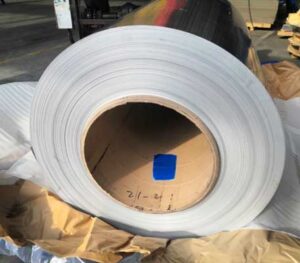
Ang Huawei Aluminum ay ang iyong maaasahang kasosyo para sa 0.5mm aluminyo coils, at kami ay nakatuon sa pagtugon sa iyong mga pangangailangan sa aluminyo na may isang malawak na hanay ng mga modelo ng haluang metal at mga pagtutukoy.
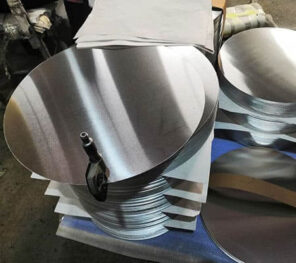
Partner with a China Aluminum Alloy Disc Supplier for versatile aluminum circles and discs. Huawei Aluminum offers a broad aluminum product portfolio, export experience, and customized solutions for industrial and decorative applications.
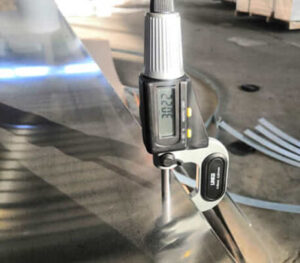
3mm aluminyo sheet ay tumutukoy sa isang aluminyo sheet na may kapal ng 3mm, at 3mm ay isang karaniwang kapal ng aluminyo sheet
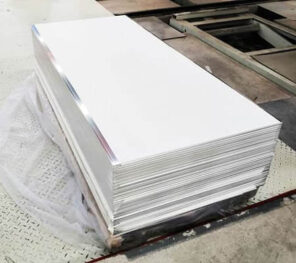
5083 H116 marine grade aluminium sheet offers outstanding seawater corrosion resistance, mataas na ratio ng lakas sa timbang, and excellent weldability for marine and offshore structures.
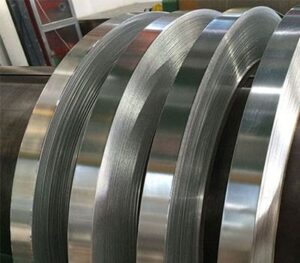
Ang 3003 ang aluminium strip ay gawa sa 3003 aluminyo haluang metal. Ang 3 serye aluminyo haluang metal ay tinatawag ding isang aluminyo-mangganeso haluang metal.
No.52, Dongming Road, Zhou Zhengzhou, Henan, Tsina
Henan Huawei Aluminyo Co., Ltd, Isa Sa Ang Pinakamalaking Aluminum Supplier Sa China Henan,Kami ay Itinatag Sa 2001, At Mayroon kaming mayaman na karanasan sa pag-import at pag-export at mataas na kalidad na mga produkto ng aluminyo
Mo – Sat, 8SA – 5PM
Linggo: Username or email address *
© Disclaimer © 2023 Henan Huawei Aluminium Co., Ltd

Pinakabagong Mga Komento
Mahal na Sir, Please offer your best FOB Prices specs are as under ALUMINIUM STRIP (AL=99.50% MIN) SUKAT:450 X32 X6 MM. DIN EN 570 EN-AW 1050 A, QUANTITY=3400KG
Hello po, Gusto mo bang maging kaya mabait upang mag alok ng item tulad ng sumusunod: Coil 0,6х1250 (1000)mm EN AW-3105 5tons
Hello po, Maaari mo bang i alok sa akin ang mga plato ng Aluminium? Actally kailangan ko: 110mm x 1700mm x 1700mm 5083 H111 - 21 pcs Next year planed is 177 mga pc
Mahusay na artikulo. natuwa naman ako, na search ko ang article na ito. Maraming tao ang tila, na mayroon silang maaasahang kaalaman sa paksa, Ngunit ito ay madalas na hindi ang kaso. Kaya ang aking kaaya ayang sorpresa. Bilib na bilib ako. Tiyak na irerekomenda ko ang lugar na ito at i drop sa pamamagitan ng mas madalas, para makakita ng mga bagong bagay.
kinakailangan ng aluminium strip