Decorative and functional 1100 H22 coated embossed aluminum foil combining premium appearance, dimensional stability and recyclability for architectural, appliance and consumer applications.


1100 H22 coated embossed aluminum foil is a hybrid engineering material that combines a commercially-pure aluminum substrate (haluang metal 1100) in a work-hardened/partially-annealed H22 temper with a patterned (naka emboss na) surface and a functional coating.
This combination delivers an attractive package of properties: high thermal/electrical conductivity and corrosion resistance from the high-purity alloy; controlled strength, springback and dimensional stability from the H22 temper; increased out-of-plane stiffness, enhanced heat-transfer surface area and tactile benefits from embossing; and corrosion protection, printability or sealability from the applied coating.
Quantitatively, 1100 alloy contains ≈99.0–99.95% Al by weight; H22 temper raises yield and tensile properties relative to fully annealed stock (representative tensile ranges for H-tempers fall in the 80–120 MPa band depending on processing); and common heat-seal or protective coat weights for foil applications sit in the low grams-per-square-metre range (typical industry practice centers around ~5–7 g/m² for thin functional lacquers).
1100 H22 Coated Embossed Aluminum Foil
To fully appreciate this specialized aluminum foil, it’s crucial to understand the individual contributions of its alloy, Pamahiin, patong na patong, and embossing.
| Elemento | Content Range | Functional Role | Performance Impact |
| Aluminyo (Al) | ≥99.00 | Base matrix | Paglaban sa kaagnasan, thermal kondaktibiti (222 W/m·K), electrical kondaktibiti (59% IACS) |
| Silicon (Si Si) | ≤0.95 | Casting aid, trace strengthener | Improved fluidity during casting, minor solid solution strengthening |
| bakal na bakal (Fe) | ≤0.35 | Grain control | Forms intermetallic phases that control recrystallization behavior |
| Tanso (Cu) | 0.05–0.20 | Intentional strengthening element | 10–20% strength increase vs. 1050/1060 mga haluang metal, maintains conductivity |
| Mga mangganeso (Mn) | ≤0.05 | Grain refiner | Texture control during thermomechanical processing |
| Sink (Zn) | ≤0.10 | Impurity control | Minimizes galvanic corrosion potential |
| Ang iba naman (bawat isa ay) | ≤0.05 | — | — |
| Ang iba naman (kabuuan) | ≤0.15 | — | — |
Sources: ASTM B209, AA standards, EN 573-3
Temper refers to the mechanical and thermal treatment history of an aluminum alloy, influencing its strength and ductility.
H22 temper signifies a strain-hardened (work-hardened) to quarter-hard temper, followed by a stabilizing anneal.
A coating is a functional layer applied to the aluminum foil surface to enhance specific properties beyond the base metal.
Embossing is a mechanical process that creates a raised or sunken pattern on the foil’s surface. This seemingly simple step provides multiple critical benefits:

Huawei Embossed Aluminum Foil Display
Common Embossing Patterns
| Pattern Type | Paglalarawan | Depth Range | Mga Pangunahing Aplikasyon |
| Stucco | Random granular texture resembling plaster | 0.05–0.15 mm | HVAC duct facing, general insulation |
| Balat ng Orange | Fine dimpled surface, uniform appearance | 0.03–0.08 mm | Architectural panels, aesthetic applications |
| Diamond/Ribbed | Geometric repeating pattern | 0.05–0.12 mm | Structural applications, directional stiffness |
| Pasadyang | Client-specific logos, textures | Variable na | Brand identification, specialized airflow |
Commercial datasheets and standards specify 1100 as ≈99.0–99.95% aluminum with trace Cu (0.05–0.20%), Fe ≤0.95%, Si ≤0.95%, Mn ≤0.05% and small amounts of Zn and other residuals.
These strict impurity limits are central to 1100’s properties: low alloying preserves conductivity and corrosion resistance while allowing modest increases in strength from cold work.
High Al content gives three practical advantages:
(1) mahusay na thermal kondaktibiti (useful in heat-transfer or heat-spreading applications),
(2) superior electrical conductivity and EMI shielding when needed
(3) good natural corrosion resistance in many environments.
The downside is relatively low as-fabricated strength compared to intentionally alloyed series, which is why tempering (work hardening or partial anneal) is used to reach the required mechanical window.
H22 is produced by working the material (malamig na pagulong) and then applying a partial anneal that allows some recovery and recrystallization.
The microstructure in H22 shows a mixed population of strain-hardened and recrystallized grains, producing elevated yield/tensile strength (compared to O) alongside measurable elongation and reduced brittleness.
Representative mechanical data for 1100 aluminyo foil in H-range tempers show ultimate tensile strength often in the 80–120 MPa region and yield strength elevated accordingly, depending on exact processing and gauge.
These values must be confirmed with supplier Certificates of Analysis for design calculations.
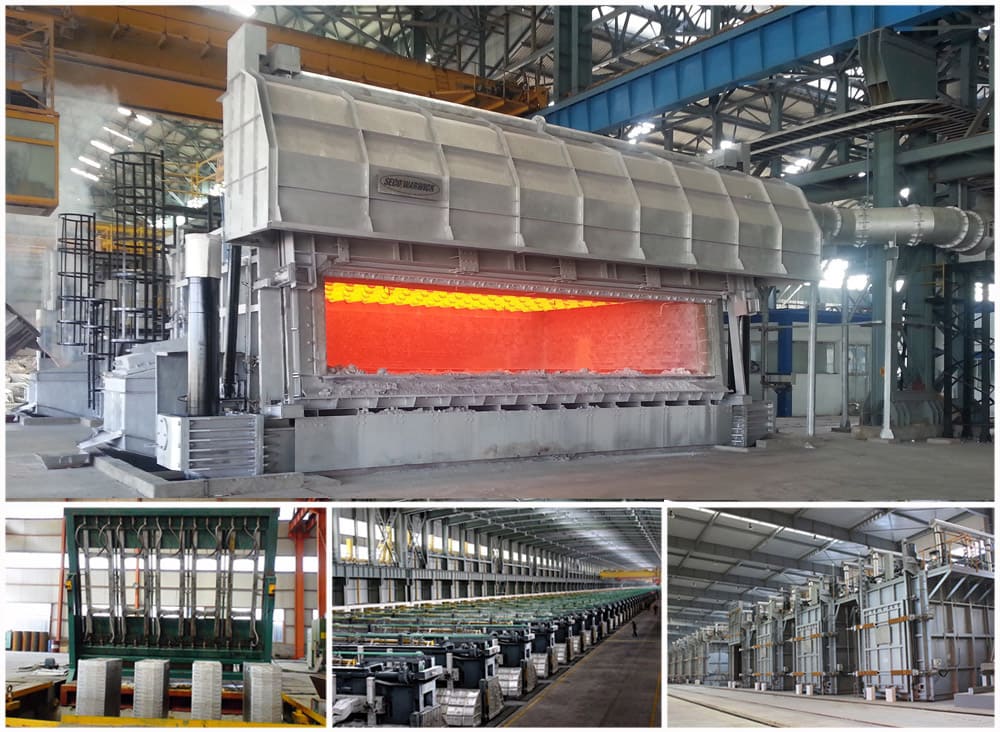
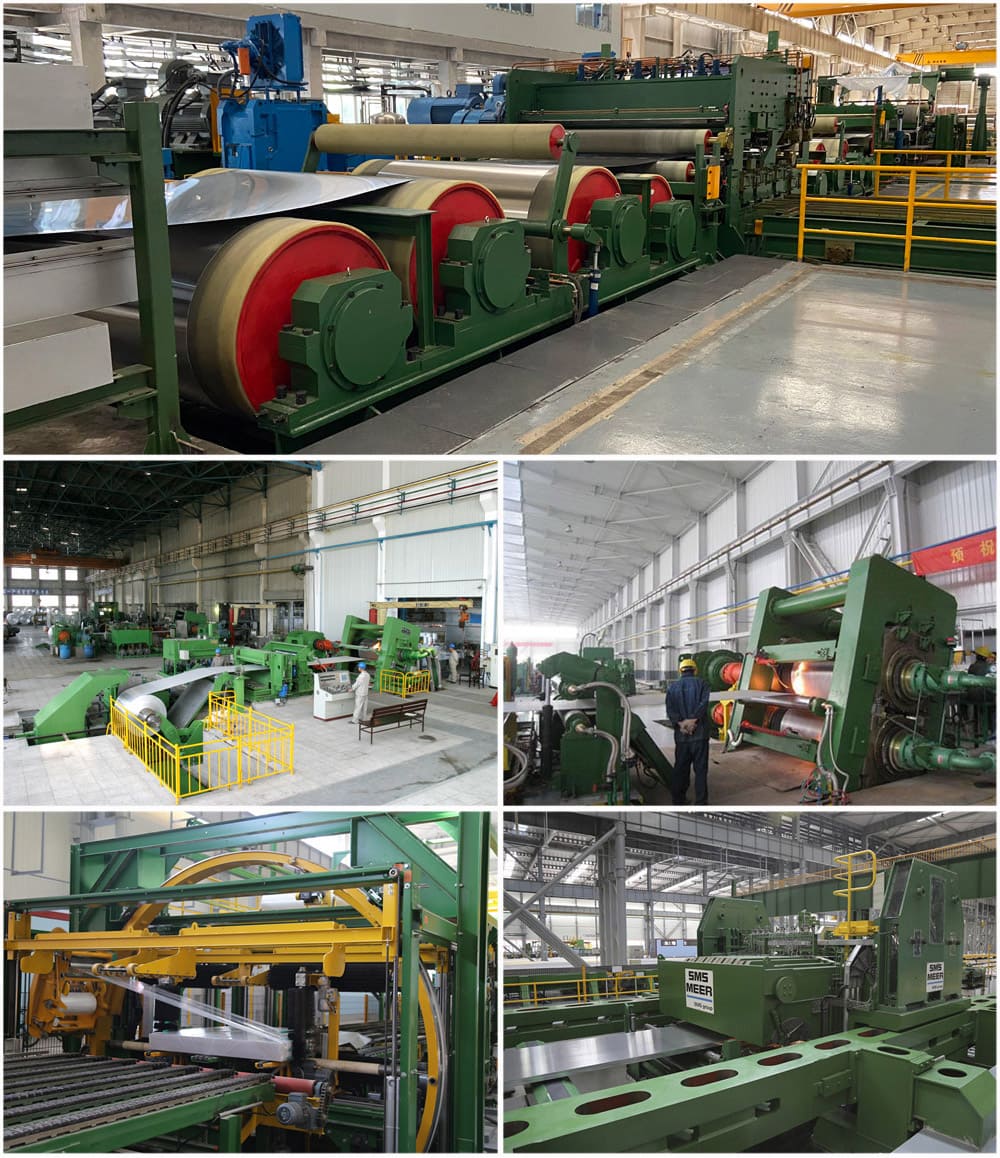
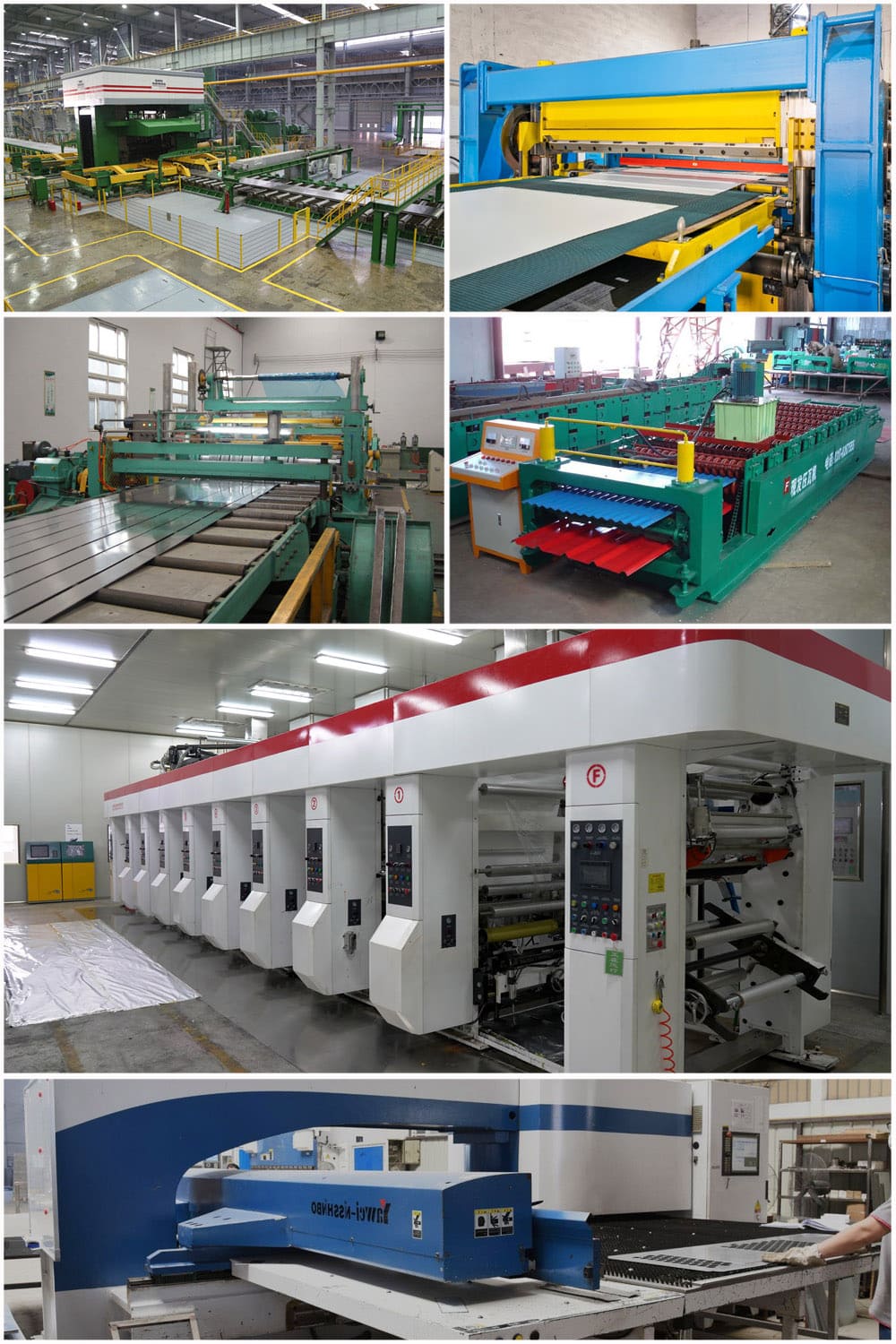
The creation of 1100 H22 coated embossed aluminum foil involves a sequence of highly controlled metallurgical and surface treatment processes.
1100 H22 Coated Embossed Aluminum Foil Production
Controlled Partial Anneal: After cold rolling to a specific work-hardened state, the foil undergoes a precise partial annealing heat treatment.
This critical step sets the H22 temper, providing the required quarter-hard strength and stabilized properties.
The temperature and duration are meticulously controlled to achieve the desired balance between strength and ductility.
Throughout the entire process, stringent quality control measures are implemented:
This section summarizes practical, measurable benefits that designers and specifiers can count on.

1100 Embossed Aluminum Foil
Embossed patterns provide premium tactile feel and visual depth; pigmented or metallic coatings amplify decorative effects for consumer-facing products.
Embossing raises the second moment of area for the sheet, increasing flexural stiffness without adding mass.
Empirical trials typically show that modest emboss depths can allow a 10–30% gauge reduction while maintaining equivalent bending resistance for many loading scenarios — a key advantage where weight reduction is important.
Textured surfaces reduce large-area contact in adhesive or thermal bonds, which can improve peel-behaviour and make separation or venting easier in some sealing applications.
Embossing increases effective surface area and creates microscale turbulence in convective flows — both effects enhance heat exchange in fin and heat-exchanger applications.
For evaporator fins or condenser foils, small repeating emboss features can measurably increase heat-transfer coefficients in constrained geometries.
1100’s high Al content improves resistance to general corrosion in air and many common environments.
Coatings add additional protection in corrosive or condensate-prone environments, especially where embossed valleys may trap moisture.
H22 provides a balance: enough strength to retain embossed geometry and suppress excessive springback, while retaining sufficient ductility to avoid cracking in moderate forming operations.
Thin lacquers or primers enable high-quality printing and — where formulated — controlled heat-seal behavior.
Typical heat-seal coatings used on aluminum foils are engineered for specific seal partners (polymers such as PE, PP or PVC) and are validated via seal-strength vs temperature maps on the target sealing equipment.
Typical lacquer grammages for heat-seal function are in the 4–8 g/m² range.
Aluminum’s high recyclability remains a sustainability asset; the use of thin coatings and judicious laminate design helps preserve recyclability and material recovery at end-of-life.
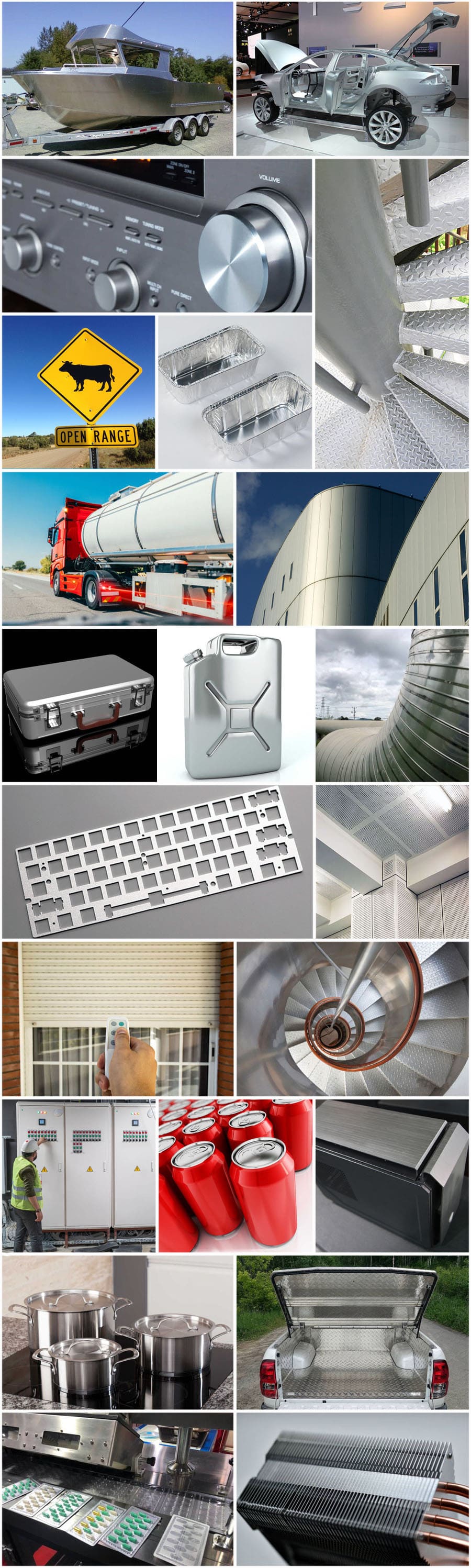
The unique combination of enhanced aesthetics, stiffness, and functional properties positions 1100 H22 coated embossed aluminum foil across a wide range of industries.
1100 H22 Coated Embossed Aluminum Foil for HVAC
To successfully integrate 1100 H22 coated embossed aluminum foil into an application, designers and engineers must consider several critical parameters to ensure optimal performance, tibay ng katawan, and compliance.
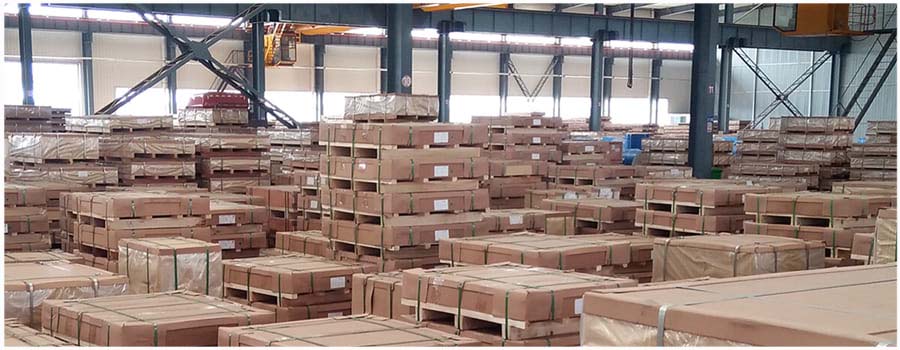
Huawei Embossed Aluminum Foil Warehouse
Selecting the right material requires understanding how 1100 H22 coated embossed foil compares to similar alternatives.
| Material Comparison | 1100 H22 Coated Embossed Foil (Baseline) | 1100 ‘O’ (Malambot na) Embossed Foil | 3003 H14/H24 Embossed Foil | Plain (Non-Embossed) Coated Foil |
| Key Difference | Balanced strength and formability, with functional texture. | Maximum na pagiging formable, mababa ang lakas. | Mas Mataas lakas ng loob, moderate formability. | Smooth ibabaw, standard properties. |
| Mga kalamangan | Good stiffness, moderate formability, aesthetic texture, mataas na kondaktibiti. | Excellent for deep forming after embossing, very flexible. | Significantly stronger and more rigid than 1100, magandang paglaban sa kaagnasan. | Lower cost, smooth surface for uniform contact/printing. |
| Mga kahinaan | Not suitable for deep drawing, katamtamang lakas. | Very low strength, easily damaged or dented. | Lower thermal/electrical conductivity than 1100, less formable. | Lacks enhanced stiffness, non-stick properties, and unique aesthetics of embossed foil. |
| Best Suited For | HVAC, architectural panels, appliance components where a balance of properties is key. | Applications requiring extreme flexibility and shaping after the embossing is applied. | Structural panels, pang industriya na mga aplikasyon, or architectural uses where higher strength is the primary requirement. | Standard packaging, paglalamina, or applications where a simple, makinis na, functional surface is needed. |
Ang 1100 H22 coated embossed aluminum foil is a sophisticated, multi-functional material that exemplifies the power of synergistic engineering.
By strategically combining the inherent benefits of high-purity 1100 aluminum—its excellent corrosion resistance and thermal conductivity—with the controlled mechanical properties of an H22 temper, the functional enhancements of a specialized coating, and the structural and aesthetic benefits of embossing, it delivers a unique and highly valuable solution.
From enhancing the efficiency of HVAC systems to providing durable and attractive finishes for architectural projects and appliances, this material offers a compelling balance of performance, mga estetika, at tibay.
Its ability to provide enhanced stiffness, non-stick properties, and a premium textured look, all while remaining lightweight and recyclable, ensures its continued relevance and broad utility across a diverse range of demanding industrial and consumer applications.
Q1: What does H22 temper add to 1100 aluminyo foil?
A1: H22 temper adds a controlled level of strength and rigidity (quarter-hard) compared to fully soft (‘O’ temper) papel de liha. This allows the material to hold its shape better and resist deformation, while still retaining enough ductility for moderate forming and the embossing process itself.
Q2: How does embossing benefit aluminum foil?
A2: Embossing provides multiple benefits: it increases stiffness and rigidity, adds a decorative aesthetic texture, reduces sticking between layers for easier handling, at increases the effective surface area, which can improve heat transfer.
Q3: Ay 1100 H22 Coated Embossed Foil suitable for outdoor use?
A3: Oo nga, it is highly suitable for outdoor use, especially when a durable, weather-resistant coating like Polyester (PE) o Polyvinylidene Fluoride (PVDF) is applied. The inherent corrosion resistance of the 1100 haluang metal, combined with a protective coating, provides excellent long-term durability against the elements.
Q4: Can this foil be painted over the existing coating?
A4: It depends on the original coating. If the foil has a primer coating, it is designed to be painted. If it has a finished topcoat (like a colored polyester), painting over it would require proper surface preparation (sanding, priming) to ensure good adhesion, similar to painting any other finished surface.
Q5: What are the most common embossing patterns?
A5: The most common and versatile embossing patterns are “stucco” (a non-directional hammered texture), “pebble” (a rounded dimple pattern), at “diamond plate” (an industrial, raised diamond pattern). Custom patterns are also available for specific aesthetic or functional requirements.
3104 aluminyo sheet ay angkop na pagpapahaba, mahusay na kaagnasan paglaban at magandang processability. Kaya nga, maaari naming smelt ito sa alloys ng iba't ibang katigasan ayon sa iba't ibang mga kinakailangan sa application.
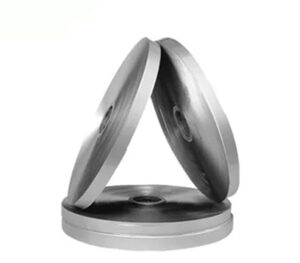
Cable aluminyo foil, kilala rin bilang aluminum foil para sa cable, tumutukoy sa isang tiyak na uri ng aluminyo foil na ginagamit sa pagmamanupaktura ng mga cable at wire.
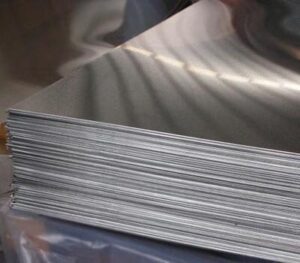
5754 aluminyo sheet ay may mga katangian ng mahusay na processability, magandang paglaban sa kaagnasan, weldability at madaling pagbuo. Bilang isang wrought haluang metal, 5754 aluminyo sheet ay maaaring nabuo sa pamamagitan ng rolling, paglabas ng mga, at pagkukubli, pero hindi sa pamamagitan ng casting.

Find corrosion-resistant 16 gauge aluminum diamond plate with superior traction. Perfect for marine, Automobilidad, and workshop use — custom cuts available.
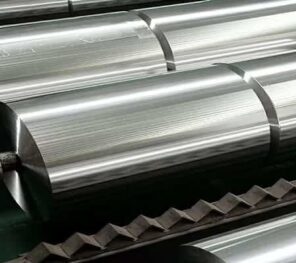
8006 aluminyo foil ay isang tiyak na haluang metal na kilala para sa kanyang mahusay na mga katangian ng barrier, paggawa ng ito mainam para sa packaging application. Nagbibigay ito ng epektibong proteksyon laban sa kahalumigmigan, liwanag, at oxygen, pagtulong upang mapanatili ang pagiging sariwa at kalidad ng mga produkto ng pagkain.
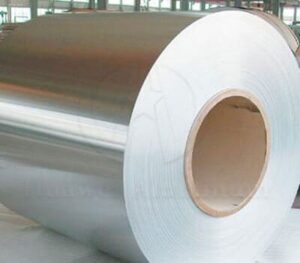
5052 Ang Aluminum Coil ay isang haluang metal na binubuo ng 2.5% magnesiyo at 0.25% chromium at isa sa mga pinaka-promising anti-kalawang aluminyo materyales
No.52, Dongming Road, Zhou Zhengzhou, Henan, Tsina
Henan Huawei Aluminyo Co., Ltd, Isa Sa Ang Pinakamalaking Aluminum Supplier Sa China Henan,Kami ay Itinatag Sa 2001, At Mayroon kaming mayaman na karanasan sa pag-import at pag-export at mataas na kalidad na mga produkto ng aluminyo
Mo – Sat, 8SA – 5PM
Linggo: Username or email address *
© Disclaimer © 2023 Henan Huawei Aluminium Co., Ltd

Pinakabagong Mga Komento
We need some t111 aluminium plate. We are looking for quarter inch by 4'x8' sheets
Aluminyo 5754 H111 หนา 8 mm กว้าง x ยาว : 4 x 6 ฟุต
سلام بسیار عالی ،،من از ایران تماس میگیرم فویل طلا ۱۲میکرون عرض ۶۱سانت نیاز داریم حدودا هرماه ۳۵هزار متر
Dear Sales Team, I hope you are doing well. We are looking to source aluminum products from your company and would appreciate receiving your best quotation for the following: Aluminum Sheets Thickness: 2 mm, 3 mm, 4 mm, at 5 mm Please provide your available standard sheet sizes. Kindly quote the price per sheet and the price per metric ton. Aluminum Coils Thickness: 2 mm, 3 mm, 4 mm, at 5 mm Please provide your available coil widths, standard coil weights, and inner diameter specifications. Kindly quote the price per metric ton. For both sheets and coils, please include: Available alloys (e.g. 1050, 3003, 5052) Temper options Mill finish or other available surface finishes Minimum Order Quantity (MOQ) Production lead time Payment terms Please provide your quotation based on: CIF Jebel Ali Port, UAE (including sea freight), or alternatively provide both FOB China and CIF Jebel Ali Port, UAE prices. If available, please also send: Product catalogue Mill Test Certificate (MTC) sample Photos of the products and packaging. We are interested in establishing a long-term business relationship. Our initial purchase volume is expected to be 100+ metric tons, with the potential for larger and recurring orders if your pricing, kalidad, and service meet our requirements. Thank you for your time. We look forward to receiving your quotation and hope to build a successful long-term partnership. Best regards, Eng.Yousef
アルミハニカムパネルについてお聞きしたいのですが L1500×W700×厚みで曲げに対して200kgg耐えられるには厚みはどのくらいでしょうか ※簡単に言いますと約1000mmの側溝に渡して真ん中で200kg耐えられるかという事になります 又、そのような製品があるようでしたらその重量、価格をおしえていただけますか 現在はコンパネ板を使用してますが腐ると折れてしまい人が側溝に落ちてけがをしてます 出来ましたらメールでお返事をいただけますか