Discover premium coated aluminum foil for yogurt lids with excellent heat sealability, reliable barrier protection, and smooth easy-peel opening for dairy packaging.
Coated Aluminum Foil for Yogurt Lids has evolved from a simple protective layer to a sophisticated, multi-functional component of modern dairy packaging.
This article provides an in-depth look at why coated aluminum foil is essential for yogurt lids, how it behaves under processing and storage conditions, and why Huawei Aluminum stands out as a reliable supplier in this field.
You’ll find data-driven insights, practical guidance, and actionable takeaways for selection, pagtutukoy, and implementation.
Yogurt lids require a material that can seal securely to the cup, protect the product from oxygen and moisture ingress, resist cold-chain shrinkage, withstand steam and hot-fill processes, and support branding and consumer appeal through printing and aesthetics.
Coated aluminum foil for yogurt lids achieves this balance by combining the inherent barrier properties of aluminum with carefully engineered polymer coatings that enable heat sealing, compatibility with cup materials, and reliable performance throughout the product life cycle.
Huawei Aluminum, a leading supplier in the aluminum foil packaging industry, has established itself as a credible source of coated foils tailored to the yogurt lid market.
With a focus on regulatory compliance, food safety, and process efficiency, Huawei Aluminum offers a range of products designed to meet the demands of global dairy brands and contract manufacturers.
This article introduces the material science behind coated aluminum foil for yogurt lids, discusses key performance metrics, and provides practical guidelines for specification, testing, and supplier selection.

Coated Aluminum Foil for Yogurt Lids
Coated aluminum foil for yogurt lids is typically a composite that combines a thin aluminum foil substrate with one or more polymer coatings or laminates.
The common structural arrangement is:
This structure delivers three core performance criteria:
– Barriers to moisture and oxygen to protect product quality.
– A robust, food-safe heat seal to ensure lid integrity during filling, sealing, at imbakan.
– Compatibility with the cup’s material and filling processes, including hot fill, steam retort (where applicable), and cold-chain transport.
The heat-seal layer is the critical interface between the lid and the container. For yogurt products, the seal must remain intact under typical consumer handling and cold storage, yet allow easy opening by the consumer.
The seal must also perform consistently across a range of temperatures during distribution, including potential temperature fluctuations during transport and retail display.
Coating chemistries used in yogurt lid foils generally fall into two families:
– Polyolefin-based coatings (such as polyethylene [PE] or polypropylene [PP]), which provide strong adhesion to common cup materials, good heat-seal properties, and broad compatibility with food-contact requirements.
– Barrier-enhanced laminates that incorporate specialty materials like EVOH or PVDC to reduce oxygen transmission rate (OTR) and improve shelf stability in premium or long-life products.
Huawei Aluminum’s coated foils commonly feature PE-based heat-seal layers for wide compatibility and to support efficient sealing equipment in dairy plants, along with optional barrier laminates for brands seeking extended shelf life.
Coated aluminum foil for yogurt lids must comply with food-contact regulations in the markets where the products are sold. In many regions, the primary considerations include:
– Food-contact safety: Materials must be non-toxic, non-migratory at typical storage conditions, and compliant with applicable regulations (halimbawa na lang, FDA in the United States, EFSA in the European Union, LFGB in Germany, and other national standards).
– Migration and extractables: Reasonable migration limits are established for substances in coatings that could transfer to food.
– Recyclability and sustainability: Increasingly, the packaging ecosystem seeks more recyclable materials or mono-material laminates to simplify end-of-life processing.
Huawei Aluminum places emphasis on providing coated foil formulations that meet these regulatory standards, along with documentation and test data to support compliance claims.
Manufacturers who choose coated aluminum foil for yogurt lids from credible suppliers typically request safety data sheets (SDS), material safety data sheets (MSDS), and third-party test results (migration tests, heavy metals, and allergen-free declarations) to facilitate regulatory approvals.
Sustainability in yogurt lid packaging involves several dimensions, including raw material efficiency, energy consumption in manufacturing, and end-of-life management.
Key considerations include:
– Weight optimization: Manipis na manipis, well-engineered foil with efficient coatings reduces material usage while preserving performance.
– Lamination architecture: Multi-layer laminates that minimize material thickness without compromising barrier properties can lower the overall environmental footprint.
– Recyclability: Many packaging programs favor mono-material solutions or laminates compatible with recycling streams. Some yogurt lids are designed to be recyclable with the same stream as the cup, while others may require a separate recycling flow.
– Food waste prevention: Strong barrier properties and reliable seals help maintain product quality and reduce spoilage, contributing to a lower lifecycle environmental footprint.
Huawei Aluminum highlights the possibility of designing coatings to balance performance with recyclability.
When customers require easier post-consumer separation, the supplier can propose lamination architectures and coating chemistries that align with local recycling practices and consumer behavior.

8011 Coated Aluminum Foil for Yogurt Lids
Alloy Selection for Yogurt Lid Foil
| haluang metal | Mga Pangunahing Katangian | Mga kalamangan | Karaniwang Paggamit |
| AA8011 | Katamtamang lakas, Mahusay na ductility | Most widely used, matipid sa gastos, good for coating and sealing | Standard yogurt lids |
| AA8079 | Mas mataas na lakas, finer grain structure | Better barrier reliability, improved pinhole resistance | Premium or high-performance lids |
Thickness Range and Performance
| Ang kapal (M) | Mga Katangian | Mga kalamangan | Considerations |
| 30–35 µm | Thin and flexible | Lower cost, easy peel, suitable for standard lids | Lower mechanical strength |
| 36–45 µm | Balanced performance | Good strength and seal reliability | Most commonly used range |
| 46–50 µm | Thick and robust | Higher puncture resistance, better rigidity | Higher material cost, may require stronger peel force |
Temper (Mechanical Condition)
| Temper | Paglalarawan | Mechanical Behavior | Application Suitability |
| O (Captcha * / Malambot na) | Fully annealed | Maximum flexibility, mababa ang lakas | Best for deep forming and easy-peel lids |
| H22 | Partially hardened | Moderate strength and ductility | Balanced option for sealing and durability |
| H24 | More work-hardened | Mas mataas na lakas, lower elongation | Suitable for lids requiring higher rigidity |
The inside-contact surface of the lid, which touches the yogurt, carries the heat-seal or contact layer. Common coating chemistries include:
– PE (polyethylene): A robust, food-safe seal layer compatible with most cup materials (PP, Alagang Hayop, PS). It provides good heat sealing at moderate temperatures and is cost-effective.
– PP (polypropylene): Similar to PE but with higher heat resistance and seal integrity under hotter fill conditions.
– PET-based coatings: Sometimes used in laminate constructions to improve rigidity and printability, with barrier layers to reduce gas transmission.
– EVOH or PVDC barriers: Multilayer laminates that add barrier performance without significantly increasing thickness, used in premium products or longer shelf-life requirements.
Laminate architectures might be:
– Foil + seal coat + outer print layer (monolayer or multiple inks) to balance aesthetic appeal with functionality.
– Foil + seal coat + barrier layer (EVOH or PVDC) + outer film (PE or PET) to create a high-barrier, yet printable and sealable structure.
When evaluating coated aluminum foil for yogurt lids, packaging engineers typically assess:
– Heat-seal strength (seal initiation and peak seal force): A measure of how readily the lid adheres to the cup and how well the seal withstands handling.
– Seal-bond integrity after storage: The seal’s resilience after exposure to cold chain, kahalumigmigan, and temperature cycling.
– Shear strength and peel strength: To determine the force required to detach the lid and the reliability of the seal against unintended opening.
– Oxygen Transmission Rate (OTR) and Water Vapor Transmission Rate (WVTR): Indicators of barrier performance that affect product stability.
– Migration tests: To ensure that any coatings or residual monomers do not migrate into yogurt under standard storage conditions.
– Printing compatibility: The ability to reproduce branding, color fidelity, and legibility on the lid exterior.
Huawei Aluminum emphasizes a data-driven approach to these performance metrics, delivering test data and certifications to customers during the supplier qualification process.

Huawei Packaged Aluminum Foil
Huawei Aluminum is a prominent manufacturer of rolled aluminum products, with a dedicated focus on packaging foil solutions for the food and beverage sector.
The company’s core strengths include:
– Integrated production lines for aluminum foil extrusion, annealing, and finishing, enabling tight control over thickness, kalidad ng ibabaw, at mekanikal na mga katangian.
– Specialized coating and lamination capabilities to produce high-performance yogurt lid foils tailored to customer requirements.
– A global supply footprint with logistics and distribution networks designed to support multi-region brands and contract manufacturers.
Key differentiators include:
– Customizable coatings: A range of heat-seal coatings and barrier laminates designed to optimize seal integrity, pagganap ng hadlang, and branding opportunities.
– Regulatory compliance: Documentation and testing that support food-contact approvals in major markets.
– Customer-centric development: Collaborative engineering efforts with brands to optimize laminate architecture, printability, and production efficiency.
Huawei Aluminum offers a variety of coated aluminum foil for yogurt lids, kasama na ang:
– Foil thickness options: 9–12 µm base foil with compatible seal coatings to suit different cup materials and processing temperatures.
– Seal-coating options: PE-based or PP-based heat-seal layers, with optional barrier laminates (EVOH, PVDC) depending on shelf-life requirements.
– Laminate configurations: A range of constructions from simple foil-seal layers to complex laminates with barrier layers and outer printing films.
– Printability: High-quality exterior printing with standard CMYK and Pantone color support, suitable for short-run or long-run branding needs.
– Food safety and regulatory documentation: SDS, migration tests, and compliance statements aligned with global market requirements.
Technical performance data vary by specific product family and customer specification. Huawei Aluminum typically provides:
– Seal strength ranges appropriate for hot-fill and cold-fill processes.
– Barrier data for chosen laminate structures, often including OTR and WVTR estimates.
– Compatibility notes for cup materials (PP, Alagang Hayop, PS) and sealing equipment.
Quality is central to supplying yogurt lid foils. Huawei Aluminum’s quality program generally includes:
– ISO-based quality management system certifications (hal., .ISO 9001).
– HACCP-based processes for food-contact safety and traceability.
– Material certifications for food-grade coatings and laminates, including migration testing results.
– Process controls for lamination adhesion, coating uniformity, and surface roughness.
– Batch-level traceability and lot-specific test reports to support customer audits.

Advantages of Coated Aluminum Foil for Yogurt Lids
When selecting a coating system for yogurt lids, Isipin ang:
– Cup material compatibility: PP and PET cups require certain heat-seal properties. A PE seal layer is typically well-suited for a broad range of cup substrates.
– Fill temperature: Hot-fill processes require coatings that can maintain seal integrity at elevated temperatures and maintain compliance with regulatory limits.
– Printing and branding: Exterior printing on the lid must be compatible with the sealing process and not compromise seal performance.
Huawei Aluminum works closely with customers to tailor seal layers and laminates to specific cup materials, fill temperatures, and production lines.
Lamination is a critical step in creating the final yogurt lid foil. Common lamination approaches include:
– Direct lamination: Foil laminated directly to a film or to a thin polymer layer forming a single laminate structure.
– Multilayer laminates: Foil + seal layer + barrier layer + outer film, enabling improved barrier properties and printability.
– Adhesive-based lamination: Use of water-based or solvent-based adhesives to join layers; attention to adhesive compatibility with food-contact requirements is essential.
Adhesive selection affects seal strength, peel performance, and automation compatibility.
Huawei Aluminum’s offerings typically balance lamination cost, sealing performance, and process compatibility.
Robust testing ensures that yogurt lid foils meet performance expectations. Essential tests include:
– Seal strength tests (hal., peel, die-cut peel, and quick-bond tests).
– Heat sealing trials across equipment types and temperatures typical in dairy plants.
– Barrier testing (OTR, WVTR) for chosen laminates.
– Ink adhesion and print quality tests for exterior branding.
– Migration and exposure tests to confirm food-contact safety and stability under storage conditions.
– Mechanical tests for puncture resistance and elongation to withstand handling in packing lines.
Huawei Aluminum typically provides customers with test reports, including performance results on representative samples and, when required, third-party verification.
Lead times of coated aluminum foil for yogurt lid depend on the complexity of the laminate, coating requirements, and volume. A typical supplier-customer collaboration might involve:
– Initial specification and feasibility trials (2–4 weeks).
– Prototyping and pilot production (2–6 na linggo).
– Scale-up and full production (depending on capacity, often 4–12 weeks).
– Ongoing technical support for process optimization, troubleshooting, and requalification encounters.
Huawei Aluminum emphasizes collaborative development, offering technical support during trials and post-launch optimization.
To help you evaluate options, here’s a comparative view of common materials used for yogurt lids, with a focus on how coated aluminum foil stacks up.
| Materyal | Typical Thickness (M) | Primary Seal Layer | Mga Katangian ng Barrier | Kakayahang i-print | Recyclability | Typical Use Case |
| Pinahiran na Aluminum Foil (PE/PP seal) | 9–12 (papel de liha) + seal layer | PE or PP on inside | Mahusay na kahalumigmigan at gas barrier; with barrier laminates can reach very low OTR | Good exterior printability on outer layer; can support high-resolution branding | Mixed; depends on laminate; may require recycling streams that handle multilayer packaging | Yogurt lids, dairy cups, premium desserts |
| Laminate with PET outer film (papel de liha + Alagang Hayop + seal) | 15–25 | PE/PP/ PET seal | Moderate to high barrier with barrier layers | Excellent printability on PET; high aesthetics | Often not monomaterial; recycling may require specialized streams | Premium yogurt lids; longer shelf-life products |
| Plain aluminum foil (no coating) | 9–12 | Not applicable; needs external bonding | Excellent barrier but non-sealable | No exterior printability unless laminated | High recyclability as aluminum, but not suitable for direct contact seal | Not used alone for yogurt lids; used in other packaging roles |
| Plastic lids without foil (PP/ PET lids) | N/A | Direct plastic seal | Lower barrier than foil-based lids | Moderate to high depending on printing | Typically recyclable with plastics streams | Some yogurt packaging systems |
Mga Tala:
– Coated aluminum foil with a polyethylene (PE) seal layer remains the most common choice for many yogurt lids due to good seal strength, broad material compatibility, and cost efficiency.
– Barrier laminates can be tailored to extend shelf life for specific products; EVOH and PVDC barriers provide stronger protection against oxygen but add cost and processing considerations.
Supply chain sustainability programs are increasingly important. Huawei Aluminum emphasizes supply chain transparency, environmental stewardship, and adherence to applicable environmental regulations.
1) What is the main advantage of coated aluminum foil for yogurt lids compared to plain aluminum?
– The coating provides a reliable heat seal to yogurt cups, enabling efficient mass production, while the foil itself continues to offer excellent barrier properties. The coating can also add barrier layers to extend shelf life when needed.
2) Are there regulatory concerns with coatings in yogurt lids?
– Yes. Food-contact safety requires substantiated migration data, minimal substrate risk, and approvals for the target markets. Reputable suppliers provide documentation and third-party test results.
3) Can coated foil be recycled?
– Recycling depends on the laminate configuration. Some designs are easier to recycle in specific streams, while multilayer laminates can complicate recycling. Manufacturers are increasingly offering mono-material or more easily recyclable laminates where possible.
4) How does EVOH or PVDC addition affect yogurt lid performance?
– EVOH and PVDC substantially improve oxygen barrier performance, which is valuable for long-life or premium products. They can, gayunpaman, increase cost and complicate processing; careful laminate design is required to avoid moisture sensitivity and processing challenges.
5) What should I consider when selecting a supplier?
– Consider materials performance data, regulatory compliance, lead times, customization capabilities, and overall reliability. Supplier collaboration is essential for optimizing laminates and achieving reliable scale-up.
6) How is heat-seal performance tested?
– Heat-seal strength tests, seal initiation temperature, dwell time, and post-seal performance under storage conditions are typical tests. Trials on actual equipment help verify performance in production.
7) Does Huawei Aluminum offer customization beyond standard products?
– Yes. Huawei Aluminum’s approach includes collaborative development for windowed strengths, barrier configurations, and branding-ready exterior finishes tailored to customer needs.
8) Can the lid be used with hot-fill processes?
– Yes, many coatings are designed for hot-fill compatibility, but you must verify compatibility with your specific fill temperature and line conditions.
Coated Aluminum Foil for Yogurt Lids represents a mature, scalable packaging solution that balances seal integrity, proteksyon ng barrier, branding flexibility, and regulatory compliance.
The inner heat-seal layer ensures reliable bonding to cup materials across a broad range of processing conditions, while optional barrier laminates support shelf life requirements for diverse yogurt products.
The combination of aluminum’s inherent barrier performance with optimized coatings and laminates enables yogurt brands to maintain product quality from production line to consumer.
Huawei Aluminum stands out as a credible supplier in this space, offering a portfolio of coated aluminum foil for yogurt lids and backed by a commitment to quality, regulatory compliance, and collaborative product development.
By working closely with yogurt manufacturers, Huawei Aluminum helps optimize laminate configurations for performance, gastos, at pagpapanatili.
For brands seeking a dependable, data-driven partner to modernize or expand their yogurt lid program, coated aluminum foil from Huawei Aluminum can deliver the balance of performance, pagiging maaasahan, and brand impact that today’s dairy packaging demands.
Share with PDF: Download
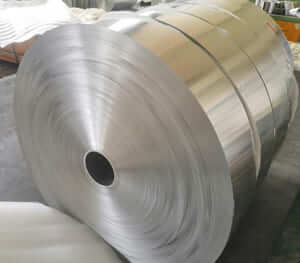
Ang mga karaniwang haluang metal ng aluminyo foil para sa air duct ay 1000 serye ng mga, 3000 serye at 8000 serye aluminyo foil, na kung saan ay may malakas na kaagnasan paglaban at kahalumigmigan paglaban.
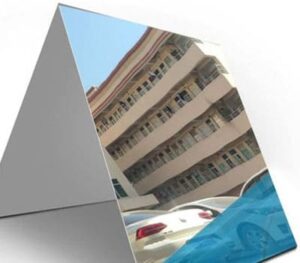
Ang reflective aluminum sheet ay isang metal sheet na may mataas na reflectivity at malawakang ginagamit sa optika, mga electronics, konstruksiyon at iba pang mga patlang. Ipapakilala sa artikulong ito ang mga alituntunin, mga katangian at mga application ng Reflective aluminyo sheet.
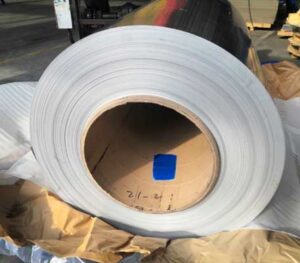
Ang Huawei Aluminum ay ang iyong maaasahang kasosyo para sa 0.5mm aluminyo coils, at kami ay nakatuon sa pagtugon sa iyong mga pangangailangan sa aluminyo na may isang malawak na hanay ng mga modelo ng haluang metal at mga pagtutukoy.
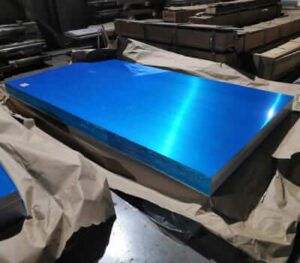
3000 serye aluminyo haluang metal ay isang AL-MG haluang metal na ang pangunahing mga bahagi ay aluminyo, mangganeso at isang maliit na halaga ng iba pang mga elemento. Ito ay may mahusay na mga katangian tulad ng mahusay na kaagnasan paglaban, processability at weldability.
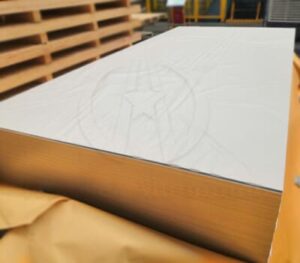
5083 Ang Aluminum Sheet ay kilala para sa superior performance nito sa matinding kapaligiran. 5083 Ang aluminyo ay lubos na lumalaban sa kaagnasan mula sa tubig dagat at pang industriya na kapaligiran ng kemikal.
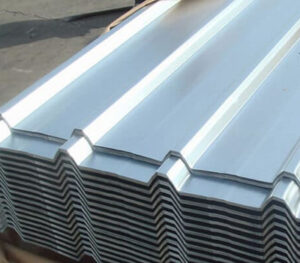
I upgrade ang iyong bubong na may mataas na kalidad na aluminyo na mga sheet ng bubong. Makaranas ng pangmatagalang proteksyon at mapahusay ang aesthetics ng iyong tahanan sa aming naka istilong at matibay na solusyon sa bubong
No.52, Dongming Road, Zhou Zhengzhou, Henan, Tsina
Henan Huawei Aluminyo Co., Ltd, Isa Sa Ang Pinakamalaking Aluminum Supplier Sa China Henan,Kami ay Itinatag Sa 2001, At Mayroon kaming mayaman na karanasan sa pag-import at pag-export at mataas na kalidad na mga produkto ng aluminyo
Mo – Sat, 8SA – 5PM
Linggo: Username or email address *
© Disclaimer © 2023 Henan Huawei Aluminium Co., Ltd

Pinakabagong Mga Komento
Mahal na Sir, Please offer your best FOB Prices specs are as under ALUMINIUM STRIP (AL=99.50% MIN) SUKAT:450 X32 X6 MM. DIN EN 570 EN-AW 1050 A, QUANTITY=3400KG
Hello po, Gusto mo bang maging kaya mabait upang mag alok ng item tulad ng sumusunod: Coil 0,6х1250 (1000)mm EN AW-3105 5tons
Hello po, Maaari mo bang i alok sa akin ang mga plato ng Aluminium? Actally kailangan ko: 110mm x 1700mm x 1700mm 5083 H111 - 21 pcs Next year planed is 177 mga pc
Mahusay na artikulo. natuwa naman ako, na search ko ang article na ito. Maraming tao ang tila, na mayroon silang maaasahang kaalaman sa paksa, Ngunit ito ay madalas na hindi ang kaso. Kaya ang aking kaaya ayang sorpresa. Bilib na bilib ako. Tiyak na irerekomenda ko ang lugar na ito at i drop sa pamamagitan ng mas madalas, para makakita ng mga bagong bagay.
kinakailangan ng aluminium strip