In this paper, 8011 cast-rolled blanks are adopted to manufacture aluminum sheets for bottle caps, and the effects of homogenization annealing and intermediate annealing processes on product properties are investigated.
In this paper, 8011 cast-rolled blanks are adopted to manufacture aluminum sheets for bottle caps, and the effects of homogenization annealing and intermediate annealing processes on product properties are investigated.
The results show that bottle cap aluminum sheets meeting customer requirements can be produced from cast-rolled blanks by adopting appropriate homogenization annealing processes.
Due to the inherent characteristics of the cast-rolling process, cast-rolled blanks exhibit obvious anisotropy, which restricts their application in deep-drawing products.
In this work, a reasonable homogenization annealing process is adopted to alleviate composition segregation and anisotropy of 8011 cast-rolled blanks induced by the cast-rolling process and optimize the internal microstructure.
Combined with appropriate intermediate annealing and reasonable cold reduction of the final rolling pass in subsequent processing, the proportions of various textures in the sheets are balanced, material anisotropy is reduced, and bottle cap aluminum sheets satisfying deep-drawing requirements are successfully fabricated.
The raw material is 8011 cast-rolled coil with an initial blank thickness of 6.0–6.5 mm, and the target finished thickness of the product is 0.21 mm.
The grain size of cast-rolled coils shall reach Grade 1.
Kemikal na komposisyon ng 8011 Alloy for Bottle Caps (masa fraction, %)
| Elemento | Si Si | Fe | Cu | Mn | Mg | Ti | Single Impurity | Total Impurity | Al |
| Nilalaman | 0.50~0.90 | 0.6~ 1.0 | ≤0.1 | ≤0.2 | ≤0.05 | ≤0.1 | ≤0.05 | ≤0.15 | Balanse |
With fixed cold rolling passes, homogenization annealing and intermediate annealing temperatures are set as variable parameters. The complete process route is as follows:
Cast-rolled blank → cold rolling to 3.8 mm → homogenization annealing → cold rolling to 0.43 mm → intermediate annealing → cold rolling to finished thickness of 0.21 mm
Three comparative process schemes are designed:
Scheme 1: Homogenization at 480 °C for 4 h for 3.8 mm thick blanks; intermediate annealing at 360 °C for 2 h for 0.43 mm strips
Scheme 2: Homogenization at 480 °C for 4 h for 3.8 mm thick blanks; intermediate annealing at 280 °C for 2 h for 0.43 mm strips
Scheme 3: Homogenization at 530 °C for 4 h for 3.8 mm thick blanks; intermediate annealing at 320 °C for 2 h for 0.43 mm strips
Lakas ng paghatak \(R_m\), elongation A and earing rate e of specimens after intermediate annealing and finished products are tested in accordance with national standards.
Finished sheets produced by the three schemes are delivered to customers for cup drawing tests, and the optimal industrial production process is determined based on practical stamping feedback.
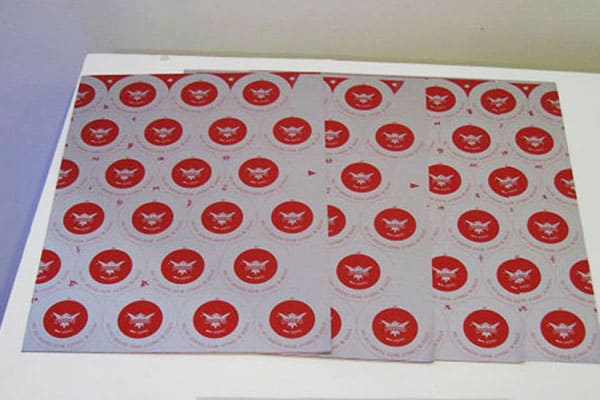
Specimens cold-rolled to 0.43 mm are annealed in a box furnace (put into the furnace after the set temperature is reached, holding time: 2–4 h) to test mechanical properties and earing characteristics.
Actual Properties after Intermediate Annealing
| Process Scheme | Lakas ng Paghatak \(R_m\) (MPa) | Elongation A (%) | Earing Rate e (%) | Earing Direction |
| Scheme 1 | 95 | 28 | 10 | 0°/90° |
| Scheme 2 | 93 | 30 | 8.9 | 0°/90° |
| Scheme 3 | 90 | 36 | 4.9 | 0°/90° |
After intermediate annealing, strips are cold-rolled to the finished thickness of 0.21 mm with a cold reduction of approximately 51%.
The mechanical and earing performance data of finished products are listed as follows.
Properties of Finished Products
| Process Scheme | Sampling Direction | \(R_m\) (MPa) | A (%) | Earing Rate e (%) | Earing Direction |
| Scheme 1 | 0° | 146 | 2.2 | 8.9 | 0°/90° |
| 45° | 154 | 2.8 | |||
| 90° | 156 | 2.1 | |||
| Scheme 2 | 0° | 154 | 2.8 | 8.0 | 0°/90° |
| 45° | 164 | 1.8 | |||
| 90° | 162 | 1.6 | |||
| Scheme 3 | 0° | 145 | 2.8 | 2.2 | 0°/90° |
| 45° | 150 | 2.0 | |||
| 90° | 156 | 2.0 |
Customer Trial Results
| Process Scheme | Customer Cup Drawing Performance |
| Scheme 1 | No trial test conducted |
| Scheme 2 | Cracking occurs during stamping |
| Scheme 3 | Actual earing rate < 3%, excellent forming performance, meeting bottle cap production requirements |
Test conclusion: The finished products of Scheme 1 and Scheme 2 homogenized at 480 °C have an earing rate close to 10%, failing to meet deep-drawing requirements for bottle caps.
The finished products of Scheme 3 homogenized at 530 °C have an earing rate of about 5% without stamping cracking, and have been supplied to multiple bottle cap manufacturers in mass production.
The earing behavior of mga sheet ng aluminyo is dominated by internal crystal textures.
Cold rolling produces deformation textures, which lead to 45° earing during cup drawing.
After annealing of sheets subjected to large cold reduction, recrystallization textures mainly consist of cube texture and R texture.
The optimization idea for deep-drawing aluminum sheets is to regulate the proportion of the two textures, offset the earing effects induced by different textures mutually, reduce the overall earing rate and improve deep-drawing formability.
The cast-rolling process features high supercooling degree and rapid cooling, resulting in a large number of nonequilibrium second phases and severe solid-solution segregation of Si and Fe elements in the aluminum matrix after solidification.
Homogenization annealing promotes the transformation of nonequilibrium phases, precipitation of supersaturated solid solutions and elimination of composition segregation.
Ang mga pangunahing haluang metal na elemento ng 8011 alloy are Fe and Si. Rapid cooling in cast rolling makes a large amount of Fe and Si supersaturated in the aluminum matrix.
During homogenization, Fe and Si precipitate out to form dispersed \(FeAl_3\) particles:
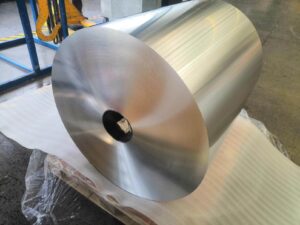
Discover primer coated aluminium foil with excellent coating adhesion, paglaban sa kahalumigmigan, smooth surface quality, and reliable performance for flexible packaging and lamination.
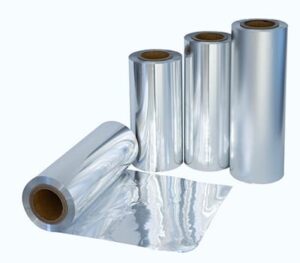
Flexible packaging aluminum foil ay isang manipis na foil na gawa sa aluminyo na karaniwang ginagamit sa packaging ng pagkain at pharmaceutical packaging. Hindi tulad ng hard aluminum foil, nababaluktot packaging aluminyo foil ay malambot at maaaring umangkop sa iba't ibang mga hugis ng mga lalagyan, kaya ito ay malawakang ginagamit para sa packaging ng pagkain at gamot.
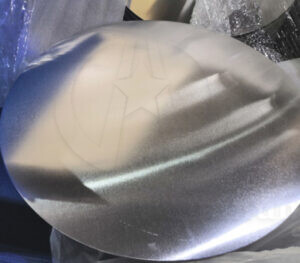
Bilang isa sa mga pangunahing tagagawa ng aluminyo bilog sa Chinese market, Ang aming aluminyo bilog ay ginawa gamit ang pinakamahusay na raw materyales at makinarya, Kabilang sa mga pangunahing produkto ang 1000 serye ng mga, 3000 serye ng mga, 5000 serye at 8000 serye ng mga, Na may isang output ng higit sa 5000 tonelada / buwan
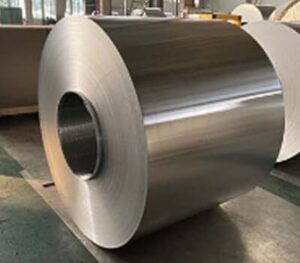
3105 aluminyo coil ay isang 3000 serye aluminyo haluang metal: ang pangunahing alloying karagdagan ay mangganeso, na kung saan ay formulated para sa pangunahing pagbuo sa mga pekeng mga produkto.
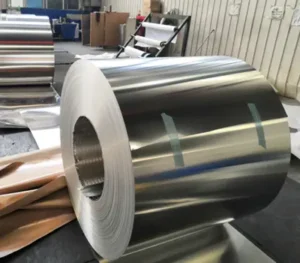
Ang Huawei Aluminum ay ang iyong maaasahang kasosyo para sa 1070 Mga produkto ng Aluminum Coil. Sa aming pangako sa kalidad, Customize, at mapagkumpitensya na pagpepresyo, layunin naming matugunan at lumampas sa iyong mga inaasahan.
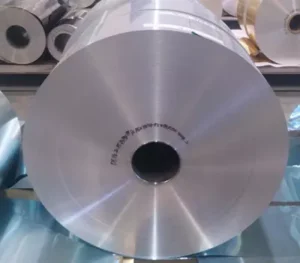
Air conditioner aluminum foil ay isang materyal na ginagamit upang gumawa ng air conditioner heat exchangers. Ang mga pangunahing tampok nito ay magaan at manipis, magandang thermal kondaktibiti, at paglaban sa kaagnasan.
No.52, Dongming Road, Zhou Zhengzhou, Henan, Tsina
Henan Huawei Aluminyo Co., Ltd, Isa Sa Ang Pinakamalaking Aluminum Supplier Sa China Henan,Kami ay Itinatag Sa 2001, At Mayroon kaming mayaman na karanasan sa pag-import at pag-export at mataas na kalidad na mga produkto ng aluminyo
Mo – Sat, 8SA – 5PM
Linggo: Username or email address *
© Disclaimer © 2023 Henan Huawei Aluminium Co., Ltd

Pinakabagong Mga Komento
Mahal na Sir, Please offer your best FOB Prices specs are as under ALUMINIUM STRIP (AL=99.50% MIN) SUKAT:450 X32 X6 MM. DIN EN 570 EN-AW 1050 A, QUANTITY=3400KG
Hello po, Gusto mo bang maging kaya mabait upang mag alok ng item tulad ng sumusunod: Coil 0,6х1250 (1000)mm EN AW-3105 5tons
Hello po, Maaari mo bang i alok sa akin ang mga plato ng Aluminium? Actally kailangan ko: 110mm x 1700mm x 1700mm 5083 H111 - 21 pcs Next year planed is 177 mga pc
Mahusay na artikulo. natuwa naman ako, na search ko ang article na ito. Maraming tao ang tila, na mayroon silang maaasahang kaalaman sa paksa, Ngunit ito ay madalas na hindi ang kaso. Kaya ang aking kaaya ayang sorpresa. Bilib na bilib ako. Tiyak na irerekomenda ko ang lugar na ito at i drop sa pamamagitan ng mas madalas, para makakita ng mga bagong bagay.
kinakailangan ng aluminium strip