Korrosjon av aluminium og aluminiumslegeringer omfatter hovedsakelig gropdannelse, intergranulær korrosjon, spenningskorrosjonssprekker, lagdelt korrosjon, osv. Selv om aluminium har en relativt høy korrosjonsmotstand, uansett hvilket metallmateriale det er, uansett hvor høy korrosjonsmotstanden er, det vil alltid gi mer eller mindre korrosjonstap under bruk.
Korrosjon av aluminium og aluminiumslegeringer omfatter hovedsakelig gropdannelse, intergranulær korrosjon, spenningskorrosjonssprekker, lagdelt korrosjon, osv. Selv om aluminium har en relativt høy korrosjonsmotstand, uansett hvilket metallmateriale det er, uansett hvor høy korrosjonsmotstanden er, det vil alltid gi mer eller mindre korrosjonstap under bruk. Det årlige korrosjonstapet av aluminium er ca 0.5% av den årlige aluminiumsproduksjonen. De 6000 serielegering har den største produksjonen blant deformerte aluminiumslegeringer. Selv om dens korrosjonsbestandighet ikke er like god som 1000 serie, 3000 serie, og 5000 serie aluminiumslegeringer, det er mye større enn det 2000 serie og 7000 serie aluminiumslegeringer. Den intergranulære tendensen til 6000 serielegering er også relativt stor. De 6000 serie aluminiumslegering materialer som brukes i viktige strukturer bør vurderes for intergranulær korrosjonsfølsomhet.
Etter vanlig estimeringsmetode, de direkte økonomiske tapene forårsaket av korrosjon i Kina hvert år utgjør ca 3% av BNP (brutto nasjonalprodukt), og stålet som forbrukes av korrosjon utgjør ca 1/3 av den årlige produksjonen, hvorav ca 1/10 av den totale produksjonen er ikke-resirkulerbar. Korrosjonsmotstanden til aluminium og aluminiumslegeringer er mye høyere enn for stål, og korrosjonstapet er mye mindre enn for stål. I 2020, Kinas primære aluminiumsproduksjon var 37.3 millioner tonn. I følge dette anslaget, korrosjonstapet av aluminium var ca 186,500 tonn.
Fra morfologien til korrosjon, aluminiumskorrosjon kan deles inn i omfattende korrosjon og lokal korrosjon. Førstnevnte kalles også uniform korrosjon, også kjent som total korrosjon, som refererer til jevn korrosjon og tap av overflaten av materialet i kontakt med miljøet. Korrosjonen av aluminium i alkalisk løsning er en typisk jevn korrosjon, som alkalisk vasking. Korrosjonsresultatet er at aluminiumsoverflaten blir tynnere i omtrent samme hastighet og vekten reduseres. Imidlertid, det skal påpekes at absolutt jevn korrosjon ikke eksisterer, og tykkelsesreduksjonen varierer fra sted til sted. Lokalisert korrosjon refererer til korrosjon som er begrenset til et bestemt område eller en del av en struktur, og kan deles inn i følgende kategorier:
Pitting oppstår i et svært lokalisert område eller en del av en metalloverflate, forårsaker huler eller groper som utvider seg innover og til og med forårsaker perforering. Hvis gropdiameteren er mindre enn gropdybden, det kalles pitting; hvis gropdiameteren er større enn gropdybden, det kan kalles pitting. Faktisk, det er ingen streng grense mellom pitting og pitting. Typisk gropkorrosjon oppstår når aluminium er i en kloridholdig vandig løsning. Blant aluminiumskorrosjon, pitting er det vanligste, som er forårsaket av forskjellen mellom potensialet til et visst område av aluminium og matrisepotensialet, eller ved tilstedeværelse av urenheter med forskjellige potensialer enn aluminiummatrisepotensialet.

Pitting
This type of corrosion is a selective corrosion that occurs at the grain boundary of a metal or alloy when the grains or crystals themselves are not significantly corroded, which will cause a sharp drop in the mechanical properties of the material, resulting in structural damage or accidents. The reason for intergranular corrosion is that the grain boundaries are very active under certain conditions, such as impurities at the grain boundaries, or an increase or decrease in a certain alloy element at the grain boundaries, det vil si, there must be a thin layer of area on the grain boundaries that is electronegative to the rest of the aluminum, and it corrodes first. This type of corrosion can occur in high-purity aluminum in hydrochloric acid and high-temperature water. AI-Cu, AI-Mg-Si, Al-Mg, and Al-Zn-Mg alloys are all sensitive to intergranular corrosion.
Galvanic corrosion is also a characteristic corrosion form of aluminum. When a less active metal and a more active metal such as aluminum (anode) are in contact in the same environment or when a conductor is connected, a galvanic couple is formed and current flows, causing galvanic corrosion. Galvanic corrosion is also called bimetallic corrosion or contact corrosion. The natural potential of aluminum is very negative. When aluminum contacts other metals, aluminum always acts as an anode, and corrosion is accelerated. Almost all aluminum and aluminum alloys cannot avoid galvanic corrosion. The greater the potential difference between the two metals in contact, the more serious the galvanic corrosion. It should be noted that in galvanic corrosion, arealfaktoren er ekstremt viktig, og en stor katode og en liten anode er den mest ugunstige kombinasjonen.
Når samme eller forskjellige metaller er i kontakt, eller når metaller er i kontakt med ikke-metaller, en sprekk vil bli dannet, og korrosjon vil oppstå ved sprekken eller dens nærhet. Det er ingen korrosjon utenfor sprekken, som er forårsaket av mangel på oksygen i sprekken, fordi det dannes en konsentrasjonscelle på dette tidspunktet. Spaltekorrosjon har nesten ingenting med legeringstypen å gjøre, og til og med svært korrosjonsbestandige legeringer vil forekomme. Det sure miljøet på toppen av sprekken er drivkraften til korrosjon, som er en type korrosjon under sediment (skala). Korrosjonen under mørtelen på overflaten av 6063 legerte arkitektoniske aluminiumsprofiler er en svært vanlig sprekkkorrosjon under skala. Flensforbindelsesflater, mutterfesteflater, overlappende overflater, sveise porer, silt, skala, urenheter, osv. under rustlaget og på metalloverflaten til sedimentlaget kan alle forårsake sprekkkorrosjon.
Spenningskorrosjonssprekker er korrosjonssprekker forårsaket av sameksistensen av strekkspenning og spesifikke korrosive medier. Spenning kan være ytre eller gjenværende spenning inne i metallet. Sistnevnte kan være forårsaket av deformasjon under bearbeiding og produksjon, eller ved drastiske temperaturendringer under bråkjøling, eller ved volumendringer forårsaket av endringer i den indre strukturen. Stress forårsaket av nagling, bolting, presspasning, og krympetilpasning er også restspenning. Når strekkspenningen på metalloverflaten når flytegrensen Rpo.2, stress corrosion cracking will occur. 2000 serie og 7000 series aluminum alloy thick plates will produce residual stress during quenching, which should be eliminated by pre-stretching before aging treatment to avoid deformation during processing of aircraft parts or even bringing it into the parts.

Spenningskorrosjonssprekker
This corrosion is also called delamination, peeling, and layered corrosion, which can be simply called exfoliation. It is a special corrosion form of 2000 serie, 5000 serie, 6000 serie, og 7000 serie legeringer. It is more common in extruded materials. Once it occurs, it can be peeled off layer by layer like mica.
This is a type of corrosion that can develop in a worm-like manner under aluminum paint or other coatings, but this type of corrosion has not been found under anodized films. It generally occurs under the coating of aircraft aluminum structures and architectural or structural aluminum parts. Filiform corrosion is related to material composition, pre-coating pretreatment and environmental factors. Environmental factors refer to temperature, fuktighet, chlorides, osv.
Among the deformed aluminum alloys used today, the most widely used are heat-treated and strengthened 6000 serie legeringer, which are a type of Al-Mg-Si and Al-Mg-Si-Cu alloys. I 2018, a total of 706 common and uncommon alloys were registered with the Aluminum Association, Inc., of which 6000 series alloys were the most numerous, med 126, accounting for 18%. They have been widely used in the construction industry, structural fields and transportation equipment because they have good forming and processing properties, moderate strength and excellent corrosion resistance. Imidlertid, if the alloy composition ratio is not appropriate, or the heat treatment parameters are not properly selected, or the processing and forming are not appropriate, then intergranular corrosion (IGC) will occur in a chlorine-containing environment.
I de fleste tilfeller, intergranular corrosion occurs in alloys containing a small amount of copper and a high Si/Mg ratio. Vanligvis, the copper content of most copper-containing alloys is no more than 0.4%. Only 6013, 6113, 6056, og 6156 have a copper content as high as 1.1%. Adding copper to Al-Mg-Si alloys is to improve the mechanical properties of the alloy. Studies have found that when observing alloys with intergranular corrosion sensitivity with high-resolution scanning transmission electron microscopy, copper-rich segregation layers and cathodic Q phase precipitates are often found. The Q phase is a quaternary intermetallic phase with a molecular formula of Cu2Mg8 Si5Al4. Det feller ut langs korngrensene, forårsaker at den tilstøtende faste løsningen gjennomgår anodisk oppløsning for å danne en bunnfallfri sone.

Intergranulær korrosjon av 6000 serie legeringer
Ved bestemmelse av den intergranulære korrosjonsfølsomheten til aluminiumslegeringer, det er to vanlige testmetoder: felttest og akselerert nedsenkingstest. I den akselererte testen, for å akselerere korrosjonen, kaliumkloridløsning som inneholder saltsyre (ISO 11846 Metode B) eller kaliumkloridløsning med hydrogenperoksid (ASTM G110) brukes ofte. Etter testen, tverrsnittet av prøven er metallografisk observert eller dens mekaniske egenskapstap måles. Resultatene av den akselererte ISO11846-testen er svært konsistente med resultatene fra felttesten for marin atmosfære. Imidlertid, i den akselererte testen, the intergranular corrosion-sensitive aluminum material has severe corrosion (uniform intergranular corrosion) at almost all grain boundaries near the surface of the sample, while the surface of the field test sample only corrodes in limited areas (local corrosion). Despite this, the accelerated test is still a standard method that can accurately determine whether the material has intergranular corrosion.
The automotive industry often uses the ISO 11846 Method B standard to determine whether the 6000 series aluminum alloy has intergranular corrosion. When testing according to this standard, first immerse a small sample (overflateareal <20cm2) in an acidic sodium chloride solution (pH = 1) at room temperature for 24 timer, and then perform a metallographic examination to determine the type of corrosion, pitting or intergranular corrosion. Prosentandelen av overflaten som er skadet av korrosjon og maksimal korrosjonsdybde skal fortsatt bestemmes. Nyere studier har vist at noen store endringer i testforholdene er tillatt uten å ha stor innvirkning på reproduserbarheten av testresultatene. Spesielt, standarden fastsetter at forholdet mellom elektrolyttvolumet og prøveoverflaten ikke må være mindre enn 5 ml/cm2, ellers vil det ha stor innvirkning på den intergranulære korrosjonshastigheten.
Betingelsen for korrosjon på prøveoverflaten er at det må være en katodisk reaksjon (hydrogenutfelling og oksygenreduksjon). pH-verdien til testløsningen øker med tiden, som reduserer elektrolyttkorrosjonen.
Blant de 8 serie deformerte aluminiumslegeringer, de 6000 serielegering er en type Al-Mg-Si (Cu, Zn) legering, one of the alloys most susceptible to intergranular corrosion, det vil si, this series of alloys has a fairly strong sensitivity to intergranular corrosion.
In order to test the intergranular corrosion tendency of 6000 serie legeringer, one of the most effective methods is to perform alkaline etching and then decontamination after the ISO 11846 standard test, and the decontamination treatment uses concentrated nitric acid solution. Imidlertid, etching for 2min-5min in a NaOH solution with a temperature of 50℃-60℃ and a concentration of (5-10) wt% will affect the test results.
An effective alternative to alkaline etching is to use nitric acid/hydrofluoric acid solution, which can effectively remove aluminum from iron-rich primary particles on the surface. It is known that aluminum particles can accelerate the corrosion of aluminum alloys in chloride solutions because they are local microscopic cathodes and these particles are also the source of intergranular corrosion (IGC). Compared with corrosion in alkaline solutions, alloys corrode more slowly in nitric acid/fluoride solutions.
6000 series alloy is not only the most widely used, largest-volume, most diverse (brand) deformed aluminum alloy, but also one of the most sensitive to intergranular corrosion. Imidlertid, as long as the process specifications, especially the heat treatment process, are strictly followed in production, the structure is reasonably designed, and the production is excellent, this corrosion can be completely avoided. The intergranular corrosion sensitivity of 6000 seriens legeringsstrukturer og deler er også nært knyttet til deres arbeidsmiljø, så full oppmerksomhet bør vies når du designer strukturen.
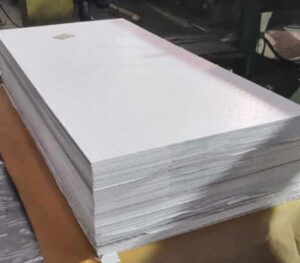
Finn holdbare og pålitelige 4x10 aluminiumsplater for dine behov. Utforsk vårt brede utvalg og bestill i dag.
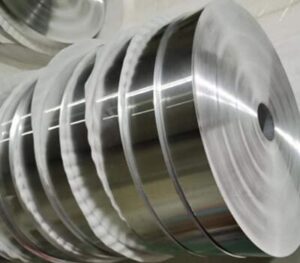
Huawei aluminium er en ledende produsent av aluminiumslister i Kina, spesialiserer seg på produksjon og salg av aluminiumsspoler, aluminiumslister og aluminiumsfolier.
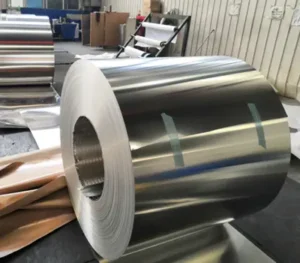
Huawei Aluminium er din pålitelige partner for 1070 Aluminium Coil produkter. Med vår forpliktelse til kvalitet, tilpasning, og konkurransedyktige priser, vi tar sikte på å møte og overgå dine forventninger.
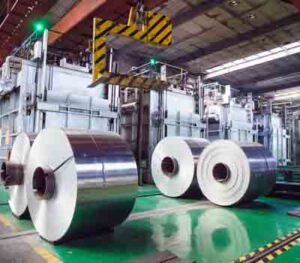
Vår forpliktelse til kvalitet, variasjon, og tilpasning sikrer at du finner den perfekte isolasjonsaluminiumsspolen for prosjektet ditt.
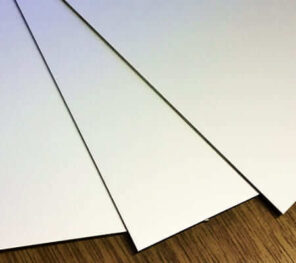
Oppdage 5005 Anodisert aluminiumsplate med utmerket korrosjonsbestandighet, formbarhet, og attraktive finisher. Egendefinerte størrelser, temperament, farger, og overflatebehandlinger tilgjengelig.
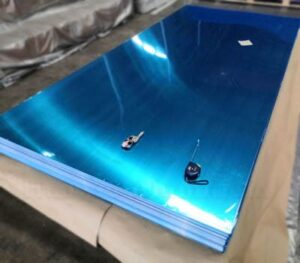
4x8 aluminiumsplate er en vanlig størrelse på aluminiumsplate, også kjent som standard størrelse aluminiumsplate, referert til som standardark.
Nr.52, Dongming Road, Zhengzhou, Henan, Kina
Henan Huawei Aluminium Co., Ltd, En av de største aluminiumsleverandørene i Kina Henan,Vi er etablert i 2001, og vi har rik erfaring innen import og eksport og høykvalitets aluminiumsprodukter
man – lør, 8AM – 17:00
søndag: Lukket
© Copyright © 2023 Henan Huawei Aluminium Co., Ltd

Siste kommentarer
Kjære Sir, Please offer your best FOB Prices specs are as under ALUMINIUM STRIP (AL=99,50 % MIN) STØRRELSE:450 X32 X6 MM. DIN EN 570 EN-AW 1050 EN, ANTALL=3400KG
Hallo, Vil du være så snill å tilby varen som følger: Spole 0,6х1250 (1000)mm EN AW-3105 5tons
Hallo, Kan du tilby meg aluminiumsplater? Egentlig trenger jeg: 110mm x 1700 mm x 1700 mm 5083 H111 - 21 pcs Next year planed is 177 stk
Flott artikkel. Jeg var henrykt, at jeg fant denne artikkelen. Mange tror det, at de har pålitelig kunnskap om dette emnet, men dette er ofte ikke tilfelle. Derfor min hyggelige overraskelse. Jeg er imponert. Jeg vil definitivt anbefale dette stedet og komme tilbake oftere, å se nye ting.
krav til aluminiumslist