Discover high-quality 8011 H18 Capsule Blister Aluminum Foil for pharmaceutical PTP packaging. Customized thickness, lapad ng katawan, patong na patong, and roll specifications.
8011 H18 Capsule Blister Aluminum Foil is a specialized aluminum material widely used in pharmaceutical blister packaging.
It serves as the lidding layer that seals preformed blister cavities containing capsules, mga tablet, and other solid-dose products.
As the outer sealing material of a blister pack, aluminum foil helps protect pharmaceutical products from moisture, liwanag, oxygen, and external contamination.
Its barrier performance, combined with a suitable heat-seal lacquer, supports product stability and reliable packaging during storage, transportasyon, and distribution.
Ang 8011 alloy belongs to the 8xxx series of aluminum alloys, while H18 indicates a full-hard, strain-hardened temper.
This combination provides the strength and stiffness required for lidding applications, particularly where the foil must maintain dimensional stability during printing, Captcha *, and high-speed packaging operations.
8011 H18 is commonly used as PTP (Press-Through Packaging) lidding foil. It should be distinguished from 8021 aluminyo foil, which is commonly used as the forming layer in cold-form Alu-Alu blister packaging. The two materials serve different functions and require different mechanical properties.
8011 H18 Capsule Blister Aluminum Foil consists of an 8011 aluminum alloy substrate processed to the H18 temper and generally combined with printing, primer, protective lacquer, or heat-seal lacquer layers.
It is primarily designed for pharmaceutical blister lidding. During packaging, the foil covers preformed cavities containing capsules and seals them through controlled heat and pressure.
Consumers can then push the capsule through the aluminum lidding when opening the package.
8011 is an aluminum alloy in the 8xxx series. It mainly contains aluminum, bakal na bakal, at silicon, with smaller amounts of other alloying elements.
The controlled addition of iron and silicon contributes to the alloy’s strength and processing characteristics.
Ang mga katangiang ito ay gumagawa ng 8011 suitable for various thin-gauge aluminum foil applications, including pharmaceutical packaging, packaging ng pagkain, and household foil.
For capsule blister lidding, 8011 provides a practical balance of mechanical performance, kalidad ng ibabaw, and manufacturing consistency.
Kemikal na komposisyon ng 8011 Aluminyo
| Elemento | Komposisyon ng Kemikal (wt.%) |
| Silicon (Si Si) | 0.50–0.90 |
| bakal na bakal (Fe) | 0.60–1.00 |
| Tanso (Cu) | ≤ 0.10 |
| Mga mangganeso (Mn) | ≤ 0.20 |
| Magnesium (Mg) | ≤ 0.05 |
| Chromium (Cr) | ≤ 0.05 |
| Sink (Zn) | ≤ 0.10 |
| Titanium (Ti) | ≤ 0.08 |
| Iba pang mga Elemento, Ang bawat isa | ≤ 0.05 |
| Iba pang mga Elemento, Kabuuang | ≤ 0.15 |
| Aluminyo (Al) | Natitira |
Tala: The table provides commonly referenced 8011 composition limits. Buyers should confirm the applicable standard and product designation, such as AA 8011 or EN AW-8011A, before approving the material.
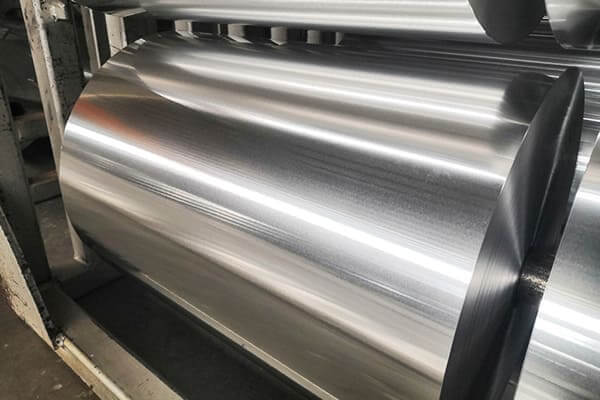
8011 H18 Aluminum Foil Jumbo Roll
H18 is a fully work-hardened temper produced through cold working without a subsequent annealing treatment that would soften the material.
Cold rolling increases the strength and hardness of aluminum foil while reducing its elongation.
Bilang isang resulta, 8011 H18 offers greater stiffness and resistance to deformation than its O-temper counterpart.
For blister lidding applications, these characteristics help the foil maintain its shape during printing, patong na patong, Captcha *, rewinding, at pag iimpake.
| Temper | Material Condition | Main Characteristics | Mga Karaniwang Aplikasyon |
| O | Fully annealed | Malambot na, may kakayahang umangkop, high ductility | Flexible and deep-forming foil applications |
| H14 | Half-hard | Moderate strength and formability | Selected packaging and industrial foil |
| H18 | Full-hard | Mataas na lakas, tigas na tigas, and stiffness | Pharmaceutical blister lidding foil |
The H18 temper is particularly suitable when the packaging process requires a relatively stiff foil that can run consistently through converting and sealing equipment.
Gayunpaman, it is not intended for deep drawing into blister cavities.
8011 H18 capsule blister foil generally combines an aluminum substrate with functional coating layers.
The exact structure depends on whether the product is printed or unprinted.
The main layers perform different functions:
The coating formulation, coating weight, and layer arrangement should match the customer’s packaging materials and sealing conditions.
Ang pagganap ng 8011 H18 capsule blister foil depends on both the aluminum substrate and its functional coating layers.
Its key properties include mechanical strength, proteksyon ng barrier, kalidad ng ibabaw, heat-sealing compatibility, and dimensional stability.
The H18 temper gives 8011 aluminyo foil high strength and stiffness compared with softer tempers.
These characteristics help the thin foil maintain a stable shape during printing, patong na patong, Captcha *, rewinding, and automatic blister packaging.
Adequate tensile strength also helps reduce handling-related damage during converting.
Gayunpaman, the foil must still meet the flexibility and opening requirements of the finished blister package.
Mechanical performance depends on foil thickness, rolling conditions, and the applicable material specification.
Buyers should confirm tensile strength and elongation values for the actual product rather than rely on a single universal figure.
Aluminum foil provides an effective barrier against light, singaw ng tubig, and oxygen when the material remains continuous and free from defects.
This barrier function helps protect capsules from environmental exposure that may affect their appearance, physical condition, or stability.
The overall protection also depends on foil thickness, pinhole quality, Integridad ng pagbubuklod, and the design of the complete blister package.
A high-quality aluminum substrate cannot compensate for an incomplete or defective heat seal.
Surface quality is essential for pharmaceutical blister foil because defects can affect both packaging appearance and performance.
Manufacturers should control:
Pinhole inspection is particularly important because defects may reduce the barrier performance of thin aluminum foil.
Buyers should establish acceptable limits according to the required foil thickness and quality specification.
Heat-seal lacquer is a critical functional layer of 8011 H18 capsule blister foil.
It enables the aluminum lidding material to bond with the blister-forming film under controlled temperature, presyon, and dwell time.
Depending on the coating formulation, the foil may be designed for sealing with PVC, PVC / PVDC, or other compatible packaging materials.
Reliable heat sealing helps prevent accidental opening and reduces the risk of contamination during storage and transportation.
The appropriate lacquer must match the forming film. Buyers should evaluate sealing strength and package integrity using the actual packaging materials and equipment.
Pharmaceutical blister foil often carries product names, mga logo, Impormasyon sa Dosis, mga numero ng batch, and other identification details.
A uniform aluminum surface and suitable primer or coating system help improve ink adhesion and printing consistency.
Protective over lacquer can further reduce ink damage during handling and packaging.
Common surface options include:
High-speed blister packaging requires consistent foil thickness, lapad ng katawan, patag na, and winding quality.
The H18 temper helps maintain stiffness during web handling, while accurate slitting and rewinding support stable feeding through packaging equipment.
Manufacturers should also control roll tension, edge quality, telescoping, and winding alignment to minimize production interruptions.
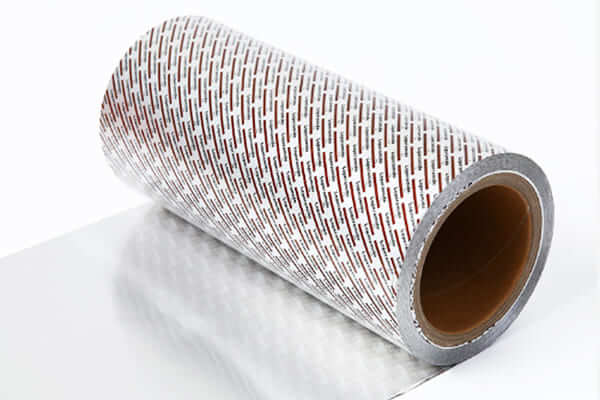
Printed 8011 Blister Aluminum Foil
The specifications of 8011 H18 capsule blister foil cover alloy composition, Pamahiin, kapal naman, mekanikal na mga katangian, coating structure, and roll dimensions.
Buyers should select these parameters according to the blister packaging machine, forming film, and required packaging performance.
| Parameter | Typical Specifications |
| haluang metal | 8011 |
| Temper | H18 |
| Uri ng Produkto | Pharmaceutical capsule blister lidding foil |
| Kapal ng Aluminum | 20, 25, 30 M |
| Lapad ng katawan | Na customize na, commonly 60–800 mm |
| Ibabaw | Isang panig maliwanag, one side matte |
| Coating Structure | Primer / Ink / Aluminyo / Heat-Seal Lacquer |
| Coating Side | Single-sided or customized |
| Heat-Seal Compatibility | PVC, PVC / PVDC, and other compatible films |
| Pag-print | Plain or printed |
| Core Panloob na Diameter | 76 mm / 152 mm |
| Roll Outer Diameter | Na customize na |
| Packaging | Protective pharmaceutical foil roll packaging |
Tala: These are common commercial options rather than universal requirements. Actual specifications and tolerances should be confirmed with the manufacturer.
The coating system is an essential part of 8011 H18 capsule blister aluminum foil.
Although the aluminum substrate provides the primary barrier against light, kahalumigmigan, and gases, functional coatings improve printing performance, protect the surface, and enable reliable heat sealing.
The coating structure should match the forming film, printing requirements, packaging equipment, and intended pharmaceutical application.
Heat-seal lacquer is one of the most important functional coatings for pharmaceutical blister lidding foil.
Manufacturers apply it to the side that contacts the blister-forming film.
During packaging, heat and pressure activate the lacquer and create a bond between the aluminum foil and the forming material.
A suitable heat-seal layer helps maintain package integrity and reduces the risk of accidental opening or contamination.
Common forming materials include:
Primer coating prepares the aluminum surface for printing or additional protective layers.
It improves ink adhesion and helps create a more uniform surface for downstream processing.
For unprinted pharmaceutical blister foil, a primer layer allows customers to print product information during their own converting process.
Its main functions include:
Primer selection should consider the printing ink, printing method, drying conditions, and pharmaceutical packaging requirements.
Printed 8011 H18 blister foil helps pharmaceutical manufacturers display essential product information and brand details.
Common printing content includes:
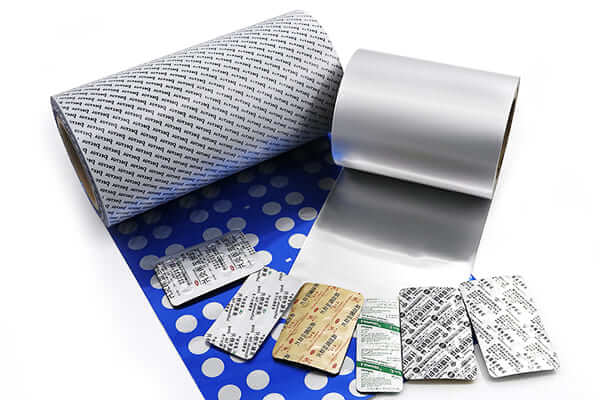
Unprinted vs Printed Blister Aluminum Foil
8011 H18 aluminum foil primarily serves as the lidding material in pharmaceutical blister packaging.
Its mechanical strength, mga katangian ng barrier, and compatibility with suitable heat-seal coatings make it useful for packaging capsules and tablets.
Capsule packaging is a major application of 8011 H18 blister lidding foil.
During production, capsules enter preformed cavities made from materials such as PVC or PVC/PVDC.
The aluminum foil then covers the cavities and seals to the forming film through a compatible heat-seal lacquer.
Its main functions include:
8011 H18 foil is also widely used for tablet PTP packaging.
Its stiffness and mechanical strength support stable web handling and help the lidding material maintain its structure during packaging.
The aluminum layer provides barrier protection, while the heat-seal lacquer bonds the foil to the forming film.
Typical applications include:
8011 H18 lidding foil can be used with PVC and PVC/PVDC forming films when the heat-seal lacquer matches the selected material.
| Blister Structure | Forming Material | Role of 8011 H18 Foil |
| PVC-Alu Blister | PVC film | Provides lidding and barrier protection |
| PVC/PVDC-Alu Blister | PVC/PVDC film | Seals the formed cavity and provides an aluminum barrier layer |
| Other Compatible Blister Structures | Film specified by the packaging design | Provides lidding when the lacquer system is compatible |
PVC is commonly selected for conventional thermoformed blister packaging. PVC/PVDC structures provide an additional barrier contribution from the PVDC layer.
The appropriate structure depends on the medicine’s moisture sensitivity, shelf-life requirements, packaging cost, and regulatory requirements.
Printed 8011 H18 foil supports product identification and pharmaceutical traceability.
Manufacturers can print product names, Impormasyon sa Dosis, mga logo, batch details, and other approved information on the outer surface.
Clear and durable printing helps reduce identification errors and supports brand consistency.
For regulated pharmaceutical products, the artwork and printed information should follow the customer’s approved packaging specifications.

8011 H18 Capsule Blister Aluminum Foil
In addition to conventional capsules and tablets, 8011 H18 lidding foil may be considered for other solid-dose blister products when the packaging design and sealing requirements are suitable.
Gayunpaman, not every pharmaceutical package uses the same foil structure.
Buyers should evaluate the product’s sensitivity, forming material, sealing conditions, and opening requirements before selecting the foil.
Ang produksyon ng 8011 H18 capsule blister aluminum foil involves several key stages.
Strict process control helps ensure consistent thickness, mekanikal na mga katangian, coating quality, and packaging performance.
Manufacturers prepare the 8011 aluminum alloy according to the required chemical composition.
The molten aluminum is then cast into slabs for further processing.
Hot rolling reduces the slab thickness, while cold rolling gradually produces the required foil gauge.
Controlled cold working gives the aluminum its H18 full-hard temper and required mechanical properties.
The foil surface undergoes cleaning to remove rolling oil, alikabok na, at iba pang mga contaminants.
Proper surface preparation improves the adhesion of primers, printing inks, and functional coatings.
Manufacturers apply primer, printing ink, protective lacquer, and heat-seal lacquer according to the required product structure.
Coating uniformity and compatibility with the blister-forming film are important quality factors.
Controlled drying and curing help the coatings and inks develop the required adhesion, tibay ng katawan, and heat-sealing performance.
The coated master roll is slit into customer-specified widths and rewound according to the required core diameter, roll diameter, and winding specifications.
Finished rolls undergo inspection for thickness, lapad ng katawan, surface defects, coating quality, paglilimbag, and winding condition.
Protective packaging helps prevent contamination and damage during storage and transportation.

Blister Aluminum Foil Production
Quality control is essential for 8011 H18 capsule blister aluminum foil because defects in the substrate, patong na patong, or sealing layer may affect the integrity of pharmaceutical packaging.
A comprehensive inspection program should cover raw materials, mekanikal na mga katangian, foil dimensions, kalidad ng ibabaw, coating performance, and finished-package sealing.
Chemical composition testing verifies that the aluminum substrate meets the specified 8011 alloy requirements.
Manufacturers typically check the main alloying elements, including iron and silicon, together with the limits for other elements.
This inspection helps ensure material consistency and confirms that the substrate meets the agreed alloy specification.
Mechanical testing evaluates whether the foil meets the requirements of the H18 temper.
Common inspection items include:
These properties influence foil stiffness, resistance to deformation, and performance during converting and packaging.
Testing should follow the agreed material standard and thickness-specific requirements.
Accurate dimensions are important for stable production and compatibility with blister packaging equipment.
| Inspection Item | Quality Control Purpose |
| Kapal ng Aluminum | Verifies substrate thickness and tolerance |
| Foil Width | Ensures compatibility with packaging equipment |
| Roll Diameter | Checks machine loading requirements |
| Core Panloob na Diameter | Confirms roll installation compatibility |
| Winding Quality | Identifies loose winding, mga wrinkles, and telescoping |
| Edge Quality | Checks for burrs and irregular trimming |
Manufacturers should distinguish aluminum substrate thickness from coating weight.
The two parameters measure different parts of the finished product and should have separate specifications.
Surface inspection identifies defects that may affect barrier performance, hitsura, or downstream processing.
Common inspection items include:
Pinhole inspection is particularly important for thin aluminum foil because excessive defects may reduce its protective performance.
Acceptance limits should reflect the foil thickness, applicable standard, and customer’s quality requirements.
Coating inspection verifies that the functional layers meet the required specifications.
| Test Item | Inspection Purpose |
| Timbang ng Patong | Checks the amount of coating applied |
| Coating Uniformity | Identifies uneven coverage |
| Coating Adhesion | Evaluates bonding between coating and aluminum |
| Pagdikit ng Tinta | Checks printing durability |
| Color Consistency | Verifies printing appearance |
| Surface Inspection | Identifies coating defects and contamination |
For printed foil, manufacturers should also check printing registration, kalinawan, and alignment.
No single foil suits every pharmaceutical product. The right choice depends on how sensitive the product is, how the pack is formed, and how the patient opens it.
| Pag-aari | 8011 H18 (Email Address *) | 8021 (cold-form) | 8079 (cold-form) | 1235 / 1145 (soft or hard) |
| Main role | Lidding foil, push-through | Cold-form base web | Cold-form base web | General foil, Email Address *, mga laminate |
| Temper | H18 (full-hard) | O (malambot na) | O (malambot na) | O or H18, depending on use |
| Typical thickness | 20–30 μm | 45–60 μm (as laminate) | 40–60 μm (as laminate) | 6.5–30 μm |
| Formability | Not formed | Napakahusay (deep draw) | Napakaganda | Good in soft temper |
| Push-through | Napakahusay | Not applicable | Not applicable | Good in hard temper |
| Hadlang | Mataas na (foil side) | Full barrier, both sides | Full barrier, both sides | Mataas na |
| Relative cost | Low to medium | Mas Mataas | Mas Mataas | Mababa ang |
| Typical use | Capsule and tablet blisters | Alu-alu blisters | Alu-alu blisters | Papel de liha sa bahay, some lidding |
Henan Huawei Aluminyo Co., Ltd. has supplied aluminum products to international markets since 2001.
With more than 20 years of experience in aluminum manufacturing and sales, the company supports customers looking for consistent material quality and customized specifications.
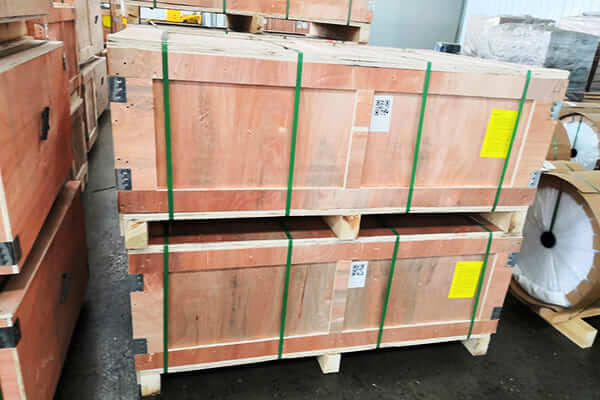
Huawei Packaged 8011 H18 Aluminum Foil
Huawei Aluminum can discuss 8011 aluminum foil requirements based on your packaging design and converting equipment, kasama na ang:
For pharmaceutical applications, customers should confirm the coating structure, lacquer specifications, and compatibility with PVC, PVC / PVDC, or other forming films before placing an order.
Stable foil quality helps reduce defects during printing, patong na patong, Captcha *, and blister packaging.
Huawei Aluminum emphasizes inspection of key product characteristics, kasama na ang:
Customers can also discuss inspection documents and third-party testing requirements before production.
Huawei Aluminum has exported aluminum products to 72 countries and regions.
The company works with overseas buyers on product specifications, pag iimpake, documentation, and shipment arrangements.
If you are sourcing 8011 H18 capsule blister aluminum foil, contact Huawei Aluminum with your required thickness, lapad ng katawan, roll dimensions, coating structure, and application details to request a quotation.
8011 H18 capsule blister aluminum foil remains the standard lidding material for solid-dose pharmaceutical packaging because it balances barrier protection, clean push-through, printability, at gastos.
Its value depends on details: low pinhole counts, controlled hardness, a clean surface for coating, a lacquer matched to the forming film, and rolls that run smoothly on high-speed blister machines.
Its limits are also clear. For extremely moisture-sensitive products or special formats such as child-resistant or peelable packs, cold-form alu-alu or laminated structures may be the better choice.
1. What does H18 mean on aluminum foil?
H18 is a temper designation meaning the foil is fully strain-hardened (full-hard) by cold rolling, without final softening. In foil, this gives the stiffness needed for a clean push-through action.
2. What thickness is used for capsule blister foil?
Capsule and tablet lidding foil is commonly about 20 sa 25 M, with other gauges available up to roughly 30 M. The right thickness depends on capsule size, pack design, and push-through requirements.
3. Ano ang pagkakaiba ng 8011 at 8021 papel de liha?
8011 H18 is a hard-temper lidding foil sealed over plastic pockets. 8021 is a soft, highly formable alloy used as the base web of cold-form (alu-alu) blisters, where the foil itself is stamped into pockets.
4. Ay 8011 H18 foil safe for pharmaceutical packaging?
It is widely used for this purpose. Safety in practice depends on the full foil structure, including lacquer, ink, and varnish, and on meeting the requirements of the customer’s market. Ask the supplier for compliance documents and a batch CoA instead of relying on general statements.
5. What is the difference between blister lidding foil and cold-form foil?
Lidding foil is thin, mahirap na, and sealed over a plastic pocket. Cold-form foil is a thicker, soft laminate that is formed into the pocket. Cold-form gives a full aluminum barrier on all sides at higher cost.
6. Why is heat-seal lacquer needed?
Aluminum cannot bond to plastic by itself. The lacquer melts under heat and pressure on the blister machine and creates the seal between foil and forming film. It must be matched to the film type, tulad ng PVC, PVDC, Alagang Hayop, or PP.
7. What is a pinhole, and how is it controlled?
A pinhole is a tiny hole in the foil that can allow moisture and oxygen in. It is controlled through clean melt practice, stable rolling, careful handling, and testing by light-box or automatic detection. Ask for pinhole data by batch.
8. Can foil with different bright and matte sides be used?
Oo nga. Double rolling naturally produces a bright side and a matte side. The coating side is chosen according to the converter’s process and customer requirement, so confirm which side should carry the lacquer.
9. Does 8011 H18 foil need printing or lacquer from the supplier?
Not necessarily. Some buyers purchase bare foil and print and lacquer in-house, while others buy converted foil ready for the blister machine.
10. How should blister foil be stored?
Keep rolls in original packaging in a clean, dry, temperature-stable area, away from oils, solvents, and direct sunlight. Avoid dents and edge damage, and use within the supplier’s recommended shelf life, especially for coated foil.
11. What is the minimum order quantity and lead time?
These depend on thickness, lapad ng katawan, ibabaw ng paggamot, and production schedule. Standard bare foil generally ships faster than custom coated or printed foil.
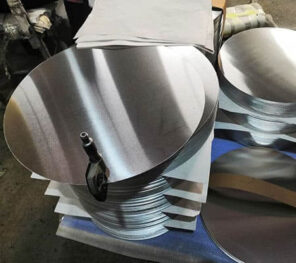
Partner with a China Aluminum Alloy Disc Supplier for versatile aluminum circles and discs. Huawei Aluminum offers a broad aluminum product portfolio, export experience, and customized solutions for industrial and decorative applications.
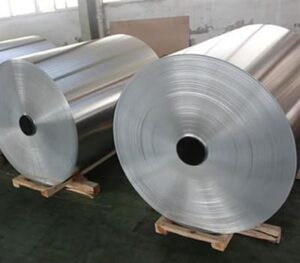
Composite aluminyo foil ay isang functional na materyal na binubuo ng aluminyo foil at iba pang mga materyales. Ito ay may iba't ibang mga katangian tulad ng antioxidant, paglaban sa init, paglaban sa kaagnasan, at pagkakabukod ng init

High-formability Colored Lacquered Aluminum Foil O Temper engineered for deep-draw lidding, blister backing and decorative packaging — excellent adhesion, low pinhole and food-grade compliance.

Learn how non-stick aluminum foil works, its high-performance coatings, paglaban sa init, and benefits in food safety and sustainability. A must-read guide for chefs and manufacturers.
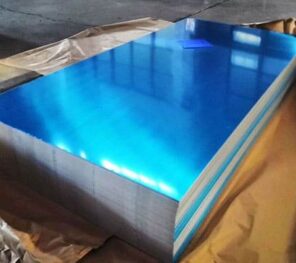
Discover marine grade 5086 H116 aluminum plate is trusted in shipbuilding, offshore structures, and seawater environments for its excellent corrosion resistance, weldability, and strength.
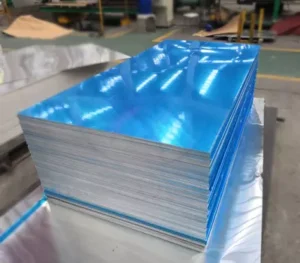
3105 Aluminum Sheet ay pagdaragdag ng ilang iba pang mga elemento sa batayan ng purong aluminyo, tulad ng cu, mg, si si, mn, atbp., Ang layunin ay upang mapabuti ang lakas ng aluminyo haluang metal
No.52, Dongming Road, Zhou Zhengzhou, Henan, Tsina
Henan Huawei Aluminyo Co., Ltd, Isa Sa Ang Pinakamalaking Aluminum Supplier Sa China Henan,Kami ay Itinatag Sa 2001, At Mayroon kaming mayaman na karanasan sa pag-import at pag-export at mataas na kalidad na mga produkto ng aluminyo
Mo – Sat, 8SA – 5PM
Linggo: Username or email address *
© Disclaimer © 2023 Henan Huawei Aluminium Co., Ltd

Pinakabagong Mga Komento
Mahal na Sir, Please offer your best FOB Prices specs are as under ALUMINIUM STRIP (AL=99.50% MIN) SUKAT:450 X32 X6 MM. DIN EN 570 EN-AW 1050 A, QUANTITY=3400KG
Hello po, Gusto mo bang maging kaya mabait upang mag alok ng item tulad ng sumusunod: Coil 0,6х1250 (1000)mm EN AW-3105 5tons
Hello po, Maaari mo bang i alok sa akin ang mga plato ng Aluminium? Actally kailangan ko: 110mm x 1700mm x 1700mm 5083 H111 - 21 pcs Next year planed is 177 mga pc
Mahusay na artikulo. natuwa naman ako, na search ko ang article na ito. Maraming tao ang tila, na mayroon silang maaasahang kaalaman sa paksa, Ngunit ito ay madalas na hindi ang kaso. Kaya ang aking kaaya ayang sorpresa. Bilib na bilib ako. Tiyak na irerekomenda ko ang lugar na ito at i drop sa pamamagitan ng mas madalas, para makakita ng mga bagong bagay.
kinakailangan ng aluminium strip