Ang kaagnasan ng aluminyo at aluminyo haluang metal ay higit sa lahat ay kinabibilangan ng pitting, intergranular kaagnasan, pag-crack ng kaagnasan ng stress, Layered kaagnasan, atbp. Bagaman ang aluminyo ay may medyo mataas na paglaban sa kaagnasan, Anuman ang materyal na metal na ito, gaano man kataas ang resistensya nito sa kaagnasan, Ito ay palaging magdudulot ng higit pa o mas kaunting pagkawala ng kaagnasan sa panahon ng paggamit.
Ang kaagnasan ng aluminyo at aluminyo haluang metal ay higit sa lahat ay kinabibilangan ng pitting, intergranular kaagnasan, pag-crack ng kaagnasan ng stress, Layered kaagnasan, atbp. Bagaman ang aluminyo ay may medyo mataas na paglaban sa kaagnasan, Anuman ang materyal na metal na ito, gaano man kataas ang resistensya nito sa kaagnasan, Ito ay palaging magdudulot ng higit pa o mas kaunting pagkawala ng kaagnasan sa panahon ng paggamit. The annual corrosion loss of aluminum is about 0.5% of the annual aluminum production. Ang 6000 series alloy has the largest output among deformed aluminum alloys. Although its corrosion resistance is not as good as that of 1000 serye ng mga, 3000 serye ng mga, at 5000 serye aluminyo alloys, it is much greater than that of 2000 serye at 7000 serye aluminyo alloys. The intergranular tendency of the 6000 series alloy is also relatively large. Ang 6000 serye aluminyo haluang metal materials used in important structures should be evaluated for intergranular corrosion sensitivity.
According to the usual estimation method, the direct economic losses caused by corrosion in China each year account for about 3% of GDP (gross national product), and the steel consumed by corrosion accounts for about 1/3 of the annual output, of which about 1/10 of the total output is non-recyclable. The corrosion resistance of aluminum and aluminum alloys is much higher than that of steel, and the corrosion loss is much smaller than that of steel. Sa 2020, China’s primary aluminum production was 37.3 milyong tonelada. According to this estimate, the corrosion loss of aluminum was about 186,500 tonelada.
From the morphology of corrosion, aluminum corrosion can be divided into comprehensive corrosion and local corrosion. The former is also called uniform corrosion, also known as overall corrosion, which refers to the uniform corrosion and loss of the surface of the material in contact with the environment. The corrosion of aluminum in alkaline solution is a typical uniform corrosion, such as alkali washing. The corrosion result is that the aluminum surface becomes thinner at an approximately the same rate and the weight is reduced. Gayunpaman, it should be pointed out that absolute uniform corrosion does not exist, and the thickness reduction varies from place to place. Localized corrosion refers to corrosion that is confined to a specific area or part of a structure, and can be divided into the following categories:
Pitting occurs in a very localized area or part of a metal surface, causing caves or pits that expand inward and even cause perforation. If the pit diameter is smaller than the pit depth, it is called pitting; if the pit diameter is larger than the pit depth, it can be called pitting. Sa katunayan, there is no strict boundary between pitting and pitting. Typical pitting corrosion occurs when aluminum is in a chloride-containing aqueous solution. Among aluminum corrosion, pitting is the most common, which is caused by the difference between the potential of a certain area of aluminum and the matrix potential, or by the presence of impurities with different potentials from the aluminum matrix potential.

Pitting
This type of corrosion is a selective corrosion that occurs at the grain boundary of a metal or alloy when the grains or crystals themselves are not significantly corroded, which will cause a sharp drop in the mechanical properties of the material, resulting in structural damage or accidents. The reason for intergranular corrosion is that the grain boundaries are very active under certain conditions, such as impurities at the grain boundaries, or an increase or decrease in a certain alloy element at the grain boundaries, na ang ibig sabihin ay, there must be a thin layer of area on the grain boundaries that is electronegative to the rest of the aluminum, and it corrodes first. This type of corrosion can occur in high-purity aluminum in hydrochloric acid and high-temperature water. AI-Cu, AI-Mg-Si, Al Mg, and Al-Zn-Mg alloys are all sensitive to intergranular corrosion.
Galvanic corrosion is also a characteristic corrosion form of aluminum. When a less active metal and a more active metal such as aluminum (anode) are in contact in the same environment or when a conductor is connected, a galvanic couple is formed and current flows, causing galvanic corrosion. Galvanic corrosion is also called bimetallic corrosion or contact corrosion. The natural potential of aluminum is very negative. When aluminum contacts other metals, aluminum always acts as an anode, and corrosion is accelerated. Almost all aluminum and aluminum alloys cannot avoid galvanic corrosion. The greater the potential difference between the two metals in contact, the more serious the galvanic corrosion. It should be noted that in galvanic corrosion, the area factor is extremely important, and a large cathode and a small anode are the most unfavorable combination.
When the same or different metals are in contact, or when metals are in contact with non-metals, a crevice will be formed, and corrosion will occur at the crevice or its vicinity. There is no corrosion outside the crevice, which is caused by the lack of oxygen in the crevice, because a concentration cell is formed at this time. Crevice corrosion has almost nothing to do with the type of alloy, and even very corrosion-resistant alloys will occur. The acidic environment at the top of the crevice is the driving force of corrosion, which is a type of corrosion under sediment (scale). The corrosion under the mortar on the surface of 6063 alloy architectural aluminum profiles is a very common crevice corrosion under scale. Flange connection surfaces, nut fastening surfaces, overlap surfaces, weld pores, silt, scale, impurities, atbp. under the rust layer and on the metal surface of the sediment layer can all cause crevice corrosion.
Stress corrosion cracking is corrosion cracking caused by the coexistence of tensile stress and specific corrosive media. Stress can be external or residual stress inside the metal. The latter may be caused by deformation during processing and manufacturing, or by drastic temperature changes during quenching, or by volume changes caused by changes in the internal structure. Stress caused by riveting, bolting, press-fitting, and shrinkage fitting is also residual stress. When the tensile stress on the metal surface reaches the yield strength Rpo.2, stress corrosion cracking will occur. 2000 serye at 7000 series aluminum alloy thick plates will produce residual stress during quenching, which should be eliminated by pre-stretching before aging treatment to avoid deformation during processing of aircraft parts or even bringing it into the parts.

Stress corrosion cracking
This corrosion is also called delamination, pagbabalat ng balat, and layered corrosion, which can be simply called exfoliation. It is a special corrosion form of 2000 serye ng mga, 5000 serye ng mga, 6000 serye ng mga, at 7000 mga haluang metal ng serye. It is more common in extruded materials. Once it occurs, it can be peeled off layer by layer like mica.
This is a type of corrosion that can develop in a worm-like manner under aluminum paint or other coatings, but this type of corrosion has not been found under anodized films. It generally occurs under the coating of aircraft aluminum structures and architectural or structural aluminum parts. Filiform corrosion is related to material composition, pre-coating pretreatment and environmental factors. Environmental factors refer to temperature, kahalumigmigan, chlorides, atbp.
Among the deformed aluminum alloys used today, the most widely used are heat-treated and strengthened 6000 mga haluang metal ng serye, which are a type of Al-Mg-Si and Al-Mg-Si-Cu alloys. Sa 2018, a total of 706 common and uncommon alloys were registered with the Aluminum Association, Inc., of which 6000 series alloys were the most numerous, kasama ang 126, accounting for 18%. They have been widely used in the construction industry, structural fields and transportation equipment because they have good forming and processing properties, moderate strength and excellent corrosion resistance. Gayunpaman, if the alloy composition ratio is not appropriate, or the heat treatment parameters are not properly selected, or the processing and forming are not appropriate, then intergranular corrosion (IGC) will occur in a chlorine-containing environment.
Sa karamihan ng mga kaso, intergranular corrosion occurs in alloys containing a small amount of copper and a high Si/Mg ratio. Karaniwan ay, the copper content of most copper-containing alloys is no more than 0.4%. Only 6013, 6113, 6056, at 6156 have a copper content as high as 1.1%. Adding copper to Al-Mg-Si alloys is to improve the mechanical properties of the alloy. Studies have found that when observing alloys with intergranular corrosion sensitivity with high-resolution scanning transmission electron microscopy, copper-rich segregation layers and cathodic Q phase precipitates are often found. The Q phase is a quaternary intermetallic phase with a molecular formula of Cu2Mg8 Si5Al4. It precipitates along the grain boundaries, causing the adjacent solid solution to undergo anodic dissolution to form a precipitate-free zone.

Intergranular kaagnasan ng 6000 mga haluang metal ng serye
When determining the intergranular corrosion sensitivity of aluminum alloys, there are two common test methods: field test and accelerated immersion test. In the accelerated test, in order to accelerate the corrosion, potassium chloride solution containing hydrochloric acid (.ISO 11846 Method B) or potassium chloride solution with hydrogen peroxide (ASTM G110) is often used. After the test, the cross section of the sample is metallographically observed or its mechanical property loss is measured. The results of the ISO11846 accelerated test are highly consistent with the results of the marine atmosphere field test. Gayunpaman, in the accelerated test, the intergranular corrosion-sensitive aluminum material has severe corrosion (uniform intergranular corrosion) at almost all grain boundaries near the surface of the sample, while the surface of the field test sample only corrodes in limited areas (local corrosion). Despite this, the accelerated test is still a standard method that can accurately determine whether the material has intergranular corrosion.
The automotive industry often uses the ISO 11846 Method B standard to determine whether the 6000 series aluminum alloy has intergranular corrosion. When testing according to this standard, first immerse a small sample (surface area <20cm2) in an acidic sodium chloride solution (pH = 1) at room temperature for 24 mga oras, and then perform a metallographic examination to determine the type of corrosion, pitting or intergranular corrosion. The percentage of the surface damaged by corrosion and the maximum corrosion depth are still to be determined. Recent studies have shown that some major changes in the test conditions are allowed without having a major impact on the reproducibility of the test results. Sa partikular na, the standard stipulates that the ratio of the electrolyte volume to the sample surface area must not be less than 5ml/cm2, otherwise it will have a great impact on the intergranular corrosion rate.
The condition for corrosion on the sample surface is that there must be a cathodic reaction (hydrogen precipitation and oxygen reduction). The pH value of the test solution increases with time, which reduces the electrolyte corrosion.
Among the 8 series of deformed aluminum alloys, ang 6000 series alloy is a type of Al-Mg-Si (Cu, Zn) haluang metal, one of the alloys most susceptible to intergranular corrosion, na ang ibig sabihin ay, this series of alloys has a fairly strong sensitivity to intergranular corrosion.
In order to test the intergranular corrosion tendency of 6000 mga haluang metal ng serye, one of the most effective methods is to perform alkaline etching and then decontamination after the ISO 11846 standard test, and the decontamination treatment uses concentrated nitric acid solution. Gayunpaman, etching for 2min-5min in a NaOH solution with a temperature of 50℃-60℃ and a concentration of (5-10) wt% will affect the test results.
An effective alternative to alkaline etching is to use nitric acid/hydrofluoric acid solution, which can effectively remove aluminum from iron-rich primary particles on the surface. It is known that aluminum particles can accelerate the corrosion of aluminum alloys in chloride solutions because they are local microscopic cathodes and these particles are also the source of intergranular corrosion (IGC). Compared with corrosion in alkaline solutions, alloys corrode more slowly in nitric acid/fluoride solutions.
6000 series alloy is not only the most widely used, largest-volume, most diverse (brand) deformed aluminum alloy, but also one of the most sensitive to intergranular corrosion. Gayunpaman, as long as the process specifications, especially the heat treatment process, are strictly followed in production, the structure is reasonably designed, and the production is excellent, this corrosion can be completely avoided. The intergranular corrosion sensitivity of 6000 series alloy structures and parts is also closely related to their working environment, so full attention should be paid when designing the structure.
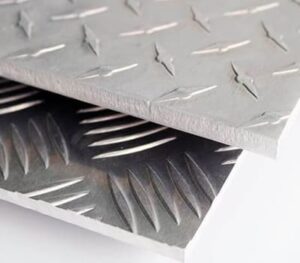
6061-T6 Aluminyo sahig plate, karaniwang kilala bilang "diamond plate" o "tread plate", ay isang mahusay na kandidato para sa karamihan ng mga pamamaraan sa pagproseso at parehong panloob at panlabas na mga application.
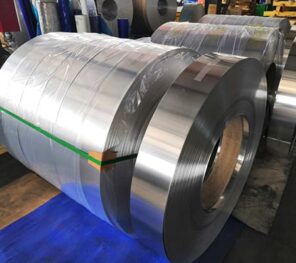
Looking for 5005 aluminyo strip? Explore customized thicknesses, mga lapad, and tempers with good corrosion resistance and excellent anodizing potential.
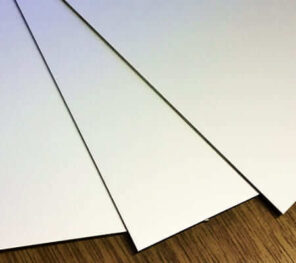
Discover 5005 Anodized Aluminum Sheet Plate with excellent corrosion resistance, pagiging formable, and attractive finishes. Custom sizes, mga temper, mga kulay, and surface treatments available.
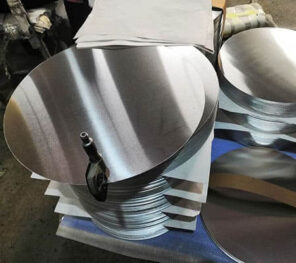
Partner with a China Aluminum Alloy Disc Supplier for versatile aluminum circles and discs. Huawei Aluminum offers a broad aluminum product portfolio, export experience, and customized solutions for industrial and decorative applications.
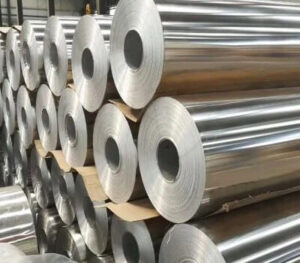
Bilang isang propesyonal na tagagawa at tagaluwas ng aluminyo foil jumbo roll seal sa Tsina. Kami ay sa lugar na ito para sa higit sa 20 mga taon, Mayroon kaming isang pabrika at dust-free workshop ng higit sa 100,000 mga metro kuwadrado

5000 Series Rolled Mirror Aluminum Plate ay isang mataas na kalidad na aluminyo haluang metal produkto nailalarawan sa pamamagitan ng kanyang pambihirang ibabaw reflectivity (≥85%) at paglaban sa kaagnasan. Manufactured sa pamamagitan ng mga advanced na malamig na proseso ng pagulong at buli, nakakamit nito ang isang salamin tulad ng pagtatapos habang nananatili ang lakas at formability ng 5000 mga haluang metal ng serye.
No.52, Dongming Road, Zhou Zhengzhou, Henan, Tsina
Henan Huawei Aluminyo Co., Ltd, Isa Sa Ang Pinakamalaking Aluminum Supplier Sa China Henan,Kami ay Itinatag Sa 2001, At Mayroon kaming mayaman na karanasan sa pag-import at pag-export at mataas na kalidad na mga produkto ng aluminyo
Mo – Sat, 8SA – 5PM
Linggo: Username or email address *
© Disclaimer © 2023 Henan Huawei Aluminium Co., Ltd

Pinakabagong Mga Komento
Mahal na Sir, Please offer your best FOB Prices specs are as under ALUMINIUM STRIP (AL=99.50% MIN) SUKAT:450 X32 X6 MM. DIN EN 570 EN-AW 1050 A, QUANTITY=3400KG
Hello po, Gusto mo bang maging kaya mabait upang mag alok ng item tulad ng sumusunod: Coil 0,6х1250 (1000)mm EN AW-3105 5tons
Hello po, Maaari mo bang i alok sa akin ang mga plato ng Aluminium? Actally kailangan ko: 110mm x 1700mm x 1700mm 5083 H111 - 21 pcs Next year planed is 177 mga pc
Mahusay na artikulo. natuwa naman ako, na search ko ang article na ito. Maraming tao ang tila, na mayroon silang maaasahang kaalaman sa paksa, Ngunit ito ay madalas na hindi ang kaso. Kaya ang aking kaaya ayang sorpresa. Bilib na bilib ako. Tiyak na irerekomenda ko ang lugar na ito at i drop sa pamamagitan ng mas madalas, para makakita ng mga bagong bagay.
kinakailangan ng aluminium strip