Premium 1050 epoxy coated aluminum foil delivers excellent conductivity, strong adhesion, superior corrosion resistance, and reliable EMI shielding for communication, control, and automotive cables.
1050 epoxy coated aluminum foil is a cable-shielding material built from a high-purity 1050 aluminum base and an epoxy resin surface layer.
In cable constructions, the aluminum layer provides the conductive barrier needed for EMI/RFI attenuation, while the epoxy layer improves adhesion, corrosion resistance, and processing durability during wrapping, lamination, and cable assembly.
Huawei’s published 1050 foil range lists 99.5% aluminum content, thickness from 0.006 mm to 0.2 mm, tensile strength around 60–100 MPa depending on temper, and elongation of at least 15% in O temper; its coated-foil portfolio also lists corrosion-resistant epoxy among the available coatings.
Foil shields are widely used in communications and signal cables because they can provide 100% conductor coverage and typical attenuation around 60–65 dB, though they are mechanically less robust than braid shields.
1050 Epoxy Coated Aluminum Foil
Alloy Overview
1050 aluminum foil belongs to the 1xxx series aluminum alloys, known as commercially pure aluminum alloys.
Its minimum aluminum content is:
Al ≥ 99.5%
Typical Chemical Composition
| Element | Content (%) |
| Aluminum (Al) | ≥99.50 |
| Silicon (Si) | ≤0.25 |
| Iron (Fe) | ≤0.40 |
| Copper (Cu) | ≤0.05 |
| Manganese (Mn) | ≤0.05 |
| Magnesium (Mg) | ≤0.05 |
| Zinc (Zn) | ≤0.05 |
The high purity contributes directly to:
Electrical Conductivity
1050 aluminum typically provides:
61–63% IACS conductivity
Although lower than copper (100% IACS), aluminum’s significantly lower density offers a superior conductivity-to-weight ratio.
Density Comparison
| Material | Density (g/cm³) |
| Copper | 8.96 |
| Aluminum 1050 | 2.70 |
This means aluminum is approximately:
70% lighter than copper
which is highly advantageous in long cable installations.
Epoxy coating is a thermosetting polymer layer applied to one or both sides of the aluminum foil.
Corrosion Protection
The coating creates an effective barrier against:
Enhanced Adhesion
Epoxy coatings exhibit excellent bonding characteristics with:
Typical adhesion strength:
5–10 N/15 mm
depending on coating formulation and curing conditions.
Mechanical Protection
The coating reduces:
during cable manufacturing.
| Coating Type | Thickness |
| Single-side Epoxy | 1–4 μm |
| Double-side Epoxy | 2–8 μm |
The combination of 1050 aluminum and epoxy resin creates a composite that transcends the limitations of its individual components.
Bare aluminum is highly susceptible to corrosion and oxidation, which degrades its electrical continuity.
Conversely, epoxy alone lacks mechanical rigidity and electromagnetic reflectivity.
Together, the epoxy protects the aluminum’s conductive integrity while acting as a vital adhesive bridge, bonding the aluminum shield firmly to the cable’s outer polyethylene (PE) or polyvinyl chloride (PVC) sheath.
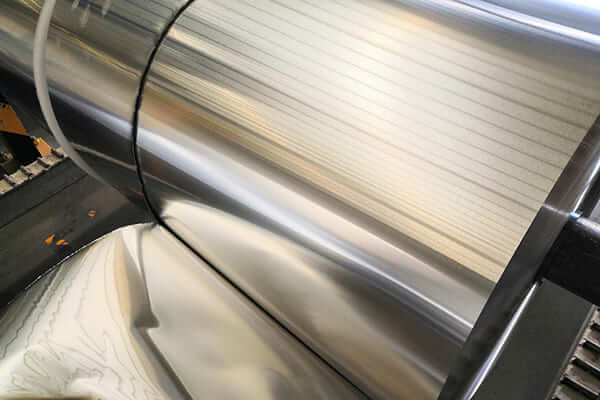
Surface of 1050 Epoxy Coated Aluminum Foil
Depending on the specific cable requirement, the foil is typically engineered in two primary configurations:
The shielding efficiency of this composite relies primarily on Reflection Loss.
When an electromagnetic wave hits the highly conductive 1050 aluminum surface, the impedance mismatch between the air and the metal causes the wave to reflect.
Any residual wave penetrating the metal is subjected to Absorption Loss, where the wave’s energy is converted into minute amounts of heat, dictated by the skin effect of the 1050 aluminum at high frequencies.
The production of high-quality epoxy-coated aluminum foil involves several precise and controlled steps.
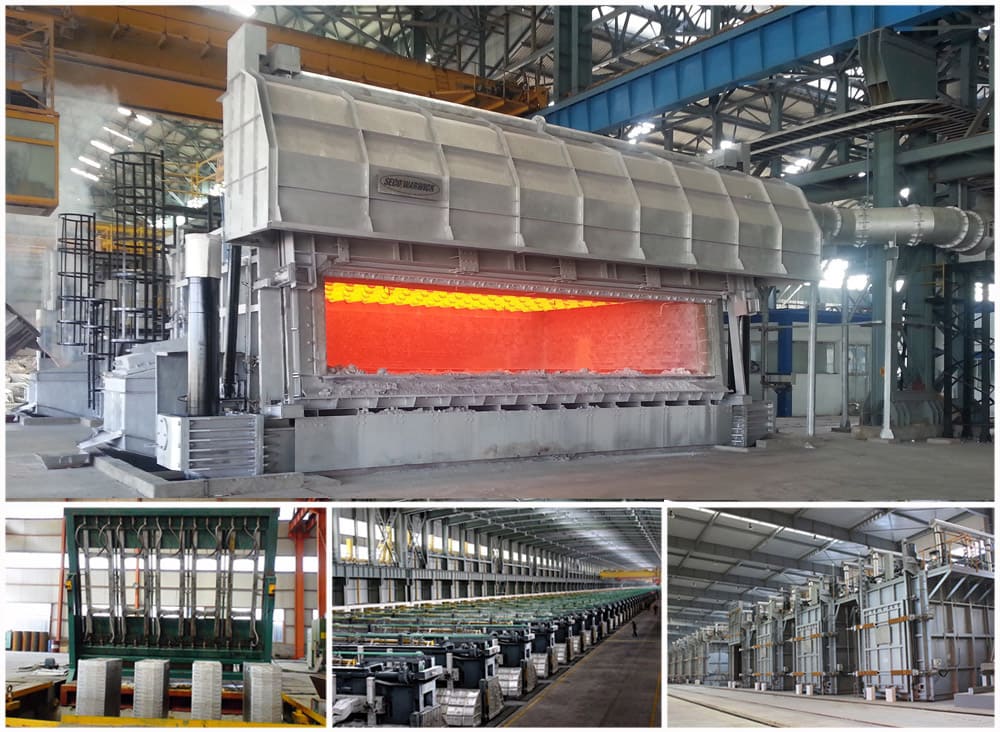
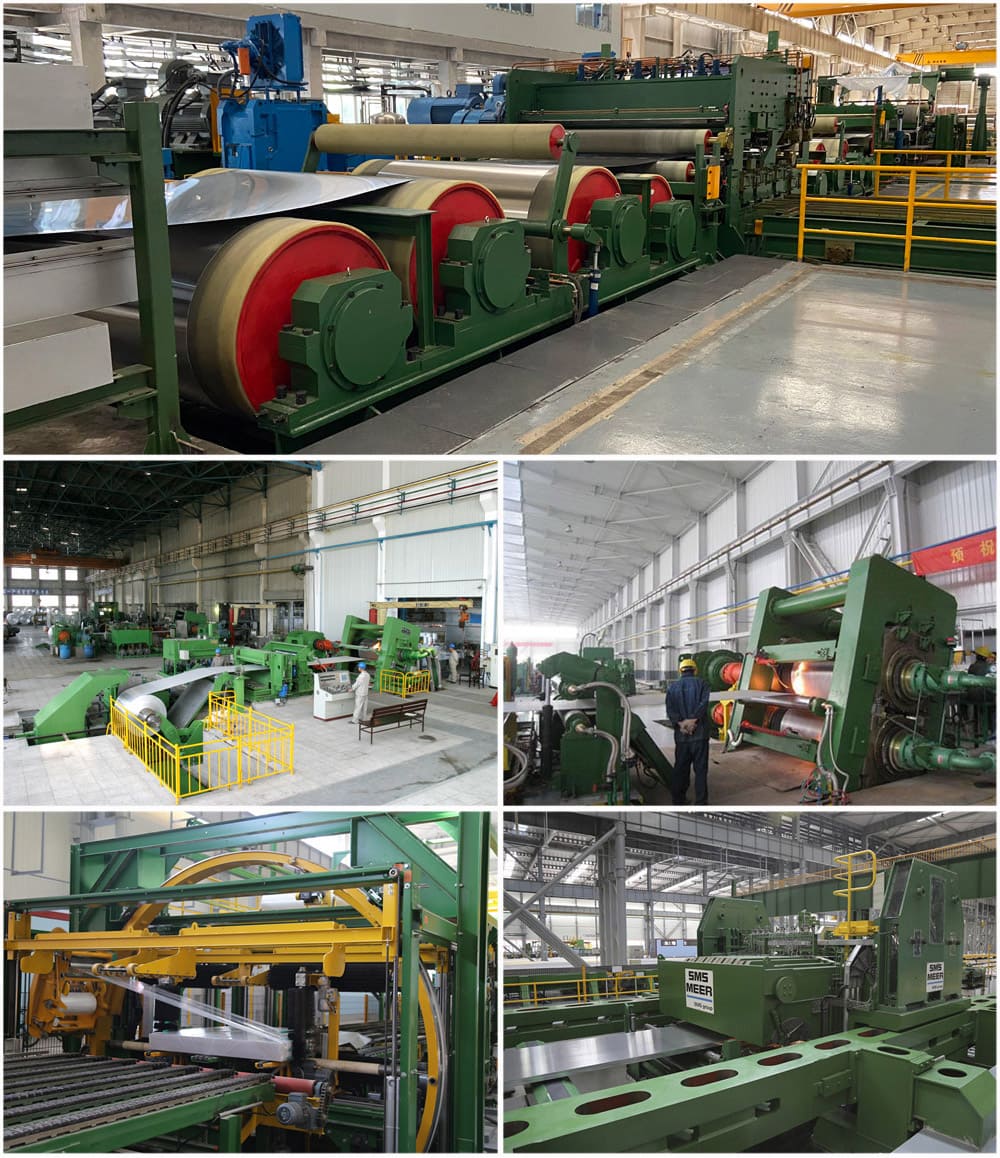
The process begins with high-purity 1050 aluminum ingots, which are hot-rolled into thick sheets and then cold-rolled through a series of mills to achieve the desired foil gauge.
For cable shielding, the foil is typically rolled to thicknesses between 25 μm and 100 μm.
A final annealing process is often performed to achieve the soft (O) temper, ensuring maximum flexibility.
Achieving a robust bond between the aluminum foil and the epoxy coating is critical.
The aluminum surface must be meticulously cleaned and pretreated to remove residual rolling oils, oxides, and contaminants. Common pretreatment methods include:
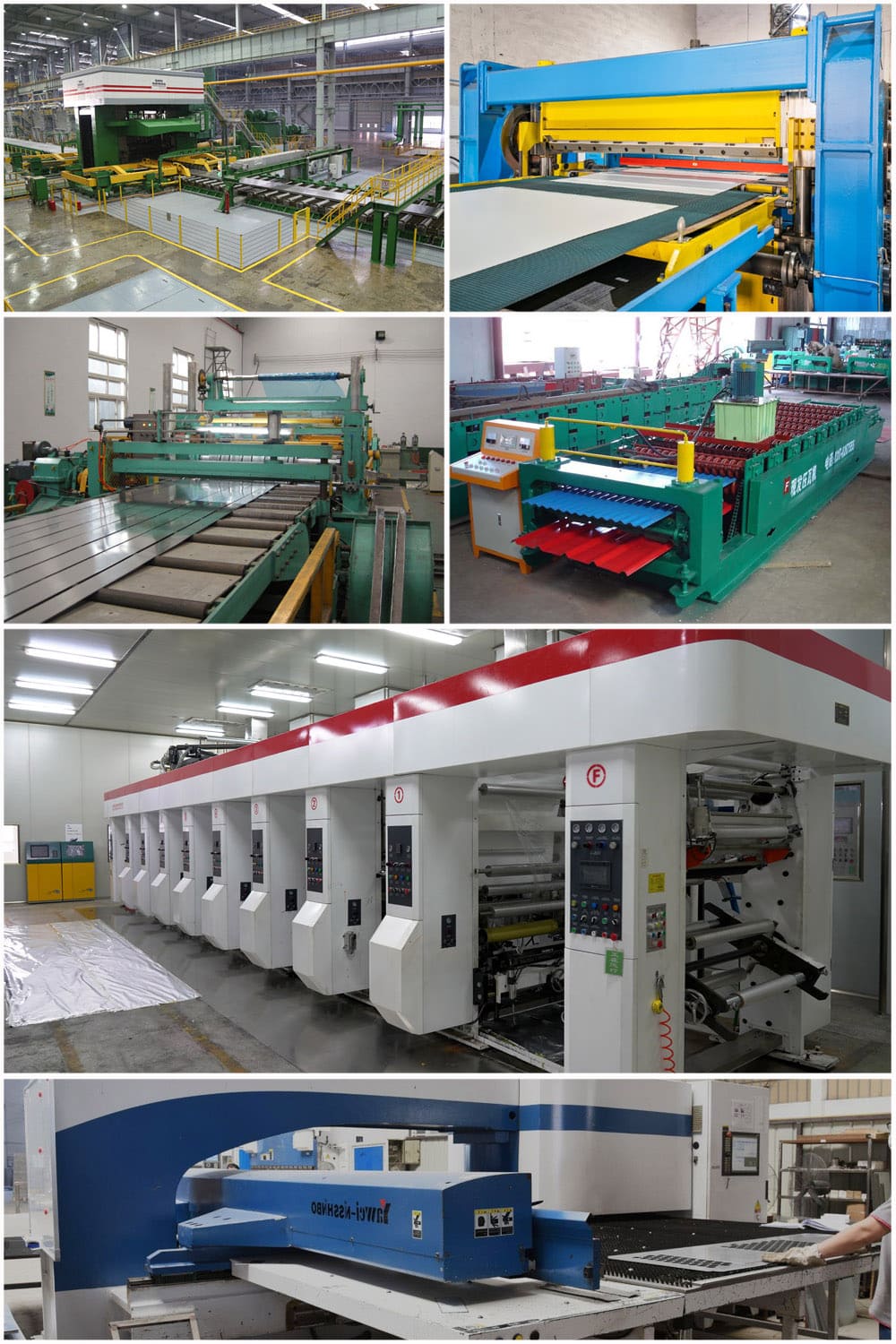
The specialized epoxy resin formulation is applied to the pretreated aluminum foil using precision coating methods. The most common technique is coil coating (also known as roll coating).
After coating, the foil passes through a multi-zone curing oven. The heat activates the chemical cross-linking reaction within the epoxy resin, transforming it from a liquid or semi-solid state into a tough, cured, thermoset polymer.
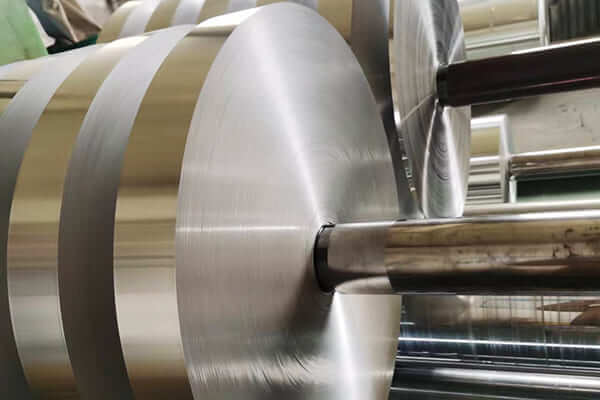
The cured, coated foil is typically produced in wide master rolls.
To meet the specific requirements of cable manufacturers, these master rolls must be slit into narrower widths (e.g., 10 mm to 100 mm) using precision slitting machines.
The slit pancake coils are then rewound onto cores, ready for shipment.
Rigorous quality control is performed throughout the manufacturing process. Key inspections include:
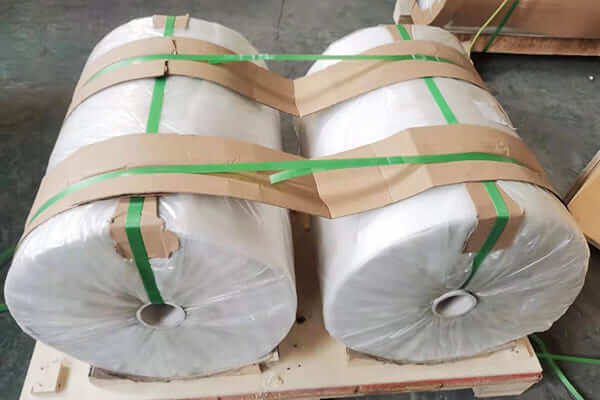
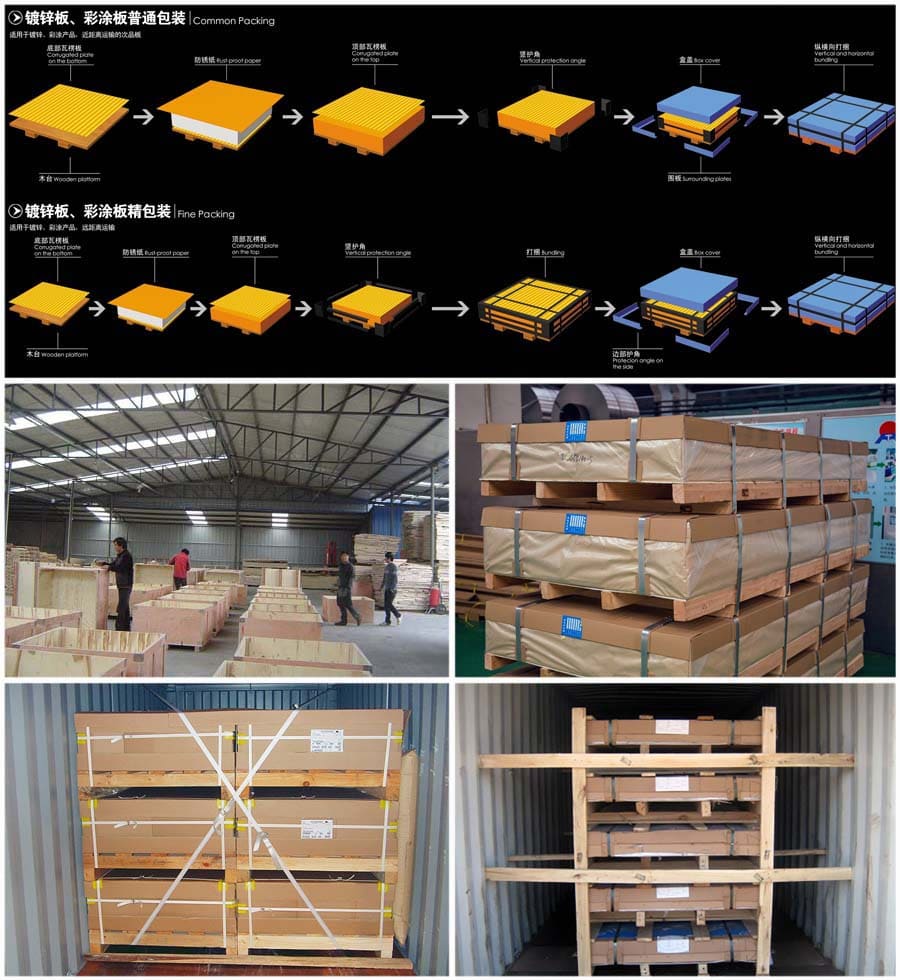
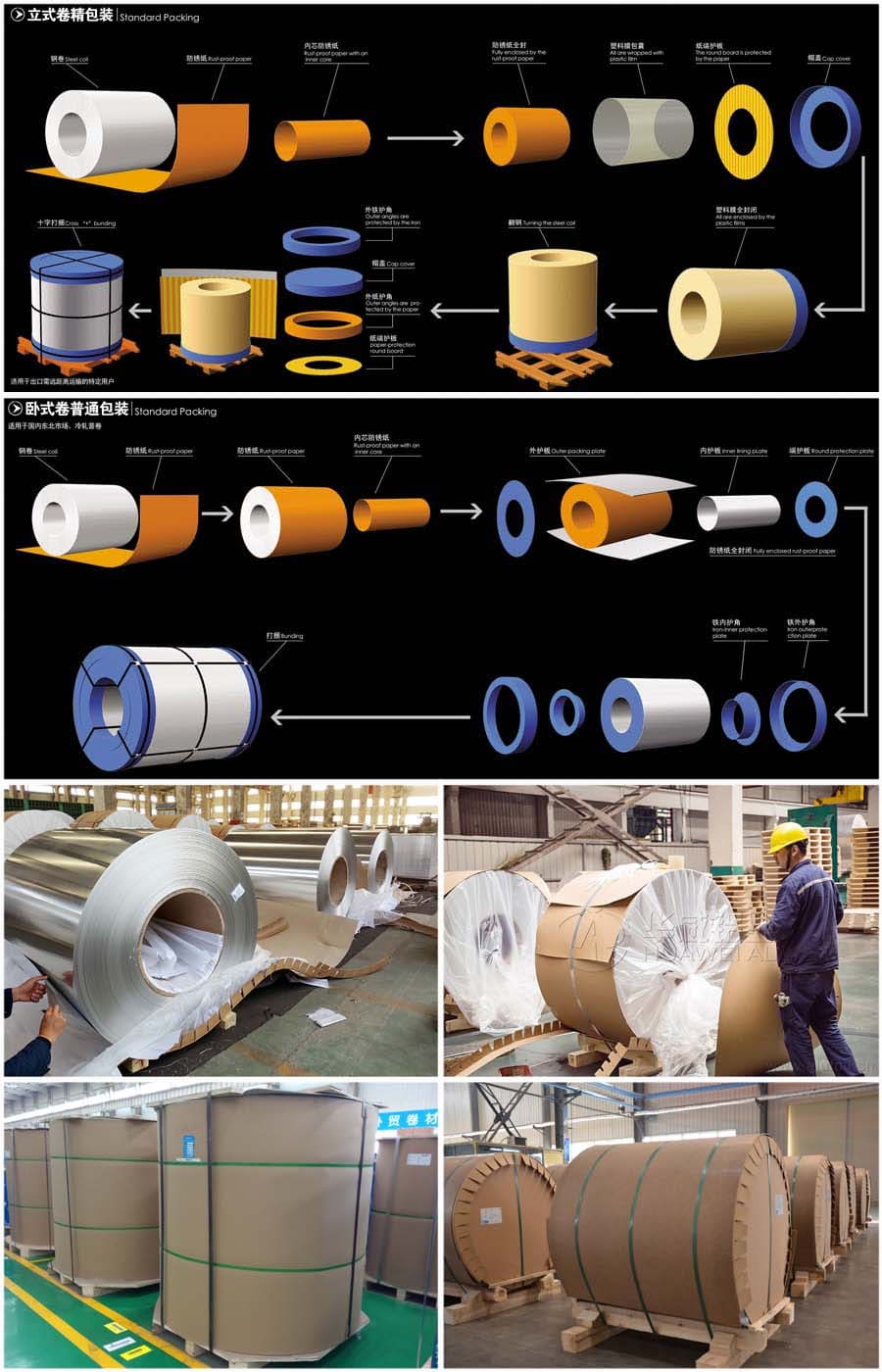
Huawei 1050 Aluminum Foil Packaging
Due to the >99.5% purity of the 1050 alloy, the foil offers superior shielding effectiveness (SE).
In the frequency ranges typical of modern communications (1 MHz to 10 GHz), a 0.15mm 1050 aluminum foil achieves an SE of 60 dB to over 90 dB, effectively blocking >99.9% of electromagnetic interference.
The epoxy coating turns the aluminum into a chemically inert barrier.
In standard Salt Spray Tests (ASTM B117), high-quality 1050 epoxy-coated foils can endure over 500 hours without showing signs of white rust or delamination.
It also boasts a Water Vapor Transmission Rate (WVTR) of virtually zero.
The thermosetting nature of epoxy provides a broad operational window, typically from -40°C to +150°C.
During the extrusion of the cable’s outer sheath (where molten PE or PVC is applied at ~200°C), the epoxy layer remains stable, neither melting nor deforming.
The bond between the epoxy and the aluminum base is exceptionally strong, usually yielding a peel strength of ≥ 6.13 N/cm.
When bonded to the cable’s outer PE jacket, the foil creates a solid, unified structure that prevents moisture from traveling longitudinally down the cable.
1050 Epoxy Coated Aluminum Foil for Cable Shielding
The unique properties of 1050 epoxy coated aluminum foil make it suitable for a wide range of cable types across diverse industries.
This is the largest application area.
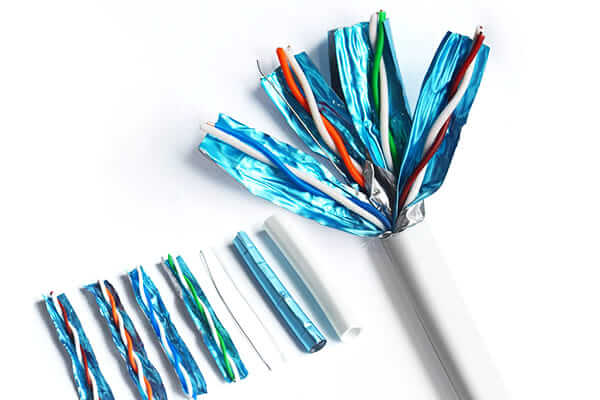
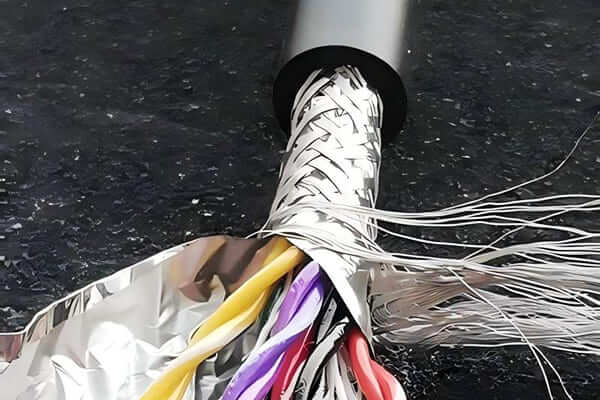
Cable Shielding Used Aluminum Foil
| Property | 1050 Epoxy Coated Aluminum Foil | Copper Foil | Copper Braid | AL/PET Laminate | Metallized PET Film |
| Base Material | 1050 Aluminum + Epoxy Coating | Pure Copper | Copper Wire | Aluminum + Polyester Film | PET + Vacuum Metal Layer |
| Metal Purity | ≥99.5% Al | ≥99.9% Cu | ≥99.9% Cu | Typically 99%+ Al | Thin Aluminum Layer |
| Density (g/cm³) | 2.70 | 8.96 | 8.96 | 2.70 + PET | 1.38–1.40 |
| Electrical Conductivity (% IACS) | 61–63 | 100 | 100 | 55–63 | Very Low |
| Shield Coverage | 100% | 100% | 70–95% | 100% | 95–100% |
| Typical Shielding Effectiveness (dB) | 60–90 | 70–100 | 40–80 | 60–90 | 30–60 |
| High-Frequency Shielding | Excellent | Excellent | Good | Excellent | Moderate |
| Low-Frequency Shielding | Good | Excellent | Excellent | Good | Poor |
| Corrosion Resistance | Excellent | Good | Good | Excellent | Excellent |
| Flexibility | Excellent | Good | Excellent | Excellent | Excellent |
| Tear Resistance | Moderate | Moderate | Excellent | Excellent | Good |
| Weight | Very Low | High | High | Low | Very Low |
| Thermal Conductivity (W/m·K) | ~220 | ~390 | ~390 | ~180–220 | Very Low |
| Operating Temperature (°C) | -40 to 150 | -40 to 200 | -40 to 200 | -40 to 120 | -20 to 120 |
| Processability | Excellent | Good | Moderate | Excellent | Excellent |
| Service Life | Long | Long | Long | Long | Medium |
| Material Cost | Low | High | High | Medium | Low |
| Recyclability | Excellent | Excellent | Excellent | Good | Moderate |
| Typical Applications | Communication, Automotive, Control Cables | Military, Aerospace, Premium RF Cables | Industrial Flexible Cables | LAN, CAT6, CAT7, Data Cables | Consumer Electronics |
| Item | Typical Specification |
| Alloy | 1050 |
| Temper | O |
| Aluminum Content | ≥99.5% |
| Thickness | 0.006–0.100 mm |
| Width | 10–1600 mm |
| Tensile Strength | 60–110 MPa |
| Elongation | ≥15% |
| Conductivity | >60% IACS |
| Coating Type | Epoxy |
| Coating Thickness | 1–8 μm |
| Service Temperature | -40°C to 150°C |
1050 epoxy coated aluminum foil has become one of the most important shielding materials in modern cable manufacturing.
By combining the outstanding conductivity, flexibility, and lightweight characteristics of high-purity 1050 aluminum with the adhesion, durability, and corrosion resistance of epoxy coatings, it delivers a highly effective solution for EMI and RFI protection.
Its ability to provide near-complete shielding coverage, excellent processability, long-term environmental stability, and competitive cost makes it indispensable in communication networks, industrial automation, automotive electronics, aerospace systems, and next-generation high-speed data transmission infrastructure.
As 5G, AI data centers, electric vehicles, and future 6G technologies continue to expand, demand for high-performance cable shielding materials is expected to grow steadily, further strengthening the position of 1050 epoxy coated aluminum foil as a critical material in the global cable industry.
Because it offers high purity (≥99.5% Al), excellent conductivity, low density, and outstanding formability.
It improves corrosion resistance, adhesion, mechanical durability, and environmental protection.
Typically 60–90 dB, depending on cable structure and operating frequency.
Most cable shielding applications use foil thicknesses between 9 μm and 50 μm.
Aluminum foil is approximately 70% lighter and generally more cost-effective while still providing excellent shielding coverage.
Telecommunications, data transmission, industrial automation, automotive, aerospace, defense, and energy infrastructure sectors.
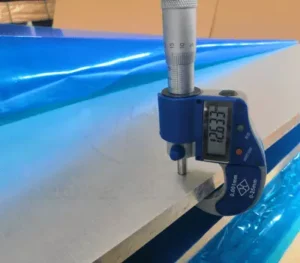
3004 Aluminum Sheet is a medium-strength aluminum alloy with manganese and magnesium as the main alloying elements. Its strength is higher than 3003 Aluminum Sheet, but the ductility is lower.
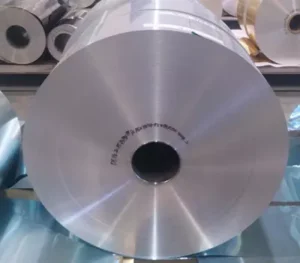
Air conditioner aluminum foil is a material used to make air conditioner heat exchangers. Its main features are light and thin, good thermal conductivity, and corrosion resistance.
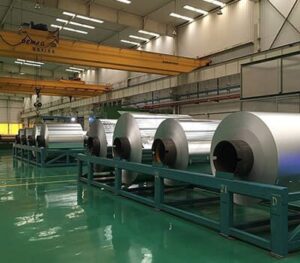
Aluminum alloy 8011 aluminum foil is widely used in aluminum-plastic composite board base tape and food packaging. As a professional aluminum foil 8011 manufacturer in China, Huawei Aluminum has a large 8011 aluminum foil production base and has accumulated more than 20 years of rich aluminum foil production experience and skilled processing technology.

In-depth guide to 5083 marine aluminium sheet—chemical composition, mechanical strength, corrosion resistance, welding performance, and marine applications.
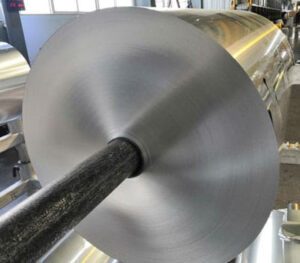
Pharmaceutical foil, also known as medical-grade foil or blister foil, 8011,8021,8079 aluminum foil common used for Pharmaceutical packaging foil.

High barrier coated aluminum foil 30 µm engineered for lidding, retort and pharmaceutical laminates — tight gauge control, low pinhole counts and predictable seal mapping for high-speed converters.
No.52, Dongming Road, Zhengzhou, Henan, China
Henan Huawei Aluminum Co., Ltd, One Of The Biggest Aluminum Supplier In China Henan,We Are Established In 2001,And We Have rich experience in import and export and high quality aluminum products
Mon – Sat, 8AM – 5PM
Sunday: Closed
© Copyright © 2023 Henan Huawei Aluminium Co., Ltd

Latest Comments
We need some t111 aluminium plate. We are looking for quarter inch by 4'x8' sheets
Aluminum 5754 H111 หนา 8 mm กว้าง x ยาว : 4 x 6 ฟุต
سلام بسیار عالی ،،من از ایران تماس میگیرم فویل طلا ۱۲میکرون عرض ۶۱سانت نیاز داریم حدودا هرماه ۳۵هزار متر
Dear Sales Team, I hope you are doing well. We are looking to source aluminum products from your company and would appreciate receiving your best quotation for the following: Aluminum Sheets Thickness: 2 mm, 3 mm, 4 mm, and 5 mm Please provide your available standard sheet sizes. Kindly quote the price per sheet and the price per metric ton. Aluminum Coils Thickness: 2 mm, 3 mm, 4 mm, and 5 mm Please provide your available coil widths, standard coil weights, and inner diameter specifications. Kindly quote the price per metric ton. For both sheets and coils, please include: Available alloys (e.g. 1050, 3003, 5052) Temper options Mill finish or other available surface finishes Minimum Order Quantity (MOQ) Production lead time Payment terms Please provide your quotation based on: CIF Jebel Ali Port, UAE (including sea freight), or alternatively provide both FOB China and CIF Jebel Ali Port, UAE prices. If available, please also send: Product catalogue Mill Test Certificate (MTC) sample Photos of the products and packaging. We are interested in establishing a long-term business relationship. Our initial purchase volume is expected to be 100+ metric tons, with the potential for larger and recurring orders if your pricing, quality, and service meet our requirements. Thank you for your time. We look forward to receiving your quotation and hope to build a successful long-term partnership. Best regards, Eng.Yousef
アルミハニカムパネルについてお聞きしたいのですが L1500×W700×厚みで曲げに対して200kgg耐えられるには厚みはどのくらいでしょうか ※簡単に言いますと約1000mmの側溝に渡して真ん中で200kg耐えられるかという事になります 又、そのような製品があるようでしたらその重量、価格をおしえていただけますか 現在はコンパネ板を使用してますが腐ると折れてしまい人が側溝に落ちてけがをしてます 出来ましたらメールでお返事をいただけますか