High-quality aluminum foil for air conditioner radiators, available in 1100, 1200, 3003, และ 3102 โลหะผสม. ความหนาที่กำหนดเอง, อารมณ์, และการเคลือบ. Get a quote!
Aluminum foil plays an important role in modern air-conditioning systems, particularly in the manufacture of heat exchanger fins.
These thin aluminum components are installed around or between heat exchanger tubes to increase the surface area exposed to airflow, allowing heat to transfer more efficiently between the refrigerant and surrounding air.
In residential air conditioners, commercial HVAC equipment, refrigeration systems, and automotive cooling applications, aluminum fin stock is widely used because it combines good thermal conductivity, ความหนาแน่นต่ํา, ความต้านทานการกัดกร่อน, และการสร้างที่ยอดเยี่ยม.
Compared with many traditional metal materials, aluminum offers an attractive balance between heat-transfer performance and structural weight.
It can also be rolled into thin, uniform strips and processed into complex fin shapes through high-speed stamping, corrugating, and louver-forming operations.
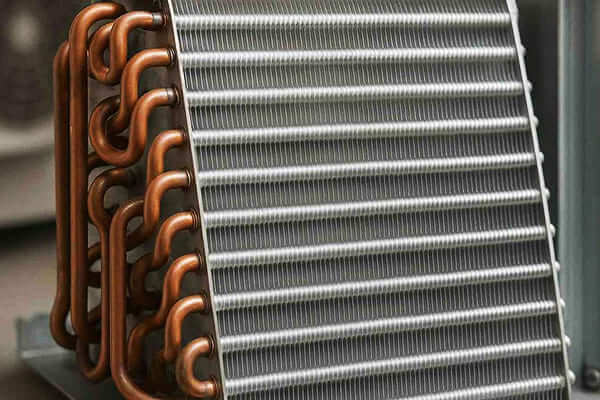
Aluminum Foil for Air Conditioner Radiator
Aluminum foil for air conditioner radiators is generally known as aluminum fin stock.
It is a thin-gauge aluminum strip or coil used to manufacture the fins in air-conditioning radiators and heat exchangers.
ในระหว่างการผลิต, aluminum fin stock passes through specialized fin presses, where it is stamped, ลูกฟูก, or formed into specific geometries.
These fins are then assembled with heat exchanger tubes to create a larger heat-transfer surface.
The fins increase the contact area between the heat exchanger and the surrounding air.
This helps improve heat exchange without significantly increasing the overall weight or size of the equipment.
An air conditioner heat exchanger is an assembled structure consisting of several components.
Although aluminum is widely used in these products, different components perform different functions and require different material specifications.
| ส่วนประกอบ | ฟังก์ชั่นหลัก | Common Material Forms | ข้อกำหนดที่สำคัญ |
| Aluminum fin stock | Increases heat-transfer surface area | Thin aluminum strip or coil | การนำความร้อน, ความสามารถในการขึ้นรูป, ความต้านทานการกัดกร่อน |
| Heat exchanger tubes | Carry refrigerant or cooling fluid | Aluminum or copper tubes | Pressure resistance, ความต้านทานการกัดกร่อน, joining compatibility |
| Headers and manifolds | Distribute refrigerant or fluid | Aluminum tubes, การอัดขึ้นรูป, or formed components | แรง, pressure resistance, brazing compatibility |
| Brazing sheet | Joins heat exchanger components | Aluminum sheet or clad coil | ความสามารถในการประสาน, controlled melting behavior, joint strength |
| Side plates and supports | Provide structural support | Aluminum sheet or formed parts | แรง, ความแม่นยำของมิติ, ความต้านทานการกัดกร่อน |
Aluminum fin stock can be classified according to its surface condition and functional coating.
Bare Aluminum Fin Stock
Bare fin stock has a mill-finished aluminum surface without an additional functional coating.
It is suitable for heat exchangers where the base alloy provides sufficient corrosion resistance and surface performance.
Its advantages include a relatively simple material structure, การนำความร้อนที่ดี, and compatibility with various fin-forming processes.
ฟอยล์อลูมิเนียม Hydrophilic
Hydrophilic aluminum foil has a surface coating that improves water wettability.
In air conditioner evaporators, moisture condenses on the cold fin surfaces during operation.
A hydrophilic coating helps condensate spread into a thinner water film and drain more easily.
This can reduce water bridging between closely spaced fins and help maintain airflow.
Hydrophobic foil has a surface designed to repel water rather than spread it. Condensate tends to form droplets instead of a continuous water film.
Its suitability depends on the heat exchanger structure, fin spacing, airflow conditions, and drainage design.
Anti-Corrosion Aluminum Fin Stock
Anti-corrosion fin stock uses a protective coating or specially selected alloy to improve resistance to moisture, salt, และสารกัดกร่อนอื่น ๆ.
It is particularly relevant for outdoor air-conditioning units and heat exchangers operating in humid or coastal environments.
The choice between bare, ชอบน้ำ, hydrophobic, and anti-corrosion fin stock should be based on the actual operating conditions and heat exchanger design rather than coating type alone.
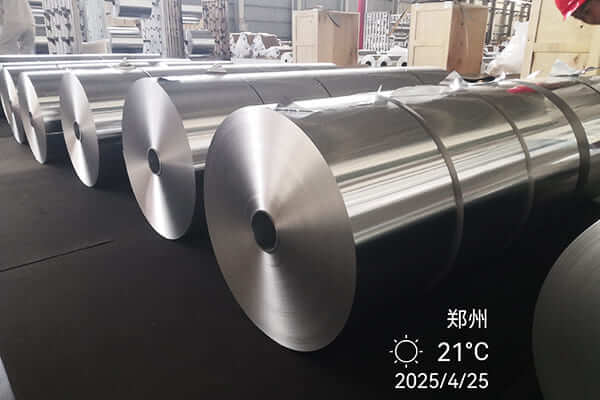
Huawei Aluminum Foil Display
Alloy selection affects the thermal conductivity, ความแข็งแกร่ง, ความสามารถในการขึ้นรูป, and corrosion resistance of aluminum fin stock.
Common alloys used in air conditioner heat exchangers include 1100, 1200, 3003, และ 3102.
1100 aluminum is a commercially pure aluminum alloy with a minimum aluminum content of 99.00%.
It offers good thermal conductivity, ทนต่อการกัดกร่อนได้ดีเยี่ยม, and high ductility.
Key characteristics:
การใช้งานทั่วไป: General air conditioner fins, refrigeration heat exchangers, and other heat-transfer components.
1200 aluminum is another commercially pure aluminum alloy. It provides good thermal conductivity, ความสามารถทำงานได้, และความต้านทานการกัดกร่อน, making it suitable for selected heat exchanger applications.
Key characteristics:
การใช้งานทั่วไป: HVAC fins, refrigeration components, and general heat-transfer applications.
3003 aluminum is an aluminum-manganese alloy with higher strength than commercially pure 1xxx-series aluminum.
It maintains good formability and corrosion resistance, making it a popular choice for heat exchanger fin materials.
Key characteristics:
การใช้งานทั่วไป: Air conditioner condenser fins, evaporator fins, and refrigeration heat exchangers.
3102 aluminum is an aluminum-manganese alloy commonly used in HVAC and refrigeration heat exchangers.
It offers a good balance of strength, ความสามารถในการขึ้นรูป, และความต้านทานการกัดกร่อน.
Key characteristics:
การใช้งานทั่วไป: Air conditioner evaporator fins, condenser fins, and refrigeration equipment.
Aluminum foil for air conditioner radiators, also known as aluminum fin stock, is available in different thicknesses, ความกว้าง, อารมณ์, และการตกแต่งพื้นผิว.
Specifications can be customized according to fin design, stamping requirements, and heat exchanger production processes.
| พารามิเตอร์ | ข้อมูลจำเพาะทั่วไป |
| ชื่อผลิตภัณฑ์ | Aluminum Fin Stock / Aluminum Foil for Air Conditioner Radiators |
| ล้อแม็ก | 1100, 1200, 3003, 3102 |
| อารมณ์โกรธ | อู๋, H22, ส 24, เอช 26 |
| ความหนา | 0.08–0.30 มม |
| ความหนาทั่วไป | 0.08, 0.09, 0.10, 0.11, 0.12, 0.15, 0.18, 0.20, 0.25, 0.30 มม |
| ความกว้าง | 100–1630 mm |
| เส้นผ่านศูนย์กลางภายในคอยล์ (รหัส) | 150, 200, 305, 508 มม |
| เส้นผ่านศูนย์กลางภายนอกคอยล์ (จาก) | กำหนด เอง |
| น้ำหนักคอยล์ | กำหนด เอง |
| สภาพพื้นผิว | เปลือย, ชอบน้ำ, hydrophobic, anti-corrosion coated |
| พื้นผิวเสร็จสิ้น | ทำความสะอาด, เรียบ, and uniform |
| ประเภทการเคลือบ | ชอบน้ำ, hydrophobic, อีพ็อกซี่, อะคริลิก, or other protective coatings |
| Fin Configuration | Flat, ลูกฟูก, or louvered |
| ประมวล ผล | การตัด, กลิ้ง, ปั๊ม, corrugating, และการเคลือบ |
| บรรจุ ภัณฑ์ | บรรจุภัณฑ์ส่งออกป้องกันความชื้น, wooden pallets, or customized packaging |
| มาตรฐาน | ASTM B209, ใน 485 ชุด, or agreed technical specifications where applicable |
Aluminum foil for air conditioner radiators, commonly known as aluminum fin stock, must provide good thermal conductivity, ความสามารถในการขึ้นรูป, ความต้านทานการกัดกร่อน, และความเสถียรของมิติ.
These properties help manufacturers produce consistent fins and maintain reliable heat exchanger performance.
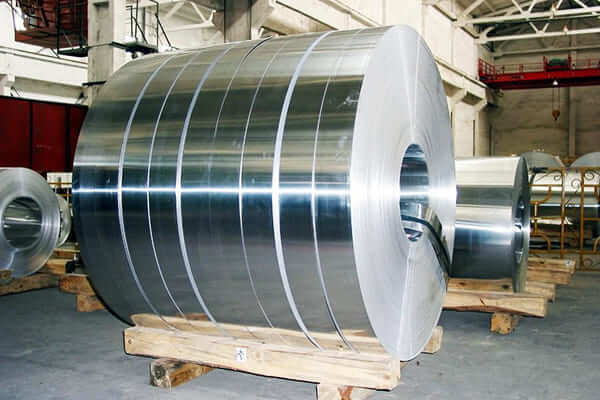
Residential Air Conditioners Aluminum Foil
Aluminum transfers heat efficiently between the refrigerant tubes and surrounding air.
Its high thermal conductivity helps fins distribute heat across their surfaces, supporting effective heat exchange in air conditioner evaporators and condensers.
Fin stock must withstand high-speed stamping, เจาะ, ดัด, and corrugating without cracking or excessive deformation.
Aluminum alloys such as 1100, 1200, 3003, และ 3102 offer different combinations of ductility and strength to meet various fin-forming requirements.
Air conditioner fins are frequently exposed to moisture, การควบแน่น, and airborne contaminants.
Aluminum naturally forms a protective oxide layer that helps resist corrosion.
For equipment operating in coastal, humid, or polluted environments, additional anti-corrosion coatings may provide improved surface protection.
Aluminum has a low density compared with many other heat exchanger metals.
Using aluminum fin stock helps reduce the weight of heat exchanger assemblies while maintaining a large heat-transfer surface area.
This is particularly useful in residential air conditioners, commercial HVAC systems, and automotive cooling equipment.
Fin stock needs sufficient strength to maintain its shape during stamping, assembly, and operation.
The appropriate alloy and temper help prevent fin deformation, การโก่ง, and damage during production and handling.
สะอาด, เรียบ, and consistent surface supports stable stamping and coating performance.
Uniform thickness and reliable surface quality also help manufacturers maintain consistent fin dimensions and reduce production defects.
Surface treatments improve the functional performance of aluminum fin stock, particularly its resistance to corrosion, condensate behavior, และความทนทานของพื้นผิว.
The appropriate treatment depends on the heat exchanger design and operating environment.
Bare aluminum fin stock has no additional functional coating.
Its natural oxide layer provides basic corrosion protection, while its thermal conductivity and formability make it suitable for general HVAC and refrigeration applications.
ลักษณะสำคัญ:
Hydrophilic coating makes the aluminum surface easier for water to spread across.
Instead of forming large droplets, condensation forms a thin water film that can drain more easily from the fin surface.
Main benefits:
Hydrophilic aluminum foil is widely used for air conditioner evaporator fins, where condensation occurs during cooling operation.
Hydrophobic coating creates a water-repellent surface that encourages condensation to form droplets rather than spread into a continuous film.
It may be selected for heat exchanger designs that benefit from water repellency and specific drainage behavior.
Its actual performance depends on coating properties, fin spacing, airflow, และสภาพการทำงาน.
Anti-corrosion coatings provide an additional protective barrier against moisture, salt, และสารกัดกร่อนอื่น ๆ.
They are particularly useful for air conditioning equipment installed in coastal areas, industrial environments, and locations with high humidity.
Common coating systems include epoxy, อะคริลิก, and other specialized protective formulations.
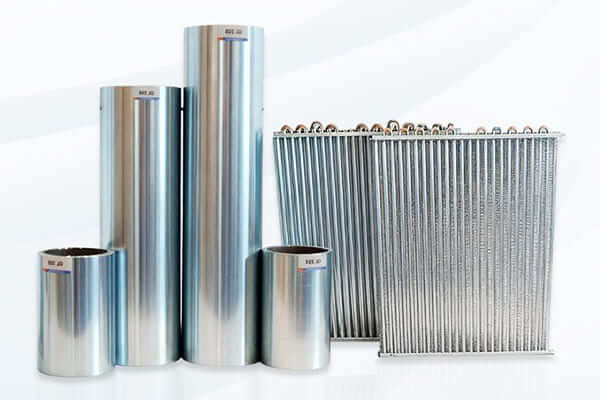
ฟอยล์อลูมิเนียม Hydrophilic
The production of aluminum fin stock involves several stages, from aluminum casting and rolling to final slitting and inspection.
Each stage affects the material’s thickness accuracy, คุณสมบัติทางกล, คุณภาพพื้นผิว, and suitability for fin forming.
Aluminum ingots and alloying elements are melted according to the required alloy composition, เช่น 1100, 1200, 3003, หรือ 3102.
The molten aluminum is refined and filtered to reduce impurities and inclusions before casting.
The molten aluminum is cast into slabs or other suitable forms.
After homogenization when required, the material undergoes hot rolling to reduce its thickness and prepare it for subsequent cold rolling.
Cold rolling gradually reduces the aluminum material to the required fin-stock thickness.
This process also helps control thickness uniformity, การตกแต่งพื้นผิว, และคุณสมบัติเชิงกล.
Annealing adjusts the material’s hardness, ความแข็งแกร่ง, และความเหนียว.
Depending on the alloy and customer requirements, the fin stock can be supplied in O, H22, ส 24, เอช 26, or other suitable tempers.
The correct temper is important because the material must withstand high-speed stamping and fin forming without cracking or excessive deformation.
For bare fin stock, the material undergoes appropriate cleaning and surface inspection. For coated products, additional processes may include:
These processes help achieve consistent coating adhesion and surface performance.
The aluminum coil is slit to the required width and rewound into smaller coils. Slitting quality is important for smooth feeding into fin stamping equipment.
Manufacturers also control coil tension, winding tightness, สภาพขอบ, and coil alignment to reduce problems during downstream processing.
Aluminum foil for air conditioner radiators is mainly used to manufacture fins in heat exchangers.
These fins increase the surface area available for heat transfer between the refrigerant or cooling medium inside the tubes and the surrounding air.
Different aluminum alloys, อารมณ์, ความหนา, and coatings are selected according to equipment design and operating conditions.
Residential split air conditioners and window units use aluminum fin stock in both evaporators and condensers.
Hydrophilic coated aluminum foil is often selected for evaporator fins to promote condensate drainage.
Commercial HVAC equipment uses aluminum fins in larger heat exchanger assemblies, including air handling units, rooftop air conditioners, and central cooling systems.
These applications require consistent fin dimensions, reliable mechanical properties, and suitable corrosion protection to support long-term operation.
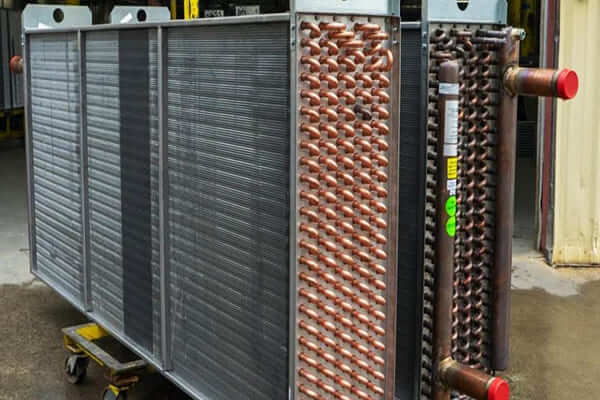
HVAC Systems Used Aluminum Foil
Aluminum fin stock is used in refrigeration evaporators, condensers, display cabinets, ตู้แช่แข็ง, and cold storage equipment.
Its lightweight structure, การนำความร้อน, and formability make it suitable for producing compact finned heat exchangers.
Coating requirements depend on humidity, การควบแน่น, cleaning conditions, and the operating environment.
Automotive air conditioning systems use aluminum fins in condensers and evaporators to support efficient heat exchange within compact assemblies.
Material selection focuses on formability, ความต้านทานการกัดกร่อน, ความสม่ำเสมอของมิติ, and compatibility with the heat exchanger’s joining and manufacturing processes.
Heat pumps and industrial cooling equipment also use aluminum fin stock in their heat exchanger assemblies.
ขึ้นอยู่กับแอปพลิเคชัน, manufacturers may require higher corrosion resistance, เคลือบพิเศษ, or specific mechanical properties to withstand outdoor exposure and demanding operating conditions.
| การเปรียบเทียบ | Aluminum Fin Stock | ทองแดง | Aluminum Brazing Sheet |
| ฟังก์ชั่นหลัก | Increases heat-transfer surface area | Used in heat exchanger tubes, ขด ลวด, and fins | Used to manufacture components joined by brazing |
| การนำความร้อน | ดี | สูงกว่าอลูมิเนียม | Similar to its aluminum core alloy |
| ความหนาแน่น | ต่ำ (ประมาณ. 2.70 ก./ซม.³) | สูง (ประมาณ. 8.96 ก./ซม.³) | ต่ำ (ประมาณ. 2.70 ก./ซม.³) |
| น้ําหนัก | น้ำหนักเบา | Relatively heavy | น้ำหนักเบา |
| ความต้านทานการกัดกร่อน | ดี, depending on alloy and surface treatment | Good in many environments, but susceptible to certain corrosion conditions | Depends on core alloy, หุ้ม, และสภาพแวดล้อมในการทำงาน |
| แบบฟอร์ม | Excellent for stamping, corrugating, and louvering | ดี, depending on material form and processing | Suitable for forming components before brazing |
| ต้นทุนวัสดุ | Generally economical | โดยทั่วไปสูงขึ้น | Depends on alloy and cladding structure |
| กระบวนการผลิต | กลิ้ง, ตัด, ปั๊ม, and fin forming | การวาดภาพ, กลิ้ง, ดัด, และเข้าร่วม | กลิ้ง, การขึ้นรูป, and brazing |
| การใช้งานทั่วไป | AC evaporator fins, condenser fins, and refrigeration heat exchangers | Heat exchanger tubes, ขด ลวด, and selected fin structures | Heat exchanger tubes, headers, and other brazed components |
| ข้อได้เปรียบที่สำคัญ | น้ำหนักเบา, คุ้มค่า, and easy to form into fins | การนำความร้อนสูง | Designed for reliable brazed joints |
| Main Consideration | ล้อแม็ก, อารมณ์, การเคลือบ, and fin geometry must match application requirements | Higher density and material cost | Brazing compatibility and cladding quality must be controlled |
Choosing a reliable aluminum supplier is important for maintaining consistent material quality, stable production, and dependable delivery.
Buyers should evaluate not only alloy and dimensional specifications but also manufacturing capabilities, การควบคุมคุณภาพ, การปรับแต่ง, และการสนับสนุนด้านเทคนิค.
เหอหนาน หัวเว่ย อลูมิเนียม บจก., จํากัด., established in 2001, is a Chinese manufacturer specializing in aluminum rolled products.
Its product range includes aluminum sheets, แผ่น, ขด ลวด, ขี้เกียด, แถบ, and circles.
ที่มีมากกว่า 20 years of industry experience and exports to 72 ประเทศ, Huawei Aluminum serves customers across different industrial sectors.
The company focuses on product quality, customized specifications, and international customer service.
For air conditioner radiator and heat exchanger applications, material selection should be based on the customer’s production requirements.
Huawei Aluminum can discuss customized aluminum material specifications, รวมทั้ง:
For fin-stock applications, buyers should confirm the required alloy, อารมณ์, ความทนทานต่อความหนา, สภาพพื้นผิว, and coating requirements before ordering.
If you are sourcing aluminum fin stock or other aluminum materials for air conditioning heat exchangers, contact Huawei Aluminum to discuss your requirements and confirm product availability.
Aluminum foil for air conditioner radiators, commonly known as aluminum fin stock, plays an important role in heat exchanger performance.
การนำความร้อนของมัน, คุณสมบัติน้ำหนักเบา, ความต้านทานการกัดกร่อน, and formability make it suitable for manufacturing flat, ลูกฟูก, and louvered fins.
Common alloy options include 1100, 1200, 3003, และ 3102. The right choice depends on fin design, stamping requirements, สภาพแวดล้อมการดำเนินงาน, and joining process.
ความหนา, อารมณ์, สภาพพื้นผิว, and coating performance should also be considered when selecting fin stock.
For reliable production, buyers should work with an experienced aluminum supplier that can provide consistent material quality, customized specifications, and appropriate technical support.
1. What is aluminum foil for air conditioner radiators?
It is thin aluminum strip or coil, also known as aluminum fin stock, used to manufacture heat exchanger fins. These fins increase the heat-transfer surface area.
2. Which aluminum alloys are commonly used for air conditioner fins?
โลหะผสมทั่วไปได้แก่ 1100, 1200, 3003, และ 3102. Selection depends on strength, การนำความร้อน, ความสามารถในการขึ้นรูป, and corrosion resistance requirements.
3. What is the typical thickness of aluminum fin stock?
The common thickness range is approximately 0.08–0.30 mm, depending on fin design and stamping requirements.
4. What is the difference between bare and hydrophilic aluminum foil?
Bare aluminum has no functional coating, while hydrophilic aluminum has a special surface coating that helps condensate spread and drain more easily.
5. What tempers are available for air conditioner aluminum fin stock?
อารมณ์ทั่วไป ได้แก่ o, H22, ส 24, and H26. Each provides a different balance of strength and formability.
6. Is aluminum better than copper for air conditioner radiators?
Aluminum is lighter and generally more economical, while copper offers higher thermal conductivity. The best material depends on heat exchanger design and performance requirements.
7. Can aluminum fin stock be customized?
ใช่. ล้อแม็ก, อารมณ์, ความหนา, ความกว้าง, ขนาดคอยล์, and surface treatment can be specified according to customer requirements.
8. What should buyers consider when purchasing aluminum fin stock?
Key factors include alloy, อารมณ์, ความทนทานต่อความหนา, คุณสมบัติทางกล, คุณภาพพื้นผิว, ประสิทธิภาพการเคลือบ, and compatibility with the fin-forming process.
9. How can I get a quotation for aluminum foil for air conditioner radiators?
จัดหาโลหะผสมที่ต้องการ, อารมณ์, ความหนา, ความกว้าง, การรักษาพื้นผิว, ขนาดคอยล์, and order quantity to Huawei Aluminum for a customized quotation.
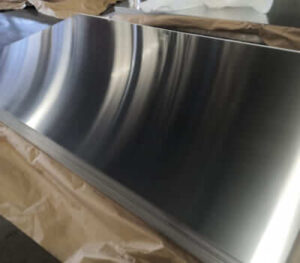
5แผ่นอลูมิเนียม × 10 เป็นข้อกําหนดทั่วไปของแผ่นอลูมิเนียมที่ผลิตโดยผู้ผลิตแผ่นอลูมิเนียม,มันคือ 5 ฟุตกว้างและ 10 ฟุตยาว.
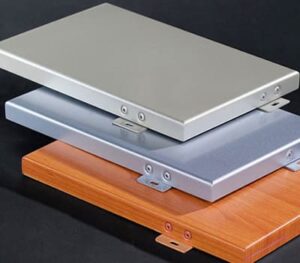
3003 แผ่นอลูมิเนียมผนังม่านเป็นผนังด้านนอกของอาคาร. เป็นผนังน้ำหนักเบาของอาคารสูงขนาดใหญ่และมีการตกแต่งบางอย่าง.
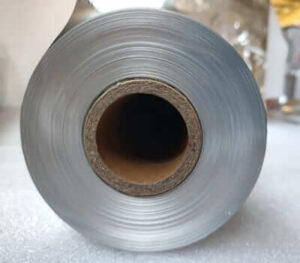
อลูมิเนียมฟอยล์สำหรับมอระกู่มักใช้ในการเตรียมและใช้มอระกู่, เรียกอีกอย่างว่าชิชาหรือท่อน้ำ. มีจุดประสงค์เฉพาะในการเตรียมมอระกู่, โดยเฉพาะอย่างยิ่งในการจัดวางและการจัดการถ่านและยาสูบ.
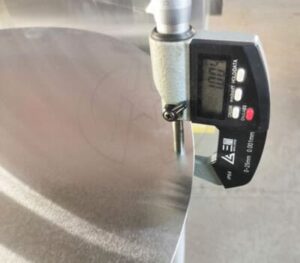
1100 วงกลมอลูมิเนียมรีดจาก 1100 ขดลวดอลูมิเนียมเป็นวัตถุดิบ, ซึ่งเป็นของอลูมิเนียมบริสุทธิ์อุตสาหกรรมธรรมดาที่มีปริมาณอลูมิเนียมของ 99.0%.
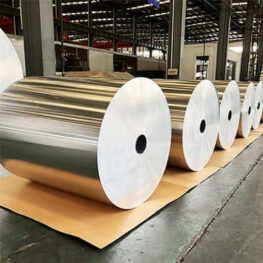
การยึดเกาะสูง, ทนต่อการกัดกร่อน 8011 อลูมิเนียมฟอยล์สีทอง hydrophilic สำหรับการปิดผนึก, การเคลือบ, และการใช้งาน HVAC.
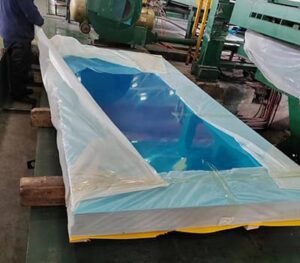
5086 แผ่นอลูมิเนียมมีความแข็งแรงสูง, โลหะผสม al-mg ที่ทนต่อการกัดกร่อน, ใช้กันอย่างแพร่หลายในการบินและอวกาศ, การขนส่ง, การตกแต่งสถาปัตยกรรมและสาขาอื่น ๆ.
ฉบับที่ 52, ถนนตงหมิง, เจิ้งโจว, เหอหนาน, จีน
เหอหนาน หัวเว่ย อลูมิเนียม บจก., จํากัด, หนึ่งในผู้จัดจําหน่ายอลูมิเนียมที่ใหญ่ที่สุดในจีนเหอหนาน,เราก่อตั้งขึ้นในปี 2544 และเรามีประสบการณ์มากมายในการนําเข้าและส่งออกและผลิตภัณฑ์อลูมิเนียมคุณภาพสูง
จันทร์ – เสาร์, 8น. – 17.00 น.
วันอาทิตย์: ปิด
© ลิขสิทธิ์ © 2023 เหอหนานหัวเว่ยอลูมิเนียม จํากัด, จํากัด

ความคิดเห็นล่าสุด
ท่านที่รัก, Please offer your best FOB Prices specs are as under ALUMINIUM STRIP (AL=99.50% นาที) ขนาด:450 X32 X6 มม. หนึ่งของคุณ 570 TH-AW 1050 อา, QUANTITY=3400KG
สวัสดี, จะกรุณามอบสิ่งของดังนี้: คอยล์0,6x1250 (1000)mm EN AW-3105 5tons
สวัสดี, คุณสามารถให้ฉันแผ่นอลูมิเนียม? ตามหน้าที่ฉันต้องการ: 110มม. x 1700 มม. x 1700 มม 5083 เอช 111 - 21 pcs Next year planed is 177 พี ซี
บทความที่ดี. ฉันมีความยินดี, ฉันพบบทความนี้. หลายคนดูเหมือนจะ, ว่าพวกเขามีความรู้ที่ถูกต้องเกี่ยวกับเรื่องนี้, แต่บ่อยครั้งก็ไม่เป็นเช่นนั้น. ดังนั้นความประหลาดใจที่น่ายินดีของฉัน. ฉันประทับใจ. ฉันจะแนะนำที่นี่อย่างแน่นอนและกลับมาบ่อยขึ้น, เพื่อดูสิ่งใหม่ๆ.
ความต้องการของแถบอลูมิเนียม