Introduction
In the evolving world of flexible packaging, the need for materials that combine safety, efficiency, and sustainability has never been higher. Among the array of options, 8011 Heat Sealable Aluminum Foil for Flexible Packaging stands out as a versatile solution that meets stringent food-contact standards while offering reliable sealability, strong barrier properties, and compatibility with modern printing and lamination processes.
This article dives deep into what makes 8011 aluminum foil an excellent choice for flexible packaging, explores its properties, manufacturing considerations, and practical applications, and provides actionable guidance for buyers and users.
Along the way, we introduce Huawei Aluminum, a leading supplier known for its comprehensive capabilities in producing high-quality aluminum foil for packaging, and explain why partners choose Huawei Aluminum when sourcing 8011 aluminum foil for flexible packaging needs.
8011 Heat Sealable Aluminum Foil for Flexible Packaging
What is 8011 Heat Sealable Aluminum Foil for Flexible Packaging
8011 aluminum foil is part of the 8xxx series, a family known for its excellent formability and workability. When described as “heat sealable,” the foil is designed to work in concert with sealant layers or heat-seal coatings in laminates to create robust, food-contact compliant seals.
The term 8011 Heat Sealable Aluminum Foil for Flexible Packaging captures both the base metal performance and the essential sealability that makes it suitable for pouches, lidding foils, sachets, and other flexible formats.
Composition and Properties
- Base alloy: Aluminum with trace elements that provide good formability and workability.
- Temper range: Typical foil in flexible packaging uses soft or annealed tempers to maximize elongation and sealability (for example, O temper is common for consumer foil before conversion; post-lamination temper may vary).
- Formability: Excellent elongation and folding tolerance enable reliable wrapping, pouch forming, and lamination with a variety of sealant films.
- Surface finish: Bright or matte finishes are common, with potential for coating or treatment to enhance printability, adhesion, or barrier performance.
- Food-contact safety: Compliant with standards governing food contact materials in most major markets when properly coated and laminated, assuming adherence to relevant regulations and supplier certifications.
Heat Sealability and Lamination Compatibility
- Heat sealing is achieved by adhering a sealant layer (such as a polyolefin-based coating or an electron-beam/coat technology) to the foil or to an intermediate polymer film in a laminate.
- The 8011 foil’s surface energy and cleanliness are optimized to interact with common sealants, ensuring consistent peel strength and reliable seam integrity across a range of temperatures.
- Compatibility with inks, coatings, and barrier layers is a function of both foil quality and the laminate structure. In practice, 8011 aluminum foils are paired with PET, CPP, LDPE, LDPE copolymers, or other sealant films to achieve desired seal strength and barrier performance.
Barrier Performance
- Aluminum foil provides an excellent barrier to moisture, oxygen, and light. In standalone foil form, the barrier is extraordinary; in laminated structures, the overall barrier depends on the choice of lamination layers.
- When combined with coatings or laminated films, 8011 foil helps create multi-layer structures that can resist gas transmission and moisture ingress over the product’s shelf life.
- The foil itself contributes minimal to no permeation to gases and water vapor, and the effective barrier is largely defined by laminate architecture and coatings.
Forming Formats and Finishes
- Common formats include rolls for converting into pouches, lidding foils, and film laminates.
- Finishes may include surface coatings to enhance adhesion with ink systems or lamination resins, as well as embossing or texturing to improve anti-slip properties or brand aesthetics.
- For high-speed packing lines, the foil’s surface quality and consistent thickness are crucial to achieving stable sealing performance and machine runnability.
Typical Specifications Snapshot
- Thickness: Often in the range of 9–25 microns for packaging applications, depending on product requirements and the laminate architecture.
- Surface roughness: Kept to a level that supports reliable printing and coating adhesion while maintaining high barrier performance.
- Tolerances: Tight thickness and lateral tolerance are important to ensure uniform sealing performance across the width of the foil.
Note: Specific numbers vary by supplier, product line, and end-use standards. Always consult the technical data sheet for the exact material you plan to source.

Huawei 8011 Heat Sealable Aluminum Foil
Why 8011 Foil for Flexible Packaging?
Choosing 8011 for flexible packaging offers a combination of advantages that align well with modern packaging goals, including safety, performance, and cost efficiency.
Advantages
- Superior sealability: Heat-sealable foil is designed to form durable seals with common lamination films, enabling reliable pouch and lid formation in high-speed lines.
- Excellent barrier: Aluminum foil provides outstanding protection against moisture and gases, contributing to extended shelf life for sensitive products.
- Printability and aesthetics: The surface can be finished and prepared for high-quality printing, helping brands convey identity and information clearly.
- Formability: The metal’s ductility supports versatile packaging formats, from stand-up pouches to form-fill-seal (FFS) cartons, with minimal cracking or delamination risk.
- Food safety and compliance: When produced by reputable suppliers under appropriate standards, 8011 foil meets many global food-contact requirements, reducing regulatory concerns in many markets.
- Sustainability considerations: While aluminum itself is recyclable, the environmental profile of flexible packaging hinges on laminate structure optimization and recycling pathways (see sustainability section for deeper discussion).
Limitations and Tradeoffs
- Cost considerations: Aluminum foil adds cost to packaging; however, its barrier performance can reduce product waste and extend shelf life, potentially offsetting price differences.
- Laminates and recyclability: Flexible packaging often involves multi-layer laminates that can complicate recycling. A well-structured supply chain and clear labeling help address end-of-life considerations.
- Seal parameter sensitivity: Sealing temperature, dwell time, and pressure must be chosen according to the sealant film and equipment; improper settings can degrade seal strength or cause leaks.
How 8011 Compares with Other Foil Grades
- Compared with thinner foils used for simple wrap applications, 8011 foil in packaging is optimized for stronger mechanical properties after forming and consistent seal performance with standard sealant films.
- In relation to other 8xxx alloys, 8011 emphasizes sealing performance and formability rather than maximum barrier in standalone foil; when laminated with polymer films, the overall barrier is dominated by the laminate architecture rather than the foil alone.
- For heavy-duty or high-temperature packaging, other alloys or material combinations may be preferred, but 8011 remains a popular workhorse for consumer packaging due to its blend of sealability, formability, and barrier when laminated appropriately.

Heat Sealable Aluminum Foil Application
Applications and Formats
The flexible packaging market uses 8011 foil across a broad spectrum of product categories and formats. Below are the most common applications and how the material is typically configured.
Food Packaging
- Stand-up pouches (SUPs): Foil-laminate structures that combine 8011 foil with PET/PE or PLA-based films for barrier and printability.
- Lidding foils: Aluminum foil-based lids for cups, trays, and tubs; sealable against the container’s surface with appropriate heat seal films.
- Sachets and single-serve packaging: Thinner foils that enable easy tearing and secure seals for portion-controlled products.
- Snack packs and wrapper films: Printed, high-clarity laminates that preserve aroma and prevent moisture ingress.
Pharmaceutical and Medical Packaging
- Blister and pouch packaging: 8011 foil helps preserve payload integrity, with lamination designed to meet stringent pharmaceutical packaging guidelines.
- Medical device packaging: In some cases, foil-based laminates offer barrier protection and a compatible seal for sterile-pack environments.
Household and Personal Care
- Cosmetic and cleaning product sachets: High barrier properties help contain volatile components and preserve fragrance and stability.
- Household consumables: Foil laminates provide barrier against moisture and oxygen, maintaining product quality.
Other Uses
- Electronics and battery packaging: Foil laminates can be employed for moisture protection in certain product categories, with careful consideration of seal integrity.
- Specialty applications: Heat-sealable aluminum foil can be adapted for unique consumer packaging formats, including multi-compartment pouches or custom-laminates.

8011 Heat Sealable Aluminum Foil for Food Packaging
The Manufacturing Process of 8011 Aluminum Foil
Understanding how 8011 foil is produced helps buyers appreciate consistency in roll qualities, surface finish, and downstream sealing performance.
Rolling and Annealing
- Ingot casting and primary extrusion supply a continuous flow of aluminum into the rolling mill—hot rolling to near-foil thickness and then cold rolling to the target thickness.
- Annealing: The foil is annealed at controlled temperatures to achieve the desired softness and ductility, enabling a consistent formability in converting lines.
- Temper designations: Standard foils for packaging are typically in O (annealed) or soft temper conditions, maximizing elongation and seam formation quality.
Surface Treatments and Coatings
- Surface treatment can include corona or chemical surface activation to improve ink and coating adhesion when printing or lamination is involved.
- Coatings: Barrier-enhancing coatings or lacquer layers may be applied depending on the laminate design and product requirements. The surface treatment contributes to sealant compatibility and final seal performance.
Printing and Lamination
- Printing: Foils can be printed directly or laminated to print-compatible films, with precise registration to ensure consistent graphics across the roll.
- Lamination: The foil is laminated to polymer films (PET, PE, CPP, or bio-based films) using adhesive or extrusion laminates. The lamination gap and storage guidelines influence the final barrier and seal performance.
- Slitting and rewind: After lamination, the foil-laminate is slit to standardized width and wound for shipping to customers or conversion facilities.
Quality Control and Testing
- Thickness uniformity: Measured across the width of the roll to ensure consistent sealing behavior and laminate performance.
- Surface quality: Visual and instrument-based inspection for scratches, pinholes, or contamination that might compromise sealing or barrier.
- Seal strength: Test methods like heat-seal peel strength and lap-shear tests evaluate reliability at standard packaging temperatures.
- Food-contact compliance: Material undergoes conformity checks to ensure it meets applicable global food-contact regulations, with certificates from the supplier.

8011 Aluminum Foil Production
Quality, Standards, and Compliance
Integrity and safety are critical in packaging materials. 8011 foil intended for flexible packaging typically adheres to recognized standards and supplier quality management practices.
Standards and Testing
- ISO 9001: Quality management systems—ensures consistent product quality across batches.
- ISO 14001: Environmental management—addresses sustainable manufacturing practices.
- Food-contact regulations: Compliance with relevant regional regulations (e.g., EFSA, FDA, EU regulations) depending on the intended market. This includes ensuring coatings and sealant-laminate layers are approved for food contact and do not introduce unwanted substances into the packaged product.
- Food-grade coatings and inks: When printing and coating, 8011 foil should be compatible with inks and coatings that comply with food-contact safety.
Certifications and Supplier Capabilities
- A reliable supplier will maintain certifications across production, surface treatments, and finishing processes.
- Traceability: The ability to trace each batch from ingot to finished laminate, including testing records, helps improve accountability and recalls management if ever required.
- Confidential technology and process control: Many suppliers implement stringent process controls to assure consistent performance across thousand-meter rolls.
Sustainability and Environmental Footprint
- Aluminum foil is widely recyclable, and laminated packaging can be designed with recycling in mind. Effective design reduces waste and improves end-of-life outcomes.
- Producers may implement energy-efficient rolling processes, waste reduction programs, and recycling of scrap to minimize environmental impact.
- Sustainability reporting: Leading suppliers publish data on energy consumption, emissions, and waste management.

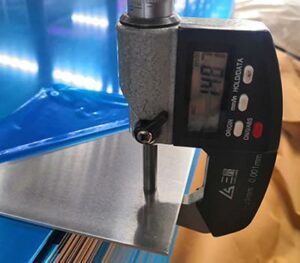
8011 Heat Sealable Aluminum Foil Thickness Measurement
Supplier Spotlight: Huawei Aluminum
Huawei Aluminum Co., Ltd. is a leading supplier and manufacturer of aluminum products, including 8011 foil for flexible packaging.
The company is recognized for its integrated production chain, which covers ingot production, rolling, finishing, surface treatment, coating, and lamination solutions.
Huawei Aluminum emphasizes reliability, scale, and consistent quality in serving global packaging brands and converters.
Company Overview
- Core competency: Large-scale aluminum foil production with a focus on packaging-grade foils.
- Capabilities: In-house rolling mills, annealing furnaces, surface treatment lines, and finishing/coating options to tailor foil for packaging needs.
- Global reach: A broad network of distributors and customers around the world, including major packaging converters and consumer brands.
Capabilities for 8011 Aluminum Foil
- Custom thickness ranges: 9–25 μm typical for flexible packaging, with precise tolerances to support uniform sealing behavior.
- Surface and coating options: Available surface treatments and compatible coatings to improve printing, adhesion, and lamination performance.
- Compliance and certifications: ISO 9001 and related quality management practices, along with regulatory compliance for food-contact materials in multiple markets.
- Packaging-ready solutions: Tailored foil–laminate packages (e.g., foil with specific coatings or surface treatments) aligned to customer product requirements and line configurations.
Why Huawei Aluminum as a Supplier
- Scale and reliability: Large production capacity supports sustained supply for global brands and large converters.
- End-to-end control: In-house capabilities from extrusion and rolling to finishing and coating reduce supply-chain risk and improve lead times.
- Customer-oriented service: Technical support, fast sample provision, and collaboration on laminate design help converters optimize their packaging solutions.
- Quality and traceability: Robust QA processes and batch traceability enable consistent performance across orders.
What to Expect When Sourcing 8011 Foil from Huawei Aluminum
- Documentation: Certificates of analysis, material safety data, and food-contact compliance documentation.
- Technical support: Detailed data sheets that cover mechanical properties, sealing parameters, and compatibility guidelines with specific lamination films.
- Lead times and volumes: Flexible production planning to accommodate large volumes or just-in-time delivery for global brands.
Practical Guidelines for Buyers
Sourcing and utilizing 8011 heat-sealable foil for flexible packaging requires careful planning and clear specifications.
The following guidelines help buyers align technical needs with supplier capabilities.
How to Specify 8011 Heat Sealable Aluminum Foil
- Foil thickness: Define the target thickness (e.g., 9–12 μm for pouches, 12–25 μm for lidding and specialized packaging) and tolerance.
- Temper and surface: Specify temper (O or soft) and preferred surface finish (bright, matte, or coated) based on printability and lamination requirements.
- Coatings and coatings compatibility: Indicate any coatings (e.g., corona-treated surface or other surface activations) to improve adhesion to inks or laminates.
- Sealing parameters: Provide laminate film details (polymer, coatings, and recommended sealing temperatures and dwell times) so the foil can be matched to seal conditions.
- Food-contact and regulatory compliance: Confirm the intended market’s regulatory requirements and the supplier’s certifications for food-contact materials.
- Packaging format and width: Define roll width, core size, and winding direction to ensure compatibility with converting lines.
Sealant Film Compatibility and Sealing Parameters
- Sealant polymer choices: Common sealants include LDPE, LLDPE, EVA, EAA, and PET-based laminates. Match to foil surface and line capabilities.
- Temperature window: Typical sealing ranges may be from 110°C to 170°C, depending on film and equipment; the goal is to maintain a stable seal without burn-through or wrinkling.
- Pressure and dwell time: Optimize for consistent seal integrity across the roll width and across long production runs.
- Testing: Before production, run a pilot test to confirm seal strength, peel force, and seal integrity across a temperature and humidity range representative of distribution conditions.
Storage, Handling, and Transportation
- Store away from moisture and heat sources; maintain stable ambient temperatures to preserve surface treatments and coatings.
- Handle rolls carefully to prevent surface damage or contamination that could hinder sealing performance or lamination adhesion.
- Transport in conditions that minimize abrasion and delamination risks; use protective cores and proper roll packaging.
Sustainability and End-of-Life Considerations
- Consider laminate design choices that optimize recyclability, reduce overall material weight, and simplify end-of-life processing.
- Seek supply chain transparency: documentation that outlines materials, coatings, and adhesives used in laminates, enabling better recycling or disposal decisions.

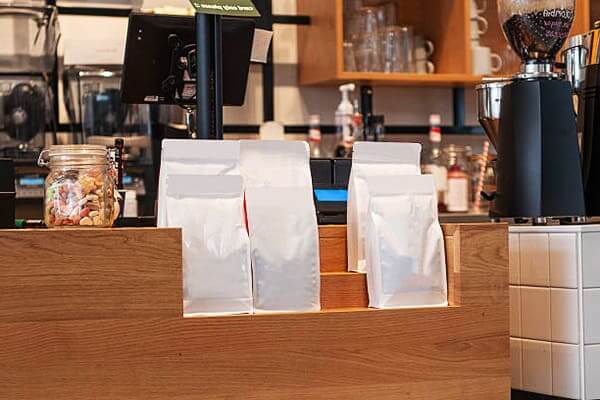
Coffee Beans Aluminum Foil Flexible Packaging
Data-Driven Insights and Comparisons
To help buyers make informed decisions, the following data-driven insights compare 8011 foil to alternative materials and outline practical implications for different packaging goals.
Cost vs Performance
- Total cost includes foil material, lamination layers, coating, and processing. 8011 foil’s cost is offset by powerful barrier performance and reliable seal strength, potentially reducing product waste and return rates.
- On a per-package basis, the foil’s contribution is a function of thickness, laminate architecture, and line efficiency. In many cases, the added protection and extended shelf life justify higher initial packaging costs.
Efficiency and Line Performance
- The foil’s mechanical properties support high-speed conversion with stable seal quality, reducing downtime from seal-related defects.
- Consistent thickness and surface finish reduce the variability in downstream lamination and printing processes, contributing to improved line efficiency and fewer scrap losses.
Sustainability Metrics
- Recyclability: Aluminum is widely recyclable; however, multi-layer laminates complicate recycling. Designers may consider mono-material or easily separable laminates to improve end-of-life outcomes.
- Material savings: Thinner foil and optimized laminate designs can reduce overall material usage without compromising performance, contributing to a more sustainable packaging solution.
FAQs
What is the main advantage of 8011 foil in flexible packaging?
The main advantage is its excellent sealability with common heat-seal films, combined with a superb barrier to moisture and gases when used within a suitable laminate structure, which helps preserve product quality and extend shelf life.
Can 8011 foil be used in high-temperature packaging?
Yes, but sealing temperature and laminate stack must be selected with care. The foil itself is ductile and can be used in a range of temperatures when paired with compatible films and proper sealing parameters.
How does 8011 foil impact recyclability?
Aluminum foil is recyclable, but laminated structures complicate recycling. Packaging engineers should aim for laminates that are easier to separate or design mono-material laminates when feasible to improve recyclability.
What should I consider when selecting a supplier for 8011 aluminum foil?
Consider supply reliability, capacity, track record in packaging applications, regulatory certifications, and the ability to provide technical support, testing data, and customized laminate solutions. Huawei Aluminum, as described, demonstrates capabilities in these areas.
Conclusion
8011 Heat Sealable Aluminum Foil for Flexible Packaging represents a versatile, reliable, and high-performing choice for modern packaging demands.
Its combination of formability, excellent barrier properties, and compatibility with widely used sealant films makes it a robust option for a broad spectrum of products, from everyday snacks to pharmaceutical and premium cosmetics packaging.
The ability to tailor the foil through surface treatments, coatings, and laminate configurations enables brands and converters to achieve both performance and aesthetics that align with consumer expectations.
In this landscape, choosing a trusted supplier is crucial. Huawei Aluminum stands out as a capable partner, offering end-to-end production, consistent quality, and a responsive support network.
By collaborating with an experienced supplier, packaging customers can optimize laminate designs, improve seal reliability, and achieve sustainable packaging solutions that meet regulatory requirements and consumer demands.
As packaging technology continues to advance, the role of 8011 aluminum foil in flexible packaging will likely expand further.
Ongoing innovations in barrier coatings, printable surfaces, and laminate architectures will enhance performance while helping brands deliver safer, longer-lasting products with more sustainable packaging footprints.
Whether you are developing new product formats or refining existing packaging lines, 8011 foil is a robust material that can help you achieve your goals with confidence.
If you’d like to discuss your specific needs for 8011 Heat Sealable Aluminum Foil for Flexible Packaging or to explore options with Huawei Aluminum, we can help connect you with technical experts who can tailor a solution to your product, process, and market requirements.
Share with PDF: Download

Latest Comments
Dear Sir, Please offer your best FOB Prices specs are as under ALUMINIUM STRIP (AL=99.50% MIN) SIZE:450 X32 X6 MM. DIN EN 570 EN-AW 1050 A, QUANTITY=3400KG
Hello, Would you be so kind to offer item as follows: Coil 0,6х1250 (1000)mm EN AW-3105 5tons
Hello, Can you offer me Aluminium plates? Actally I need: 110mm x 1700mm x 1700mm 5083 H111 - 21 pcs Next year planed is 177 pcs
Świetny artykuł. Byłem zachwycony, że wyszukałem ten artykuł. Wielu osobom wydaje się, że mają rzetelną wiedzę na ten temat, ale często tak nie jest. Stąd też moje miłe zaskoczenie. Jestem pod wrażeniem. Zdecydowanie będę rekomendował to miejsce i częściej wpadał, aby zobaczyć nowe rzeczy.
requirement of aluminium strip