In this paper, 8011 cast-rolled blanks are adopted to manufacture aluminum sheets for bottle caps, and the effects of homogenization annealing and intermediate annealing processes on product properties are investigated.
In this paper, 8011 cast-rolled blanks are adopted to manufacture aluminum sheets for bottle caps, and the effects of homogenization annealing and intermediate annealing processes on product properties are investigated.
The results show that bottle cap aluminum sheets meeting customer requirements can be produced from cast-rolled blanks by adopting appropriate homogenization annealing processes.
Due to the inherent characteristics of the cast-rolling process, cast-rolled blanks exhibit obvious anisotropy, which restricts their application in deep-drawing products.
In this work, a reasonable homogenization annealing process is adopted to alleviate composition segregation and anisotropy of 8011 cast-rolled blanks induced by the cast-rolling process and optimize the internal microstructure.
Combined with appropriate intermediate annealing and reasonable cold reduction of the final rolling pass in subsequent processing, the proportions of various textures in the sheets are balanced, material anisotropy is reduced, and bottle cap aluminum sheets satisfying deep-drawing requirements are successfully fabricated.
The raw material is 8011 cast-rolled coil with an initial blank thickness of 6.0–6.5 mm, and the target finished thickness of the product is 0.21 mm.
The grain size of cast-rolled coils shall reach Grade 1.
Chemical Composition of 8011 Alloy for Bottle Caps (mass fraction, %)
| Element | Si | Fe | Cu | Mn | Mg | Ti | Single Impurity | Total Impurity | Al |
| Content | 0.50~0.90 | 0.6~1.0 | ≤0.1 | ≤0.2 | ≤0.05 | ≤0.1 | ≤0.05 | ≤0.15 | Balance |
With fixed cold rolling passes, homogenization annealing and intermediate annealing temperatures are set as variable parameters. The complete process route is as follows:
Cast-rolled blank → cold rolling to 3.8 mm → homogenization annealing → cold rolling to 0.43 mm → intermediate annealing → cold rolling to finished thickness of 0.21 mm
Three comparative process schemes are designed:
Scheme 1: Homogenization at 480 °C for 4 h for 3.8 mm thick blanks; intermediate annealing at 360 °C for 2 h for 0.43 mm strips
Scheme 2: Homogenization at 480 °C for 4 h for 3.8 mm thick blanks; intermediate annealing at 280 °C for 2 h for 0.43 mm strips
Scheme 3: Homogenization at 530 °C for 4 h for 3.8 mm thick blanks; intermediate annealing at 320 °C for 2 h for 0.43 mm strips
Tensile strength \(R_m\), elongation A and earing rate e of specimens after intermediate annealing and finished products are tested in accordance with national standards.
Finished sheets produced by the three schemes are delivered to customers for cup drawing tests, and the optimal industrial production process is determined based on practical stamping feedback.
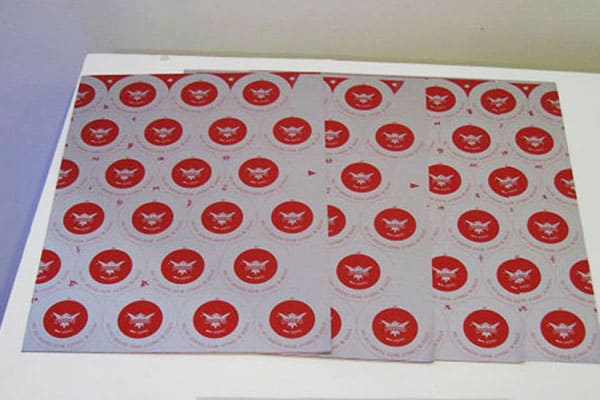
Specimens cold-rolled to 0.43 mm are annealed in a box furnace (put into the furnace after the set temperature is reached, holding time: 2–4 h) to test mechanical properties and earing characteristics.
Actual Properties after Intermediate Annealing
| Process Scheme | Tensile Strength \(R_m\) (MPa) | Elongation A (%) | Earing Rate e (%) | Earing Direction |
| Scheme 1 | 95 | 28 | 10 | 0°/90° |
| Scheme 2 | 93 | 30 | 8.9 | 0°/90° |
| Scheme 3 | 90 | 36 | 4.9 | 0°/90° |
After intermediate annealing, strips are cold-rolled to the finished thickness of 0.21 mm with a cold reduction of approximately 51%.
The mechanical and earing performance data of finished products are listed as follows.
Properties of Finished Products
| Process Scheme | Sampling Direction | \(R_m\) (MPa) | A (%) | Earing Rate e (%) | Earing Direction |
| Scheme 1 | 0° | 146 | 2.2 | 8.9 | 0°/90° |
| 45° | 154 | 2.8 | |||
| 90° | 156 | 2.1 | |||
| Scheme 2 | 0° | 154 | 2.8 | 8.0 | 0°/90° |
| 45° | 164 | 1.8 | |||
| 90° | 162 | 1.6 | |||
| Scheme 3 | 0° | 145 | 2.8 | 2.2 | 0°/90° |
| 45° | 150 | 2.0 | |||
| 90° | 156 | 2.0 |
Customer Trial Results
| Process Scheme | Customer Cup Drawing Performance |
| Scheme 1 | No trial test conducted |
| Scheme 2 | Cracking occurs during stamping |
| Scheme 3 | Actual earing rate < 3%, excellent forming performance, meeting bottle cap production requirements |
Test conclusion: The finished products of Scheme 1 and Scheme 2 homogenized at 480 °C have an earing rate close to 10%, failing to meet deep-drawing requirements for bottle caps.
The finished products of Scheme 3 homogenized at 530 °C have an earing rate of about 5% without stamping cracking, and have been supplied to multiple bottle cap manufacturers in mass production.
The earing behavior of aluminum sheets is dominated by internal crystal textures.
Cold rolling produces deformation textures, which lead to 45° earing during cup drawing.
After annealing of sheets subjected to large cold reduction, recrystallization textures mainly consist of cube texture and R texture.
The optimization idea for deep-drawing aluminum sheets is to regulate the proportion of the two textures, offset the earing effects induced by different textures mutually, reduce the overall earing rate and improve deep-drawing formability.
The cast-rolling process features high supercooling degree and rapid cooling, resulting in a large number of nonequilibrium second phases and severe solid-solution segregation of Si and Fe elements in the aluminum matrix after solidification.
Homogenization annealing promotes the transformation of nonequilibrium phases, precipitation of supersaturated solid solutions and elimination of composition segregation.
The main alloying elements of 8011 alloy are Fe and Si. Rapid cooling in cast rolling makes a large amount of Fe and Si supersaturated in the aluminum matrix.
During homogenization, Fe and Si precipitate out to form dispersed \(FeAl_3\) particles:
5754 aluminum sheet has the characteristics of excellent processability, good corrosion resistance, weldability and easy forming. As a wrought alloy, 5754 aluminum sheet can be formed by rolling, extrusion, and forging, but not by casting.
Pvdf Coated Aluminum Coil is one type of Color coated aluminum coil, Color coated aluminum coil can be divided into polyester (PE) coated aluminum coil, fluorocarbon (PVDF) coated aluminum coil and epoxy roller coated aluminum coil.
Our commitment to quality, variety, and customization ensures that you'll find the perfect insulation aluminum coil for your project.
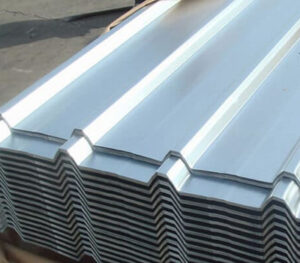
Upgrade your roof with high-quality aluminum roofing sheets. Experience long-lasting protection and enhance your home's aesthetics with our stylish and durable roofing solution
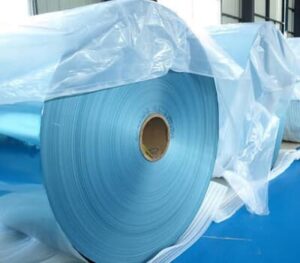
Hydrophilic aluminum foil is obtained by coating the surface of aluminum foil with hydrophilic coating, the purpose is to improve the hydrophilic (water-attracting) performance of the aluminum foil, and it has higher heat transfer efficiency and corrosion resistance.

High barrier coated aluminum foil 30 µm engineered for lidding, retort and pharmaceutical laminates — tight gauge control, low pinhole counts and predictable seal mapping for high-speed converters.
No.52, Dongming Road, Zhengzhou, Henan, China
Henan Huawei Aluminum Co., Ltd, One Of The Biggest Aluminum Supplier In China Henan,We Are Established In 2001,And We Have rich experience in import and export and high quality aluminum products
Mon – Sat, 8AM – 5PM
Sunday: Closed
© Copyright © 2023 Henan Huawei Aluminium Co., Ltd

Latest Comments
Dear Sir, Please offer your best FOB Prices specs are as under ALUMINIUM STRIP (AL=99.50% MIN) SIZE:450 X32 X6 MM. DIN EN 570 EN-AW 1050 A, QUANTITY=3400KG
Hello, Would you be so kind to offer item as follows: Coil 0,6х1250 (1000)mm EN AW-3105 5tons
Hello, Can you offer me Aluminium plates? Actally I need: 110mm x 1700mm x 1700mm 5083 H111 - 21 pcs Next year planed is 177 pcs
Świetny artykuł. Byłem zachwycony, że wyszukałem ten artykuł. Wielu osobom wydaje się, że mają rzetelną wiedzę na ten temat, ale często tak nie jest. Stąd też moje miłe zaskoczenie. Jestem pod wrażeniem. Zdecydowanie będę rekomendował to miejsce i częściej wpadał, aby zobaczyć nowe rzeczy.
requirement of aluminium strip