Discover premium 3003 hot rolled aluminium disc for lighting reflector, offering excellent formability, smooth surface quality, and reliable performance for reflector manufacturing.
Lighting reflectors are more than shaped metal parts. They are optical and thermal components that directly influence light distribution, energy efficiency, appearance, and long-term reliability.
In modern lighting systems, especially LED downlights, industrial lamps, street lights, high-bay luminaires, and decorative fixtures, the reflector must combine high reflectivity, stable forming performance, corrosion resistance, and consistent surface quality.
3003 hot rolled aluminium disc for lighting reflector stands out as a practical and widely adopted choice.
It offers a balanced combination of formability, corrosion resistance, surface finishing potential, and cost efficiency.
When properly processed, it can be deep drawn, spun, stamped, polished, anodized, or coated into reflector components with stable performance and attractive appearance.
This article explains what 3003 hot rolled aluminium disc is, why it is suitable for lighting reflectors, how it performs, how it is manufactured, and how it compares with similar materials.
A lighting reflector must do several things at once. It must shape the beam of light, maintain surface brightness, survive forming operations without cracking, and remain stable in service over time.
In many reflector designs, the material choice has a direct impact on both optical performance and manufacturing yield.
3003 hot rolled aluminium disc is used because it provides a useful balance of properties:
For reflector production, this balance matters more than any single property. A material with very high reflectivity but poor formability may crack during shaping.
A material with strong formability but poor surface quality may not deliver the required optical finish. 3003 aluminum offers a reliable middle ground.

3003 Hot Rolled Aluminium Disc for Lighting Reflector
3003 aluminum circle belongs to the Al-Mn series. It is one of the most widely used non-heat-treatable aluminum alloys.
Its strength comes mainly from manganese solid-solution strengthening rather than from precipitation hardening.
A hot rolled aluminium disc is a circular blank produced from rolled aluminum sheet or coil and cut into disc shapes for further forming.
In reflector manufacturing, these discs are often used as the starting material for:
The hot rolling route helps produce a disc with more uniform internal structure and better workability than an unsuitable raw blank. For many lighting applications, that improves forming reliability and final surface consistency.
| Element | Typical Range (wt.%) | Function |
|---|---|---|
| Aluminum (Al) | Balance | Base metal; provides lightweight nature, corrosion resistance, and good processability |
| Manganese (Mn) | 1.0 – 1.5 | Main strengthening element; improves mechanical stability |
| Iron (Fe) | ≤ 0.7 | Minor element; influences structure and rolling behavior |
| Silicon (Si) | ≤ 0.6 | Helps control casting and processing characteristics |
| Copper (Cu) | ≤ 0.2 | Minor strengthening contribution, kept low for corrosion balance |
| Zinc (Zn) | ≤ 0.1 | Residual element, limited to avoid property variation |
The suitability of 3003 for reflector use comes from the way its metallurgy supports both manufacturing and optical finishing.
Reflectors often require deep drawing, spinning, flanging, or stretching. 3003 can be formed without excessive cracking when the temper and thickness are properly selected.
A reflector depends on surface smoothness. 3003 can be processed into discs with good flatness and acceptable surface finish, which supports polishing or coating.
Lighting reflectors may be exposed to humidity, dust, thermal cycling, and indoor pollutants. 3003 resists corrosion well enough for most indoor and many commercial environments.
Because 3003 is non-heat-treatable, its processing window is relatively straightforward. That makes production more predictable.
Compared with specialty reflective alloys, 3003 is widely available and economical, making it suitable for large-scale lighting manufacturing.

Huawei 3003 Hot Rolled Aluminium Disc
The microstructure of 3003 aluminum alloy is central to its usefulness in reflector production.
When properly rolled and annealed, 3003 can develop a stable grain structure that supports forming without excessive tearing.
3003 strengthens through cold working. Depending on the temper, it may be supplied in softer or harder conditions. For reflector blanks, manufacturers often choose a temper that balances:
The alloy itself does not create high mirror reflectivity. That performance comes from the final surface treatment. However, 3003 provides a good substrate for:
In other words, 3003 is not chosen because it is already reflective. It is chosen because it can be turned into a high-quality reflective component.
Mechanical properties vary with temper, thickness, and supplier processing, but the general performance profile is well known.
| Property | Typical Behavior |
|---|---|
| Density | ~2.73 g/cm³ |
| Tensile strength | Moderate |
| Yield strength | Moderate |
| Elongation | Good, especially in soft tempers |
| Formability | Excellent to good |
| Corrosion resistance | Good |
| Weldability | Good |
| Machinability | Moderate, depending on condition |
For lighting reflectors, 3003 does not need ultra-high strength. It needs enough strength to maintain shape, enough ductility to form complex geometries, and enough stability to preserve the finished reflector profile. That is exactly where this alloy performs well.

Aluminum Disc Auto Lighting Reflector
The manufacturing of a 3003 hot rolled aluminium disc for lighting reflector is a controlled industrial process that combines alloy preparation, rolling, annealing, blanking, and surface quality management.
Although the final product may appear simple, reflector-grade disc stock must meet strict requirements for thickness uniformity, surface smoothness, formability, and consistency.
Any defect in the base material can later appear as cracking, wrinkling, uneven polishing, or optical distortion in the finished reflector.
The process begins with selecting the correct 3003 aluminum alloy chemistry and ensuring that the incoming raw material meets the required standards.
Since 3003 is an Al-Mn alloy, its performance depends heavily on chemical consistency and impurity control.
After alloy preparation, the metal is cast into slabs or coils that can be processed further.
The cast structure is then homogenized to reduce segregation and improve internal uniformity.
Homogenization helps:
Hot rolling is the step that gives the material its “hot rolled” character. The aluminum is rolled at elevated temperature, which makes it easier to reduce thickness while improving the internal structure of the metal.
This stage is important because it:
After hot rolling, the material often undergoes cold rolling to achieve the target thickness and surface finish.
Cold rolling also improves dimensional precision and helps create a more uniform sheet structure.
Annealing is one of the most important steps in the manufacture of reflector-grade discs.
It restores ductility after rolling and adjusts the temper to the condition required for subsequent forming.
Because the final reflector depends on optical performance, surface quality control is essential throughout production.
Reflector-grade 3003 aluminium discs must have a clean, defect-free surface that can accept polishing, anodizing, or coating.
Once the sheet reaches the correct thickness and temper, it is cut into circular discs according to the reflector design.
This blanking operation must be precise, since the disc becomes the starting shape for the entire reflector component.

Disc Blanking and Cutting
For a lighting reflector, the base aluminum disc is only the starting point. The real optical performance is determined by the surface finish created after forming and treatment.
In other words, a reflector does not work simply because it is made from aluminum; it works because its surface has been engineered to control how light is reflected, distributed, and retained over time.
Mechanical polishing is one of the most common ways to improve reflector brightness.
The process smooths the metal surface and reduces microscopic irregularities that would otherwise scatter light.
A polished 3003 reflector can achieve:
However, polishing quality depends heavily on the starting surface. If the disc has scratches, waviness, or inclusions, those defects may still appear in the final reflector.
Bright rolling is often used to create a reflective base surface before further forming or finishing.
It helps improve surface smoothness and can reduce the amount of post-processing required.
This method is useful when the manufacturer wants:
Anodizing is widely used when the reflector must combine optical performance with corrosion resistance.
The anodic layer protects the surface and improves resistance to discoloration, especially in humid or dusty environments.
Anodized reflectors are often chosen for:
Although anodizing can slightly change the optical characteristics, it often improves durability and service stability.

Anodized aluminum disc surface display
In some reflector designs, special coatings are used to enhance surface protection or alter optical behavior.
These coatings may improve resistance to fingerprints, oxidation, contamination, or wear during installation and service.
Coatings may be applied when the application demands:
The optical quality of a reflector is not measured by brightness alone. It is evaluated through a set of interrelated characteristics.
This is the percentage of incident light reflected by the surface. Higher total reflectance usually means better light efficiency.
Specular reflection is the mirror-like component of reflection. It is especially important in reflectors designed to direct light in a controlled and predictable beam.
A certain degree of diffuse reflection may be desirable in some lighting systems to soften glare and improve visual comfort.
Even if a surface has high reflectance, uneven finish can lead to inconsistent beam patterns. Uniformity is therefore a critical quality factor.
The best reflector is not just bright on day one. It must retain its performance after exposure to heat, humidity, dust, and normal handling.
Lighting reflectors are exposed to thermal cycles from the light source and surrounding environment.
In LED systems, temperatures are usually lower than in older high-intensity lamps, but thermal stability still matters.
For extreme temperatures or highly corrosive environments, another alloy or a specialized surface treatment may be required.
But for general lighting reflector use, 3003 offers a very practical service balance.
The choice of reflector material often depends on the balance between reflectivity, formability, cost, and durability.
| Material / Product | Formability | Surface Finish Potential | Corrosion Resistance | Cost Efficiency | Main Advantage | Main Limitation | Typical Use |
|---|---|---|---|---|---|---|---|
| 3003 Hot Rolled Aluminium Disc | Excellent | Very good | Good | High | Balanced choice for reflector forming and finishing | Not the highest strength alloy | LED reflectors, lamp shades, spun reflectors |
| 1050 Aluminium Disc | Excellent | Excellent | Very good | High | High purity and very good brightness potential | Lower strength than 3003 | Decorative reflectors, high-brightness parts |
| 6061 Aluminium Disc | Good | Good | Very good | Medium | Higher strength and structural rigidity | Less formable than 3003 | Structural lighting parts |
| Aluminum Mirror Sheet | Limited for deep forming | Excellent | Very good | Medium to high | Very high reflectivity from the start | Less suitable for severe forming | Flat reflectors, panels |
| Stainless Steel Reflector Base | Good | Moderate to good | Excellent | Lower | Strong and durable | Heavier and harder to optimize optically | Harsh environments |
| Plastic Reflector Substrates | Excellent | Good | Good | Medium | Lightweight and easy to mold | Lower thermal stability and optical aging resistance | Low-cost decorative lighting |
3003 is often selected because it sits in the practical center of the market.
It is easier to form than stronger alloys, more durable than very soft pure aluminum in some structures, and more economical than many premium reflective solutions.
One of the most common applications is in LED downlights, where reflectors are used to control beam angle and reduce glare.
Why 3003 is suitable:
In industrial environments such as warehouses, factories, and logistics centers, reflectors must handle both mechanical demands and optical efficiency.
Key advantages:
Retail and commercial spaces require lighting that combines performance with visual appeal. Reflectors made from 3003 aluminium discs are commonly used in:
In architectural lighting, reflectors are often visible elements and must meet both optical and aesthetic requirements.
Applications include:
Although outdoor lighting requires higher durability, 3003 aluminium discs are still used when combined with appropriate surface treatments.
Typical uses:
In certain automotive and specialty lighting systems, 3003 discs are used for reflector components where moderate strength and good optical control are required.
Applications include:
As energy-efficient lighting solutions continue to grow, reflector design plays a key role in maximizing light output.
3003 aluminium discs are used in:
For specialized applications, manufacturers often require custom reflector geometries and surface finishes. 3003 discs are highly suitable for:
When specifying 3003 hot rolled aluminium disc for a lighting reflector, the following factors matter most:
A good specification should define both the material and the final application requirement.
In reflector manufacturing, the material is only part of the performance equation. The process path is equally important.
3003 hot rolled aluminium disc for lighting reflector is a highly practical material solution for modern lighting design.
It offers a strong balance of formability, corrosion resistance, surface quality, and cost efficiency, making it suitable for a wide range of reflector products.
Its real value comes from its versatility. It can be formed, polished, anodized, or coated into reflector components that deliver reliable optical performance and attractive appearance.
For manufacturers, it provides stable processing and good yield. For end users, it supports efficient light control and durable service.
In short, 3003 is not the most specialized reflector material, but it is one of the most dependable. That is often exactly what lighting production needs.
Because it offers a balanced combination of formability, corrosion resistance, surface finish potential, and cost efficiency.
Yes. It is well suited for common reflector forming methods when the correct temper and thickness are selected.
Yes. It is compatible with anodizing and other surface finishing methods used in lighting components.
Hot rolling improves internal structure and workability, which helps reduce forming defects and improves consistency.
For most reflector applications, yes, because 3003 is generally easier to form. 6061 is stronger, but not always as formable.
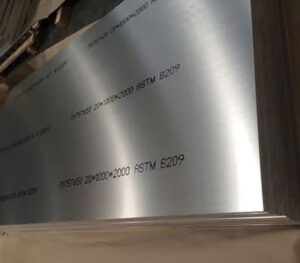
7075 aluminum sheet is the strongest heat-treatable alloy, introduced by Alcoa in 1943, and can be heat-treated to achieve strength levels comparable to many steel alloys.

The 5052 anodized mirror plate is a type of aluminum sheet that has undergone an anodization process, resulting in a reflective surface. The material is primarily made from 5052 aluminum alloy, which is known for its excellent corrosion resistance and good formability.
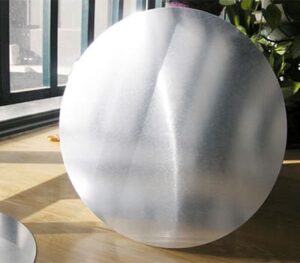
5454-O aluminium circle represents 5454 aluminum alloy O temper aluminum circle, belongs to 5000 series aluminum alloy.
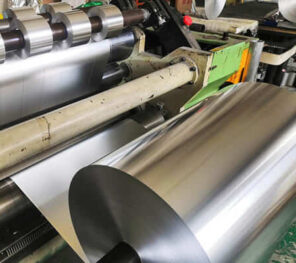
High temperature resistant coated aluminum foil delivers excellent heat stability, durable protection, and reliable performance for demanding applications.
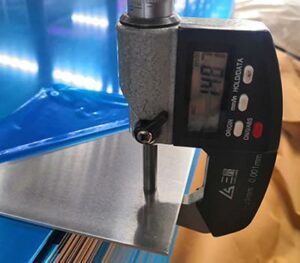
3A21 aluminum plate is an Al-Mn series aluminum alloy, which belongs to the weldable LF21 aluminum alloy and is known for its excellent anti-rust properties.
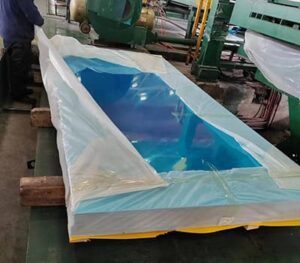
5086 aluminum sheet is a high-strength, corrosion-resistant al-mg alloy, widely used in aerospace, transportation, architectural decoration and other fields.
No.52, Dongming Road, Zhengzhou, Henan, China
Henan Huawei Aluminum Co., Ltd, One Of The Biggest Aluminum Supplier In China Henan,We Are Established In 2001,And We Have rich experience in import and export and high quality aluminum products
Mon – Sat, 8AM – 5PM
Sunday: Closed
© Copyright © 2023 Henan Huawei Aluminium Co., Ltd

Latest Comments
Dear Sir, Please offer your best FOB Prices specs are as under ALUMINIUM STRIP (AL=99.50% MIN) SIZE:450 X32 X6 MM. DIN EN 570 EN-AW 1050 A, QUANTITY=3400KG
Hello, Would you be so kind to offer item as follows: Coil 0,6х1250 (1000)mm EN AW-3105 5tons
Hello, Can you offer me Aluminium plates? Actally I need: 110mm x 1700mm x 1700mm 5083 H111 - 21 pcs Next year planed is 177 pcs
Świetny artykuł. Byłem zachwycony, że wyszukałem ten artykuł. Wielu osobom wydaje się, że mają rzetelną wiedzę na ten temat, ale często tak nie jest. Stąd też moje miłe zaskoczenie. Jestem pod wrażeniem. Zdecydowanie będę rekomendował to miejsce i częściej wpadał, aby zobaczyć nowe rzeczy.
requirement of aluminium strip