Avoid rot, heavy maintenance, and slippery surfaces—opt for aluminum sheets for boat decking and enjoy decades of reliable performance with minimal upkeep.
Boat owners and naval architects recognize that aluminum sheets for boat decking deliver unmatched performance in marine environments.
Decking materials must endure constant UV exposure, saltwater spray, and heavy foot traffic.
Consequently, specifiers increasingly favor aluminum over traditional substrates such as teak, composite, or steel.
Beyond its corrosion resistance, aluminum offers a superior strength-to-weight ratio that enhances vessel stability and fuel efficiency.

Aluminum Sheets for Boat Decking
When you choose aluminum sheets for boat decking, alloy choice dictates long-term performance:
| Alloy | Mg (%) | Si (%) | Key Benefit | Marine-Grade Spec | Typical Use |
|---|---|---|---|---|---|
| 5052 | 2.2–2.8 | ≤ 0.25 | Excellent pitting resistance | DNV-GL: ≤ 3 % Mg* | Light-duty deck panels, interior liners |
| 5086 | 3.5–4.5 | ≤ 0.25 | Superior seawater resistance | ABS: Min 3.5 % Mg, H116 | Primary deck plating, offshore walkways |
| 5754 | 2.6–3.6 | ≤ 0.40 | Enhanced formability & weld-ability | Lloyd’s: ≥ 2.7 % Mg, H321 | Complex curved decking, tight-radius bends |
| 6061-T6 | 0.8–1.2 | 0.4–0.8 | High structural strength | ISO 9001 certified mills | Load-bearing deck sections, mounting bases |
*DNV-GL allows magnesium up to 3 % for general marine alloy classification.
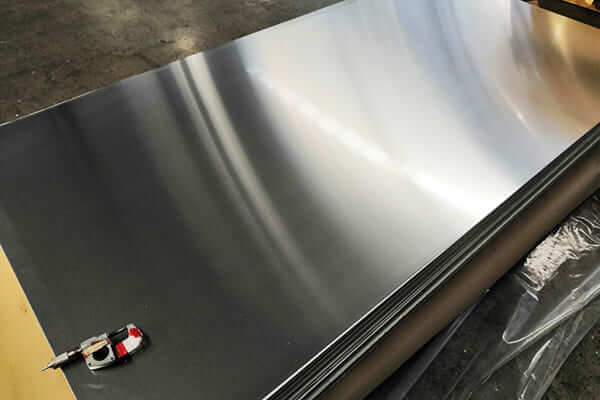
Huawei 5086 Aluminum Sheet for Boat Decking
The temper designation (e.g., -H32, -H116, -T6) indicates the mechanical and thermal treatments the aluminum has undergone, which significantly affect its properties:
The decision to use aluminum for boat decking brings a multitude of compelling advantages.
Marine-grade aluminum alloys possess an excellent strength-to-weight ratio.
For instance, 5083-H116 can have an ultimate tensile strength of over 300 MPa (44 ksi).
This allows for robust deck structures that can withstand significant loads from passengers, equipment, and dynamic sea forces, ensuring long-term structural integrity.
Aluminum is approximately one-third the density of steel (around 2.7 g/cm³ vs. 7.85 g/cm³ for steel). This significant weight saving translates to:
Unlike wood decking which requires regular sanding, sealing, and varnishing, or fiberglass which can suffer from gel coat crazing or osmosis, aluminum decking is remarkably low maintenance.
It does not rot, warp, splinter, or succumb to insect infestation. Routine cleaning with fresh water and mild soap is typically all that is required.
When the correct marine-grade alloy is chosen and properly installed (addressing galvanic corrosion, for example), an aluminum deck can last the lifetime of the vessel.
Its resistance to UV degradation, temperature extremes, and physical impact contributes to its enduring performance.
While aluminum is known for its corrosion resistance, understanding the nuances in a marine setting is crucial.
Saltwater, rich in chloride ions, can be aggressive towards many metals. For aluminum, the main concerns are:
Proper alloy selection (like 5083 or 5086) significantly mitigates these risks.
To further enhance protection, especially for 6000 series aluminum alloys or in particularly aggressive conditions:
Galvanic corrosion occurs when dissimilar metals are in electrical contact in the presence of an electrolyte (like seawater).
Aluminum is anodic (less noble) to many common marine metals like stainless steel, bronze, and copper. Prevention includes:
Aluminum sheets are produced by hot and cold rolling processes to achieve the desired thickness and mechanical properties.
Typical thicknesses for boat decking range from 3mm (1/8 inch) to 6mm (1/4 inch) or more, depending on the boat’s size, support structure span, and expected loads.
Tight thickness tolerances (e.g., as per ASTM B209) are essential for consistent structural performance.
To enhance safety and aesthetics:
When selecting aluminum sheets for boat decking, various types offer distinct advantages based on functionality, safety, and aesthetics.
Below are the primary types of aluminum sheets utilized in marine applications:
Flat aluminum sheets serve as the foundational material for many boat decks.
They provide a smooth and even surface that is easy to walk on and maintain.
These sheets are versatile and can be cut to size for custom applications, making them ideal for a wide range of boat designs.
Aluminum tread plates feature raised patterns, such as diamonds or checkerboards, which enhance traction and minimize the risk of slipping, especially in wet conditions.
This type is particularly popular in high-traffic areas of a boat, such as the cockpit or entry points, where safety is paramount.
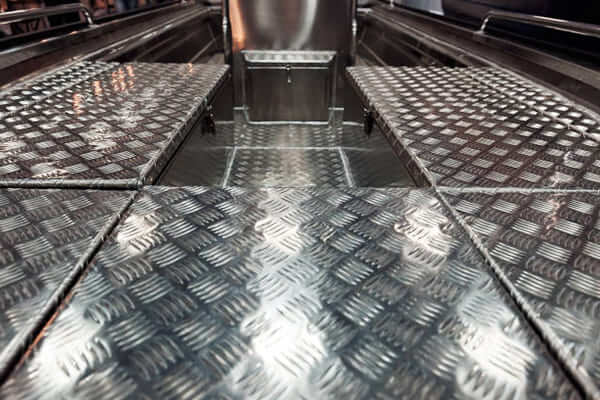
Aluminum Tread Plate for Boat Decking
Perforated aluminum sheets have holes punched into them, allowing for drainage and airflow.
This feature is beneficial in environments where moisture management is crucial, as it helps prevent water pooling on the deck.
These sheets are often used in areas that require ventilation or drainage, maintaining safety and comfort.
Specialized extrusions and planks are pre-formed aluminum components designed for specific applications.
These can include interlocking planks or custom shapes that fit particular boat designs.
This type provides enhanced structural integrity and can integrate seamlessly with the overall design of the vessel.
While less common than other types, expanded metal aluminum sheets offer a unique combination of strength and ventilation.
These sheets are made from aluminum that has been slit and stretched, creating a mesh-like structure.
They provide adequate footing in non-slip applications and can be used in areas where drainage is necessary.
Ensuring the quality and suitability of aluminum sheets for marine applications relies on adherence to recognized standards and rigorous testing.
For commercial vessels or larger yachts built to class, the aluminum materials and fabrication must often meet the specific rules and requirements of classification societies like the American Bureau of Shipping (ABS), DNV, or Lloyd’s Register.
These societies provide guidelines on approved alloys, strength calculations, and welding procedures.
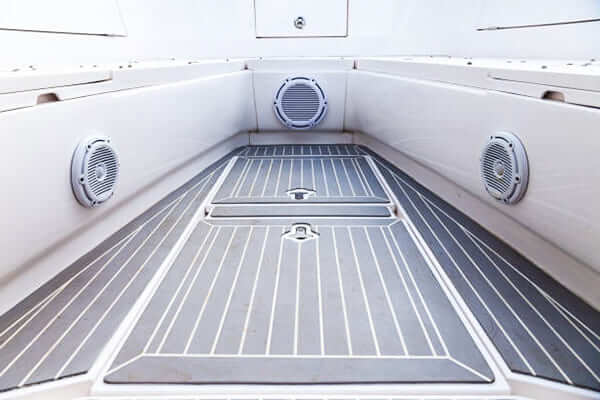
Wooden Boat Decking
| Feature | Aluminum (Marine Grade) | Wood (e.g., Teak, Marine Plywood) | Fiberglass (FRP/GRP) | Marine Composites (e.g., PVC-based, WPC) |
| Corrosion/Rot Resistance | Excellent | Susceptible to rot & pests (unless high-quality teak, well-maintained) | No rot (but risk of osmosis/blistering in core if damaged) | Generally good to excellent against rot & pests |
| Weight | Lightweight | Moderate (Plywood) to Heavy (Teak) | Moderate | Moderate to Heavy |
| Strength-to-Weight Ratio | Excellent | Good (Teak) to Fair (Plywood) | Good | Varies, can be good |
| Durability/Longevity | Very High | Good (Teak, with maintenance) to Fair (Plywood) | Good | Good to Very Good |
| Maintenance Requirements | Low | High (Teak requires oiling/sealing; Plywood needs sealing/painting) | Moderate (gelcoat care, polishing) | Low to Moderate |
| Initial Cost | Moderate to High | Moderate (Plywood) to Very High (Teak) | Moderate | Moderate to High |
| Impact Resistance | Excellent | Fair to Good (can dent/splinter) | Good (can crack/craze) | Good to Very Good |
| Fire Resistance | Non-Combustible | Combustible | Fire-retardant grades available, but base resin is combustible | Varies, some are fire-retardant |
| Heat Retention (Sun) | Can be High (if bare & dark) | Low (Teak) to Moderate | Moderate | Generally Low to Moderate |
| Slip Resistance | Good (with tread plate or coatings) | Excellent (Teak, natural texture) | Good (with molded non-skid texture) | Good to Excellent (designed textures) |
| Repairability | Good (weldable, patchable) | Fair to Good (can be complex) | Fair to Good (gelcoat/resin repair) | Varies, can be difficult to match/repair seamlessly |
| Aesthetics | Modern, Industrial (bare); Can be coated/covered for various looks | Traditional, Warm, Natural | Sleek, Moldable, Gelcoat finishes | Can mimic wood; various colors/textures |
| Recyclability | Excellent (100% recyclable) | Renewable (if sustainably sourced); Biodegradable (untreated) | Limited, energy-intensive to recycle | Limited, often difficult to separate components |
| Thermal Insulation | Poor (conducts heat/cold) | Good | Good | Good |
| Acoustic Insulation | Poor (can be noisy) | Good | Fair to Good | Fair to Good |
Key Considerations from the Comparison:
Aluminum sheets for boat decking represent a technologically advanced and highly practical solution for the modern marine industry.
The careful selection of marine-grade alloys, such as the robust 5xxx series or high-strength 6xxx series, coupled with appropriate design, fabrication, and surface treatments, results in decks that are exceptionally durable, lightweight, low-maintenance, and resistant to the relentless marine environment.
While the initial investment might be considered, the long-term benefits in terms of longevity, safety, and reduced upkeep often make aluminum the most cost-effective and reliable choice over the lifespan of the vessel.
As boat building continues to evolve, aluminum decking will undoubtedly remain a preferred material for those seeking peak performance and enduring quality.
A: Alloys from the 5xxx series, particularly 5083-H116 or 5086-H116, are generally considered best for saltwater applications due to their superior corrosion resistance and strength.
5052-H32 is also a good, more formable option for less structural decking components.
A: Typical thicknesses range from 3mm (approx. 1/8″) to 6mm (approx. 1/4″), but this depends heavily on the boat’s size, the span between support structures, and the expected load. Engineering calculations are necessary for specific applications.
A: Yes, bare aluminum can become quite hot. This can be managed by applying light-colored marine paints or coatings, using deck coverings like marine carpet or synthetic teak, or by ensuring adequate shade.
A: Isolate the stainless steel fasteners from the aluminum using non-conductive materials such as nylon or Teflon washers and sleeves, and by applying a barrier compound like Duralac or Tef-Gel to the threads and contact surfaces.
A: Aluminum tread plate provides excellent built-in slip resistance. However, other options include applying specialized non-skid paints, adhesive non-slip tapes, or synthetic decking materials over flat aluminum sheets. The best choice depends on aesthetics, comfort, and maintenance preferences.
040 Aluminum Sheet is a type of aluminum sheet that has a thickness of 0.04 inches, which is equivalent to 1.016 millimeters. It is a thin and lightweight material
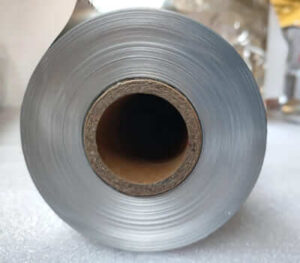
Aluminum foil for hookah is commonly used for preparing and using a hookah, also known as a shisha or water pipe. It serves a specific purpose in the preparation of the hookah, particularly in the placement and management of the charcoal and tobacco.
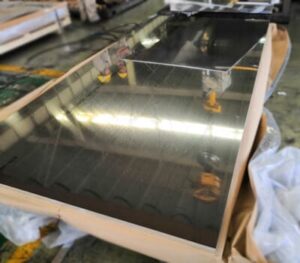
0.75 aluminum sheet refers to an aluminum sheet with a thickness of 0.75 inches, also known as 0.75" aluminum sheet;
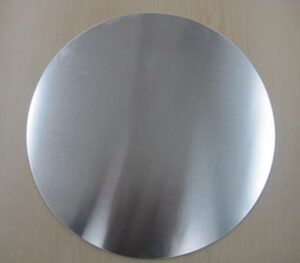
3004 aluminium circle ,also named 3004 aluminium disc,3004 aluminium disk, it is made by stamping 3004 aluminium coils.
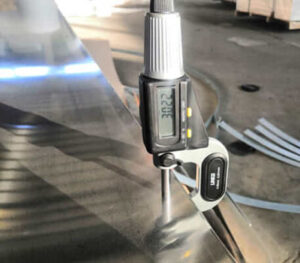
3mm aluminum sheet refers to an aluminum sheet with a thickness of 3mm, and 3mm is a common thickness of aluminum sheet
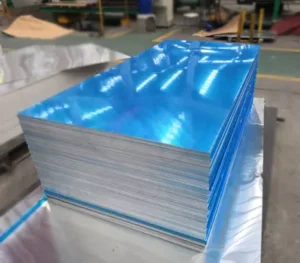
3105 Aluminum Sheet is adding some other elements on the basis of pure aluminum, such as cu, mg, si, mn, etc., the purpose is to improve the strength of aluminum alloy
No.52, Dongming Road, Zhengzhou, Henan, China
Henan Huawei Aluminum Co., Ltd, One Of The Biggest Aluminum Supplier In China Henan,We Are Established In 2001,And We Have rich experience in import and export and high quality aluminum products
Mon – Sat, 8AM – 5PM
Sunday: Closed
© Copyright © 2023 Henan Huawei Aluminium Co., Ltd

Latest Comments
Dear Sir, Please offer your best FOB Prices specs are as under ALUMINIUM STRIP (AL=99.50% MIN) SIZE:450 X32 X6 MM. DIN EN 570 EN-AW 1050 A, QUANTITY=3400KG
Hello, Would you be so kind to offer item as follows: Coil 0,6х1250 (1000)mm EN AW-3105 5tons
Hello, Can you offer me Aluminium plates? Actally I need: 110mm x 1700mm x 1700mm 5083 H111 - 21 pcs Next year planed is 177 pcs
Świetny artykuł. Byłem zachwycony, że wyszukałem ten artykuł. Wielu osobom wydaje się, że mają rzetelną wiedzę na ten temat, ale często tak nie jest. Stąd też moje miłe zaskoczenie. Jestem pod wrażeniem. Zdecydowanie będę rekomendował to miejsce i częściej wpadał, aby zobaczyć nowe rzeczy.
requirement of aluminium strip