This post delves into process for improving the edge quality of 8011 aluminum foil for air conditioner. By applying these innovations, manufacturers can achieve higher efficiency, reduce production costs, and enhance the quality of aluminum foil used in air conditioning units.
With the increasing number of aluminum foil manufacturers and the near-saturation of demand for air conditioners, competition is intensifying.
To reduce costs, manufacturers are striving to minimize production costs and maximize yield. Currently, air conditioner foil alloys are primarily 8011 and 3102 aluminum alloys, with a production process of casting-rolling—cold rolling—annealing.
Due to limitations in the casting-rolling process, certain process cracks exist on both ends of the cast-rolled strip. In subsequent processing, due to limitations in the online edge-trimming equipment, several rolling passes are often required before edge trimming.
Therefore, in the processing passes before edge trimming, the process cracks in the cast-rolled plate may expand, resulting in minor issues like incomplete trimming and small cracks, or even strip breakage and coil splitting, severely impacting product yield and production safety.
Therefore, controlling and improving the edge quality of the cast-rolled strip and reducing the number of cold rolling passes can effectively reduce the amount of cold rolling edge trimming and improve yield.
Based on our company’s production experience, this paper explores the process research on reducing edge cracking and improving the yield of 8011 aluminum alloy air conditioning foil through methods such as optimizing the casting and rolling zone, optimizing the ear structure, optimizing the casting and rolling thinning and speed-up process, and optimizing the cold rolling processing passes.

Process for improving the edge quality of 8011 aluminum foil
According to the principles of casting and rolling, in the casting and rolling zone, molten metal is cooled by two rotating rolls, completing the casting and rolling processes in a short time.
The metal surface adheres to the roll surface without relative slippage, and the rolled piece thins, with significant backward slippage only occurring at the metal center.
Therefore, the metal surface and inner layers deform under shear and pressure, which is transmitted to the solidified shell within the molten metal cavity, causing the same deformation and shear force within the solidified shell.
When the shear force generated by deformation exceeds the shear strength of the solidified shell metal, cracking first occurs at the weakest point of the material, then propagates.
Once the stress at this point is completely relaxed, the crack stops proliferating, thus forming a crack. Within the deformation zone, the edge metal is also simultaneously subjected to backward frictional stress from the lugs applied to its cross-section.
Under the action of these stresses in different directions, cracks preferentially occur at the edges, resulting in edge cracking in casting and rolling processes.
Theoretical analysis shows that reducing the casting and rolling processing rate, reducing the interaction force between the metal and the lugs, and reducing the tendency for hot cracking in casting and rolling can all reduce edge cracking in casting and rolling processes.
Casting and rolling, cooling and forming are confined to a very small space and time, known as the casting-rolling zone, which can be divided into the liquid phase zone, two-phase zone, and solid phase zone.
The solid phase zone is the rolling deformation zone. Reducing the casting-rolling zone can reduce the solid phase zone, thereby reducing the casting-rolling processing rate.
Correspondingly, various stresses will also decrease, thus reducing process cracks in casting-rolling.

8011 aluminum foil for air conditioner
Henan Huawei Aluminum Industry conducted research on a casting-rolling mill with a roll diameter of approximately 1000 mm, reducing the casting-rolling zone from over 90 mm to 58 mm. The cracks in 1060 aluminum alloy and 8011 aluminum alloy cast-rolled plates could be controlled within 10 mm.
Henan Huawei Aluminum Industry conducted research on a casting-rolling mill with a roll diameter of 820 mm, reducing the casting-rolling zone from 65 mm to 55 mm.
The average crack length in 1060 aluminum alloy cast-rolled plates was 5.6 mm. However, there is a limit to the reduction of the casting and rolling zone. To maintain the continuity and stability of the casting and rolling process, there is a matching degree issue among the main process parameters.
As the length of the casting and rolling zone decreases, it often leads to a series of problems, such as deterioration of the plate surface quality and insufficient cooling of the casting and rolling structure.
Therefore, there is an optimal range for the casting and rolling zone. Our company has a variety of roll specifications. Through years of production process optimization and summarization, we have explored the corresponding optimal range of the casting and rolling zone, as shown in Table 1.
| Alloy | Plate Thickness (mm) | Casting Speed (mm/min) | Roller Specifications (mm) | Optimal Casting Zone (mm) |
| 8011 Aluminum Alloy | 5.5~7.0 | 850~1140 | Ф1020×2000 | 58~66 |
| Ф820×1700 | 50~58 | |||
| Ф750×1600 | 48~56 | |||
| Ф700×1450 | 46~54 |
Under the condition that other process parameters are constant, increasing the casting speed will change the ratio of the liquid phase region, two-phase region, and solid phase region within the casting zone.
The length of the solid phase region decreases, thereby reducing the casting processing rate and reducing process cracking during casting.
Henan Huawei Aluminum Industry studied the effect of casting speed on cracking of 1060 aluminum alloy cast-rolled plates. By increasing the casting speed from 900 mm/min to 1100 mm/min, the average cracking length of the cast-rolled plate was controlled from 7.8 mm to 6.6 mm.
Since 8011 aluminum foil has a higher degree of alloying, the effect of casting speed on cracking is more significant. The cracking characteristics of 8011 aluminum alloy cast-rolled plates at different speeds are shown in Table 2.
| Plate Thickness (mm) | Speed (mm/min) | Longitudinal Crack Edge Characteristics | Transverse Crack Edge |
|---|---|---|---|
| 7 | 680 | Dense herringbone crack edge, upper and lower cracks through | 8~15 |
| 7 | 750 | Sparse herringbone crack edge, upper and lower cracks through | 5~10 |
| 7 | 850 | Sparse single-side crack edge on both top and bottom | 3~7 |
| 6 | 1040 | Occasional single-side crack or smooth edge | 0~3 |
Under conventional production conditions, when the casting and rolling speed of 8011 aluminum alloy exceeds 850 mm/min, quality problems such as severe roll sticking and surface segregation occur due to insufficient roll lubrication and cooling.
Further increasing the casting and rolling speed is crucial to reducing edge cracking during the casting and rolling process, making the thinning and speed-up process of the cast-rolled sheet the preferred option.
The traditional processing thickness of twin-roll casting mills is 6 mm to 10 mm, and currently, most cast-rolled billet thicknesses are 6.5 mm to 8 mm. Since the 1990s, research on rapid ultra-thin casting and rolling technology has emerged both domestically and internationally.
This technology, based on traditional twin-roll casting and rolling, reduces the billet thickness to below 3 mm, increases the casting and rolling speed by more than 10 times, increases the metal solidification rate by 10 to 100 times, and performs 60% to 80% large plastic deformation, thereby increasing productivity by 2 to 3 times and giving the aluminum alloy strip billet a superior microstructure and properties.
This technology involves many aspects, such as equipment innovation and basic theoretical research, and has not yet been widely commercialized. Drawing on its research and development ideas, our company has carried out research on the thinning and speed-up process of 8011 aluminum foil to further improve its casting and rolling speed, thereby reducing edge cracking. Reference data are shown in Table 3.
| Plate Thickness (mm) | Upper Limit Speed (mm/min) | Yield Increase (%) | Crack Edge (mm) |
| 7.0 | 850 | / | 3~7 |
| 6.5 | 950 | 3.8 | 1~5 |
| 6.0 | 1040 | 1.1 | 1~3 |
| 5.5 | 1140 | 0.5 | 0~2 |
Henan Huawei Aluminum Industry studied the impact of ear structure on edge cracking in cast-rolled plates. They found that optimizing the ear structure from a straight to a streamlined shape, and adding a groove inside the ear, both reduced friction between the ear and the cast-rolled edge, thus reducing edge cracking.
Our company conducted production trials for both methods. Adding a groove inside the ear showed better improvement in edge cracking; however, the groove is difficult to manufacture and not suitable for industrial production.
Our company also experimented with attaching a layer of aluminum silicate paper to the ear. This reduces friction between the metal and the ear on the sides and protects the ear tip during casting nozzle assembly, preventing damage from the rolls.
This ear structure optimization method has shown excellent results in production practice and is easy to operate.
In the production of 8011 aluminum alloy (7mm plate thickness, casting and rolling speed 780mm/min), the left ear was a smooth ear, while the right ear used an ear covered with aluminum silicate paper.
The edge cracking of the cast and rolled plate was compared. The experiment showed that by optimizing the ear structure, the average spacing between cracks on the plate surface increased from 18mm to 44mm, the crack depth decreased by 0.5mm to 1mm, and the cracks no longer appeared at equal intervals, significantly reducing the number of cracks. This indicates that aluminum silicate paper can significantly reduce the friction between the ear and the cast and rolled edge.

Huawei 8011 aluminum foil export packaging
Compared to 3102 aluminum alloy, 8011 aluminum alloy has a higher iron-silicon content, and its strength is slightly higher than that of 3102 aluminum alloy by about 10%.
When the cold rolling passes of the two alloys are distributed in the same way, the rolling force of 8011 aluminum alloy is much greater than that of 3102 aluminum alloy.
Therefore, under certain equipment conditions, the cold rolling passes of 8011 aluminum alloy are generally more than those of 3102 aluminum alloy.
The reference process is as follows: 8011 aluminum alloy: 7mm-3.8mm-2.1mm-1.2mm-0.7mm-edge trimming-0.42mm-0.31mm-0.21mm-0.145mm-0.095mm
3102 aluminum alloy: 7mm-3.8mm-2.1mm-1.2mm-0.7mm-edge trimming-0.42mm-0.24mm-0.145mm-0.095mm.
During the cold rolling process, the strip is under high tensile and compressive stress, and the process cracks of the strip will expand at a weak point.
The greater the rolling force, the greater the expansion of the cracks caused by cold rolling.
Since the 8011 aluminum alloy has a higher iron and silicon content and higher strength than the 3102 aluminum alloy, the 8011 aluminum alloy has a stronger work hardening ability.
Therefore, when rolling from 7 mm to 0.7 mm, the rolling force of the 8011 aluminum alloy is greater during the cold rolling process, and the expansion of the cracks is also greater than that of the 3102 aluminum alloy, resulting in a much larger cold rolling trimming amount for the 8011 aluminum alloy than that for the 3102 aluminum alloy.
When our company produces air conditioning foil of the two alloys, the cold rolling trimming amount of the 8011 aluminum alloy is about 60 mm, and the cold rolling trimming amount of the 3102 aluminum alloy is about 35 mm.
As mentioned earlier, reducing the thickness and accelerating the rolling process of 8011 aluminum alloy can decrease edge cracking in cast and rolled plates.
Simultaneously, the reduction in thickness leads to a decrease in the overall cold rolling processing rate and the cold rolling force.
A reference process is as follows for 8011 aluminum alloy: 6mm – 3.5mm – 2mm – 1.1mm – 0.7mm – trimmed edge – 0.42mm – 0.25mm – 0.15mm – 0.095mm.
In this way, the thickness of 8011 aluminum alloy cast-rolled sheet is reduced from 7mm to 6mm, the edge cracking during the casting and rolling process is reduced from 3mm~7mm to 1mm~3mm (comparable to the edge cracking during the 3102 aluminum alloy cast-rolled sheet process), the total cold rolling reduction before trimming is reduced from 90% to 88.3%, and the cold rolling trimming amount can be comparable to that of 3102 aluminum alloy air conditioning foil, improving its cold rolling yield by about 1.5%.
Over the years, Henan Huawei Aluminum Industry has continuously optimized the production process parameters of 8011 aluminum alloy air conditioning foil in each stage.
The yield of air conditioning foil has been continuously improved, the production cost has been continuously reduced, and the market competitiveness of the product has been enhanced.
The main research directions of the process are as follows:
(1) For casting rolls with different roll diameters, determine the optimal casting zone range, reduce the casting zone within a certain range, reduce the casting processing rate, and reduce the cracking of the casting plate.
(2) Apply a layer of aluminum silicate paper to the ear to reduce the friction between the ear and the edge of the casting plate. The cracking distance on the surface of the casting plate is extended from an average of 18 mm to 44 mm, and the cracking depth is reduced by 0.5 mm to 1 mm.
(3) Drawing on the research ideas of rapid ultra-thin casting and rolling technology, the thickness of the casting billet is reduced from 6.5 mm to 8 mm to 5.5 mm to 6 mm, and the upper limit of the casting speed is increased from 850 mm/min to 1140 mm/min. min, reduce the casting and rolling processing rate, thereby reducing the edge cracking of the casting and rolling plate
(4) The thickness of the casting and rolling billet is reduced from 6.5 mm~8 mm to 5.5 mm~6 mm, which can further optimize the cold rolling process, reduce the total cold rolling processing rate, reduce the cold rolling force, and reduce the edge cracking caused by cold rolling. Thus, the edge trimming amount of 8011 aluminum alloy cold rolling is reduced from 60 mm to 35 mm, and the cold rolling yield is increased by about 1.5%.
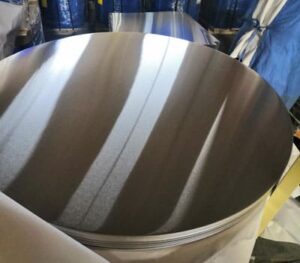
5454 aluminum circles have all the properties of 5454 aluminum alloy and are often used in can sealing, non-stick pot bottoms, traffic signs, lampshades, etc.
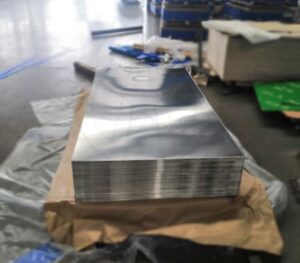
We use the pure aluminum ingots to manufacture 5mm aluminum sheets. They come in various widths and tempers. They are not only suitable for marine grade, but also for automobile manufacturing, pressure vessels, including water tanks, oil tanks, and the maximum width we can produce is 3000mm.
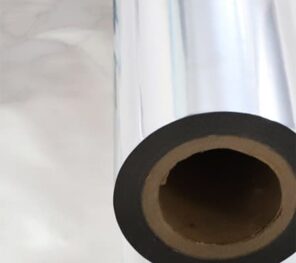
Premium aluminum foil laminated polyester film offering outstanding moisture, oxygen, and light barrier properties. Ideal for pharmaceutical, food, electronics, and industrial packaging
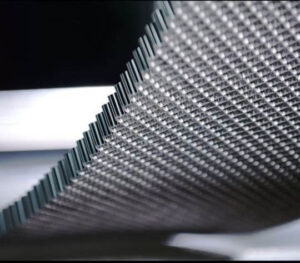
Honeycomb aluminum foil, also known as aluminum honeycomb core, is a type of lightweight core material made from two layers of aluminum foil that are bonded together in a way that creates a series of hexagonal cells, much like a honeycomb.
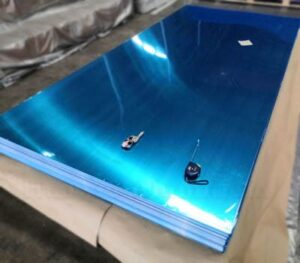
4x8 aluminum sheet is a common size of aluminum sheet, also known as standard size aluminum sheet, referred to as standard sheet.
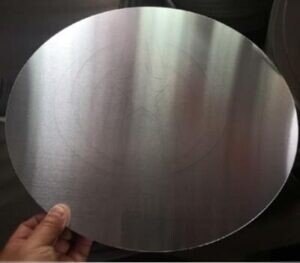
The properties of 3003 aluminum circle make it ideal for use in multiple markets including the cookware, automotive and lighting industries
No.52, Dongming Road, Zhengzhou, Henan, China
Henan Huawei Aluminum Co., Ltd, One Of The Biggest Aluminum Supplier In China Henan,We Are Established In 2001,And We Have rich experience in import and export and high quality aluminum products
Mon – Sat, 8AM – 5PM
Sunday: Closed
© Copyright © 2023 Henan Huawei Aluminium Co., Ltd

Latest Comments
Dear Sir, Please offer your best FOB Prices specs are as under ALUMINIUM STRIP (AL=99.50% MIN) SIZE:450 X32 X6 MM. DIN EN 570 EN-AW 1050 A, QUANTITY=3400KG
Hello, Would you be so kind to offer item as follows: Coil 0,6х1250 (1000)mm EN AW-3105 5tons
Hello, Can you offer me Aluminium plates? Actally I need: 110mm x 1700mm x 1700mm 5083 H111 - 21 pcs Next year planed is 177 pcs
Świetny artykuł. Byłem zachwycony, że wyszukałem ten artykuł. Wielu osobom wydaje się, że mają rzetelną wiedzę na ten temat, ale często tak nie jest. Stąd też moje miłe zaskoczenie. Jestem pod wrażeniem. Zdecydowanie będę rekomendował to miejsce i częściej wpadał, aby zobaczyć nowe rzeczy.
requirement of aluminium strip