La papier d'aluminium est un matériel polyvalent et largement utilisé dans diverses industries, y compris l'emballage, isolation, et préparation des aliments. La capacité de calculer l'épaisseur précise du papier d'aluminium est cruciale pour assurer la cohérence de ses applications.
La papier d'aluminium est un matériel polyvalent et largement utilisé dans diverses industries, y compris l'emballage, isolation, et préparation des aliments. La capacité de calculer l'épaisseur précise du papier d'aluminium est cruciale pour assurer la cohérence de ses applications. Dans cet article, nous explorerons les méthodes utilisées pour calculer l'épaisseur de la feuille d'aluminium, les facteurs qui affectent son épaisseur, et comment appliquer ces connaissances dans des scénarios du monde réel.

Outils de mesure d'épaisseur
L'épaisseur de la feuille d'aluminium fait généralement référence aux dimensions de la section verticale d'une seule couche d'aluminium., et l'unité internationalement acceptée est le micromètre (μm) ou millimètre (millimètre). Selon les normes de l'industrie:
Le papier d'aluminium est une fine feuille de aluminium qui a été traité par des techniques de roulage et d'étirement pour obtenir une forme très fine et flexible. Typiquement, Aluminium va de 0.006 Millimètres (6 microns) à 0.2 millimètres d'épaisseur. La alliage d'aluminium primaire utilisé pour la production de feuilles est 99.5% Aluminium pur, bien que de petites quantités d'autres métaux, tel que cuivre, magnésium, et silicium, peut être présent pour améliorer la force ou la flexibilité.
Calculer l'épaisseur d'une feuille d'aluminium est crucial pour plusieurs raisons:
La méthode la plus simple pour mesurer l’épaisseur d’une feuille d’aluminium est à l'aide d'un micromètre ou d'un pied à coulisse. Cet outil permet mesure précise de l’épaisseur du film en plusieurs points de sa surface. Voici comment:

Comment calculer l'épaisseur de la papier d'aluminium
Cependant, cette méthode peut prendre beaucoup de temps si l'on mesure de grandes quantités de papier d'aluminium ou si l'on travaille avec des feuilles très fines.
La densité de l’aluminium est d’environ 2.7 grammes par centimètre cube (g/cm³). Si vous avez un masse connue de papier d'aluminium et son surface, tu peux calculer l'épaisseur. Voici la formule:
Épaisseur=MassDensity×Surface Areatext{Épaisseur} = frac{\texte{Masse}}{\texte{Densité} \fois texte{Superficie}}
Cette méthode est utile lorsque vous disposez d’un échantillon de feuille mais que vous ne disposez pas d’outils de mesure directs..
UN micromètre est un instrument de mesure de précision conçu spécifiquement pour mesurer l'épaisseur des matériaux avec une grande précision. Il se compose d'une vis qui déplace la surface de mesure lorsque vous tournez le bouton. C'est idéal pour mesurer des matériaux très fins comme le papier d'aluminium., offrant un lecture plus précise que les étriers.
Une autre méthode courante consiste à utiliser le volume et surface de la feuille pour calculer l'épaisseur. En connaissant le masse et dimensions du papier d'aluminium, vous pouvez déterminer son volume et calculer l'épaisseur en fonction de la formule suivante:
Épaisseur=VolumeSurface Surfacetexte{Épaisseur} = frac{\texte{Volume}}{\texte{Superficie}}

Calcul basé sur le volume
Cette méthode fonctionne bien pour les grandes feuilles où la masse et la surface sont facilement disponibles.
Plusieurs facteurs peuvent influencer l'épaisseur finale de la feuille d'aluminium:
La formule de base pour calculer l'épaisseur d'une feuille d'aluminium, basé sur la masse et la surface, est le suivant:
Épaisseur=MassDensity×Surface Areatext{Épaisseur} = frac{\texte{Masse}}{\texte{Densité} \fois texte{Superficie}}
Pour une feuille rectangulaire de papier d'aluminium, où tu connais le longueur (L) et largeur (Dans), la formule devient:
Épaisseur=MassDensity×L×Wtext{Épaisseur} = frac{\texte{Masse}}{\texte{Densité} \fois L fois W}
Ce calcul suppose que la feuille a une densité constante sur toute sa surface., ce qui est généralement le cas du papier d'aluminium utilisé dans la plupart des applications commerciales.
Disons que vous disposez d’un morceau de papier d’aluminium présentant les caractéristiques suivantes:
Nous pouvons calculer l'épaisseur en utilisant la formule:
Épaisseur=MassDensity×L×Wtext{Épaisseur} = frac{\texte{Masse}}{\texte{Densité} \fois L fois W}
Première, nous calculons le surface (UN):
A=L×W=0,5×0,2=0,1 m2=1000 cm2A = L times W = 0.5 \fois 0.2 = 0.1 , \texte{m}^2 = 1000 , \texte{cm}^2
Maintenant, remplacer des valeurs dans la formule:
Épaisseur=102,7×1000=102700=0,0037 cm=0,037 mmtext{Épaisseur} = frac{10}{2.7 \fois 1000} = frac{10}{2700} = 0.0037 , \texte{cm} = 0.037 , \texte{millimètre}
Ainsi, l'épaisseur de ce morceau de papier d'aluminium est 0.037 millimètre.
Une épaisseur correcte garantit que la feuille d'aluminium remplira son rôle fonction prévue sans être trop fragile ou aussi volumineux. Que ce soit pour emballage alimentaire ou isoler les bâtiments, la bonne épaisseur garantit que le papier d'aluminium:

Huawei en aluminium en aluminium rouleau jumbo
Le calcul de l'épaisseur d'une feuille d'aluminium est un processus essentiel pour les industries qui s'appuient sur des propriétés précises des matériaux.. En comprenant les différentes méthodes disponibles, qu'il s'agisse de mesurer directement, en utilisant la masse et la densité, ou en appliquant une formule basée sur la surface – les fabricants peuvent garantir que leurs produits répondent normes de qualité et attentes en matière de performances. Que vous travailliez dans aérospatial, emballage, ou électronique, comprendre comment calculer et contrôler l'épaisseur d'une feuille d'aluminium est fondamental pour des résultats optimaux.
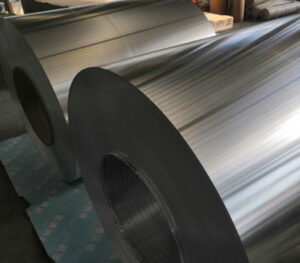
Contactez-nous dès aujourd'hui pour en savoir plus sur notre 5083 Offres de bobines d'aluminium et comment nous pouvons répondre à vos besoins spécifiques.

La 5052 la plaque miroir anodisée est un type de feuille d'aluminium qui a subi un processus d'anodisation, résultant en une surface réfléchissante. Le matériau est principalement composé de 5052 alliage d'aluminium, qui est connu pour son excellente résistance à la corrosion et sa bonne formabilité.
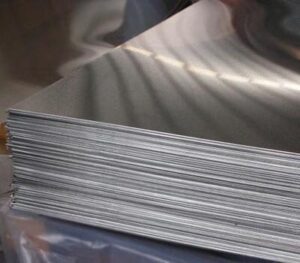
5754 La tôle d’aluminium a les caractéristiques d’une excellente facilité de traitement, bonne résistance à la corrosion, Soudabilité et formage facile. En alliage corroyé, 5754 La tôle d’aluminium peut être formée par laminage, extrusion, et forgeage, mais pas par casting.
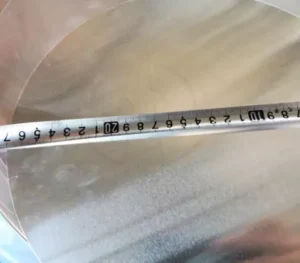
Les disques en aluminium Huawei sont largement exportés vers le Ghana, Guatemala, Burkina Faso, Algérie, Togo, Kenya, Nigéria, Afrique du Sud, Maroc et autres pays africains; les Émirats arabes unis, Yémen, Qatar, Koweït, Iran, Jordanie, Arabie saoudite et autres pays du Moyen-Orient.
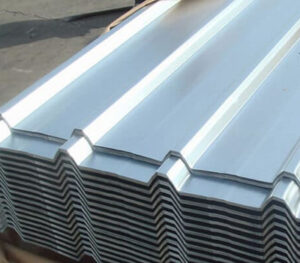
Améliorez votre toit avec des tôles de toiture en aluminium de haute qualité. Profitez d'une protection durable et améliorez l'esthétique de votre maison avec notre solution de toiture élégante et durable
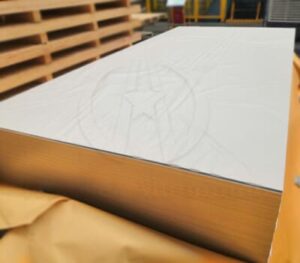
5083 La tôle d’aluminium est connue pour ses performances supérieures dans les environnements extrêmes. 5083 L’aluminium est très résistant à la corrosion de l’eau de mer et des environnements chimiques industriels.
N°52, Route de Dongming, Zhengzhou, Henan, Chine
Henan Huawei Aluminium Co., Ltée, L’un des plus grands fournisseurs d’aluminium en Chine Henan,Nous sommes établis en 2001, et nous avons une riche expérience dans l’importation et l’exportation et les produits en aluminium de haute qualité
Lun – Sam, 8AM – 17h
Dimanche: Fermé
© Copyright © 2023 Henan Huawei Aluminium Co., Ltée

Derniers Commentaires
Cher Monsieur, Please offer your best FOB Prices specs are as under ALUMINIUM STRIP (AL=99.50% MIN) TAILLE:450 X32 X6MM. LE TIENS 570 FR-AW 1050 UN, QUANTITE=3400KG
Bonjour, Seriez-vous si aimable d'offrir l'article comme suit: Bobine 0,6х1250 (1000)mm EN AW-3105 5tons
Bonjour, Pouvez-vous me proposer des plaques en aluminium ?? Agir J’ai besoin: 110mm x 1700mm x 1700mm 5083 N° H111 - 21 pcs Next year planed is 177 Pc
Excellent article. Je fus ravi, j'ai trouvé cet article. Beaucoup de gens semblent, qu'ils ont une connaissance précise à ce sujet, mais souvent ce n'est pas le cas. D'où ma bonne surprise. Je suis impressionné. Je recommanderai certainement cet endroit et reviendrai plus souvent, voir de nouvelles choses.
exigence de bande d'aluminium