Discover LDPE composite aluminum foil, designed for superior moisture resistance, thermal insulation, and versatile applications in packaging, construction, and more.


In the era of high-demand functional materials, LDPE composite aluminum foil has emerged as a core solution for industries ranging from packaging to electronics.
Unlike single-material options (e.g., pure LDPE films or standalone aluminum foil), this composite integrates the flexibility of low-density polyethylene (LDPE) with the ultra-high barrier properties of aluminum foil, creating a “1+1>2” synergistic effect.
Its ability to solve critical pain points—such as pure aluminum foil’s brittleness and LDPE’s poor resistance to oxygen/moisture—makes it indispensable in modern manufacturing.
LDPE composite aluminum foil refers to a multi-layer functional material formed by bonding LDPE (as the base/adhesive/protective layer) with thin aluminum foil (as the barrier/functional layer) via professional processes like extrusion lamination or dry lamination.
The composite typically has a total thickness of 20–50 μm, with the aluminum foil layer accounting for 6–20 μm and LDPE layers making up the remainder.
LDPE composite aluminum foil
The performance of LDPE composite aluminum foil stems entirely from the complementary strengths of its two core components. Below is a detailed breakdown of their roles and synergies.
A typical composite structure (from outer to inner) follows this design:
Structure of LDPE Composite Aluminum Foil
LDPE (low-density polyethylene) is the “workhorse” of the composite, with properties tailored for processability and protection:
Aluminum foil selection directly impacts the composite’s barrier and mechanical performance.
Leading suppliers like Henan Huawei Aluminum Co., Ltd. prioritize high-purity alloys for consistency:
| Alloy Model | Core Composition | Key Properties | Typical Application |
| 1235 | 99.35% Al, 0.5% Si+Fe | High purity, excellent ductility, uniform thickness | Food/pharmaceutical packaging |
| 8011 | 97.5% Al, 1.0% Fe, 0.8% Si | Higher tensile strength, good corrosion resistance | Industrial chemical packaging, construction |
| 3003 | 97% Al, 1.5% Mn | Enhanced strength, heat resistance | Electronics (EMI shielding) |
Data source: Henan Huawei Aluminum Co., Ltd. Material Technical Datasheet (2024)
The true value of LDPE composite aluminum foil lies in its synergistic performance, which overcomes the limitations of single materials:
Huawei 8011 Aluminum Foil for Composite
KPIs are the backbone of evaluating LDPE composite aluminum foil quality. Below are the most critical metrics, supported by industry-standard data.
Barrier properties are the primary reason for choosing this composite, as they directly determine product shelf life:
Mechanical strength ensures the composite withstands processing (e.g., printing, molding) and transportation:
The composite must perform reliably in diverse conditions:

Flexible packaging used composite aluminum foil
The manufacturing process directly affects the composite’s performance and consistency. Below is a breakdown of core technologies and critical control points.
Three processes dominate industrial production, each with unique advantages:
| Process Name | Technical Principle | Key Parameters | Advantages | Disadvantages |
| Extrusion Lamination | Melt LDPE at 180–220℃ into a thin film, then extrude it between aluminum foil and a base LDPE layer, bonding under 0.3–0.5 MPa pressure. | Temperature: ±5℃; Pressure: 0.3–0.5 MPa | No solvent, eco-friendly; high bonding strength. | High temperature may damage thin aluminum foil (≤6 μm). |
| Co-extrusion | Use a multi-layer die to co-extrude LDPE (base layer) + functional resins (e.g., EVA for adhesion) + aluminum foil in one step. | Die temperature: 190–230℃; Line speed: 150–250 m/min | High efficiency; uniform layer thickness. | Complex equipment; difficult to adjust layer structure. |
| Dry Lamination | Coat solvent-free glue on aluminum foil, dry at 60–80℃ (to remove residual solvents), then press with LDPE film under 0.4 MPa. | Curing time: 24–48h; Dry temperature: 60–80℃ | Low processing temperature (suitable for sensitive aluminum foil). | Risk of solvent residue (requires strict curing). |
Note: Henan Huawei Aluminum Co., Ltd. primarily uses extrusion lamination (equipped with German Bruckner lines) for food/pharmaceutical grades, as it eliminates solvent contamination risks.
Even advanced equipment fails without strict quality control. The following steps are non-negotiable:
LDPE composite aluminum foil serves diverse industries, with packaging accounting for 70% of global demand (2024 data).
LDPE composite aluminum foil for pharmaceutical packaging
Compared to alternatives like PET-aluminum foil or pure LDPE, LDPE composite aluminum foil offers unique advantages:
Despite its strengths, the composite faces three key challenges:
The industry is actively addressing sustainability issues to align with global carbon neutrality goals.
To highlight LDPE composite aluminum foil’s competitiveness, below is a comparison with common alternatives:
| Material | OTR (cm³/(m²·24h·atm)) | WVTR (g/(m²·24h)) | Tensile Strength (MPa) | Cost (USD/ton) | 耐温 Range (℃) | Recycling Rate (%) |
| LDPE-Al Foil | <0.1 | <0.1 | 15–25 | 3,200–3,800 | -40 to 60 | 85–90 |
| PET-Al Foil | <0.05 | <0.05 | 25–35 | 3,800–4,500 | -40 to 120 | 80–85 |
| BOPP-Al Foil | <0.2 | <0.2 | 20–30 | 3,000–3,500 | -20 to 80 | 75–80 |
| Pure LDPE | 500–1000 | 5–10 | 10–18 | 1,800–2,200 | -40 to 60 | 95–98 |
Data source: Global Packaging Insights (2024) and Henan Huawei Aluminum Co., Ltd. Cost Analysis
Key Insight: LDPE-Al foil balances performance and cost—its barrier properties are nearly as good as PET-Al foil but 15–20% cheaper, making it the most cost-effective choice for mid-to-high barrier applications.
No. Aluminum foil reflects microwaves, which can cause sparks and damage the microwave. Always remove the composite packaging before heating.
It must comply with:
Henan Huawei Aluminum Co., Ltd. ’s pharmaceutical-grade products meet all three standards.
Thicker aluminum foil improves barrier properties but increases cost:
Most applications (e.g., food packaging) use 6–9 μm foil for optimal balance.
When stored in a dry, cool environment (<30℃, RH <60%), it has a shelf life of 24 months. Beyond this, LDPE may degrade slightly, reducing peel strength by 5–10%.
LDPE composite aluminum foil is more than a packaging material—it is a synergistic solution that bridges the gap between performance, cost, and practicality.
Its unique combination of LDPE’s flexibility and aluminum foil’s barrier properties makes it irreplaceable in food, pharmaceutical, and industrial applications.
While challenges like recycling and thermal limitations remain, innovations (e.g., bio-based LDPE, chemical recycling) and efforts by companies like Henan Huawei Aluminum Co., Ltd. (with its focus on high-purity materials and energy efficiency) are driving the industry toward sustainability.
Looking ahead, as global demand for long-term preservation and lightweight materials grows, LDPE composite aluminum foil will continue to evolve—becoming greener, more specialized, and a cornerstone of modern manufacturing.
High-quality 3003 polyester coated aluminum coil offers excellent corrosion resistance, color retention, and long-lasting performance for architectural and industrial applications.
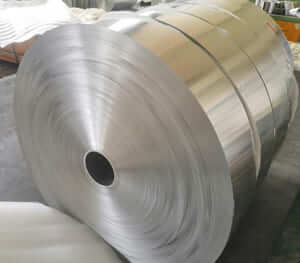
The common alloys of aluminum foil for air duct are 1000 series, 3000 series and 8000 series aluminum foil, which have strong corrosion resistance and moisture resistance.

The 5052 anodized mirror plate is a type of aluminum sheet that has undergone an anodization process, resulting in a reflective surface. The material is primarily made from 5052 aluminum alloy, which is known for its excellent corrosion resistance and good formability.
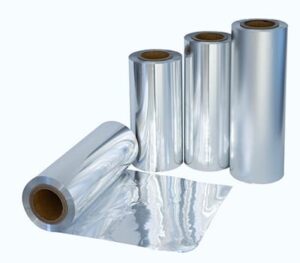
Flexible packaging aluminum foil is a thin foil made of aluminum that is commonly used in food packaging and pharmaceutical packaging. Unlike hard aluminum foil, flexible packaging aluminum foil is soft and can adapt to various shapes of containers, so it is widely used for packaging food and medicine.
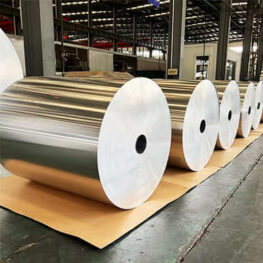
High-adhesion, corrosion-resistant 8011 gold hydrophilic aluminum foil for sealing, lamination, and HVAC applications.
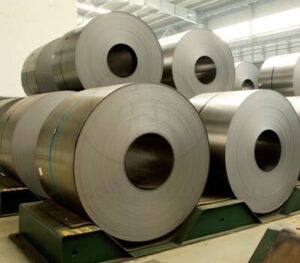
1100 Aluminum Coil is the alloy with the highest commercial purity of all aluminum grades, with an aluminum content (mass fraction) of 99.00%. Its strength is relatively low, and it has excellent ductility, formability, weldability, and corrosion resistance.
No.52, Dongming Road, Zhengzhou, Henan, China
Henan Huawei Aluminum Co., Ltd, One Of The Biggest Aluminum Supplier In China Henan,We Are Established In 2001,And We Have rich experience in import and export and high quality aluminum products
Mon – Sat, 8AM – 5PM
Sunday: Closed
© Copyright © 2023 Henan Huawei Aluminium Co., Ltd

Latest Comments
Dear Sales Manager, I hope this email finds you well. This is Min-Hyung Lee, CEO of Taesan Steel Co., Ltd., an import & export company based in Incheon, South Korea, dealing in steel and aluminum materials. We understand that Henan Huawei Aluminum produces 1100 aluminum coils in H16 temper from 0.2 mm thickness at your mill in Gongyi, Henan. We use mill finish aluminum coil as a substrate for coating in Korea, and are looking for a reliable Chinese mill for regular monthly imports. We would appreciate your quotation for the material below, based on current market prices. 1. Material - Alloy / Temper: A1100 – H16 (A1235 or A1050 acceptable subject to prior approval) - Standard: KS D 6701 or equivalent (JIS H 4000, ASTM B209, GB/T 3880 accepted) - Surface: mill finish (as-rolled), suitable for painting/coating 2. Ordered sizes - 0.45 mm x 1,120 mm x Coil (main size) - 0.60 mm x 1,060 mm x Coil - No minus tolerance on thickness (e.g., actual 0.45 mm or above for the 0.45 mm order) 3. Coil weight: approx. 3-6 MT per coil 4. Quantity: 30-40 MT per month (estimated 360-480 MT per year) 5. Price terms: CIF Incheon Port or Pyeongtaek Port, South Korea, in USD (USD/kg or USD/MT). A formula-based quotation (e.g., SMM ingot price + processing cost) is also acceptable, provided the total is given on a CIF basis (or FOB with ocean freight shown separately). Please include the following in your quotation: 1. Unit price (CIF Incheon or Pyeongtaek, in USD) 2. MOQ per size 3. Lead time (order to shipment) 4. Payment terms 5. Whether the material is DC or CC rolled, and producible thickness/width range for 1xxx alloys 6. Mill information (location, ISO 9001 or other certifications) 7. Sample availability and conditions (we plan a coating trial before regular orders) 8. Confirmation that a Mill Test Certificate (chemical composition and mechanical properties) will be provided with each shipment Our plan is to review your quotation and material specification first, then request samples for a coating trial. If the results are satisfactory, we intend to place regular monthly orders. We are also willing to visit your mill in China in person to see the production line and discuss the details of a long-term partnership. The detailed specification (SPEC-AL-2026-01) is attached for your reference. We look forward to your reply. Best regards, Min-Hyung Lee CEO | Taesan Steel Co., Ltd. Email: [email protected] Tel: 82 10 5048 5768 WeChat: dolf369
Aluminum 5754 H111 หนา 8 mm กว้าง x ยาว : 4 x 6 ฟุต
سلام بسیار عالی ،،من از ایران تماس میگیرم فویل طلا ۱۲میکرون عرض ۶۱سانت نیاز داریم حدودا هرماه ۳۵هزار متر
Dear Sales Team, I hope you are doing well. We are looking to source aluminum products from your company and would appreciate receiving your best quotation for the following: Aluminum Sheets Thickness: 2 mm, 3 mm, 4 mm, and 5 mm Please provide your available standard sheet sizes. Kindly quote the price per sheet and the price per metric ton. Aluminum Coils Thickness: 2 mm, 3 mm, 4 mm, and 5 mm Please provide your available coil widths, standard coil weights, and inner diameter specifications. Kindly quote the price per metric ton. For both sheets and coils, please include: Available alloys (e.g. 1050, 3003, 5052) Temper options Mill finish or other available surface finishes Minimum Order Quantity (MOQ) Production lead time Payment terms Please provide your quotation based on: CIF Jebel Ali Port, UAE (including sea freight), or alternatively provide both FOB China and CIF Jebel Ali Port, UAE prices. If available, please also send: Product catalogue Mill Test Certificate (MTC) sample Photos of the products and packaging. We are interested in establishing a long-term business relationship. Our initial purchase volume is expected to be 100+ metric tons, with the potential for larger and recurring orders if your pricing, quality, and service meet our requirements. Thank you for your time. We look forward to receiving your quotation and hope to build a successful long-term partnership. Best regards, Eng.Yousef
アルミハニカムパネルについてお聞きしたいのですが L1500×W700×厚みで曲げに対して200kgg耐えられるには厚みはどのくらいでしょうか ※簡単に言いますと約1000mmの側溝に渡して真ん中で200kg耐えられるかという事になります 又、そのような製品があるようでしたらその重量、価格をおしえていただけますか 現在はコンパネ板を使用してますが腐ると折れてしまい人が側溝に落ちてけがをしてます 出来ましたらメールでお返事をいただけますか