Precision aluminium strip for transformer winding. Standard alloys: 1060, 1070, 1350. Strict thickness tolerance, high elongation, and stable insulation adhesion. Exported to global transformer factories.
When making transformers, you use aluminium strip for transformer winding. These strips are essential for creating coils that perform efficiently and have a long lifespan. Aluminum is preferred in dry-type transformers due to its lower cost compared to copper, as well as its lighter weight.
Additionally, aluminium provides excellent electrical performance. It’s important to choose the right grade and thickness of the aluminium strip for transformer winding to meet your specific requirements. Be sure to consider key properties and tips to ensure your transformer operates effectively and endures over time.

Aluminium strip for transformer winding
You use aluminium strip for transformer winding to make coils inside a transformer. These strips are made from very pure aluminum, usually 99.6% or more.
The most used alloys are 1050, 1060, and 1070. These strips let electricity and heat move easily. This helps transformers work well and stay cool.
You can find these strips in power and distribution transformers. They are used a lot in dry-type transformers.
Note: Because these strips are so pure, they have low electrical resistance. This means less energy is lost when the transformer is working.
Manufacturers make aluminium strip for transformer winding using careful steps. First, they melt and cast pure aluminum. Then, they roll the metal into thin sheets.
They use hot and cold rolling to get the right thickness. This also makes the strips better. After rolling, the strips are annealed. This makes them soft and easy to wind.
To keep quality high, manufacturers treat the edges. This step makes the edges smooth. Smooth edges help protect the insulation during winding.
The strips are cut to the right width with special machines. This makes sure each strip is even and neat.
Every strip must meet strict rules for how well it carries electricity, how strong it is, and how good the surface looks.
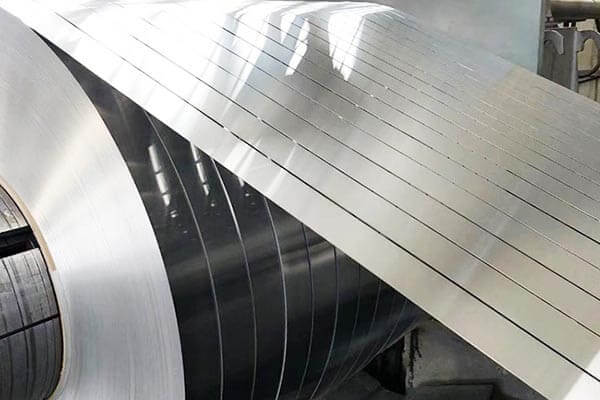
Slitting of aluminum strip
Here are the main steps:
Aluminum strip for transformer winding is special because of its physical and chemical properties. It has high conductivity, good strength, and great flexibility.
These things make it perfect for transformer coils. The coils need to handle both electricity and force.
Here is a table with the main properties:
| Property | Details |
|---|---|
| Mechanical Properties | Tensile strength: 60-95 MPa; Elongation: ≥20% (for 0.08-0.20 mm thick) |
| Chemical Composition | 1050: ≥99.5% Al; 1060: ≥99.6% Al; 1070: ≥99.7% Al; trace Si, Fe, Cu |
The strips also have a smooth surface. This helps stop the insulation from breaking down. They do not rust easily, so transformers last longer, even in hard places.
More companies use these strips as they want better energy efficiency. New foil technology and better ways to control heat also make these strips more popular.
Tip: Always check the alloy grade and surface before picking a strip for your transformer. This helps you get the best results and makes sure your transformer works well.
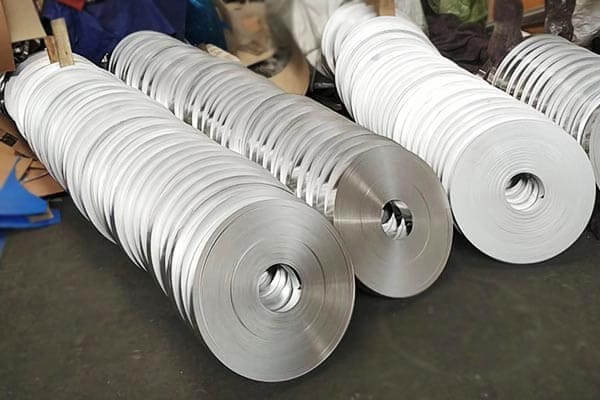
Huawei 1050 O aluminium strip
Aluminum strip for transformer winding is used in dry-type transformers. These transformers do not use oil to cool down. They use air and special materials to keep cool. Aluminum has high conductivity, so transformers work well. It also lets heat move away fast.
This keeps the transformer safe and cool. You can use these strips in many transformers. They work in power distribution, renewable energy, electric vehicles, and industrial machines.
Here is a table showing common uses:
| Application Type | Description |
|---|---|
| Power Distribution | Used in systems that need to be cheap and reliable. They handle high voltages well. |
| Renewable Energy Systems | Good for solar and wind because they save energy and do not rust. |
| Electric Vehicles (EVs) | Great for power converters and chargers. They are light and manage heat well. |
| Industrial Equipment | Used in big machines in tough places. They are light and do not rust easily. |
Tip: Picking aluminum strips for dry-type transformers helps them work better and stay safe.
Aluminum strips can be shields inside transformers. These shields block unwanted electrical signals. They sit between the main and secondary windings.
This setup lowers noise and makes signals clearer. Aluminum costs less than copper, so you save money. The shield also keeps windings apart and steady.
Using aluminum strips in transformer windings gives you many benefits. Aluminum conducts electricity well, so energy moves easily.
It also lets heat escape fast, stopping overheating. You can wind aluminum strips tightly, making transformers smaller but still strong.
Aluminum costs less than copper, so you save money. Even winding layers make transformers stable and tough. Aluminum does not rust, so transformers last longer and stay strong.
Here is a table with these benefits:
| Contribution | Description |
|---|---|
| Enhanced Conductivity | Aluminum foil lets electricity move easily, so energy transfer is high. |
| Improved Heat Dissipation | Aluminum lets heat escape fast, stopping overheating. |
| Space Optimization | Thin strips can be wound tightly, making transformers smaller. |
| Cost-Efficiency | Aluminum is cheaper than copper, so making transformers costs less. |
| Reliability and Longevity | Even winding layers make transformers stable and tough. |
| Corrosion Resistance | Aluminum does not rust, so transformers last longer and stay strong. |
Note: Think about these benefits when picking materials for transformer windings. Aluminum strips help make transformers reliable, efficient, and affordable.
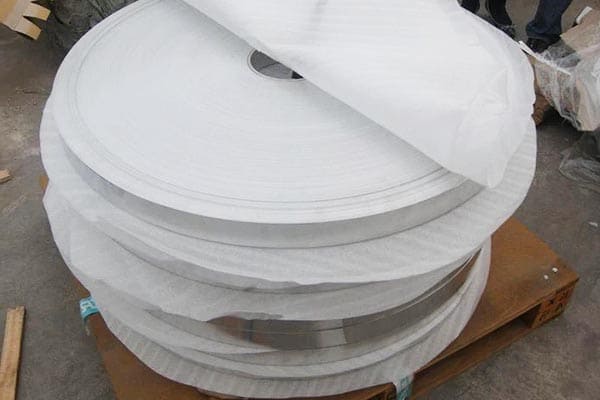
Huawei Aluminium strip for transformer winding
When picking aluminum strips for transformer winding, you should know the main grades. Each grade has special features that change how your transformer works.
The grades 1050 O, 1060, 1070, and 1350 are used a lot. Some other grades like 3003 and 5052 are for special jobs.
Here is a table that shows what each grade is like and how it is used:
| Alloy | Characteristics | Typical Use |
|---|---|---|
| 1050 | Very pure, conducts electricity well, not very strong | Used for low-voltage windings and connectors |
| 1060 | Like 1050, a bit stronger, saves money | Used for general transformer parts |
| 1070 | Conducts electricity very well, stretches well, strong enough | Used for high-efficiency transformer windings |
| 1350 | Conducts electricity great, bends easily | Used for high-efficiency transformer windings |
| 3003 | Has manganese, stronger, conducts electricity well | Used for busbars, supports, and heat sinks |
| 5052 | Has magnesium, does not rust easily | Used for outdoor transformers and marine uses |
You want your transformer to waste little energy. That means you need aluminum that lets electricity flow easily. Grades like 1050 O, 1060, 1070, and 1350 all let electricity move well, but they are not all the same.
| Grade | Electrical Conductivity (IACS) | Suitability for Transformer Winding |
|---|---|---|
| 1050 O | High | Used for support, helps lower energy loss |
| 1060 O | About 60% | Bends well, does not rust easily |
| 1070 O | At least 65% | Strong and stretches well |
| 1350 O | Excellent, about 62% | Bends easily, good for winding |
Tip: If you want your transformer to work best, pick 1070 or 1350. These grades help your transformer move energy with less waste.
You also need to think about how strong the strip is. The strip must handle winding and working without breaking. Grades like 1070 are strong and bend well.
You can wind them tight and they will not snap. Grades 1050 and 1060 are not as strong but work for easier jobs. If you need more strength, 3003 and 5052 are better and do not rust easily.
You must pick the right size for your transformer. Aluminum strips for transformer winding are usually between 0.1 mm and 3.5 mm thick.
The width can be from 10 mm to 1600 mm. Thin strips help make small coils. Wide strips help carry more electricity. You should match the thickness and width to your voltage and current.
Note: Always check the size before you buy. The right size helps your transformer work safely and well.
When you know about these grades and features, you can pick the best aluminum strip for your transformer. This helps you build equipment that works well, lasts long, and is reliable.
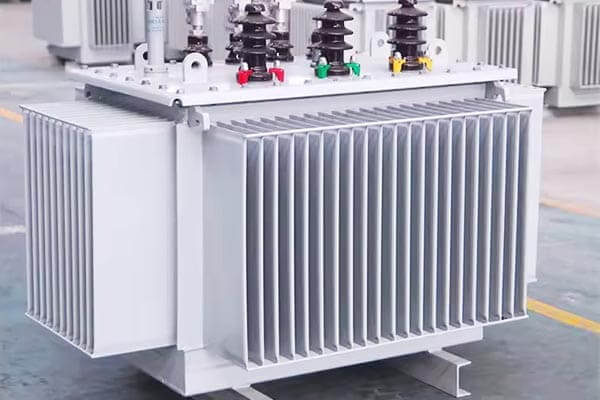
Transformer display
If you pick aluminum strips for transformer winding, you save money right away. Aluminum costs much less than copper per kilogram.
You spend less on materials and making the transformer. If you build many transformers, these savings get bigger.
Weight is important when designing transformers. Aluminum is much lighter than copper. This makes transformers easier to move and install. Look at the table below to see the difference:
| Material | Weight Difference |
|---|---|
| Copper | About 20% heavier |
| Aluminum | About one-third the density |
If you use aluminum, your transformer will weigh much less than one with copper. Lighter transformers are easier to ship, set up, and fix.
Tip: Lighter transformers are easier to move and install. This can help you save time and money.
Copper lets electricity and heat move better than aluminum. Copper strips have very high conductivity.
Aluminum strips have lower conductivity, but they still work well. Copper strips can make transformers smaller and more efficient.
You can still get good results with aluminum. New aluminum strips work better than before. You can use wider or thicker strips to help with lower conductivity.
For most transformers, aluminum gives enough efficiency and works reliably.
Aluminum strips are strong and safe. They do not rust easily, so transformers last longer.
Rounded edges on aluminum strips lower friction and help keep insulation safe.
This makes transformers safer and more reliable.
Here is a table with important durability and safety features:
| Feature | Advantage |
|---|---|
| Conductivity | At least 61% IACS |
| Edge burr height | Less than 0.01mm |
| Surface insulation resistance | At least 100MΩ (25℃, 500V test) |
| Corrosion resistance | No rust after 96 hours in salt water |
| Density | Only one-third of copper, so transformers are much lighter |
| Thermal conductivity | 237W/(m·K), helps keep transformers cooler |
| High temperature resistance | Can handle above 200℃ for short times, up to 155℃ for long times |
| Machining performance | Rounded edges lower insulation breakdown risk by 40% |
Aluminum can be recycled. Making aluminum is now better for the environment. It has a smaller carbon footprint than copper.
If you want to help the planet, aluminum strips are a good choice.
Note: Aluminum strips are safe, strong, and good for the environment. They are a smart choice for many transformers.
It is important to check the thickness and width of aluminum strips for transformer winding.
These two things change how well your transformer works and how long it lasts. Manufacturers make strips in many sizes for different transformer types.
Here is a table that shows the usual size ranges:
| Specification | Typical Range | Application Example |
|---|---|---|
| Thickness | 0.1 mm – 3.5 mm | Small coils, high-current windings |
| Width | 10 mm – 1600 mm | Distribution, power transformers |
Tip: Always pick the strip size that matches your transformer’s voltage and current. The right size stops overheating and helps your transformer work better.
You also need to check the tolerance for thickness and width. Good manufacturers keep thickness within ±0.02 mm and width within ±0.5 mm.
This helps you wind coils evenly and keeps your transformer safe.
Your aluminum strips should follow strict industry standards. These rules make sure the strips work well and last a long time.
The most common standards are ASTM B209, EN 13599, and GB/T 3190. Each one covers chemical makeup, strength, and surface quality.
Quality control is very important for getting good strips. Manufacturers do many checks:
Note: Always ask your supplier for a quality certificate. This paper shows the strips meet all rules and pass all tests.
You should also look for strips with smooth, burr-free edges. Smooth edges protect the insulation and help you wind coils without damage.
Good suppliers give you test reports and samples so you can check the quality before you buy.
If you follow these technical rules, your transformers will be safe, work well, and last a long time.
You must think about many things when picking aluminium strip for transformer winding. Each thing changes how well your transformer works and how long it lasts.
The table below shows important differences between aluminum and copper strips. This helps you pick the best one for your project.
| Factor | Aluminum Considerations | Copper Considerations |
|---|---|---|
| Thermal Conductivity | Lower thermal conductivity; may need more cooling. | Higher thermal conductivity; better heat dissipation. |
| Mechanical Strength | More prone to deformation; may need thicker strips or reinforcement. | Stronger and more ductile; handles stress better. |
| Cost and Weight | Lower cost and lighter weight; ideal for saving money and reducing weight. | Higher cost; better for high-capacity transformers. |
| Corrosion Resistance | More prone to oxidation; may need protective coatings. | Highly resistant to corrosion; keeps properties longer. |
Tip: Always match the strip’s grade, thickness, and width to your transformer’s voltage and current needs. This keeps your transformer safe and working well.
Handling and installing strips the right way keeps your transformer safe. You should do these things to stop damage and help your transformer work well:
Note: Clean edges with no defects help stop electrical problems and keep your transformer working well.
You might have some problems when using aluminium strip for transformer winding.
Knowing these problems and how to fix them helps you get better results.
Tip: Checking strips often and installing them carefully helps you avoid most problems and keeps your transformer working for a long time.
You use aluminum strips in transformer winding because they are very pure and bend easily. They also help save money. The table below lists common grades and how they are used:
| Grade | Composition | Applications | Thickness Range |
|---|---|---|---|
| 1050 | 99.50% Al | Used for low or high voltage windings and electrical coils | 0.3mm to 2.5mm |
| 1350 | 99.50% Al | Used in different transformers, high frequency, and distribution transformers | 0.3mm to 2.5mm |
| 1070 | 99.70% Al | Used for low or high voltage windings and electrical coils | 0.3mm to 2.5mm |
| 1060 | 99.60% Al | Used for low or high voltage windings and electrical coils | 0.3mm to 2.5mm |
It is important to know about grades and properties because:
If you want more information or need help, you can contact:
Huawei Aluminum is a professional manufacturer of aluminium strip for transformer winding. We have multiple aluminum strip slitting production lines, and can customize the width and length of aluminum strips according to customer requirements.
Huawei transformer aluminum strip foil has a smooth surface without scratches, and the edge chamfer can reach 100% without burrs, resistivity and conductivity are better than the national and industry standards for transformers.
Aluminum strip is used to make coils inside transformers. These strips help move electricity well. They also help keep the transformer cool.
You pick the grade based on voltage and current needs. Grades like 1050, 1060, 1070, and 1350 are good for most jobs.
Aluminum costs less than copper. It is much lighter too. This makes transformers easier to install.
Aluminum does not rust easily. This helps transformers last longer, even in tough places.
You can choose thickness from 0.1 mm to 3.5 mm. Width can be from 10 mm to 1600 mm. The right size depends on your transformer’s design.
Handle strips gently and check for smooth edges. Careful winding keeps insulation safe and helps the transformer work well.
Aluminum strips are safe for high-voltage transformers. They meet strict rules and work well when installed the right way.
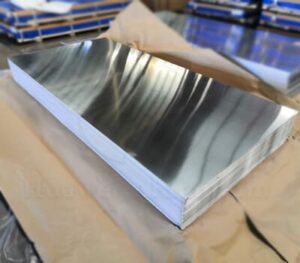
5005 aluminum sheet is a medium-strength aluminum alloy plate, which can reach medium and high strength by cold working, and it has good formability

Reflective aluminum sheet is a metal sheet with high reflectivity and is widely used in optics, electronics, construction and other fields. This article will introduce the principles, characteristics and applications of Reflective aluminum sheets.
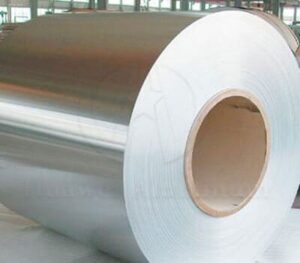
5052 Aluminum Coil is an alloy composed of 2.5% magnesium and 0.25% chromium and is one of the most promising anti-rust aluminum materials

In-depth guide to 5083 marine aluminium sheet—chemical composition, mechanical strength, corrosion resistance, welding performance, and marine applications.
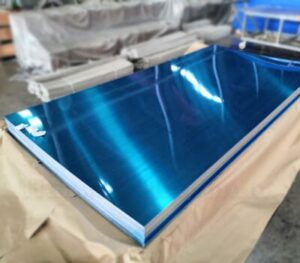
5052 aluminum sheet is part of the 5000 series of aluminum. The grades in this series are alloyed with magnesium (2.5%) and have medium to high strength properties.
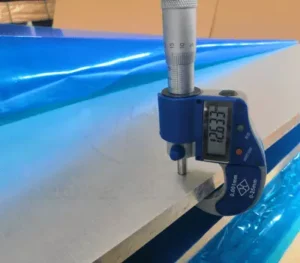
3004 Aluminum Sheet is a medium-strength aluminum alloy with manganese and magnesium as the main alloying elements. Its strength is higher than 3003 Aluminum Sheet, but the ductility is lower.
No.52, Dongming Road, Zhengzhou, Henan, China
Henan Huawei Aluminum Co., Ltd, One Of The Biggest Aluminum Supplier In China Henan,We Are Established In 2001,And We Have rich experience in import and export and high quality aluminum products
Mon – Sat, 8AM – 5PM
Sunday: Closed
© Copyright © 2023 Henan Huawei Aluminium Co., Ltd

Latest Comments
Dear Sir, Please offer your best FOB Prices specs are as under ALUMINIUM STRIP (AL=99.50% MIN) SIZE:450 X32 X6 MM. DIN EN 570 EN-AW 1050 A, QUANTITY=3400KG
Hello, Would you be so kind to offer item as follows: Coil 0,6х1250 (1000)mm EN AW-3105 5tons
Hello, Can you offer me Aluminium plates? Actally I need: 110mm x 1700mm x 1700mm 5083 H111 - 21 pcs Next year planed is 177 pcs
Świetny artykuł. Byłem zachwycony, że wyszukałem ten artykuł. Wielu osobom wydaje się, że mają rzetelną wiedzę na ten temat, ale często tak nie jest. Stąd też moje miłe zaskoczenie. Jestem pod wrażeniem. Zdecydowanie będę rekomendował to miejsce i częściej wpadał, aby zobaczyć nowe rzeczy.
requirement of aluminium strip