High-performance aluminum foil for insulated sandwich panels, delivering low emissivity, superior vapor barrier protection for roofs, walls, and cold rooms.
The global construction industry faces a critical imperative: delivering energy-efficient buildings without compromising structural integrity or aesthetic flexibility.
Consequently, aluminum foil for insulated sandwich panels has emerged as an indispensable material solution, bridging the gap between thermal performance and manufacturing practicality.
This analysis examines the metallurgical engineering, application-specific performance, and strategic selection criteria that define high-performance aluminum foil in contemporary building systems.
Aluminum foil serves as the primary reflective and protective layer in insulated sandwich panels, typically laminated to polyurethane (PUR), polyisocyanurate (PIR), mineral wool, or EPS cores.
Furthermore, the material exhibits unique properties that polymer alternatives cannot match:
Henan Huawei Aluminum Co., Ltd leverages decades of metallurgical expertise to produce specialized foil grades optimized for these thermal envelope applications, ensuring architects and manufacturers achieve both code compliance and long-term durability.

Aluminum Foil for Insulated Sandwich Panels
Not all aluminum alloys perform equally in insulated panel systems.
The selection between 8011 (Al-Fe-Si) and 3003 (Al-Mn) alloys significantly impacts both manufacturing efficiency and end-use performance.
| Performance Parameter | 8011 Aluminum Foil | 3003 Aluminum Foil | Engineering Implication |
| Tensile Strength (O-temper) | 80–110 MPa | 95–135 MPa | 3003 provides 20% higher rigidity for standing-seam applications |
| Elongation (%) | 20–30 | 25–35 | 3003 offers superior deep-drawing for complex profiles |
| Corrosion Resistance | Excellent (native Al₂O₃) | Superior (Mn-enhanced) | 3003 preferred for coastal/high-humidity environments |
| Thermal Conductivity | 205–220 W/(m·K) | 190–210 W/(m·K) | 8011 provides marginally better heat dissipation |
| Cost Index | 1.0 (baseline) | 1.15–1.25 | 8011 offers economic advantage for large-scale projects |
| Weldability | Good | Excellent | 3003 facilitates field welding of panel joints |
Critical Insight:
While 3003 delivers superior mechanical strength for structural sandwich panels subject to wind loads exceeding 2.0 kPa, 8011 dominates the market for standard wall and roof applications due to its optimal balance of formability and cost-efficiency.
Moreover, Henan Huawei Aluminum Co., Ltd provides both alloys in tempers ranging from soft annealed (O) to half-hard (H14), allowing manufacturers to match specific panel design stresses.

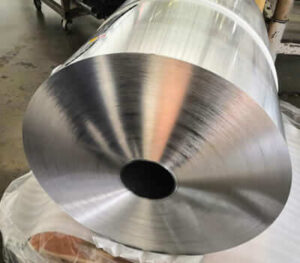
Huawei Embossed aluminum foil rolls
The thermal performance of aluminum foil in sandwich panels involves sophisticated heat transfer mechanisms that extend beyond basic reflection.
Radiative Heat Transfer Control
The foil surface acts as a low-emissivity (low-e) barrier. Specifically, emissivity values range 0.03–0.05 for bright-annealed foil versus 0.90 for oxidized steel.
Consequently, installing aluminum-faced sandwich panels reduces building cooling loads by 15–25% in tropical climates, directly impacting HVAC sizing and operational carbon footprints.
Conductive Pathway Management
Aluminum’s high thermal conductivity (205 W/(m·K)) paradoxically benefits panel performance when properly engineered.
In double-skin facades, this property enables rapid heat dissipation from the outer skin, preventing thermal lag that degrades indoor comfort.
Furthermore, the material’s thermal expansion coefficient (23.2×10⁻⁶/°C) closely matches steel structural elements, minimizing stress differentials across panel joints during diurnal temperature swings of 40°C or greater.
Fire Performance Considerations
Contrary to misconceptions about aluminum “melting” in fires, aluminum foil in sandwich panels actually enhances fire safety profiles:
Different insulated panel architectures demand distinct foil specifications.
The following breakdown illustrates how aluminum foil adapts to diverse construction challenges:
PUR/PIR Core Panels (Cold Storage & Industrial Buildings)

Insulated Sandwich Panels for Construction
Mineral Wool Acoustic Panels (Commercial Interiors)
EPS/XPS Roof Panels (Residential & Agricultural)
The transformation of primary aluminum into high-barrier foil for sandwich panels requires precision metallurgy.
Henan Huawei Aluminum Co., Ltd employs advanced processing protocols that differentiate construction-grade foil from standard packaging materials:
Rolling Precision
Thermal Processing
Surface Engineering

HVAC used Insulated Sandwich Panels
Modern construction specifications increasingly mandate lifecycle assessment (LCA) compliance.
Aluminum foil in sandwich panels delivers compelling environmental credentials:
Recyclability Without Downgrading
Unlike laminated plastic insulation barriers, aluminum foil separates cleanly from polymer cores at end-of-life.
Moreover, recycled aluminum retains 95% of primary metal properties, enabling infinite material loops.
Henan Huawei Aluminum Co., Ltd utilizes 50–70% recycled content in its 8011 alloy production, reducing carbon footprint by 8–10 kg CO₂e per kilogram of foil.
Embodied Energy Optimization
While primary aluminum production requires 12–15 kWh/kg, the energy savings during building operation rapidly offset this investment:
Lightweight Transportation Benefits
At 2.7 g/cm³ density, aluminum-faced panels reduce transport emissions by 60% compared to cement-fiber alternatives.
Consequently, a standard curtain wall project saves approximately 12 tonnes of transport CO₂ per 1000m² façade.
Reliable thermal performance demands rigorous quality control. Specifiers should verify the following compliance matrix when sourcing sandwich panel foil:
| Test Parameter | Standard Method | Acceptance Criteria | Henan Huawei Aluminum Compliance |
| Tensile Strength | ASTM E8 | 80–120 MPa (O-temper) | Certified per batch (3.1 mill test cert) |
| Elongation | ASTM E8 | >20% | 22–28% typical |
| Reflectivity (IR) | ASTM C1371 | >90% | 95–97% (bright annealed) |
| Pinhole Count | Electrolytic (DIN 55531) | <10/m² (Grade A) | <5/m² for 80μm+ gauges |
| Adhesion (Peel Strength) | ASTM F904 | >2.5 N/cm | 3.5–4.5 N/cm with PUR foam |
| Salt Spray Resistance | ASTM B117 | >500 hours (coated) | 720+ hours (chromate-free) |
| Fire Reaction | EN 13501-1 | Class A2 (non-combustible) | A2-s1,d0 (smoke/toxicity compliant) |
Selecting the optimal aluminum foil specification requires balancing thermal, structural, and economic factors. Consider this decision framework:
For High-Humidity Cold Storage (Frozen Food Logistics) Specify 8011-O, 100–120 μm with lacquered surface.
The additional thickness prevents handling damage during panel installation, while the lacquer resists condensation corrosion in -25°C to +30°C cycling environments.
For Architectural Facades (Aesthetic + Thermal) Choose 3003-H16, 60–80 μm with PVDF-coated surface.
The harder temper provides rigidity for concealed-fix panel systems, while color coating eliminates secondary painting and provides 20-year UV resistance.
For Acoustic Industrial Partitions Utilize 8011-O, perforated 80 μm with 1.5mm hole diameter on 3mm centers.
This configuration maximizes sound absorption at 1000–4000 Hz (human speech frequencies) while maintaining thermal insulation.
Henan Huawei Aluminum Co., Ltd provides comprehensive technical consultation to match these specifications with project requirements, offering custom slitting (widths 20–1600mm), embossing patterns, and surface treatments tailored to specific climatic zones and building codes.
Aluminum foil for insulated sandwich panels represents far more than a simple reflective layer. Rather, it constitutes a precision-engineered component that dictates building energy performance, fire safety, and longevity.
The selection between 8011 and 3003 alloys, optimization of surface treatments, and control of metallurgical quality directly impact whether a building achieves Passive House standards or suffers thermal bridge failures within five years.
As the construction industry advances toward net-zero targets, the role of high-performance aluminum foil will only intensify.
Manufacturers like Henan Huawei Aluminum Co., Ltd continue pushing metallurgical boundaries, delivering foils that not only meet current EN and ASTM standards but anticipate tomorrow’s stringent energy codes.
By understanding the nuanced interplay between alloy chemistry, thermal physics, and manufacturing precision, specifiers can leverage aluminum foil to create building envelopes that are genuinely sustainable—energy-efficient in operation, durable in service, and recyclable at end-of-life.
Contact Henan Huawei Aluminum Co., Ltd for detailed technical datasheets, sample materials for adhesion testing, and customized alloy recommendations for your specific sandwich panel manufacturing requirements.
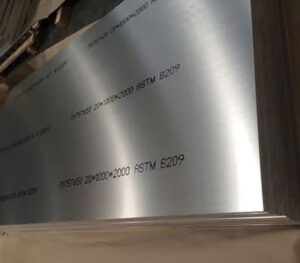
7075 aluminum sheet is the strongest heat-treatable alloy, introduced by Alcoa in 1943, and can be heat-treated to achieve strength levels comparable to many steel alloys.
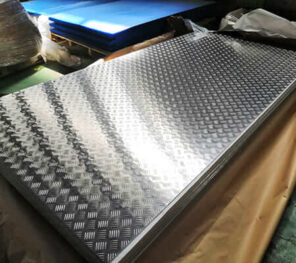
Discover the benefits of 5052 H32 aluminum checkered plates. Lightweight, corrosion-resistant, and anti-slip design ideal for flooring, ramps, vehicles, and marine projects.
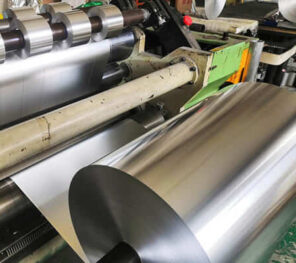
High temperature resistant coated aluminum foil delivers excellent heat stability, durable protection, and reliable performance for demanding applications.
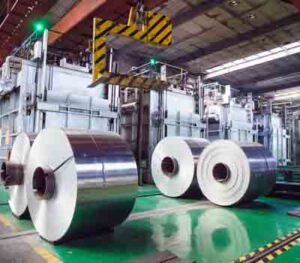
Our commitment to quality, variety, and customization ensures that you'll find the perfect insulation aluminum coil for your project.
Aluminum foil containers made of aluminum foil can be processed into various shapes, common alloys are 8011, 3003, 3004, 5052 aluminum foil.
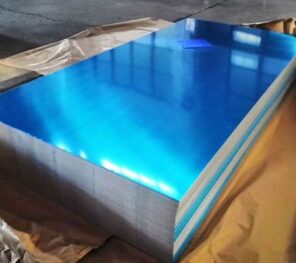
Discover marine grade 5086 H116 aluminum plate is trusted in shipbuilding, offshore structures, and seawater environments for its excellent corrosion resistance, weldability, and strength.
No.52, Dongming Road, Zhengzhou, Henan, China
Henan Huawei Aluminum Co., Ltd, One Of The Biggest Aluminum Supplier In China Henan,We Are Established In 2001,And We Have rich experience in import and export and high quality aluminum products
Mon – Sat, 8AM – 5PM
Sunday: Closed
© Copyright © 2023 Henan Huawei Aluminium Co., Ltd

Latest Comments
Dear Sir, Please offer your best FOB Prices specs are as under ALUMINIUM STRIP (AL=99.50% MIN) SIZE:450 X32 X6 MM. DIN EN 570 EN-AW 1050 A, QUANTITY=3400KG
Hello, Would you be so kind to offer item as follows: Coil 0,6х1250 (1000)mm EN AW-3105 5tons
Hello, Can you offer me Aluminium plates? Actally I need: 110mm x 1700mm x 1700mm 5083 H111 - 21 pcs Next year planed is 177 pcs
Świetny artykuł. Byłem zachwycony, że wyszukałem ten artykuł. Wielu osobom wydaje się, że mają rzetelną wiedzę na ten temat, ale często tak nie jest. Stąd też moje miłe zaskoczenie. Jestem pod wrażeniem. Zdecydowanie będę rekomendował to miejsce i częściej wpadał, aby zobaczyć nowe rzeczy.
requirement of aluminium strip