Explore Aluminum for Indoor Lighting Use: discover its lightweight, corrosion-resistant, and thermal conductive properties that make it ideal for modern lighting fixtures, LED housings, and decorative designs.
Aluminum for indoor lighting use refers to the use of aluminum and its alloys as key materials in the design and construction of lighting systems.
These aluminum components serve various functions, including housing LED modules, serving as heat sinks, forming structural frames for light fixtures, and providing decorative elements.

Aluminum for Indoor Lighting Use
The inherent properties of aluminum—such as low density, high thermal conductivity, and corrosion resistance—make it ideal for enhancing the efficiency and longevity of indoor lighting products.
Understanding the material characteristics of aluminum used in indoor lighting is crucial for selecting the right alloy and processing method.
These characteristics are defined by its composition, physical and mechanical properties, and surface treatments.
Aluminum used in indoor lighting typically comes from high-purity aluminum or specific aluminum alloys.
The choice of alloy depends on the desired performance criteria, such as thermal conductivity, strength, and corrosion resistance.

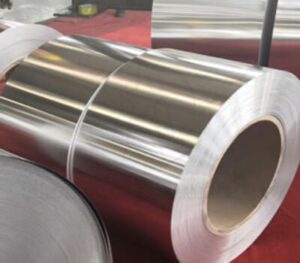
3003 aluminum strip for Led Light
Aluminum’s physical and mechanical properties play a critical role in its performance in lighting applications.
These properties include density, thermal conductivity, electrical conductivity, and reflectivity.
| Property | Typical Value for Aluminum | Notes |
|---|---|---|
| Density | ~2.70 g/cm³ | Low density reduces overall weight. |
| Thermal Conductivity | 150-235 W/m·K | High conductivity for efficient heat dissipation. |
| Electrical Conductivity | 35-65% IACS | Depends on alloy composition; important for LED systems. |
| Reflectivity | 80-90% (depending on finish) | High reflectivity enhances light distribution.
|
Aluminum’s surface can be modified to enhance aesthetics and durability:
| Treatment | Process | Benefits |
|---|---|---|
| Anodizing | Electrochemical oxidation | Corrosion resistance, color options |
| Powder Coating | Electrostatic application of polymer | Scratch resistance, custom finishes |
| Polishing | Mechanical abrasion | High reflectivity (up to 95%) |
| Chemical Etching | Acid-based patterning | Anti-glare surfaces for diffused light |
Aluminum offers several key benefits when used in indoor lighting systems.
Its unique properties contribute to both the performance and aesthetics of lighting fixtures.

Advantages of Aluminum for Indoor Lighting Use
Aluminum plays a pivotal role in the indoor lighting industry.
Its unique properties enable a range of applications, from the basic structure of light fixtures to advanced LED systems.

LED Light used aluminum
The transformation of aluminum into functional and aesthetically pleasing indoor lighting components involves several processing technologies.
These techniques allow for the creation of complex shapes, finishes, and precise components necessary for high-quality lighting fixtures.
Rolling is a manufacturing process used to produce aluminum sheets and plates, which are fundamental in the construction of lighting fixtures.

Rolling aluminum
Extrusion is a process that creates aluminum profiles with complex cross-sections, making it highly suitable for lighting fixture frames and heat sinks.
Surface treatment processes enhance both the appearance and the durability of aluminum lighting components.
Precision machining techniques are essential for manufacturing the intricate components found in indoor lighting fixtures.
In conclusion, the combination of rolling, extrusion molding, surface treatment, and precision processing technologies enables the efficient and effective transformation of aluminum into high-quality components for indoor lighting fixtures.

Precision processing of lighting aluminum
These processes not only ensure the structural integrity and functionality of the lighting but also contribute to their aesthetic appeal and longevity.
Answer: Aluminum is lightweight, strong, and highly corrosion-resistant.
Its excellent thermal conductivity ensures efficient heat dissipation from light sources, while various surface treatments (such as anodizing and powder coating) allow for customization of the aesthetic finish.
Answer: Common alloys include 1050, 1060, 3003, 5052, and 6061, each selected based on specific requirements such as conductivity, strength, and corrosion resistance.
Answer: Surface treatments like anodizing enhance corrosion resistance and allow for color customization, while powder coating provides additional durability and aesthetics.
Polishing can improve reflectivity, which is crucial in decorative lighting.
Answer: Techniques include rolling to produce uniform sheets, extrusion molding for complex profiles, CNC machining for precision parts, and various surface treatment processes to enhance performance and appearance.
Answer: Its high thermal conductivity helps dissipate heat from light sources, reducing energy loss.
Additionally, its lightweight nature reduces structural loads, leading to overall energy savings during installation and operation.
Aluminum for indoor lighting use represents a versatile, high-performance solution that enhances the efficiency, aesthetics, and durability of lighting systems.
Its unique combination of lightweight, high strength, excellent thermal conductivity, and outstanding corrosion resistance make aluminum an ideal choice for a wide array of applications—from LED lamp housings and intelligent lighting systems to decorative components and structural supports.
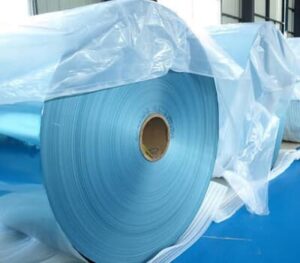
Hydrophilic aluminum foil is obtained by coating the surface of aluminum foil with hydrophilic coating, the purpose is to improve the hydrophilic (water-attracting) performance of the aluminum foil, and it has higher heat transfer efficiency and corrosion resistance.

In this article, we will explore the properties, benefits, applications, tempering processes, and factors to consider when choosing 6061 T4 T6 T651 aluminum sheet for your project.
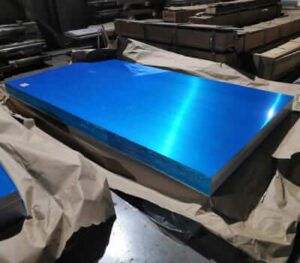
3000 series aluminum alloy is an AL-MG alloy whose main components are aluminum, manganese and a small amount of other elements. It has excellent properties such as good corrosion resistance, processability and weldability.
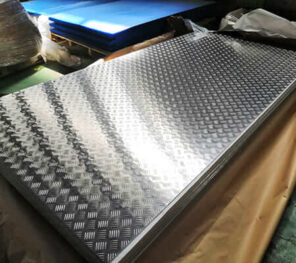
Discover the benefits of 5052 H32 aluminum checkered plates. Lightweight, corrosion-resistant, and anti-slip design ideal for flooring, ramps, vehicles, and marine projects.
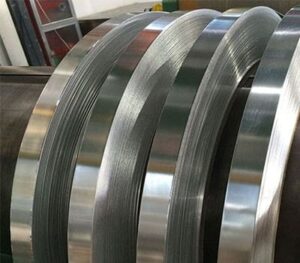
The 3003 aluminium strip is made of 3003 aluminium alloy. The 3 series aluminum alloy is also called an aluminum-manganese alloy.
6082 aluminium strip can usually be heat treated for higher strength, but relatively low ductility.6082 aluminum alloy is one of the alloy models of...
No.52, Dongming Road, Zhengzhou, Henan, China
Henan Huawei Aluminum Co., Ltd, One Of The Biggest Aluminum Supplier In China Henan,We Are Established In 2001,And We Have rich experience in import and export and high quality aluminum products
Mon – Sat, 8AM – 5PM
Sunday: Closed
© Copyright © 2023 Henan Huawei Aluminium Co., Ltd

Latest Comments
Dear Sir, Please offer your best FOB Prices specs are as under ALUMINIUM STRIP (AL=99.50% MIN) SIZE:450 X32 X6 MM. DIN EN 570 EN-AW 1050 A, QUANTITY=3400KG
Hello, Would you be so kind to offer item as follows: Coil 0,6х1250 (1000)mm EN AW-3105 5tons
Hello, Can you offer me Aluminium plates? Actally I need: 110mm x 1700mm x 1700mm 5083 H111 - 21 pcs Next year planed is 177 pcs
Świetny artykuł. Byłem zachwycony, że wyszukałem ten artykuł. Wielu osobom wydaje się, że mają rzetelną wiedzę na ten temat, ale często tak nie jest. Stąd też moje miłe zaskoczenie. Jestem pod wrażeniem. Zdecydowanie będę rekomendował to miejsce i częściej wpadał, aby zobaczyć nowe rzeczy.
requirement of aluminium strip