This article provides an in-depth exploration of Road Sign Aluminum Circles. It covers their material properties, production methods, and role in traffic sign applications. Designed for manufacturers, procurement professionals, and quality assurance teams, it offers authoritative insights grounded in industry standards and practical experience.
A Road Sign Aluminum Circle is a flat, circular aluminum disc used as a base material in the production of traffic signs.
These circles are manufactured from high-purity aluminum alloys, precision-stamped, and treated for durability and weather resistance.
They are available in a variety of diameters and thicknesses to meet the dimensional and structural requirements of different signage systems.
These circles are particularly suited for round and elliptical signs but can also be adapted for various customized sign shapes.

What is Road Sign Aluminum Circle
Aluminum circles offer a unique blend of lightweight properties, corrosion resistance, formability, and reflectivity.
These characteristics make them the ideal substrate for traffic signage, ensuring long-term performance and easy fabrication.
Compared to steel and other metals, aluminum significantly reduces transportation and installation costs.
It is also non-toxic, recyclable, and environmentally friendly, aligning with sustainable development goals and global green initiatives.
| Alloy Grade | Composition (%) | Features |
|---|---|---|
| 1050 | Al 99.5+ | High ductility, excellent reflectivity |
| 1060 | Al 99.6+ | Superior corrosion resistance |
| 1100 | Al 99.0+ | Excellent workability, soft temper |
| 3003 | Al + Mn (1.2%) | Higher strength, good corrosion resistance |
These alloys meet the mechanical and surface quality standards for sign-making.
1050 and 1060 are most commonly used due to their high purity and surface brightness.

Huawei 1100 aluminum circle display
The manufacturing of Road Sign Aluminum Circles involves multiple tightly controlled steps to ensure dimensional accuracy, surface quality, and performance.
Aluminum ingots and master alloys are melted in induction or reverberatory furnaces.
Alloying elements are added to achieve target compositions.
The melt is filtered and degassed to remove inclusions and hydrogen before casting.
Molten aluminum is cast into slabs, then hot-rolled into coils. Cold rolling refines thickness and improves mechanical properties.
Multiple passes are used to achieve final thickness tolerances and grain structure control.
Precision dies stamp aluminum coils into circles. Tolerances are kept within ±0.1mm to ensure uniformity.
The edges are smoothened using trimming tools or de-burring machines to eliminate sharpness.
Stamped circles are annealed in furnaces to relieve internal stress and improve ductility, facilitating downstream forming.
Different annealing profiles are used depending on the target mechanical properties and final application.
Surface treatments enhance reflectivity, corrosion resistance, and paint adhesion. Options include:
These treatments not only increase lifespan but also enhance visual appeal and allow for better ink or vinyl adhesion in sign printing processes.
Each batch undergoes rigorous inspection:
Products are packaged using protective films, corner guards, and wooden crates.

Aluminum Circle Thickness Checks
Special packaging methods like vacuum-sealing or humidity-proofing may be applied for export shipments.
Road Sign Aluminum Circles serve as foundational substrates in:
Their uniformity, structural strength, and surface quality ensure reliable mounting and display in diverse environments.

Application of Road Sign Aluminum Circle
| Test Type | Method | Criteria |
|---|---|---|
| Composition Analysis | Spectrometry | Matches target alloy spec |
| Thickness Measurement | Micrometer or laser gauge | ±0.05 mm |
| Tensile Strength Test | Universal testing machine | Meets EN/ASTM standards |
| Surface Quality Check | Visual + Microscope Inspection | No cracks, spots, or burrs |
| Coating Adhesion Test | Cross-hatch or tape test | 0-grade adhesion loss (ISO 2409) |
| Flatness Testing | Straight edge or optical scanner | < 0.5% deviation from standard |
Manufacturers typically hold certifications such as:
Road Sign Aluminum Circles are a critical component in modern traffic sign production.
Their unique properties, from lightweight durability to weather resistance and ease of processing, make them the standard in this sector.
With rigorous manufacturing and quality assurance processes, they ensure high visibility, safety, and longevity in road signage around the world.
By understanding the materials, processes, and applications in detail, stakeholders can make informed decisions that meet both performance and regulatory needs.
As cities evolve and intelligent transport systems emerge, aluminum circles continue to be a key enabler in delivering reliable, safe, and sustainable traffic solutions.
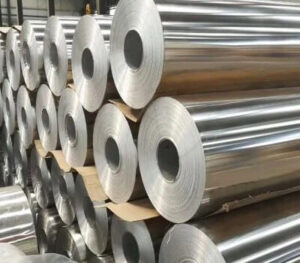
As a professional manufacturer and exporter of aluminum foil jumbo roll seals in China. We have been in this field for more than 20 years, we have a factory and dust-free workshop of more than 100,000 square meters
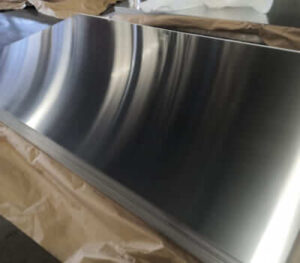
5×10 aluminum sheet is a common specification of aluminum sheet produced by aluminum sheet manufacturers,it is 5 feet wide and 10 feet long.
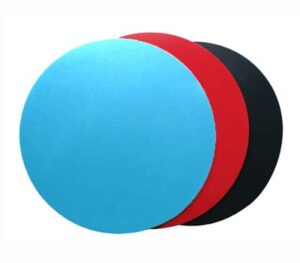
Color coated aluminum circle usually refer to aluminum circles with PE or PVDF coating on the surface, which can not only improve certain anti-corrosion properties but also enhance the appearance of the product.
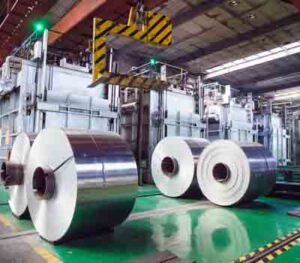
Our commitment to quality, variety, and customization ensures that you'll find the perfect insulation aluminum coil for your project.
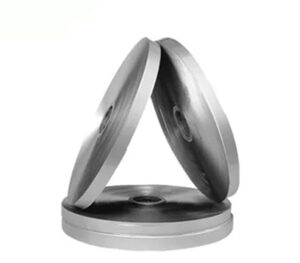
Cable aluminum foil, also known as aluminum foil for cable, refers to a specific type of aluminum foil that is used in the manufacturing of cables and wires.
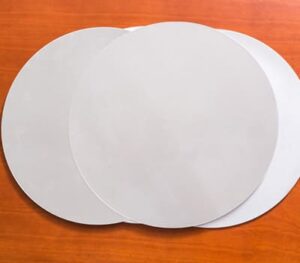
Aluminium circle for cookwares typically refers to a circular-shaped piece or circle made from aluminum that is used in the manufacturing of various types of cookware, such as pots, pans, and cooking utensils.
No.52, Dongming Road, Zhengzhou, Henan, China
Henan Huawei Aluminum Co., Ltd, One Of The Biggest Aluminum Supplier In China Henan,We Are Established In 2001,And We Have rich experience in import and export and high quality aluminum products
Mon – Sat, 8AM – 5PM
Sunday: Closed
© Copyright © 2023 Henan Huawei Aluminium Co., Ltd

Latest Comments
Dear Sir, Please offer your best FOB Prices specs are as under ALUMINIUM STRIP (AL=99.50% MIN) SIZE:450 X32 X6 MM. DIN EN 570 EN-AW 1050 A, QUANTITY=3400KG
Hello, Would you be so kind to offer item as follows: Coil 0,6х1250 (1000)mm EN AW-3105 5tons
Hello, Can you offer me Aluminium plates? Actally I need: 110mm x 1700mm x 1700mm 5083 H111 - 21 pcs Next year planed is 177 pcs
Świetny artykuł. Byłem zachwycony, że wyszukałem ten artykuł. Wielu osobom wydaje się, że mają rzetelną wiedzę na ten temat, ale często tak nie jest. Stąd też moje miłe zaskoczenie. Jestem pod wrażeniem. Zdecydowanie będę rekomendował to miejsce i częściej wpadał, aby zobaczyć nowe rzeczy.
requirement of aluminium strip