3003 aluminum is a widely used manganese-alloyed aluminum grade known for its excellent corrosion resistance, moderate strength, and superior formability.
It is a representative product of 3000 series aluminum alloy.
As a non-heat-treatable alloy, its mechanical properties are enhanced through strain hardening (cold working).

3003 Aluminum Plate H24 vs H14
Understanding the nuances between its various tempers, specifically H14 and H24, is crucial for selecting the appropriate material for specific applications.
Common applications include HVAC systems, food packaging, and automotive components.
3003 aluminum alloy is an alloy with manganese as the primary alloying element, typically containing about 1.0-1.5% manganese.
This composition grants the alloy enhanced strength compared to pure aluminum while maintaining excellent corrosion resistance and formability.
These properties make 3003 aluminum a popular choice for applications requiring medium strength and good workability.
The ‘H’ in aluminum alloys denotes a strain-hardened temper, indicating that the material has undergone a specific amount of cold working to achieve desired mechanical properties.
The digits following ‘H’ specify the degree and method of strain hardening:
The second digit indicates the degree of hardness, with higher numbers representing greater hardness.
The H14 temper signifies that the aluminum has been strain-hardened to achieve a half-hard state without any subsequent annealing.
This process enhances the material’s strength while maintaining adequate ductility for various forming operations.
The H24 temper indicates that the aluminum has been strain-hardened and then partially annealed, resulting in a quarter-hard state.
This treatment provides a balance between strength and flexibility, offering slightly higher elongation compared to H14.
The production of 3003 H14 aluminum plate involves:

3003 Aluminum Plate Cold Rolling
The production of 3003 H24 aluminum plate includes:

Aluminum Plate Annealing furnace
Both H14 and H24 tempers exhibit similar tensile strengths, typically around 160 MPa, due to their identical alloy composition.
The H24 temper generally offers slightly higher elongation at break (approximately 6.0%) compared to H14 (around 8.3%), indicating better ductility.
| Property | 3003-H14 | 3003-H24 |
| Brinell Hardness | ~50 | ~45 |
| Tensile Strength (MPa) | 145–185 | 130–170 |
| Yield Strength (MPa) | 125–165 | 110–150 |
| Elongation at Break (%) | 4–10 | 8–15 |
The 3003 H14 aluminum plate is commonly used in applications requiring moderate strength and good formability, such as:

3003 Aluminum Plate H14 for Garage Doors
The 3003 H24 aluminum plate is suitable for applications where a balance between strength and flexibility is essential, including:

3003 Aluminum Plate H24 for Storage Tanks
Choose H14 temper when the manufacturing process involves significant forming operations that require higher strength without additional annealing.
Opt for H24 temper when the process benefits from a balance between strength and ductility, allowing for easier forming and bending.
For applications demanding higher strength and less formability, H14 is preferable.
Conversely, for applications requiring better ductility and the ability to undergo more complex forming processes, H24 is more suitable.
Q1: Can H14 and H24 replace each other?
It depends on the application scenario: if high strength is required and complex forming is not required, H14 is better; otherwise, choose H24.
Q2: Does H24 annealing affect the surface quality?
Yes. Annealing may cause slight oxidation, and subsequent surface treatment (such as coating) is required to restore the finish.
Q3: Which state is more suitable for anodizing?
The performance of the two is similar, but H24 has slightly better uniformity and is suitable for high-precision oxidation needs.
Understanding the distinctions between 3003 aluminum plate H24 vs H14 is vital for selecting the appropriate material for specific applications.
While both tempers share similar tensile strengths, their differences in elongation and processing methods influence their suitability for various uses.
Careful consideration of these factors ensures optimal performance and longevity in their respective applications.
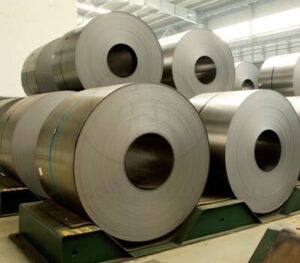
1100 Aluminum Coil is the alloy with the highest commercial purity of all aluminum grades, with an aluminum content (mass fraction) of 99.00%. Its strength is relatively low, and it has excellent ductility, formability, weldability, and corrosion resistance.

Find corrosion-resistant 16 gauge aluminum diamond plate with superior traction. Perfect for marine, automotive, and workshop use — custom cuts available.
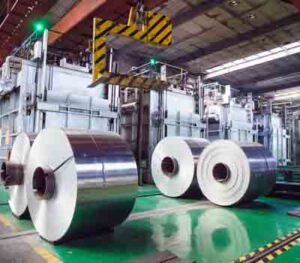
Our commitment to quality, variety, and customization ensures that you'll find the perfect insulation aluminum coil for your project.
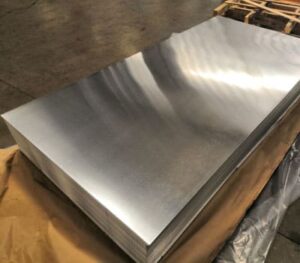
Thin aluminum sheet typically refers to a flat piece of aluminum material that has a thickness of less than 6mm (0.24 inches).
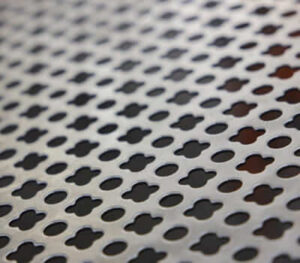
3003 Aluminum Perforated Sheets are obtained by punching 3003 aluminum alloy sheets and are often used in architectural decoration, food processing machinery and other fields.

Learn how non-stick aluminum foil works, its high-performance coatings, heat resistance, and benefits in food safety and sustainability. A must-read guide for chefs and manufacturers.
No.52, Dongming Road, Zhengzhou, Henan, China
Henan Huawei Aluminum Co., Ltd, One Of The Biggest Aluminum Supplier In China Henan,We Are Established In 2001,And We Have rich experience in import and export and high quality aluminum products
Mon – Sat, 8AM – 5PM
Sunday: Closed
© Copyright © 2023 Henan Huawei Aluminium Co., Ltd

Latest Comments
Dear Sir, Please offer your best FOB Prices specs are as under ALUMINIUM STRIP (AL=99.50% MIN) SIZE:450 X32 X6 MM. DIN EN 570 EN-AW 1050 A, QUANTITY=3400KG
Hello, Would you be so kind to offer item as follows: Coil 0,6х1250 (1000)mm EN AW-3105 5tons
Hello, Can you offer me Aluminium plates? Actally I need: 110mm x 1700mm x 1700mm 5083 H111 - 21 pcs Next year planed is 177 pcs
Świetny artykuł. Byłem zachwycony, że wyszukałem ten artykuł. Wielu osobom wydaje się, że mają rzetelną wiedzę na ten temat, ale często tak nie jest. Stąd też moje miłe zaskoczenie. Jestem pod wrażeniem. Zdecydowanie będę rekomendował to miejsce i częściej wpadał, aby zobaczyć nowe rzeczy.
requirement of aluminium strip