3105 vs 3003 aluminum are both non-heat-treatable alloys in the 3xxx series, primarily strengthened through manganese and cold working. They share several important characteristics, including good corrosion resistance, good formability, and good weldability. However, differences in alloy chemistry give them somewhat different balances of strength, formability, and application suitability.
3003 aluminum is a widely used general-purpose Al-Mn alloy. Its combination of moderate strength, excellent formability, corrosion resistance, and weldability makes it suitable for cookware, heat exchangers, storage tanks, chemical equipment, and general sheet-metal fabrication.
3105 aluminum contains manganese together with a controlled magnesium addition and is widely used in sheet and coil products, particularly where a balance of strength, formability, corrosion resistance, and surface finishing is required. It is commonly associated with building and architectural products such as siding, roofing-related components, and rain-carrying products.
The key difference can be summarized as:
3003 is a versatile general-purpose Al-Mn alloy, while 3105 is particularly useful where a balanced combination of moderate strength, formability, corrosion resistance, and architectural sheet performance is required.
However, alloy designation alone does not determine performance. Temper, thickness, product form, processing method, and service environment should also be considered when selecting between 3105 and 3003.
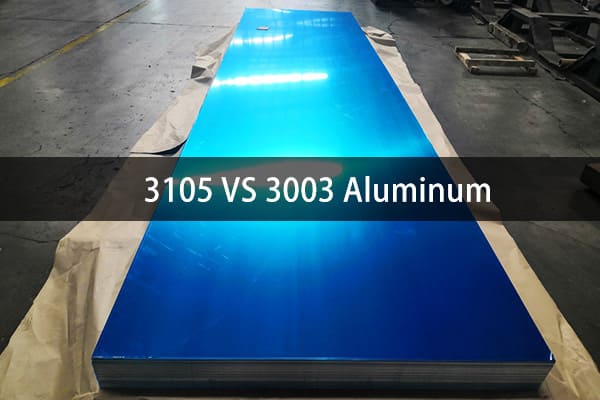
3105 vs 3003 Aluminum
3003 aluminum is a non-heat-treatable aluminum-manganese alloy in the 3xxx series.
is its principal alloying addition and contributes to its strength while maintaining good ductility and corrosion resistance.
Because 3003 cannot be strengthened through conventional precipitation heat treatment, its mechanical properties are primarily controlled through:
3003 is available in conditions such as O, H12, H14, H16, H18, H24, H26, and H28, depending on the product form and applicable specification.
Its combination of formability and moderate strength makes 3003 particularly useful for products that require forming, bending, drawing, or welding.
The alloy is especially attractive when formability and corrosion resistance are more important than maximum strength.
3105 aluminum is also a non-heat-treatable 3xxx-series alloy. Its chemistry differs from 3003 through the use of controlled manganese and magnesium additions, together with specified limits for other alloying and impurity elements.
Like 3003, 3105 obtains most of its useful mechanical strength through cold working rather than precipitation heat treatment.
3105 is commonly supplied as sheet or coil and is particularly associated with applications requiring a combination of:
3105 is therefore particularly useful in applications where appearance, corrosion resistance, forming performance, and adequate strength need to work together.
Despite their different chemical compositions, the two alloys have several fundamental similarities.
| Characteristic | 3003 | 3105 |
| Aluminum Series | 3xxx | 3xxx |
| Heat Treatability | Non-heat-treatable | Non-heat-treatable |
| Primary Strengthening | Cold working / Mn | Cold working / Mn + Mg |
| Formability | Very Good–Excellent | Very Good–Excellent |
| Corrosion Resistance | Good–Excellent | Good–Excellent |
| Weldability | Good–Excellent | Good–Excellent |
| Typical Product Forms | Sheet, plate, coil, foil | Sheet and coil |
| Common Industries | Cookware, HVAC, chemical equipment | Building, architectural, sheet metal |
Chemical composition is one of the clearest ways to understand the difference between 3105 and 3003. Both belong to the 3xxx series, but their specified alloying-element ranges are different.
The following values represent commonly specified composition limits for wrought aluminum alloys.
The exact limits should always be verified against the applicable ASTM/AA or other purchasing standard for the product being ordered.
| Element | 3003 | 3105 |
| Aluminum (Al) | Remainder | Remainder |
| Silicon (Si) | ≤ 0.60% | ≤ 0.60% |
| Iron (Fe) | ≤ 0.70% | ≤ 0.70% |
| Copper (Cu) | 0.05–0.20% | ≤ 0.30% |
| Manganese (Mn) | 1.0–1.5% | 0.30–0.80% |
| Magnesium (Mg) | ≤ 0.05% | 0.20–0.80% |
| Chromium (Cr) | — | ≤ 0.20% |
| Zinc (Zn) | ≤ 0.10% | ≤ 0.40% |
| Titanium (Ti) | — | ≤ 0.10% |
| Other Elements | Controlled by applicable standard | Controlled by applicable standard |
Values should be checked against the specific alloy/product standard before being used as contractual purchasing limits.
Manganese is the principal alloying element in 3003.
The relatively high Mn range contributes to:
At the same time, the alloy retains good ductility, making it suitable for forming and fabrication.
This balance is one reason 3003 has become a widely used general-purpose aluminum alloy.
One of the most noticeable compositional differences is the controlled magnesium addition in 3105.
Magnesium contributes to strengthening and changes the alloy’s overall mechanical-property balance.
In combination with manganese, it helps 3105 achieve the characteristics required for many sheet and architectural applications.
However, magnesium should not be viewed independently. The final properties of 3105 also depend on:
Therefore, chemical composition establishes the material’s basic metallurgical characteristics, but temper determines much of its final mechanical behavior.
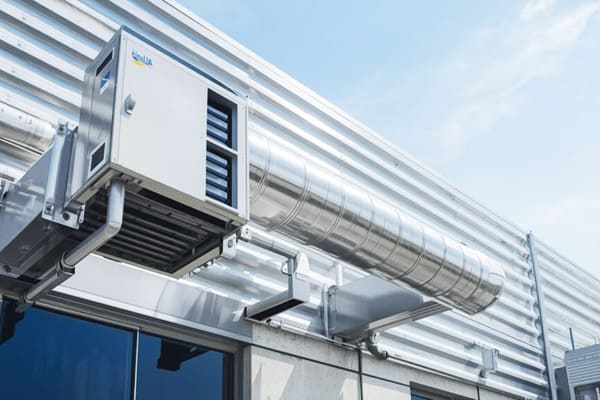
3105 vs 3003 aluminum
The mechanical properties of 3105 and 3003 aluminum depend strongly on temper and product thickness.
Both are non-heat-treatable alloys, so their strength is mainly developed through cold working.
For a meaningful comparison, the same temper and similar thickness should be considered.
| Mechanical Property | 3003 | 3105 |
| Alloy Type | Al-Mn alloy | Al-Mn-Mg alloy |
| Heat Treatability | Non-heat-treatable | Non-heat-treatable |
| Strengthening Method | Cold working | Cold working |
| Typical Tensile Strength* | ~145–200 MPa | ~150–205 MPa |
| Typical Yield Strength* | ~110–175 MPa | ~110–180 MPa |
| Elongation* | ~3–15% | ~3–15% |
| Formability | Excellent | Very good to excellent |
| Work Hardening | Moderate | Moderate |
| Ductility | High | High |
| Typical Strength Level | Moderate | Moderate |
| Common Tempers | O, H12, H14, H16, H18, H24, H26, H28 | O, H12, H14, H16, H18, H24, H26, H28 |
Representative ranges only. Actual minimum mechanical properties vary with temper, thickness, product form, and applicable ASTM/AA specification.
They should not be used as contractual values without checking the relevant product standard.
3003 Aluminum — Excellent Formability
3003 is widely selected when forming performance is a priority. Its combination of moderate strength and high ductility makes it suitable for bending, drawing, stamping, cookware, heat exchangers, and general sheet-metal fabrication.
3105 Aluminum — Balanced Strength and Formability
3105 provides a good balance between strength and ductility. This makes it particularly suitable for building panels, siding, roofing products, gutters, and other formed sheet applications where adequate strength and good fabrication performance are required.
Temper Has a Major Influence
For both alloys, increasing the degree of cold work generally increases tensile and yield strength while reducing elongation. Therefore:
O temper → Maximum ductility and formability
H14/H24 → Balanced strength and formability
H18/H28 → Higher strength, lower ductility
It is not technically accurate to state that 3105 is always stronger than 3003. Their mechanical-property ranges can overlap substantially.
The correct comparison should be:
Same alloy temper + Similar thickness + Same product standard → Compare certified mechanical properties
In practical applications, 3003 is often preferred for demanding forming and general-purpose fabrication.
While 3105 is frequently selected when moderate strength must be combined with good formability and architectural performance
Both 3105 and 3003 provide good corrosion resistance, which is one of the major advantages of the 3xxx aluminum series.
Their corrosion resistance comes primarily from aluminum’s naturally forming oxide film, which protects the underlying metal from many atmospheric environments.
3003 performs well in a wide range of normal atmospheric conditions.
It is commonly used in:
Its good corrosion resistance makes it suitable for applications where the aluminum may experience moisture, humidity, and moderate chemical exposure.
However, it should not be considered immune to corrosion. Strong acids, strong alkalis, chloride-rich environments, and certain combinations of moisture and contaminants can attack aluminum.
3105 also provides good resistance to atmospheric corrosion and is widely used in exterior building products.
Typical applications include:
Its ability to maintain useful corrosion resistance while providing adequate strength and formability makes it particularly attractive for outdoor sheet applications.
| Corrosion Factor | 3003 | 3105 |
| Atmospheric Corrosion | Excellent | Excellent |
| Humid Environment | Very Good | Very Good |
| Outdoor Exposure | Very Good | Very Good |
| Mild Chemical Exposure | Good | Good |
| Chloride-Rich Environment | Requires careful design | Requires careful design |
| Strong Acids/Alkalis | Not recommended | Not recommended |
| Anodizing/Coating | Possible | Possible |
| Typical Outdoor Use | Good | Excellent |
The difference between the two alloys is generally not large enough to make corrosion resistance the sole selection criterion.
For outdoor products, factors such as coating system, surface preparation, drainage, fastener compatibility, and exposure conditions may have a greater practical effect on service life than the choice between 3003 and 3105.

Architectural Panels Used 3105 Aluminum Sheet
Although 3105 and 3003 aluminum share good formability, corrosion resistance, and weldability, their typical applications differ because of their different alloy compositions and property balances.
3003 aluminum is a versatile general-purpose alloy, particularly suitable for applications requiring good formability, moderate strength, corrosion resistance, and thermal conductivity.
It is widely used for cookware, kitchen equipment, heat exchangers, HVAC components, storage tanks, chemical equipment, and general sheet-metal products. Its good ductility also makes it suitable for bending, drawing, stamping, and other forming operations.
For cookware and heat-transfer applications, 3003 is often preferred because it combines good fabrication performance with useful thermal properties.
3105 aluminum is widely used for architectural and building-related sheet products.
Its balance of moderate strength, formability, corrosion resistance, and surface-finishing characteristics makes it suitable for long-term outdoor applications.
Typical products include building siding, roofing components, gutters, rain-carrying products, architectural panels, mobile-home components, and painted or coated aluminum sheet.
3105 is particularly attractive when the finished product requires a combination of structural functionality, weather resistance, appearance, and coating compatibility.
The following table highlights the typical application differences between 3003 and 3105 aluminum:
| Application | 3003 Aluminum | 3105 Aluminum | Preferred Alloy |
| Cookware & Kitchen Equipment | Excellent formability and good thermal performance | Suitable, but less commonly selected | 3003 |
| Heat Exchangers & HVAC | Excellent balance of thermal conductivity, formability, and corrosion resistance | Suitable for selected components | 3003 |
| Chemical Equipment | Good corrosion resistance and weldability | Suitable for less demanding applications | 3003 |
| Storage Tanks | Good strength, formability, and corrosion resistance | Suitable for selected sheet applications | 3003 |
| General Sheet Metal | Excellent | Excellent | Both |
| Building Siding | Suitable | Excellent combination of strength, formability, and corrosion resistance | 3105 |
| Roofing Components | Suitable | Widely used for exterior building sheet | 3105 |
| Gutters & Rain-Carrying Products | Suitable | Excellent suitability for outdoor sheet products | 3105 |
| Architectural Panels | Good | Excellent for painted/coated sheet | 3105 |
| Mobile-Home Components | Suitable | Common application | 3105 |
| Painted/Coated Aluminum Sheet | Good | Very good | 3105 |
Selection rule: Choose 3003 when formability, thermal performance, or general-purpose fabrication is the priority.
Choose 3105 when building, architectural, outdoor exposure, or coated-sheet applications are the main considerations.
For either alloy, the final selection should also account for temper, thickness, forming method, and service environment.
For buyers comparing 3105 and 3003 aluminum, alloy selection is only the first step.
Consistent chemical composition, temper, dimensional accuracy, surface quality, and mechanical properties are equally important for reliable downstream fabrication.
Huawei Aluminum focuses on these factors when supplying 3003 and 3105 aluminum sheet and coil.
Huawei Aluminum can supply both 3003 and 3105 aluminum in commonly requested tempers, including O and various H tempers, depending on product form and customer requirements.
This allows buyers to select the material according to the required balance of:
Consistent alloy chemistry is essential for maintaining predictable mechanical and processing characteristics.
Production control covers key alloying and impurity elements such as Mn, Mg, Cu, Fe, and Si, according to the specified alloy and applicable standard.
This helps ensure that each production batch remains within the agreed chemical-composition limits.
For sheet and coil applications, dimensional consistency directly affects forming, cutting, roll forming, and assembly.
Quality control can cover:
The material can be supplied according to customer-specific dimensional requirements where applicable.
Huawei Aluminum can help customers select between 3003 and 3105 according to the intended application.
For example:
The appropriate temper and thickness should then be selected according to the actual forming and service requirements.
For B2B aluminum procurement, material traceability is important. Depending on the order specification, documentation may include:
These records help buyers verify that the delivered material meets the agreed technical requirements.
Huawei Aluminum can provide customized aluminum sheet and coil specifications based on application and production requirements, including:
Alloy + Temper + Thickness + Width + Surface Condition + Coil/Supply Requirements
This is particularly useful for manufacturers that require consistent material specifications across repeated production orders.
3105 and 3003 aluminum are both versatile 3xxx-series, non-heat-treatable alloys with good formability, corrosion resistance, and weldability.
However, their different chemical compositions give them somewhat different application advantages.
3003 aluminum is a strong general-purpose choice for applications requiring excellent formability and balanced mechanical and thermal performance.
It is widely used in cookware, heat exchangers, HVAC components, chemical equipment, storage tanks, and general sheet-metal fabrication.
3105 aluminum is particularly well suited to building and architectural applications, including siding, roofing components, gutters, architectural panels, and coated sheet products.
It offers a useful balance of strength, formability, corrosion resistance, and surface-finishing characteristics.
However, neither alloy is universally better. The final selection should consider alloy, temper, thickness, forming method, corrosion environment, surface treatment, and required mechanical properties together.
Both are 3xxx-series non-heat-treatable alloys, but their alloying-element ranges differ. 3003 contains a higher specified manganese range, while 3105 contains controlled manganese and magnesium additions, resulting in somewhat different property balances and application profiles.
Not necessarily. Their mechanical-property ranges can overlap substantially. Strength depends heavily on temper and thickness, so 3105 should not automatically be considered stronger than 3003.
Both have good formability. 3003 is particularly well known for excellent general-purpose formability, while 3105 also provides very good forming performance, especially in suitable tempers.
3003 is generally the more common choice for cookware because of its good formability, corrosion resistance, and useful thermal properties. The final selection should also consider cookware design, thickness, surface treatment, and applicable food-contact requirements.
3105 is generally preferred for many roofing-related sheet applications because it provides a good combination of strength, formability, corrosion resistance, and suitability for coated or painted products.
Both provide good to excellent atmospheric corrosion resistance. In practical applications, the difference is usually less important than factors such as coating, surface condition, fastener compatibility, and environmental exposure.
In some general sheet-metal applications, yes, but they should not be considered automatically interchangeable. The replacement should be evaluated based on mechanical properties, forming requirements, thermal performance, corrosion conditions, applicable standards, and customer specifications.

High-formability Colored Lacquered Aluminum Foil O Temper engineered for deep-draw lidding, blister backing and decorative packaging — excellent adhesion, low pinhole and food-grade compliance.
PVD anodizing aluminum mirror sheets is a process where a thin layer of material is deposited onto the surface of the aluminum through a vacuum deposition process.

Find corrosion-resistant 16 gauge aluminum diamond plate with superior traction. Perfect for marine, automotive, and workshop use — custom cuts available.
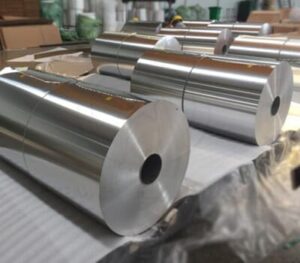
Our 3003 Aluminum foil products have been exported to Australia, Morocco, Syria, Kuwait, Turkey, Saudi Arabia, UAE, Iraq, Jordan, Germany, Poland, Spain, Brazil, etc. We sincerely welcome you to visit our factory.
Huawei Aluminum aluminum discs are widely exported to Ghana, Guatemala, Burkina Faso, Algeria, Togo, Kenya, Nigeria, South Africa, Morocco and other African countries; the United Arab Emirates, Yemen, Qatar, Kuwait, Iran, Jordan, Saudi Arabia and other Middle East nation.
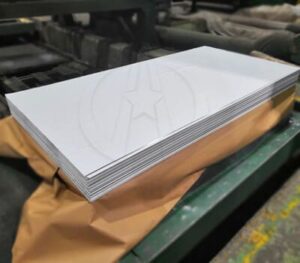
6061 aluminum sheet is an al-si-mg alloy that has been strengthened by precipitation hardening. 6061 aluminum has a high strength-to-weight ratio, above-average corrosion resistance, good machinability, and is well suited for welding.
No.52, Dongming Road, Zhengzhou, Henan, China
Henan Huawei Aluminum Co., Ltd, One Of The Biggest Aluminum Supplier In China Henan,We Are Established In 2001,And We Have rich experience in import and export and high quality aluminum products
Mon – Sat, 8AM – 5PM
Sunday: Closed
© Copyright © 2023 Henan Huawei Aluminium Co., Ltd

Latest Comments
Dear Sir, Please offer your best FOB Prices specs are as under ALUMINIUM STRIP (AL=99.50% MIN) SIZE:450 X32 X6 MM. DIN EN 570 EN-AW 1050 A, QUANTITY=3400KG
Hello, Would you be so kind to offer item as follows: Coil 0,6х1250 (1000)mm EN AW-3105 5tons
Hello, Can you offer me Aluminium plates? Actally I need: 110mm x 1700mm x 1700mm 5083 H111 - 21 pcs Next year planed is 177 pcs
Świetny artykuł. Byłem zachwycony, że wyszukałem ten artykuł. Wielu osobom wydaje się, że mają rzetelną wiedzę na ten temat, ale często tak nie jest. Stąd też moje miłe zaskoczenie. Jestem pod wrażeniem. Zdecydowanie będę rekomendował to miejsce i częściej wpadał, aby zobaczyć nowe rzeczy.
requirement of aluminium strip