Due to the physical and chemical properties of aluminum and aluminum alloys, such as strong oxidizability, low melting point (660℃), fast thermal conductivity, large linear expansion coefficient, and large melting latent heat, this article discusses the welding of aluminum and aluminum alloys.
With the continuous development of industry, the processing technology of aluminum and aluminum alloys has also made great progress.
Due to the physical and chemical properties of aluminum and aluminum alloys, such as strong oxidizability, low melting point (660℃), fast thermal conductivity, large linear expansion coefficient, and large melting latent heat, this article discusses the welding of aluminum and aluminum alloys.
Aluminum is very easy to oxidize in the air and during welding. The generated aluminum oxide has a high melting point (its melting point is as high as 2050℃, much higher than the melting point of aluminum 660℃), is very stable and difficult to remove.
It hinders the melting and fusion of the parent material. The oxide film has a large specific gravity and is not easy to float to the surface.
It is easy to generate defects such as slag inclusion, incomplete fusion, and incomplete penetration.
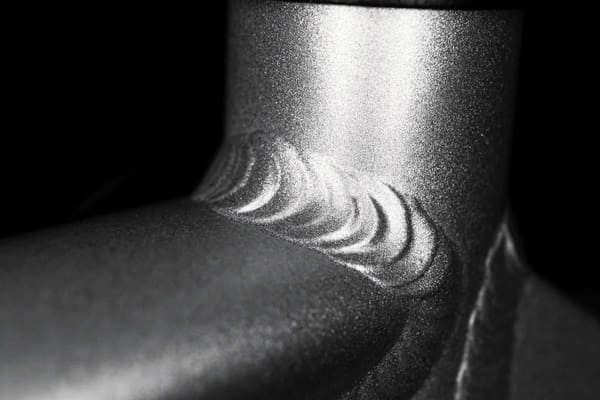
Welding of aluminum and aluminum alloys
The surface oxide film of aluminum and the absorption of a large amount of moisture can easily cause pores in the weld.
The requirements for the welding environment are mainly to prevent the generation of pores in the weld.
When the relative humidity is greater than 85% or the ambient temperature is low, the tendency of pores in the weld will increase sharply due to the condensed water absorbed by the groove, the surface of the welding wire and the inner wall of the gas pipeline.
Limit the relative humidity to less than 80%, and the ambient temperature should not be lower than 5℃.
If it exceeds the regulations, appropriate protective measures should be taken.
(Relative humidity and ambient temperature are measured within 500-1000mm from the weldment).
In outdoor construction, a windshield should generally be set up to prevent argon gas from being blown away during ammonia arc welding, which would affect the gas protection effect and enable the welding to proceed smoothly.
Before welding, the weld position should be strictly treated by chemical and mechanical methods.
The clear quality of the oxide film on the surface of the welding wire and the groove is very important to prevent defects such as pores and unfused welds.
The oil and oxide film within the range of 30-50mm of the groove are removed.
The cleaning sequence and method are as follows: Use organic solvents such as acetone or carbon tetrachloride to remove surface oil, and the cleaning range on both sides of the groove should not be less than 50mm.
The welding wire is also cleaned by chemical method.
Chemical cleaning is to soak in 5-10% sodium hydroxide solution at about 70℃ for 30-60 seconds, or soak in 5-10% sodium hydroxide solution at room temperature for 35J-falcon coins.
Then soak with about 15% HNO (normal temperature) for about 2 minutes and then wash with warm water.
Or rinse with cold water.
Then let it dry completely.
For welding wires that have been reliably surface treated and have not been oxidized or contaminated, the above treatment is no longer required and they can be used directly.
The cleaned groove and welding wire should not be contaminated before welding.
If there are no effective protective measures, welding should be carried out within 24 hours, otherwise it should be cleaned again.
The surface of the processed groove is flat, without burrs and flash.
The groove form is V-shaped, without blunt edges, and the groove angle is preferably 70-75°.
Butt welding of different wall thicknesses should have a transition section of 140mm.
The groove and the nearby surface can be filed, scraped, milled or cleaned with a stainless steel wire brush of about 0.2mm until the metallic luster is exposed.
The cleaning range on both sides should be no less than 30mm from the edge of the groove. The tools used should be degreased regularly.
Strengthen protection during welding to prevent oxidation.
When tungsten inert gas welding, use AC power to remove the oxide film through cathode cleaning.
When gas welding, use flux that removes the oxide film.
The flux used for gas welding is chlorides and fluorides of elements such as potassium, sodium, lithium, and calcium, which can remove the oxide film.
When welding thick plates, the welding heat can be increased.
For example, the helium arc has high heat, and helium or argon-helium mixed gas protection is used, or a large-scale melting electrode gas shielded welding is used.
In the case of direct current positive connection, cathode cleaning is not required.
The expansion coefficient of aluminum and aluminum alloys is about twice that of carbon steel and low-alloy steel.
The volume shrinkage rate of aluminum during solidification is large, and the deformation and stress of weldments are large.
Therefore, measures to prevent welding deformation are required.
When the aluminum welding molten pool solidifies, shrinkage cavities, shrinkage, thermal cracks and high internal stress are easily generated.
In production, measures to adjust the composition of welding wire and welding process can be adopted to prevent the occurrence of thermal cracks.
According to production experience, welding wire with a silicon content of 4.5% to 6% will have better crack resistance.
Aluminum has a strong ability to reflect light and heat.
There is no obvious color change when it changes from solid to liquid.
It is difficult to judge the melting state during welding.
The strength of high-temperature aluminum is very low, and it is difficult to support the molten pool, which is easy to cause collapse and burn-through.
The back pad method can be adopted to avoid the occurrence of this problem.
Aluminum and aluminum alloys can dissolve a large amount of hydrogen in liquid state, but almost do not dissolve in solid state.
In the process of solidification and cooling of the welding molten pool, hydrogen has no time to overflow, and hydrogen pores are easily formed.
The moisture in the arc column atmosphere, the moisture adsorbed by the oxide film on the surface of the welding material and the parent material are all sources of hydrogen in the weld.
Therefore, the source of hydrogen must be strictly controlled to prevent the formation of pores.
The groove processing adopts mechanical processing method.
The surface of the processed groove should be flat, without burrs and flash.
The groove form and size should be based on the joint type, parent material thickness, welding position, welding method, presence or absence of pads and use conditions.
The pad can be made of stainless steel, carbon steel, copper plate, graphite plate and other materials that have no adverse effect on the quality of the weld.
The misalignment should comply with the following regulations:
When the wall thickness S≤5 mm, b≤0.5 mm
When the wall thickness S>5 mm, b≤0.1 mm and b≤2 mm
When the wall thickness S≤5 mm, b≤0.5 mm
When the wall thickness S>5 mm, b≤0.1 mm and b≤2 mm
Weld ring b≤0.2 mm and b≤5 mm
The weldment pair can be spot welded outside the groove or spot fixed inside the groove.
When welding the positioning weld, the selected welding wire should match the parent material.
The positioning weld should have the appropriate length, spacing and height to ensure that it has sufficient strength and will not crack during the welding process.
If defects are found in the positioning weld, they should be handled in time.
For the root positioning weld as part of the formal weld, the black material and oxide film on its surface should also be removed, and the two ends should be trimmed into a gentle slope.
The parent material should not be damaged when removing the positioning plate.
After removal, the residual weld meat should be polished to be flush with the surface of the parent material.
A. Manual tungsten inert gas arc welding should use AC power supply.
Melting electrode argon arc welding should use DC power supply, and the welding wire should be connected to the positive electrode.
B. In order to reduce welding deformation, a reasonable welding method and sequence should be adopted.
Or rigid fixation, and the shrinkage margin should be considered in advance.
C. Before formal welding, a surfacing test can be carried out on the test plate, and the process parameters can be adjusted. After confirming that there are no pores, the formal welding can be carried out.
D. Under the condition of ensuring good penetration and fusion of the weld, high current and fast welding speed should be used as much as possible within the range allowed by the welding process regulations.
The lateral swing amplitude of the welding wire should not exceed three times its diameter.
E. If there is no special requirement, the weldment is not preheated before welding.
When multi-layer welding, the interlayer temperature should be as low as possible, preferably not higher than 100℃.
F. During tungsten inert gas welding, the end of the welding wire should not leave the argon protection area during welding, and the angle between the welding wire and the weld surface should be about 15° when feeding.
The angle between the welding gun and the weld surface should be maintained between 80° and 90°.
For vertical welding and horizontal welding positions with a thickness of not less than 4ram, when conditions permit, the bottom layer welding can adopt double-sided synchronous argon arc welding process.
G. During welding, the oxide film between the weld layers, excessive weld meat and other welding defects must be removed.
For double-sided welding or welds for bottom welding that require root cleaning, the weld root should be cleaned mechanically.
H. Aluminum arc starter plates and lead-out plates should be installed at both ends of the longitudinal weld.
After cleaning the arc pit of the longitudinal ring weld, it is also advisable to ignite the arc on the arc starter plate when continuing welding, and wait until the arc burns stably before welding.
I. When there are spatters attached to the nozzle that obviously hinder the flow of argon gas, the spatters must be removed or the nozzle must be replaced.
When the tungsten tip is contaminated or has an irregular shape, it must be repaired or replaced.
Surface cleaning and machining shall be carried out according to the methods 1.3 and 1.5 in Section 1 of this article.
Generally, when welding plates with a thickness of 3-4 mm, it is not necessary to make a crack, and one layer can be welded at a time.
When the plate thickness is 5-6 mm, a groove needs to be made, and single-sided welding and double-sided forming are required.
The strength of aluminum and aluminum alloys is very low at high temperatures, and the fluidity of liquid aluminum is good. Especially when welding by oxyacetylene gas welding, the temperature is high and the heating range is large, and the weld metal is prone to collapse.
When welding plates with a thickness of 3-4 mm, a pad needs to be added on the back, and the pad material can be made of carbon steel plate.
When the plate thickness is 5-6 mm, a groove needs to be made, and when welding single-sided welding and double-sided forming, a pad with a circular groove on the surface needs to be added on the back to ensure the reverse side forming.
The thickness of the pad material should be more than 12mm, and the pad should not be easily deformed when heated during welding.
No preheating is required for welding of 3-4mm thick aluminum plates.
When the plate thickness is 5-6mm, it can be appropriately preheated, but the temperature should not be too high, about 100℃ is sufficient.
When gas welding, use a flux that removes the oxide film.
The flux used for gas welding is chloride and fluoride of elements such as potassium, sodium, lithium, and calcium, which can remove the oxide film.
The welding wire should be selected to match the material of the aluminum bar.
Aluminum has a strong ability to reflect light and heat. There is no obvious color change when it changes from solid to liquid. It is difficult to judge the melting state during welding. The strength of high-temperature aluminum is very low, and it is difficult to support the molten pool, which is easy to cause collapse and burn-through.
When heating, the welding wire should be constantly moved on the surface of the weldment. Once melted, continuous welding should be performed immediately without pausing in the middle.
The welding speed should be fast, and the welding wire feeding speed should keep up. The welding nozzle should make a circular motion around the weld. While the welding wire is fed downward, it should be stirred in the tank to make the liquid metal uniform.
The residual flux and welding slag left in the weld and the vicinity after welding will destroy the passivation film on the aluminum surface, and sometimes corrode the aluminum parts, so they should be cleaned.
Generally, it can be cleaned by simple methods such as hot water flushing or steam blowing.
With the expansion of aluminum and aluminum alloy processing industry, welding technology is constantly improving and innovating. Users can choose different process methods according to production needs.
By fully understanding and understanding the characteristics and process methods of aluminum alloy materials and taking certain measures, the welding of aluminum alloy materials can be completed well.
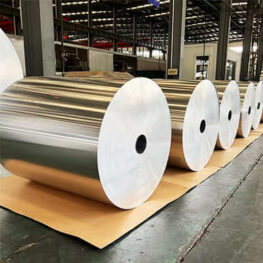
High-adhesion, corrosion-resistant 8011 gold hydrophilic aluminum foil for sealing, lamination, and HVAC applications.

The 3000 series rolled mirror aluminum plate is a premium aluminum product known for its exceptional reflectivity, durability, and versatility. It is widely used in industries where aesthetics and performance are critical.
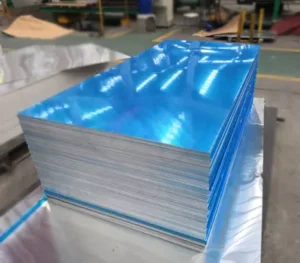
3105 Aluminum Sheet is adding some other elements on the basis of pure aluminum, such as cu, mg, si, mn, etc., the purpose is to improve the strength of aluminum alloy
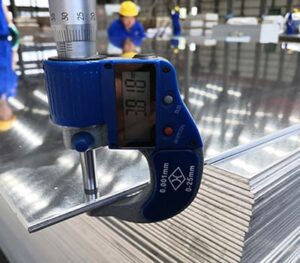
Among the various aluminum alloys available, the 2014 aluminum plate has carved a niche for itself, particularly in applications demanding high strength, excellent machinability, and resistance to fatigue.
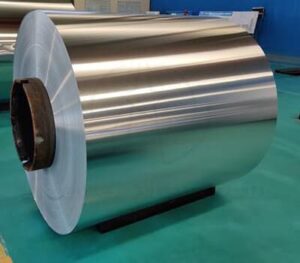
Huawei Aluminum is a large-scale 5052 aluminum foil raw material manufacturer, with 30 years of experience in aluminum foil production and sales.
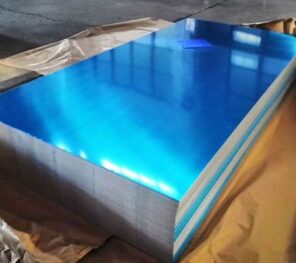
Discover marine grade 5086 H116 aluminum plate is trusted in shipbuilding, offshore structures, and seawater environments for its excellent corrosion resistance, weldability, and strength.
No.52, Dongming Road, Zhengzhou, Henan, China
Henan Huawei Aluminum Co., Ltd, One Of The Biggest Aluminum Supplier In China Henan,We Are Established In 2001,And We Have rich experience in import and export and high quality aluminum products
Mon – Sat, 8AM – 5PM
Sunday: Closed
© Copyright © 2023 Henan Huawei Aluminium Co., Ltd

Latest Comments
Dear Sir, Please offer your best FOB Prices specs are as under ALUMINIUM STRIP (AL=99.50% MIN) SIZE:450 X32 X6 MM. DIN EN 570 EN-AW 1050 A, QUANTITY=3400KG
Hello, Would you be so kind to offer item as follows: Coil 0,6х1250 (1000)mm EN AW-3105 5tons
Hello, Can you offer me Aluminium plates? Actally I need: 110mm x 1700mm x 1700mm 5083 H111 - 21 pcs Next year planed is 177 pcs
Świetny artykuł. Byłem zachwycony, że wyszukałem ten artykuł. Wielu osobom wydaje się, że mają rzetelną wiedzę na ten temat, ale często tak nie jest. Stąd też moje miłe zaskoczenie. Jestem pod wrażeniem. Zdecydowanie będę rekomendował to miejsce i częściej wpadał, aby zobaczyć nowe rzeczy.
requirement of aluminium strip