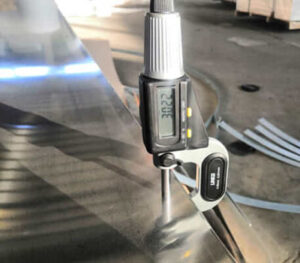
1050 Coated Aluminum Disc for Aluminum Tray — Food-Grade

Home » Applications » 1050 Coated Aluminum Disc for Aluminum Tray — Food-Grade

1050 Coated Aluminum Disc for Aluminum Tray delivers excellent formability, food-contact safety, and coating performance for ready-meal and ovenable trays.

1. Introduction

1050 Coated Aluminum Disc for Aluminum Tray is a blank—cut from commercially pure aluminum (Alloy 1050) and supplied with a functional surface coating—intended for forming into aluminum trays, lids and containers.

Its combination of exceptional ductility, excellent corrosion resistance, good thermal conductivity, and compatibility with food-grade coatings makes it a preferred substrate for drawn and deep-drawn trays used in food service, catering, pharmaceuticals and light industrial uses.

Aluminum Alloy 1050 (commercially pure, typically ≥99.5% Al) is widely used where formability, surface quality and corrosion resistance are central. In tray manufacture, the common production flow is: coil → blank disc → draw/form → trimming/finish.

Supplying discs already coated can simplify downstream operations (avoids post-forming coating steps), improve process yield and ensure consistent food-contact compliance.

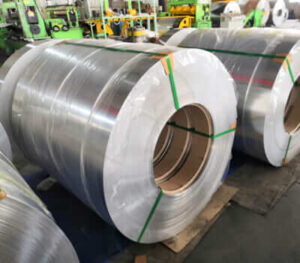
Aluminum Tray Used 1050 Coated Aluminum Disc

Aluminum Tray Used 1050 Coated Aluminum Disc

2. Properties of 1050 Coated Aluminum Disc

Chemical composition

1050 aluminum circle is a commercially-pure aluminium grade. The exact limits vary by standard and supplier; the table below shows typical composition ranges you will see on MTCs.

Element Typical content (wt.%)
Aluminium (Al) ≥ 99.5% (balance)
Iron (Fe) 0.20 – 0.40
Silicon (Si) ≤ 0.25
Copper (Cu) ≤ 0.05
Manganese (Mn) ≤ 0.05
Magnesium (Mg) ≤ 0.05
Zinc (Zn) ≤ 0.05
Titanium (Ti) ≤ 0.03
Others (each) trace

Specification note: require the supplier’s MTC with actual measured values and heat/lot traceability. Low copper and low alloy content are why 1050 has very good corrosion behaviour and is easy to qualify for food contact.

Mechanical properties

These values depend strongly on gauge and temper. Use supplier tensile coupons taken from the same coil/lot for final design.

Property Typical range (engineering guidance)
Tensile strength (UTS) ~70 – 120 MPa
Yield strength (0.2% proof) ~25 – 60 MPa
Elongation at break (A%) 20 – 40% (thicker/annealed material toward upper end)
Brinell hardness (HB) ~20 – 35 HB
Modulus of elasticity (E) ~69 GPa

Practical implications

  • Low yield and high elongation make 1050 forgiving in deep drawing; it tolerates substantial plastic reduction without cracking.
  • Tensile/yield vary by temper (O is softest; light strain hardening increases strength). Always specify temper if you need tighter forming limits.
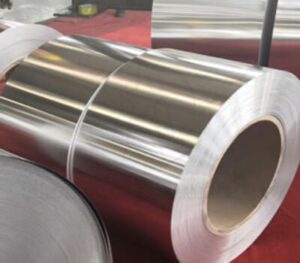
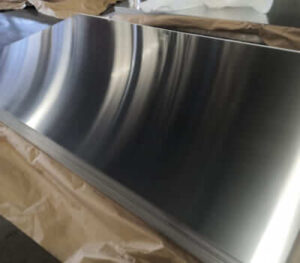
Mill Finished 1050 Aluminum Disc

Mill Finished 1050 Aluminum Disc

Ductility and formability

1050 is selected primarily because of its excellent ductility and formability — critical for deep-drawn trays.

Key formability characteristics and guidance

  • High elongation: enables single-draw depths and redraw operations with lower risk of fracture.
  • Typical single-draw ratio: ~1.6 – 2.2 (geometry dependent). Redraws and multi-stage forming increase achievable depth.
  • Thinning limits: expect local thickness reductions in drawn cups/trays; design geometry to keep local strain below the material’s forming limit. Validate with dome-testing or finite-element forming simulation.
  • Minimum recommended bend radius: depends on gauge and coating, but a conservative guideline is 0.5 – 2 × material thickness for coiled/blanked discs. For small radii run trials (coating may crack at tight bends).
  • Blank edge quality: burrs and nicks encourage tear initiation — specify burr height and edge radii for blanks.
  • Lubrication vs coating: coatings can act as part of the lubrication system for drawing, but do not rely on decorative/functional coatings alone for forming lubrication — specify forming lubricant if needed.

Essential physical properties

Property Typical value / note
Density 2.70 g·cm⁻³
Thermal conductivity ~230–235 W·m⁻¹·K⁻¹ (excellent heat transfer for ovenable trays)
Coefficient of thermal expansion (linear) ~23 × 10⁻⁶ /°C
Melting point (solidus) ~660 °C
Electrical conductivity ~50–65% IACS (alloy/temper dependent)
Surface oxide Natural Al₂O₃ passive film — chemically stable and thin

3. Manufacturing Process of 1050 Coated Aluminum Disc

Aluminum coil production and annealing

  • Casting & hot/cold rolling: mill casts slabs then reduces to final gauge by hot rolling followed by multi-pass cold rolling. Final gauge for tray discs typically ranges 0.20–1.50 mm. Cold reduction and mill schedule determine final temper and mechanical properties.
  • Annealing (softening): continuous (tandem) or batch annealing is applied to reach an annealed (O) condition or specified light temper. Typical industrial anneal ranges for commercially pure Al such as 1050 are ~300–420 °C held for a time sufficient to recrystallize and homogenize—actual setpoints depend on coil mass, line capability and desired temper. Aim to achieve targeted elongation and drawability while minimising scale and surface oxidation.
  • Pickling / scale removal: after anneal, mechanical brushing and/or light chemical pickling remove oxides and surface residues that would impair coating adhesion.
  • Coil leveling & tension control: final coil is leveled to remove camber/wave and spooled under controlled tension to prevent edge damage.

Surface Pre-treatment

This is arguably the most vital stage for ensuring the longevity and performance of the coating. An inadequately prepared surface will lead to poor adhesion and premature coating failure. The multi-step process is designed to create a chemically clean and stable substrate.

  1. Degreasing: The strip first passes through a series of spray or immersion tanks containing hot, alkaline cleaning agents. This process saponifies and removes any residual rolling oils, grease, and other surface contaminants left over from the aluminum mill.
  2. Rinsing: The strip is then thoroughly rinsed with water, often in multiple stages, to remove all traces of the cleaning solution. The final rinse is typically with deionized water to prevent any mineral deposits from forming on the pristine surface.
  3. Chemical Conversion Coating: After cleaning, the strip undergoes a chemical conversion process. This creates a microscopic, inert, inorganic layer on the aluminum. This layer serves two purposes:
    • It dramatically enhances coating adhesion by creating a more receptive surface with a larger microscopic surface area for the organic coating to bond with.
    • It provides an additional layer of under-film corrosion resistance, preventing any potential creep of corrosion should the topcoat ever be deeply scratched.
      Modern, environmentally compliant lines use chrome-free conversion coatings based on chemistries like zirconium or titanium.

Precision Coating Application

The prepared aluminum strip then enters a climate-controlled, cleanroom environment to prevent any dust or particles from contaminating the surface. The coating is applied via a continuous coil coating process.

  • Roll Coater: A high-precision machine called a roll coater is used. It consists of a series of rollers. A pickup roller draws the liquid coating from a tray, transfers it to a metered applicator roller, which then applies a perfectly uniform, thin film onto the moving aluminum strip.
  • Uniformity and Control: This method is superior to spraying as it allows for precise control over the coating thickness, which is typically specified between 15 and 25 microns (µm) with a tolerance of just ±1-2 µm. The application can be a single coat or a dual-coat system (primer and topcoat) depending on the required performance.
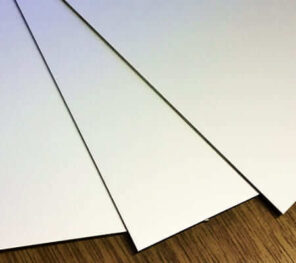
Huawei Color Coated Aluminum Disc

Huawei Color Coated Aluminum Disc

Thermal Curing

Immediately after the coating is applied, the strip travels directly into a long, multi-zone curing oven. This is not simply a drying process.

  • Polymerization: The controlled heat (typically a Peak Metal Temperature of 200°C to 260°C) initiates a cross-linking chemical reaction (polymerization) in the coating’s resin. This transforms the liquid film into a hard, durable, chemically inert, and flexible solid film that is permanently bonded to the aluminum.
  • Process Control: The oven’s length and the line speed (dwell time) are precisely calibrated to ensure the coating is fully cured—neither under-cured (too soft) nor over-cured (too brittle). After exiting the oven, the strip is cooled, often through a water quench system.

Blanking

Once the coated coil is cooled, it is ready to be cut into discs. It is fed into a high-speed mechanical press fitted with a precision blanking die.

This die, which is essentially a very sharp and robust circular punch, stamps out the discs from the continuously moving strip at a very high rate.

The scrap material, known as the “web” or “skeleton,” is automatically chopped and collected for immediate recycling, making the process highly material-efficient.

5. Performance: corrosion, chemical resistance & food safety

Corrosion resistance

  • Intrinsic: 1050 is highly corrosion-resistant in air and many food environments due to its purity and stable oxide film.
  • Coating role: coatings protect cut edges and improve resistance in acidic/alkaline/ salty conditions (e.g., ready meals). Conversion coatings reduce undercut corrosion at edges.

Chemical compatibility

  • Food acids & fats: typical aluminum base acceptable; selected coatings create a barrier to prevent flavor transfer and discoloration.
  • Cleaning agents: coatings should be tested against common sanitizers (chlorine, quaternary ammonium, peracetic acid) to ensure no blistering or loss of adhesion.

Food safety and migration

  • Regulatory compliance: coatings must be formulated and tested to meet applicable food contact regulations (FDA, EU/EFSA, GB, etc.). This typically involves overall migration and specific migration tests on representative conditions (temperature, food simulants, time).
  • Low-migration lacquers with documented toxicology are mandatory for trays intended to contact ready-to-eat meals.

Ovenability and thermal performance

  • Tray coatings for oven use must withstand short high-temperature cycles without decomposition, smoke, or off-odors. Typical bake cycle ratings are specified (e.g., 200°C for up to 60 minutes) and should be validated with real-world tests.
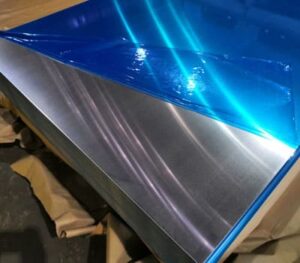
1050 Coated Aluminum Disc Display

1050 Coated Aluminum Disc Display

6. Applications of 1050 Coated Aluminum Disc for Aluminum Tray

1050 coated aluminum discs are the starting point for a wide range of formed trays and related products. Their combination of extreme formability, good surface finish and compatibility with a broad palette of coatings makes them suitable across foodservice, medical, industrial and decorative markets.

Ready-meal & retail food trays

Why 1050 discs fit

  • Excellent drawability for deep, complex tray shapes.
  • High thermal conductivity ensures even heating and rapid cooling.
  • Compatible with low-migration heat-seal lacquers and ovenable enamels.

Typical disc & coating choices

  • Gauge: 0.25–0.50 mm (single-use microwaveable often 0.25–0.35 mm).
  • Coating: single- or double-sided food-grade heat-seal lacquer (DFT 1–6 µm) for lidding; ovenable enamel (5–15 µm) for trays rated for baking.
  • Sealant requirements: seal strength ≥ 1.0–2.0 N/25 mm (specify per sealant system).

Catering, bakeware & reusable trays

Why 1050 discs fit

  • Good for light reusable trays and sheets where release properties or non-stick coatings are needed. 1050’s formability supports heavier gauges for reusability.

Typical disc & coating choices

  • Gauge: 0.6–1.2 mm (stiffer tray or reusable sheet).
  • Coating: PTFE/silicone release or robust enamel for repeated bake cycles; thicker dry film may be required.
  • If reusability is required, specify abrasion resistance and thermal endurance.
1050 Coated Aluminum Disc Applications

1050 Coated Aluminum Disc Applications

Pharmaceutical & medical trays

Why 1050 discs fit

  • High surface purity enables reliable coating adhesion and sterilization tolerance. Good formability produces complex, nestable trays with predictable geometry.

Typical disc & coating choices

  • Gauge: 0.20–0.8 mm depending on application (blister backs usually thin; instrument trays thicker).
  • Coating: inert, sterilization-resistant coatings: epoxy-phenolic or specialized inert lacquers compatible with autoclave, gamma or ETO sterilization.
  • Biocompatibility and extractables data are required.

Bakery & industrial cook-and-serve trays

Why 1050 discs fit

  • With ovenable coatings, 1050 trays can handle high short-term temperatures and provide good browning and heat transfer.

Typical disc & coating choices

  • Gauge: 0.35–0.8 mm.
  • Coating: high-temperature enamel or silicone/enamel hybrid rated for 180–230 °C short cycles.
  • Consider non-stick topcoats when foods tend to adhere.

Luxury & decorative serving trays

Why 1050 discs fit

  • 1050 takes decorative varnish and printing well; formability enables ornate shapes and embossed designs.

Typical disc & coating choices

  • Gauge: 0.20–0.6 mm (thin for wrapping, thicker for serving).
  • Coating: pigmented varnishes, metallic lacquers, protective clear coats. May be single- or double-sided depending on design.
  • Special finishes: metallic effect pigments, soft-touch overcoats or spot UV varnish on moldings.

Industrial and specialty trays

Why 1050 discs fit

  • For non-food trays that still need formability and surface coating (e.g., screens, parts holding trays), 1050 provides low-cost, easily formed substrate.

Typical disc & coating choices

  • Gauge: 0.2–1.0 mm.
  • Coating: functional — anti-static, conductive, corrosion protective, or durable protective paints.

7. Advantages of 1050 Coated Aluminum Disc for Aluminum Tray

  • Exceptional formability: 1050’s high elongation reduces cracking and enables higher single-draw ratios. Typical practical single-draw ratio for 1050 discs is ~1.6–2.2 depending on geometry and lubrication; redraws extend achievable depth.
  • Surface quality: smooth, bright surfaces that accept coatings, printing and varnishes well.
  • Corrosion resistance: base metal resists uniform corrosion; coatings block aggressive foods and sanitizers.
  • Thermal performance: excellent heat transfer for uniform cooking and rapid heating/cooling.
  • Food safety adaptability: easy to qualify with food-grade coatings; many low-migration chemistries designed for 1050 substrates.
  • Recyclability: aluminum substrate is fully recyclable; choice of coating affects recyclability pathway—single-material coatings or separable films are preferred.

8. Comparison with Other Aluminum Alloys

Parameter 1050 3003 3105 5052 5182 6061
Typical chemistry / role Pure Al (≥99.5%) Al–Mn Al–Mn Al–Mg Al–Mg Al–Mg–Si
Density (g·cm⁻³) 2.70 2.73 2.73 2.68 2.68 2.70
Typical UTS (MPa) 70–120 110–200 120–200 200–290 230–320 310–380
Typical 0.2% proof (MPa) 25–60 50–120 60–130 120–220 140–260 240–320
Elongation (A%) 20–40 10–35 8–25 8–18 6–16 8–12
Formability (deep draw) Excellent Very good Very good Good Good Poor
Corrosion resistance Excellent (general) Very good Very good Excellent (esp. marine) Very good Moderate
Weldability Excellent Excellent Excellent Good Good Good (HAZ softens)
Typical tray-use fit Deep-draw disposable trays Heavier-duty trays Strength-balanced trays Strong / reusable trays High-strength drawn parts Not suitable for deep-drawn trays
Relative material cost Low–moderate Moderate Moderate Moderate–higher Higher Higher

9. Conclusion

1050 Coated Aluminum Disc for Aluminum Tray applications represent a well-balanced solution where formability, surface quality, food safety, and cost efficiency must converge.

Owing to its commercially pure aluminum composition, 1050 alloy offers outstanding ductility and deep-draw capability, enabling the efficient production of complex tray geometries with high forming yields and low scrap rates.

1050 aluminum discs deliver reliable corrosion protection, chemical resistance, and compliance with stringent food-contact regulations.

These coatings not only enhance functional performance—such as heat sealing, ovenability, or release behavior—but also contribute to consistent aesthetics and extended service life under realistic processing and storage conditions.

FAQs About 1050 Coated Aluminum Disc for Aluminum Tray

Q1 — What thickness of 1050 disc should I choose for a typical microwaveable meal tray?
For single-use microwaveable trays, gauges between 0.25–0.40 mm are commonly used; choose thicker gauges when greater stiffness or stack strength is required.

Q2 — Are coatings applied before or after forming?
Both approaches are used. Coil-coating then blanking is efficient for high volume; blank-then-coat can provide better edge coverage. Coating before forming reduces handling but requires that the cured film be flexible enough to survive drawing.

Q3 — What temperature can a coated 1050 tray withstand in an oven?
It depends on coating chemistry. Ovenable lacquer systems are typically rated for short cycles up to ~200–230 °C, but always validate the exact system and perform real bake tests (smoke/odor, adhesion, and migration).

Q4 — How do I ensure food-safety compliance?
Require supplier documentation of migration tests and positive lists for all coating components (per FDA, EU, or local regulations). Specify representative test conditions (time, temperature, food simulants).

Q5 — How does coating affect recyclability?
Thin, low-additive coatings that incinerate or separate readily are preferable. Heavy polymer laminates or multi-material constructions complicate aluminum recycling. If recycling into metal stream is mandatory, require coatings certified as compatible with the metal recycling process or design for mechanical separation.
Leave a Reply

Your email address will not be published. Required fields are marked *

Latest Comments

  • AKBAR SAJJAD Said:
    Dear Sir, Please offer your best FOB Prices specs are as under ALUMINIUM STRIP (AL=99.50% MIN) SIZE:450 X32 X6 MM. DIN EN 570 EN-AW 1050 A, QUANTITY=3400KG
  • Sviatlana Kapachenia Said:
    Hello, Would you be so kind to offer item as follows: Coil 0,6х1250 (1000)mm EN AW-3105 5tons
  • MILES Said:
    Hello, Can you offer me Aluminium plates? Actally I need: 110mm x 1700mm x 1700mm 5083 H111 - 21 pcs Next year planed is 177 pcs
  • Fotograf Said:
    Świetny artykuł. Byłem zachwycony, że wyszukałem ten artykuł. Wielu osobom wydaje się, że mają rzetelną wiedzę na ten temat, ale często tak nie jest. Stąd też moje miłe zaskoczenie. Jestem pod wrażeniem. Zdecydowanie będę rekomendował to miejsce i częściej wpadał, aby zobaczyć nowe rzeczy.
  • kishor wagh Said:
    requirement of aluminium strip
  • Hot Products

    This is our best selling products

    Aluminum foil alloy 5052

    5052 Aluminum Foil

    Huawei Aluminum is a large-scale 5052 aluminum foil raw material manufacturer, with 30 years of experience in aluminum foil production and sales.

    6061-T6 Aluminum Floor Plate

    6061-T6 Aluminum Floor Plate

    6061-T6 Aluminum floor plate, commonly known as “diamond plate” or “tread plate”, is an excellent candidate for most processing techniques and both interior and exterior applications.

    5083 H116 Marine Grade Aluminium Sheet

    5083 H116 Marine Grade Aluminium Sheet

    5083 H116 marine grade aluminium sheet offers outstanding seawater corrosion resistance, high strength-to-weight ratio, and excellent weldability for marine and offshore structures.

    5052 H32 Aluminum Checkered Plate display

    5052 H32 Aluminum Checkered Plate

    Discover the benefits of 5052 H32 aluminum checkered plates. Lightweight, corrosion-resistant, and anti-slip design ideal for flooring, ramps, vehicles, and marine projects.

    3mm-aluminum-sheet-thickness

    3mm aluminum sheet

    3mm aluminum sheet refers to an aluminum sheet with a thickness of 3mm, and 3mm is a common thickness of aluminum sheet

    High Temperature Resistant Coated Aluminum Foil

    High Temperature Resistant Coated Aluminum Foil

    High temperature resistant coated aluminum foil delivers excellent heat stability, durable protection, and reliable performance for demanding applications.

    Our Office

    No.52, Dongming Road, Zhengzhou, Henan, China

    HWALU

    Henan Huawei Aluminum Co., Ltd, One Of The Biggest Aluminum Supplier In China Henan,We Are Established In 2001,And We Have rich experience in import and export and high quality aluminum products

    Opening Hours:

    Mon – Sat, 8AM – 5PM

    Sunday: Closed

    Get In Touch

    No.52, Dongming Road, Zhengzhou, Henan, China

    +86 181 3778 2032

    [email protected]

    Leave a Reply

    Your email address will not be published. Required fields are marked *

    © Copyright © 2023 Henan Huawei Aluminium Co., Ltd

    Call Us

    Email Us

    Whatsapp

    Inquiry