Discover 1235 flexible packaging aluminum foil with ≥99.35% aluminum, excellent ductility, and reliable barrier performance for pouches, sachets, food packaging, and laminated structures.
1235 Flexible Packaging Aluminum Foil is a high-purity 1xxx-series aluminum foil widely used as a barrier layer in flexible packaging.
Its excellent ductility, flexibility, corrosion resistance, and thin-gauge processing capability make it suitable for demanding packaging and converting processes.
In flexible packaging, 1235 foil helps protect products from light, moisture, oxygen, and external contamination.
It is commonly supplied in the annealed O temper and can be laminated with materials such as PET, PE, CPP, or paper to create multilayer packaging structures.
ASTM B479 covers annealed aluminum foil for flexible barrier and packaging applications and includes alloy 1235 within its scope.
The standard also recognizes foil used directly or laminated with paper and plastic films.
The final packaging performance depends not only on the 1235 alloy but also on foil thickness, pinhole control, surface quality, laminate structure, and sealing performance.
1235 aluminum foil belongs to the 1xxx series of commercially pure aluminum alloys.
The alloy contains a minimum aluminum content of approximately 99.35%, with relatively small amounts of other elements.
This composition gives 1235 a useful combination of ductility, corrosion resistance, and foil-processing capability.
Unlike heat-treatable aluminum alloys, 1235 relies primarily on cold working and annealing to obtain the required mechanical condition.
For flexible packaging, the O temper is particularly common because the fully annealed condition provides the softness and ductility needed for thin foil converting.
The high aluminum content also supports a clean, uniform metallic surface, which is important when the foil becomes part of a printed, coated, or laminated packaging structure.

Huawei 1235 Aluminum Foil Jumbo Roll
Flexible packaging requires a foil substrate that can be produced at very low thickness while maintaining consistent mechanical and surface quality.
1235 is well suited to this requirement because it can be rolled into thin gauges and processed into narrow or wide rolls according to the needs of packaging equipment.
Its high ductility allows the foil to withstand bending, folding, slitting, and lamination without unnecessary cracking.
This characteristic becomes increasingly important as foil thickness decreases.
The soft O temper is particularly useful when the packaging structure requires the aluminum layer to conform closely to the surrounding polymer or paper layers.
Commercial 1235-O flexible packaging products are commonly supplied in thin gauges and are used after lamination for food and other packaging applications.
The primary function of aluminum foil in flexible packaging is usually barrier protection, rather than structural strength.
A continuous aluminum layer can provide very strong resistance to the transmission of light, moisture, oxygen, and aroma compared with many polymer films.
This makes aluminum foil valuable when the packaged product is sensitive to environmental exposure.
However, the performance of a finished flexible package does not depend on the alloy alone.
Foil thickness, pinhole quality, laminate structure, adhesive system, polymer layers, sealing performance, and converting quality all contribute to the final barrier performance.
Therefore, 1235 foil should be considered as one functional layer within an engineered packaging structure rather than as a complete package by itself.
1235 aluminum foil is often laminated with materials such as polyethylene, polypropylene, polyester, or paper to create a multilayer packaging structure.
For example, a simplified structure may use:
PET / Aluminum Foil / PE
In this structure, each layer performs a different function. PET can provide printability and mechanical support, the aluminum foil provides the main barrier layer, and PE can provide heat-sealing capability.
ASTM B479 recognizes this type of application by allowing aluminum foil to be supplied as-is or subsequently laminated with paper or plastic films.
This multilayer approach allows packaging manufacturers to balance barrier performance, mechanical strength, sealability, printability, and cost rather than relying on aluminum foil alone.
1235 aluminum foil contains a minimum of 99.35% aluminum, supporting good ductility, corrosion resistance, and thin-gauge rolling performance.
1235-O foil offers excellent ductility for slitting, folding, laminating, printing, and other converting processes.
Its soft condition helps the foil maintain flexibility during high-speed packaging operations.
Aluminum foil provides an effective barrier against light, moisture, oxygen, and odors.
When properly laminated and sealed, it helps protect sensitive products and maintain package quality.
A clean and uniform surface is important for printing, coating, and lamination.
Proper control of scratches, stains, oil residues, and other surface defects supports stable downstream processing.
1235 can be rolled into very thin foil for flexible packaging applications.
ASTM B479 covers annealed aluminum foil from 0.0064 mm to less than 0.15 mm, including 1235 alloy.
1235 aluminum foil can be incorporated into multilayer structures with PET, PE, CPP, paper, and other packaging materials.
The final performance depends on foil thickness, pinhole control, surface quality, laminate design, and sealing conditions.
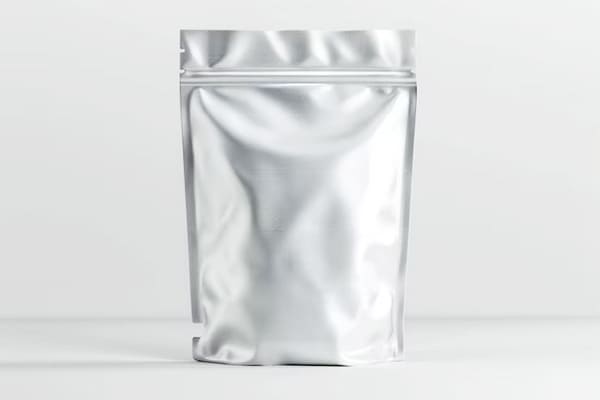
1235 Flexible Packaging Aluminum Foil
1235 flexible packaging aluminum foil is commonly supplied in the O temper (annealed condition), which provides the flexibility and ductility required for thin-gauge packaging, laminating, slitting, and other converting processes.
| Parameter | 1235 Flexible Packaging Aluminum Foil |
| Alloy | 1235 |
| Aluminum Content | ≥ 99.35% |
| Temper | O (Annealed) |
| Thickness | 0.0064–<0.15 mm under ASTM B479; commercial range is application-dependent |
| Width | Customized according to customer requirements |
| Product Form | Jumbo roll / slit roll |
| Surface | Mill finish; clean and uniform |
| Pinhole Control | According to agreed packaging specification |
| Core ID | Commonly 76 mm or 152 mm; customizable |
| Applicable Standard | ASTM B479/B479M and agreed customer specifications |
| Processing | Slitting, laminating, coating, printing and converting |
1235 is a high-purity aluminum alloy with a minimum aluminum content of 99.35%.
Its relatively simple chemical composition supports the ductility and foil-processing characteristics required for thin-gauge applications.
| Element | Maximum / Minimum (%) |
| Aluminum (Al) | ≥ 99.35 |
| Silicon + Iron (Si + Fe) | ≤ 0.65 |
| Copper (Cu) | ≤ 0.05 |
| Manganese (Mn) | ≤ 0.05 |
| Magnesium (Mg) | ≤ 0.05 |
| Zinc (Zn) | ≤ 0.10 |
| Titanium (Ti) | ≤ 0.06 |
| Vanadium (V) | ≤ 0.05 |
| Other Individual Elements | ≤ 0.03 |
These values are representative 1235 composition limits used in common foil specifications.
The applicable standard and purchase specification should govern the final chemical limits.

1235 Flexible Packaging Foil for Snack
The mechanical properties of 1235 aluminum foil depend strongly on temper, thickness, rolling conditions, and annealing practice.
For flexible packaging, 1235-O is commonly selected because its soft condition provides good flexibility and converting performance.
Representative commercial data for thin 1235-O packaging foil are shown below:
| Thickness Range | Tensile Strength | Elongation |
| 0.006–0.009 mm | 60–80 MPa | >0.5% |
| >0.009–0.020 mm | 60–80 MPa | >1.0% |
| >0.020–0.030 mm | 60–80 MPa | ≥1.0% |
These figures are representative product data rather than universal values for every 1235 foil product.
Actual properties should follow the applicable standard and agreed purchase specification.
For comparison, other commercial 1235-O foil specifications report tensile strength ranges of approximately 40–100 MPa, with elongation increasing with foil thickness.
This illustrates why mechanical properties should always be evaluated together with the specified gauge and test method.
For flexible packaging, tensile strength is important for maintaining web stability during production, while elongation indicates how well the foil can tolerate deformation without cracking.
The soft 1235-O condition provides a useful balance for:
Higher strength is not necessarily better for this application. Excessively hard foil can reduce flexibility and may not provide the forming characteristics required by a particular laminate structure.
| Physical Property | Typical Value |
| Density | Approx. 2.70 g/cm³ |
| Thermal Conductivity | Approx. 230 W/m·K |
| Coefficient of Thermal Expansion | Approx. 23 µm/m·K |
| Melting Range | Approx. 645–655°C |
These are typical reference values for 1235 aluminum and can vary slightly with material condition and data source.
For flexible packaging, density, ductility, thin-gauge processability, and barrier performance are generally more relevant to material selection than thermal properties.
The final specification should therefore focus on the parameters that directly affect rolling, converting, lamination, and package performance.

Aluminum foil Slitting
1235 aluminum foil provides an effective barrier against light, moisture, oxygen, odors, and external contaminants.
In flexible packaging, it is commonly used as the aluminum barrier layer within a multilayer structure.
The foil thickness is selected according to the required barrier performance, flexibility, converting process, and final package design.
Proper control of thickness and pinholes is particularly important for packaging applications.
1235 aluminum foil is often laminated with polymer films or paper to combine barrier performance with sealing, printing, and mechanical properties.
Common structures include:
The exact structure depends on the product, filling process, sealing temperature, shelf-life requirements, and packaging equipment.
Bare aluminum foil provides excellent barrier performance, but a laminate can add heat-sealing capability, printability, mechanical protection, and improved handling.
1235 foil can therefore serve as the functional barrier layer while PET, PE, CPP, paper, or other materials provide complementary properties.
The final packaging performance depends on the complete laminate structure rather than the aluminum foil alone.

Chocolate Packaging Uesd 1235 Aluminum Foil
1235 aluminum foil is used as a barrier layer in various food packaging structures.
Its ability to block light, moisture, oxygen, and odors helps protect sensitive products during storage and transportation.
Typical applications include food pouches, sachets, snack packaging, dry-food packaging, and multilayer barrier bags.
Laminated aluminum foil is widely used for small-format packaging that requires strong barrier protection and compact packaging structures.
1235 foil can be incorporated into sachets and pouches for products such as powders, sauces, seasonings, instant foods, and other moisture- or oxygen-sensitive products.
Aluminum foil can function as a barrier layer in selected beverage and dairy packaging structures.
It helps protect the packaged product from light and external moisture while supporting extended storage requirements.
The final material structure should be selected according to the product characteristics, filling process, sealing method, and applicable food-contact requirements.
Aluminum foil is commonly used in tobacco packaging because of its barrier properties and compatibility with laminated packaging structures.
1235 foil can be processed into thin-gauge packaging material and combined with paper or polymer layers to provide light, moisture, and aroma protection.
High-purity aluminum foil can also be used in pharmaceutical and healthcare packaging structures where protection from moisture, light, oxygen, and contamination is important.
However, pharmaceutical packaging requires tighter control of material specifications, surface quality, pinholes, cleanliness, and converting performance.
The final foil specification should therefore follow the applicable packaging and regulatory requirements.
Aluminum foil is also suitable for selected cosmetic and personal-care packaging applications.
Its barrier properties help protect sensitive formulations from light, moisture, and external contamination.
Typical applications include sachets, sample packs, refill pouches, and laminated flexible packaging.

1235 Flexible Packaging Aluminum Foil for Medicine
Slitting converts jumbo aluminum foil rolls into narrower rolls according to the customer’s required width.
Accurate slitting helps maintain consistent roll dimensions, clean edges, and stable performance during subsequent lamination, printing, and packaging operations.
1235 aluminum foil can be laminated with materials such as PET, PE, CPP, and paper to create multilayer flexible packaging structures.
The lamination process must provide consistent adhesive bonding and minimize defects that could affect barrier performance or package integrity.
For printed packaging, the foil surface may be laminated or coated with a suitable printing layer before or after converting, depending on the packaging structure.
Good surface cleanliness and uniformity help support ink adhesion, print quality, and consistent appearance.
Coating can provide additional functional properties to aluminum foil, including improved printability, heat sealing, protection, or compatibility with other packaging layers.
The coating system should match the intended application, converting process, and final packaging requirements.
Embossing creates a controlled surface pattern on aluminum foil.
Although not required for every flexible packaging application, it can be used where the packaging design or converting process requires a textured surface.
Embossing parameters should be controlled carefully to avoid excessive deformation or damage to the foil.
Quality control is critical for 1235 aluminum foil used in flexible packaging.
Consistent alloy composition, thickness, surface quality, and pinhole control help ensure stable performance during lamination, printing, and converting.
The chemical composition should meet the specified requirements for 1235 aluminum alloy.
Standard 1235 aluminum typically contains 99.35% minimum aluminum.
Chemical analysis helps verify alloy consistency and maintain stable processing performance.
Consistent foil thickness is essential for stable converting and barrier performance.
Key inspection items include:
ASTM B479-19 covers annealed aluminum foil from 0.0064 mm to less than 0.15 mm.
Actual commercial thickness should be specified according to the application and customer requirements.
Pinhole control is one of the most important quality factors for flexible packaging foil.
Excessive or oversized pinholes can reduce the effective barrier performance of the foil.
Pinhole requirements should be determined according to foil thickness, packaging structure, application, and customer specifications.
The foil surface should remain clean and uniform to support subsequent lamination, coating, printing, and converting.
Typical inspection items include:
For 1235-O foil, tensile strength and elongation can be tested to verify material consistency and converting performance.
The required mechanical properties should follow the applicable standard or agreed purchase specification because values can vary with thickness, temper, and product specification.
Finished rolls should be inspected for winding quality, core dimensions, roll stability, and external packaging.
Proper packaging helps protect aluminum foil from moisture, contamination, mechanical damage, and deformation during storage and transportation.
1235, 8011, and 8079 are commonly used aluminum alloys for foil production, but their compositions and typical applications differ.
| Parameter | 1235 Aluminum Foil | 8011 Aluminum Foil | 8079 Aluminum Foil |
| Series | 1xxx | 8xxx | 8xxx |
| Aluminum Content | ≥99.35% | Lower than 1235 | Lower than 1235 |
| Typical Temper | O | O, H18, etc. | O, H18, etc. |
| Ductility | Excellent | Good | Excellent |
| Strength | Relatively low | Moderate | Moderate |
| Thin-Gauge Processing | Excellent | Excellent | Excellent |
| Flexibility | Excellent | Good | Excellent |
| Typical Applications | Flexible packaging, barrier foil | Packaging, pharmaceutical and household foil | Flexible packaging, pharmaceutical and specialty foil |
| Key Selection Factor | Purity and ductility | Strength and processing balance | Ductility and forming performance |
1235 aluminum foil is a high-purity aluminum foil with excellent ductility, flexibility, and thin-gauge processing capability.
These properties make it suitable as a barrier layer in various flexible packaging structures.
Its performance depends on more than alloy composition. Foil thickness, temper, surface quality, pinhole control, mechanical properties, lamination structure, and converting conditions all affect the final packaging performance.
For packaging manufacturers and converters, selecting the appropriate 1235 foil specification and maintaining consistent quality can help achieve stable lamination, printing, converting, and barrier performance.
1235 aluminum foil is commonly used as a barrier layer in flexible packaging, including pouches, sachets, food packaging, tobacco packaging, and selected healthcare and cosmetic packaging.
1235 aluminum alloy typically contains at least 99.35% aluminum, with the remaining elements controlled according to the applicable alloy specification.
O temper (annealed) is commonly used because it provides high ductility and flexibility for thin-gauge foil processing.
ASTM B479-19 covers annealed aluminum foil from 0.0064 mm to less than 0.15 mm. Actual supply thickness depends on the application and customer specification.
Yes. 1235 foil can be laminated with materials such as PET, PE, CPP, and paper to create multilayer flexible packaging structures.
1235 has a higher aluminum content and is commonly associated with high purity and ductility, while 8011 uses controlled alloying additions to provide a different balance of strength and processing performance.
Pinhole control is critical because pinholes can reduce the effective barrier performance of aluminum foil. Requirements should be established according to foil thickness, packaging structure, and application.
Yes. Manufacturers can typically customize thickness, width, roll dimensions, core size, surface requirements, and packaging according to the customer’s converting and packaging requirements.
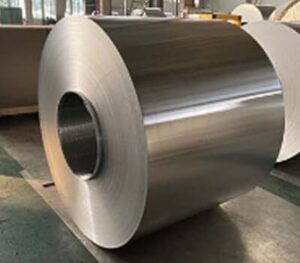
3105 aluminum coil is a 3000 series aluminum alloy: the main alloying addition is manganese, which is formulated for primary forming into forged products.
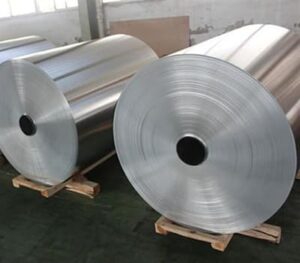
Composite aluminum foil is a functional material composed of aluminum foil and other materials. It has various properties such as antioxidant, heat resistance, corrosion resistance, and heat insulation
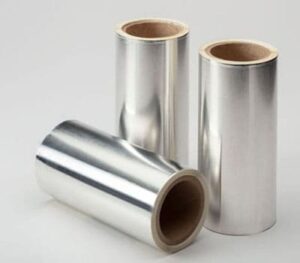
Electronic aluminum foil is a kind of aluminum foil processed by a series of rolling, cleaning and cutting processes of high-purity aluminum ingots. It is a key raw material for the production of aluminum electrolytic capacitors.

High barrier coated aluminum foil 30 µm engineered for lidding, retort and pharmaceutical laminates — tight gauge control, low pinhole counts and predictable seal mapping for high-speed converters.
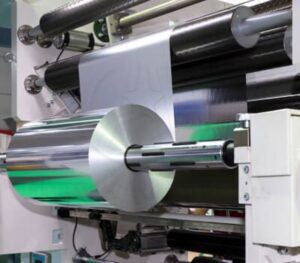
Heavy duty aluminum foil provides extra strength and tear resistance. Many cooks use it for baking, grilling, and storage. Most foil rolls marked "heavy duty" are between 0.0008" and 0.001" thick, which is roughly 0.02032-0.0254mm in national units
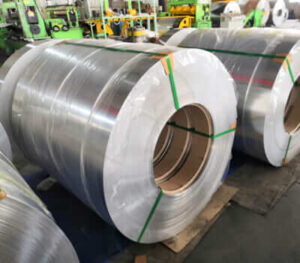
1050 aluminum strips belongs to the family of commercially pure malleable 1000 series alloys, and the aluminum is 99 pure. 5%, with excellent molding processing characteristics, high corrosion resistance, good electrical and thermal conductivity.
No.52, Dongming Road, Zhengzhou, Henan, China
Henan Huawei Aluminum Co., Ltd, One Of The Biggest Aluminum Supplier In China Henan,We Are Established In 2001,And We Have rich experience in import and export and high quality aluminum products
Mon – Sat, 8AM – 5PM
Sunday: Closed
© Copyright © 2023 Henan Huawei Aluminium Co., Ltd

Latest Comments
Dear Sir, Please offer your best FOB Prices specs are as under ALUMINIUM STRIP (AL=99.50% MIN) SIZE:450 X32 X6 MM. DIN EN 570 EN-AW 1050 A, QUANTITY=3400KG
Hello, Would you be so kind to offer item as follows: Coil 0,6х1250 (1000)mm EN AW-3105 5tons
Hello, Can you offer me Aluminium plates? Actally I need: 110mm x 1700mm x 1700mm 5083 H111 - 21 pcs Next year planed is 177 pcs
Świetny artykuł. Byłem zachwycony, że wyszukałem ten artykuł. Wielu osobom wydaje się, że mają rzetelną wiedzę na ten temat, ale często tak nie jest. Stąd też moje miłe zaskoczenie. Jestem pod wrażeniem. Zdecydowanie będę rekomendował to miejsce i częściej wpadał, aby zobaczyć nowe rzeczy.
requirement of aluminium strip