3003 PE Coated Aluminum Coils for Fire Truck

Home » Applications » 3003 PE Coated Aluminum Coils for Fire Truck

Premium 3003 PE coated aluminum coil for fire truck bodies, offering excellent corrosion resistance, weather durability, and lightweight strength.

Table Of Contents Show

Introduction

In the world of emergency response, every detail matters. The construction of fire trucks requires materials that combine light weight, durability, corrosion resistance, and the ability to hold up under demanding environmental conditions. Among the leading options is the 3003 aluminum family, particularly when paired with a protective polyethylene (PE) coating. The term 3003 PE Coated Aluminum Coil for Fire Truck denotes a coil of 3003 alloy aluminum that has been pre-painted or pre-coated with a PE layer, optimized for manufacturing fire truck panels, compartments, and body skins. This combination delivers a compelling balance of formability, strength, and long-term performance under the unique stressors faced by fire service vehicles.

This in-depth article explores the science, applications, and practical considerations behind 3003 PE Coated Aluminum Coil for Fire Truck.

We will examine alloy chemistry, coating technologies, mechanical properties, manufacturing processes, and the ways in which this material supports safety, reliability, and lifecycle cost reduction for public safety fleets.

Throughout, we will provide data-driven comparisons, procurement guidance, case-study insights, and supplier context, including a close look at Huawei Aluminum as a leading supplier in this space.

The goal is to empower engineers, fleet managers, and procurement teams with a clear understanding of why 3003 PE coated coil is a strong candidate for fire truck skin panels and related components, as well as how to select and specify this material for optimal performance.

Understanding 3003 Aluminum and PE Coatings

The 3003 aluminum series is among the most widely used non-heat-treatable alloys for applications that demand excellent formability, high corrosion resistance, and good strength for their weight class.

When a PE coating is applied to the coil, the resulting material becomes a ready-to-run feedstock for automotive and vehicle-body fabrication, reducing the need for extra paint lines and providing an additional protective barrier against abrasion and weathering.
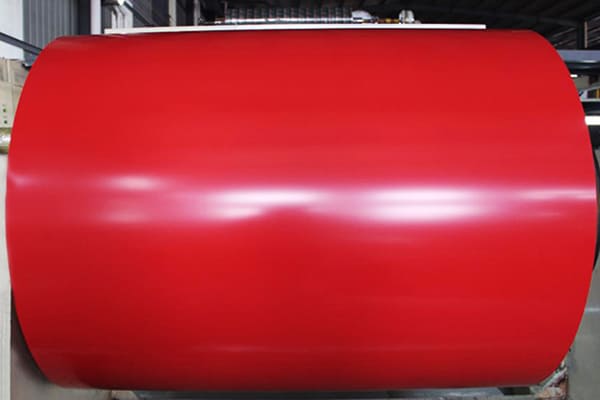
Alloy fundamentals: what makes 3003 suitable for fire truck panels

  • Composition and temper: The 3003 alloy is primarily aluminum with a manganese alloying addition. It is commonly produced in work-hardened tempers such as H14 or H24, where strength is enhanced without sacrificing formability. The typical composition yields a balance of ductility and resistance to deformation, which is crucial for the complex curves and stampings of fire truck skins.
  • Formability and bendability: 3003 exhibits excellent drawability and bendability, enabling large panel parts to be formed with radii that accommodate complex shapes—an essential feature for vehicle bodies with aerodynamic lines and high-curvature panels that must resist denting and damage from road debris or minor impacts.
  • Corrosion resistance: The manganese content in 3003 enhances corrosion resistance in diverse environments, from urban pollutants to road salt. While bare aluminum already offers good corrosion resistance, applying a PE coating further enhances protection by forming a barrier against moisture ingress and chemical exposure.
  • Cost and availability: 3003 is widely produced and cost-effective relative to higher-strength alloys. For fire trucks where weight and cost must be balanced with durability, 3003 provides a practical middle ground, especially when paired with a protective PE layer.
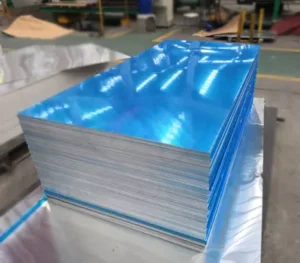
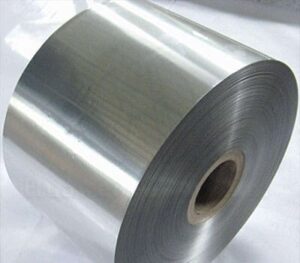
Fire Truck Used Aluminum Coil Display

Fire Truck Used Aluminum Coil Display

PE coating: functions and benefits

  • Protective barrier: PE coating acts as a primary protective layer against scratches, UV exposure, and environmental contaminants. It helps minimize surface abrasion during service and maintenance.
  • Surface uniformity: PE coatings on coils yield uniform surface finishes that translate into consistent paintable or wrap-ready surfaces downstream. This is particularly valuable for fleet operators seeking consistent aesthetics and color matching.
  • Impact and wear resistance: The coating enhances resistance to minor abrasions and chips that can occur during vehicle operation in tight urban spaces or during refueling and vehicle checks.
  • Compatibility and processing: PE-coated coils are designed to be easily machined, punched, riveted, and assembled into panels, while maintaining coating integrity at typical manufacturing temperatures. This reduces the risk of coating delamination near fastener holes and cut edges.
  • Environmental and safety considerations: PE coatings can be formulated to meet indoor air quality standards and to minimize volatile organic compound (VOC) emissions during curing and subsequent processing.

Where the 3003 PE coated coil fits in a fire truck production workflow

  • Coil-to-panel conversion: The pre-coated coil is slit, cleaned, and cut into sheets or panels used for the cab, body sides, doors, and rear sections. The pre-coated surface reduces the need for post-paint steps in many assembly lines, accelerating production and reducing finish variation.
  • Assembly compatibility: The PE surface can be bonded or mechanically fastened with rivets and sealants, depending on the design. The coating’s surface energy can support improved adhesion of protective tapes, sealants, or decals used in life-safety markings.
  • Maintenance and lifecycle: Over the vehicle’s life, PE coatings can help guard against minor scratches and corrosion, reducing repaint cycles and maintenance downtime. When the time comes for body repairs or panel replacements, the availability of pre-coated coil stock can shorten lead times.

Key properties of 3003 PE Coated Aluminum Coil for Fire Truck

Property 3003 (H14/H24 Temper, Bare) PE-Coated Variant (Typical)
Tensile Strength (MPa) 130–160 Similar to bare; coating does not significantly alter the core metal strength
Yield Strength (MPa) 110–140 Similar to bare; coating provides protection rather than structural enhancement
Elongation at Break (%) 12–20 Similar to bare; coating has minimal impact on ductility
Coating Thickness (µm) N/A 20–60 µm typical for PE-coated aluminum coils
Formability Excellent Comparable to bare aluminum; careful handling near edges is recommended
Corrosion Resistance High Enhanced by the PE coating and surface pretreatment
Weight Impact Low (lightweight aluminum) Minimal increase due to the thin PE coating
Cost (vs. Steel/Stainless Steel) Lower Slightly higher because of the coating process, while remaining cost-effective compared to stainless steel
Fire Resistance (Surface) Passive (not flame retardant) PE coating is not flame-retardant; fire-rated substrates should be used where required

Note: Values vary by temper, thickness, coating supplier, and processing route. Always verify with your material supplier for exact specifications.

Applications in Fire Trucks and Public Safety Vehicles

3003 PE coated coil for fire truck skins, door panels, cab shells, side panels, and various storage compartments.

The high formability of 3003 combined with a durable PE coating supports both the aesthetic and functional requirements of public safety vehicles.
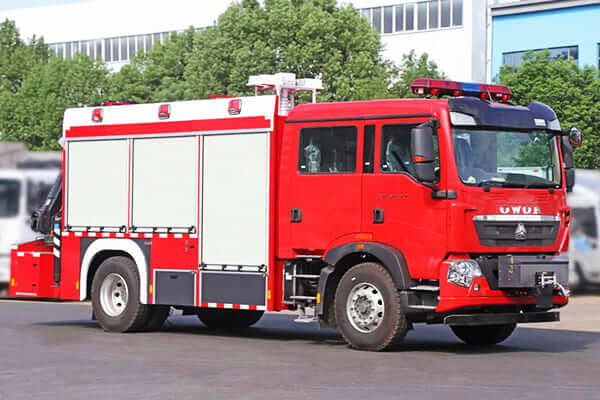
Front and rear cab panels

  • Curved surfaces: The excellent formability of 3003 allows designers to achieve smooth, aerodynamic front and rear cab panels with tight radii. The PE layer preserves the surface during handling and installation.
  • Impact resistance: While aluminum is inherently durable, the PE coat adds an outer layer that helps resist scratches and minor dents from road debris and during maintenance.

Side panels and doors

  • Large-format panels: Fire trucks use long, continuous panels to mask seams and euro-welt joints; 3003’s ductility supports efficient stamping and reduces springback in large parts.
  • Accessibility and maintenance: The PE layer aids cleaning and simplifies the application of reflective decals and safety markings, reducing time to complete the vehicle’s exterior livery.

Storage compartments and equipment bays

  • Abrasion and exposure protection: Compartments experience frequent access and potential contact with tools. PE-coated coils provide abrasion resistance and keep paint or wraps from flaking easily, preserving the vehicle’s protective coating system.

Compatibility with other materials

  • Bonding to sealants and adhesives: The smooth, uniform surface of PE-coated aluminum enables effective bonding of gaskets, seals, and protective tapes used in fire truck assemblies.
  • Paint and wrap integration: While the PE coating provides a good base, many fleets still use color-matched wraps or coatings for branding. The coating should be considered in design to ensure compatibility with subsequent finishing layers.
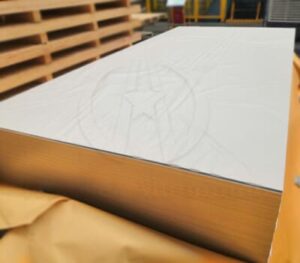
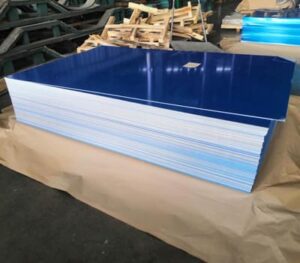
3003 PE Coated Aluminum Coil for Fire Truck
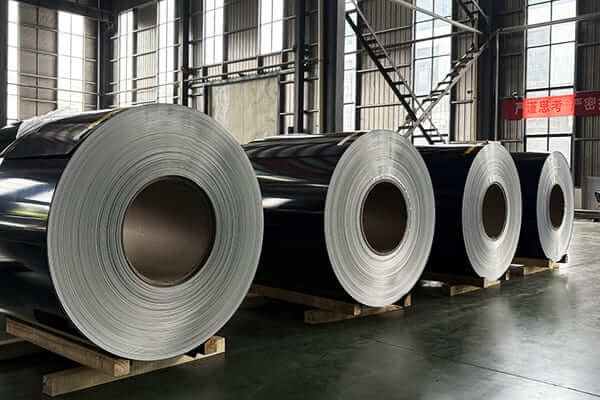
3003 PE Coated Aluminum Coil for Fire Truck

Material Properties and Performance: In-Depth Analysis

Mechanical properties and how they translate to field performance

  • Strength-to-weight balance: The 3003 alloy’s strength is sufficient for exterior panels that must resist minor impacts, while the aluminum’s lightness contributes to overall vehicle performance, including speed, maneuverability, and fuel efficiency.
  • Formability and fatigue: Fire trucks operate in dynamic environments. The ductility of 3003 reduces the risk of cracking under repeated bending and vibration, while the PE coating provides a protective interface that remains flexible enough to accommodate small deformations.
  • Fatigue behavior: Although aluminum alloys are susceptible to fatigue under cyclic stresses, the smooth surface finish and protective PE layer help mitigate crack initiation sites, contributing to longer panel life.

Coating performance: adhesion, UV resistance, and durability

  • Adhesion integrity: The adhesion of PE coatings to aluminum relies on surface pretreatment and process control. Proper surface cleaning and micro-etching enable robust adhesion, reducing the risk of coatings peeling at panel edges.
  • UV exposure: The PE coating is designed to resist UV-induced degradation, helping maintain appearance and protection in sun-exposed fleets. UV stabilizers and antioxidants in the polymer matrix contribute to color retention and gloss stability.
  • Abrasion and impact: Field abrasion from debris and service tools is common. A well-chosen PE coating can absorb some impact energy and resist micro-scratches that would otherwise compromise aesthetics and corrosion protection.

Post-fabrication performance: welding, riveting, and mounting

  • Edge integrity: Coated edges can be prone to edge-chipping if not protected during fabrication. Proper edge finishing and careful handling during cutting and punching are essential.
  • Fastening compatibility: The coating should not worsen washer bite or fastener seating. Coatings that are too soft can creep under fasteners; thus, selecting a coating formulation with adequate hardness and thickness is crucial.
  • Reworkability: In repair scenarios, panels may need to be replaced or refinished. The availability of pre-coated coils allows rework to proceed with minimal disruption to the existing finish.

Corrosion resistance in harsh environments

  • Salt spray and urban pollutants: The aluminum substrate offers inherent corrosion resistance, while the PE coating provides an added barrier. Combined, they deliver high resistance to corrosion in salt-laden environments seen in winter road treatment and coastal areas.
  • Thermal cycling: Fire trucks operate across a range of temperatures. Aluminum’s dimensional stability, combined with a flexible PE layer, helps maintain coatings during thermal cycling without cracking or delaminating.
Huawei Black PE Coated Aluminum Coil

Huawei Black PE Coated Aluminum Coil

Processing and Manufacturing: From Coil to Component

Raw material and coating supply chain

  • Alloy supply: 3003 aluminum ingots are refined and cast into coils with consistent chemical composition. Tolerances are controlled to ensure uniform mechanical properties across batches.
  • PE coating line: Coils pass through a coating line where PE resin is extruded and fused onto the metal surface. The process includes surface pretreatment, extrusion, curing, and cooling to form a uniform, defect-free coating.
  • Quality control: Inline inspection checks coating thickness, adhesion, surface defects, and dimensional tolerances. End-of-line sampling verifies mechanical properties and coating integrity.

Surface pretreatment and pretreatment options

  • Cleaning and degreasing: Essential to remove oils, waxes, and other contaminants prior to coating.
  • Conversion coatings: Aluminum may receive a chromate or non-chromate conversion layer to improve adhesion of the coating and corrosion resistance. Depending on environmental and regulatory requirements, non-chromate alternatives may be preferred.
  • Surface roughness: Achieving a consistent surface roughness aids coating adhesion and reduces the risk of delamination at punched and cut edges.

Coating thickness, performance, and customization

  • Standard thickness ranges: For fire truck panels, PE coating thickness typically ranges from 20 to 60 microns. Thinner coatings offer flexibility for forming but may have reduced abrasion resistance; thicker coatings improve protection but can impact formability slightly.
  • Customization: Some fleets require specific color or UV-stabilized formulations. Suppliers can tailor the coating with color-matching and UV protection enhancements to meet branding and longevity requirements.

Fabrication and assembly considerations

  • Cutting and punching: Post-coating cutting must be done carefully to avoid chips at the cut edges that can initiate corrosion or peel on the coating.
  • Fastening method selection: Rivets and mechanical fasteners require edge sealing and careful guidelines to ensure the coating isn’t compromised during installation.
  • Joining with other materials: When combining PE-coated aluminum with plastic, rubber, or steel components, engineers should consider differential expansion and potential galvanic effects.

Supplier Spotlight: Huawei Aluminum

Huawei Aluminum is a prominent supplier in the aluminum ecosystem, known for its integrated supply chain, technical expertise, and commitment to quality.

In the context of 3003 PE coated coils for fire trucks, Huawei Aluminum offers:

  • Comprehensive product range: A variety of aluminum coil products in the 3003 family, with temper options tailored for extrusion, stamping, and forming.
  • PE-coated coil capability: In-house coating lines or tightly integrated partner lines that deliver reliable PE-coated coils with consistent coating thickness and surface quality.
  • Quality systems: ISO-certified processes with robust QA/QC protocols, including incoming material inspection, process controls, and final product testing to meet stringent customer requirements.
  • R&D and collaboration: Strong engineering support for customization, test protocols, and design-for-manufacturing collaboration to optimize Panel geometry and coating performance.
  • Supply reliability: A track record of dependable delivery schedules and scalable production to support large fleet programs and mass production for emergency vehicles.
  • Sustainability focus: Initiatives to reduce environmental impact, including efficient energy use, waste reduction, and adherence to environmental standards in the supply chain.

Company overview

Huawei Aluminum, headquartered in China, has grown into a global supplier of aluminum sheet, coil, and related products.

Its operations cover smelting, rolling, finishing, and coating for a broad range of industries, including transportation and automotive.

The company emphasizes customer-centric innovation, compliance with quality standards, and a culture of continuous process improvement.

This makes Huawei Aluminum a credible partner for fire truck manufacturers seeking reliable supply of 3003 PE coated coils, as well as other aluminum products that meet high-performance requirements.

R&D and quality assurance

  • Product development: Huawei Aluminum maintains an active R&D program focused on alloy optimization, coating technics, and coating-adhesion improvements to match the demanding needs of public-safety fleets.
  • Testing and certification: The company adheres to internationally recognized test standards, performing mechanical testing, corrosion testing, and coating adhesion testing to validate performance under field conditions.
  • Certifications: ISO 9001 quality management is typical, with additional certifications that demonstrate environmental stewardship and health and safety focus in manufacturing.

Comparative Analysis: 3003 PE Coated Aluminum Coil vs Alternatives

In procurement and design, it is valuable to compare 3003 PE coated coils against alternative alloys and finishes to determine the best match for a fire truck program.

The following table provides a concise comparison across several dimensions critical to vehicle skin panels and storage components.

Comparative overview of material options for fire truck panels

Material option Core alloy / temper Key advantages Typical disadvantages Suitable uses in fire trucks
3003 PE coated coil 3003-H14/H24; PE coating 20–60 µm Excellent formability; good corrosion resistance; economical; ready-to-fabricate coated surface Lower strength than higher-strength alloys; careful edge handling required Cab skins, door panels, side panels, and storage compartments needing durable exterior with a protective coating
5052-H32 (uncoated or painted) 5052-H32 Higher strength than 3003; excellent corrosion resistance; good fatigue performance Heavier than 3003; more costly to process for large panels Higher-stress panels, internal components requiring strength without sacrificing formability
6061-T6 (uncoated) 6061-T6 Superior strength; excellent machinability; good corrosion resistance Less formable than 3003; higher cost; more brittleness in some forming conditions Structural components and high-load panels where stiffness is critical
Painted aluminum (pre-painted, PE-coated alternative) Various alloys with paint; PE-coated variants Uniform finish; simplified assembly in some lines Paint can chip; coating delamination risk if not properly prepared Aesthetic panels and areas requiring consistent color and branding
Stainless steel (for extreme wear zones) 304/316 stainless steel Superior corrosion resistance and impact resistance Heavier, expensive, harder to form and machine High-wear zones, edge protection, protective louvers in contact areas
Aluminum with PVDF coating Any suitable aluminum alloy Excellent UV resistance and color stability; long-lasting finish Higher coating cost; PVDF may be stiffer Regions requiring premium finishes and color range with long service life

Notes:
– The table uses generalizations; exact performance depends on temper, coating composition, process controls, and service environment.
– 3003 PE coated coil tends to be the most cost-efficient option among coated aluminum solutions while delivering excellent formability for vehicle skin panels.

FAQs

What is the main advantage of using 3003 PE coated aluminum coil for fire truck?

The primary advantages are excellent formability, good corrosion resistance, the added protection and surface uniformity of the PE coating, and a favorable cost-performance balance compared to higher-strength alloys or steel.

How does the PE coating affect maintenance and repair?

The PE coating acts as a shield against minor abrasion and moisture ingress. During maintenance, panels with sturdy coatings can be cleaned easily, and the coating layer helps protect the underlying aluminum. For damaged areas, repair strategies typically involve patching or replacing coated panels, supported by the availability of pre-coated coil stock for rapid replacement.

Are there performance trade-offs for using 3003 in terms of strength?

Yes, 3003 has lower strength than higher-strength alloys like 5052, 6061, or stainless steel. However, for exterior panels that require high formability and reliable corrosion protection, 3003 provides the right balance. For high-load structural components, engineers may opt for stronger alloys or thicker panels, possibly with different coatings.

What about the coating thickness? How thick should the PE layer be?

Typical PE coating thickness ranges from 20 to 60 microns. The exact thickness depends on environmental exposure, mechanical protection needs, and manufacturing tolerances. Thicker coatings offer better protection but can slightly affect stamping and forming; thus, the design must balance coating thickness with formability.

How does Huawei Aluminum fit into the supply chain for 3003 PE coated coils?

Huawei Aluminum is a recognized supplier with capabilities in alloy production, coating, and quality assurance. They offer a portfolio that includes 3003 alloys with PE coatings and support for large-scale fleet programs, backed by QA processes and certifications. Working with such suppliers helps ensure consistent quality, traceability, and timely delivery for fire truck programs.

Is the PE coating safe for outdoor exposure and high-temperature conditions?

Modern PE coatings are designed for outdoor exposure, offering UV resistance and weather durability. They are not flame retardant themselves; for fire trucks, it’s important to consider the entire finishing system, including protective seals and any approved coatings for areas with higher heat exposure. The coating should be matched to the service environment, ensuring adequate performance across expected temperature ranges.

Can 3003 PE coated coils be used for retrofits and panel replacements?

Yes. The availability of pre-coated coils simplifies retrofitting and panel replacement. For repairs or refurbishments, suppliers can provide reinforced or upgraded coatings that meet current design standards, reducing downtime and facilitating consistent fleet appearance.

What tests should be performed to qualify 3003 PE coated coils for a new fire truck program?

Recommended tests include coating adhesion (cross-hatch or pull-off tests), coating thickness verification, corrosion testing (e.g., accelerated salt spray exposure), impact resistance assessments, and dimensional inspections to ensure tolerances are within design specifications. Supplier-specific test protocols should be documented and traced to the program’s QA requirements.

Conclusion

The 3003 PE coated aluminum coil represents an attractive option for fire truck skin panels, door sheets, and body components.

It offers a strong combination of formability, corrosion resistance, and surface protection that aligns well with the demanding requirements of public safety vehicles.

The PE coating provides an added layer of protection against scratches, UV exposure, and environmental contaminants, supporting longer service life and lower maintenance costs.

For manufacturers and fleet operators, the material offers practical procurement and manufacturing benefits: reduced post-paint cycles, consistent surface quality, and the potential for faster production lines.

When coupled with a reliable supplier like Huawei Aluminum, the supply chain becomes more robust, enabling consistent quality, scalable production, and better lifecycle planning.

As you consider material options for 3003 PE coated coils in fire trucks, keep the following priorities in mind: performance under field conditions, ease of fabrication and assembly, sustainment of aesthetics and branding, and total cost of ownership over the vehicle’s life.

With careful specification and a thoughtful supplier partnership, 3003 PE coated coils can deliver the reliability, efficiency, and safety outcomes that public safety fleets demand.

Share with PDF: Download
Leave a Reply

Your email address will not be published. Required fields are marked *

Latest Comments

  • AKBAR SAJJAD Said:
    Dear Sir, Please offer your best FOB Prices specs are as under ALUMINIUM STRIP (AL=99.50% MIN) SIZE:450 X32 X6 MM. DIN EN 570 EN-AW 1050 A, QUANTITY=3400KG
  • Sviatlana Kapachenia Said:
    Hello, Would you be so kind to offer item as follows: Coil 0,6х1250 (1000)mm EN AW-3105 5tons
  • MILES Said:
    Hello, Can you offer me Aluminium plates? Actally I need: 110mm x 1700mm x 1700mm 5083 H111 - 21 pcs Next year planed is 177 pcs
  • Fotograf Said:
    Świetny artykuł. Byłem zachwycony, że wyszukałem ten artykuł. Wielu osobom wydaje się, że mają rzetelną wiedzę na ten temat, ale często tak nie jest. Stąd też moje miłe zaskoczenie. Jestem pod wrażeniem. Zdecydowanie będę rekomendował to miejsce i częściej wpadał, aby zobaczyć nowe rzeczy.
  • kishor wagh Said:
    requirement of aluminium strip
  • Hot Products

    This is our best selling products

    Huawei 5086 aluminum sheet

    5086 Aluminum Sheet

    5086 aluminum sheet is a high-strength, corrosion-resistant al-mg alloy, widely used in aerospace, transportation, architectural decoration and other fields.

    honeycomb aluminum panel

    Aluminum Honeycomb Panel

    Aluminum honeycomb panels are a type of composite material inspired by the hexagonal honeycomb structure found in nature. These panels are renowned for their lightweight, high strength, and versatility, making them a popular choice in various industries, from construction to aerospace.

    thick aluminum palte

    Thick aluminum plate sheet

    In general, aluminum sheet that is thicker than 6mm (0.25 inches) is considered to be thick.

    3004 Aluminum Coil

    3004 Aluminum Coil

    3004 aluminum coil is an aluminum-manganese alloy, which is the most widely used anti-rust aluminum. The strength of this alloy is not high. It is similar to 3003 alloys with about 1% magnesium added.

    1100 aluminum sheet

    1100 Aluminum Sheet

    1100 aluminum sheet is one of the representatives of the 1 series pure aluminum plate, and it is also the most widely used alloy.

    8011 Grade Cookware Aluminum Circles

    8011 Grade Cookware Aluminum Circles

    High-quality 8011 grade cookware aluminum circles offer excellent formability, stable performance, and dependable results for kitchenware production.

    Our Office

    No.52, Dongming Road, Zhengzhou, Henan, China

    HWALU

    Henan Huawei Aluminum Co., Ltd, One Of The Biggest Aluminum Supplier In China Henan,We Are Established In 2001,And We Have rich experience in import and export and high quality aluminum products

    Opening Hours:

    Mon – Sat, 8AM – 5PM

    Sunday: Closed

    Get In Touch

    No.52, Dongming Road, Zhengzhou, Henan, China

    +86 181 3778 2032

    [email protected]

    Leave a Reply

    Your email address will not be published. Required fields are marked *

    © Copyright © 2023 Henan Huawei Aluminium Co., Ltd

    Call Us

    Email Us

    Whatsapp

    Inquiry