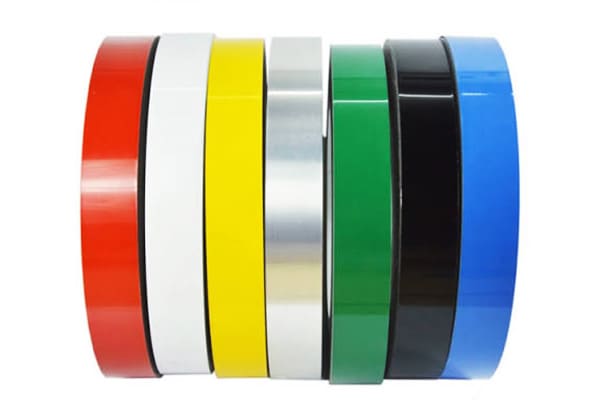
Color coated aluminum strips are widely used in modern manufacturing, construction, decorative products, and industrial components that require a combination of lightweight construction, corrosion resistance, and consistent surface appearance.
By applying a protective and decorative coating to an aluminum strip, manufacturers can obtain a material that combines the inherent advantages of aluminum with enhanced surface performance and flexible design options.
Compared with untreated aluminum strips, color coated aluminum strips offer greater freedom in color selection, surface finish, and visual consistency.
Depending on the coating system, they can also provide improved resistance to weathering, moisture, and surface contamination.
These characteristics make them suitable for applications where both functional performance and appearance are important.
Another important advantage is their compatibility with continuous manufacturing processes.
Color coated aluminum strips can be slit to specified widths and supplied in coils for stamping, bending, roll forming, and other downstream operations.
This helps manufacturers improve production efficiency while maintaining consistent material quality.
As an aluminum manufacturer and supplier, Henan Huawei Aluminum Co., Ltd. provides aluminum materials for different industrial and commercial applications.
When sourcing color coated aluminum strips, buyers should evaluate the complete product specification, including substrate properties, coating requirements, dimensional tolerances, and quality-control procedures, rather than focusing solely on price or appearance.
Color Coated Aluminum Strips By Huawei
Color coated aluminum strips are narrow aluminum products with a pre-applied colored or functional coating on one or both surfaces.
They are generally manufactured from rolled aluminum sheet or coil, followed by surface pretreatment, coating application, curing, and slitting to the required width.
The aluminum substrate provides the material’s basic mechanical properties, including strength, weight, corrosion behavior, and formability.
The coating creates the desired surface color and finish while providing additional protection according to its formulation and thickness.
Unlike aluminum strips that are painted after fabrication, pre-coated strips receive their coating before many downstream forming operations.
This allows manufacturers to process consistently coated material into finished components, provided that the selected coating can withstand the intended bending, stamping, or forming conditions.
A typical color coated aluminum strip consists of several functional layers. The exact structure varies according to the application and coating system.
The base material determines the strip’s thickness, strength, ductility, and basic corrosion resistance. Common choices include 1050, 1060, 1100, 3003, 3105, and 5052, depending on the application.
Surface cleaning and chemical pretreatment help prepare the aluminum for coating. A suitable pretreatment improves adhesion and supports corrosion protection.
The primer supports adhesion and corrosion protection, while the topcoat provides the specified color, gloss, texture, and surface durability. Some products use different or simplified coating structures.
A backing coat may protect the reverse surface or meet application-specific requirements. A removable protective film may also be applied to reduce scratches during handling and installation.
The coating structure should be specified according to the final application. For example, an exterior architectural component may require stronger weathering resistance, while a strip intended for indoor decorative parts may prioritize appearance, flexibility, and cost.
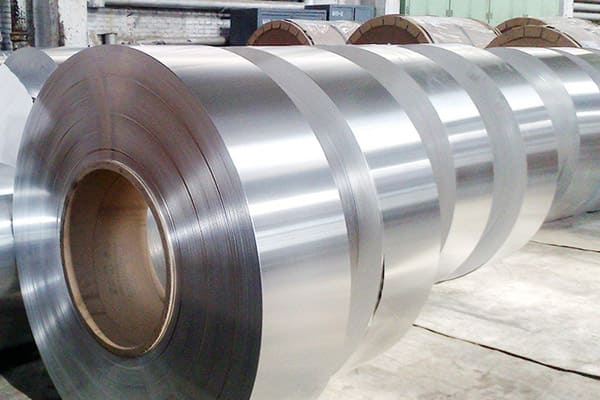
Huawei 1050 Aluminum Strips
The aluminum alloy and temper determine the substrate’s strength, ductility, formability, and corrosion resistance.
For color coated aluminum strips, these properties must be considered together with coating flexibility and the intended manufacturing process.
A strip used for deep bending or stamping generally requires different mechanical properties from one designed for rigid decorative components or structural profiles.
Therefore, alloy selection should begin with the finished product’s functional requirements.
The following alloys are potential choices for color coated aluminum strips.
Final suitability depends on the required mechanical properties, coating process, and application.
| Aluminum alloy | Main characteristics | Typical application considerations |
|---|---|---|
| 1050 | High aluminum purity, good ductility, and excellent electrical and thermal conductivity | General-purpose formed components and decorative strips |
| 1060 | High conductivity, good corrosion resistance, and good formability | Electrical components and selected industrial strips |
| 1100 | Good corrosion resistance and formability | General fabrication and decorative applications |
| 3003 | Manganese-alloyed, with better strength than commercially pure aluminum grades | Building components, formed parts, and general industrial applications |
| 3105 | Commonly used for building products and coated aluminum applications | Architectural trim, roofing accessories, and formed components |
| 5052 | Magnesium-alloyed, offering relatively high strength and good corrosion resistance | Components requiring greater strength and environmental durability |
Temper designations describe the material’s processing condition and resulting properties.
For color coated aluminum strips, the temper affects how the substrate responds to bending, stamping, stretching, and other forming operations.
| Temper | General characteristics | Selection considerations |
|---|---|---|
| O | Annealed, generally soft, with high ductility | Suitable for applications requiring extensive forming |
| H14 | Strain-hardened and partially annealed to a defined strength level | Suitable for applications requiring a balance of strength and formability |
| H16 | Strain-hardened to a higher strength level than H14 within the applicable alloy system | Consider when greater rigidity is required |
| H18 | Fully hard strain-hardened condition | Generally suited to applications where higher strength is prioritized over extensive forming |
| H24 | Strain-hardened and partially annealed | Offers a balance of strength and formability in suitable alloys |
These designations are not interchangeable across all alloys. Actual tensile strength, yield strength, and elongation depend on the alloy, product thickness, applicable standard, and specific temper definition.
In particular, H18 should not automatically be selected for a tightly bent strip. Its higher strength may be beneficial, but reduced ductility can increase the risk of cracking during forming.
The coating must also be capable of accommodating the deformation without cracking, peeling, or losing adhesion.
The best combination depends on the finished component rather than on the alloy name alone.
For highly formed components: Consider a suitable O temper or another formable temper. Evaluate elongation, bend radius, forming direction, and coating flexibility before production.
For general architectural and decorative strips: Alloys such as 3003 and 3105 may be suitable where moderate strength, forming performance, and a consistent coated surface are required.
For components requiring greater strength: Consider suitable tempers of 3003, 3105, or 5052, subject to the required mechanical properties and forming limits.
For electrical applications: High-purity grades such as 1050 and 1060 may be relevant when conductivity is a primary requirement. The coating and electrical contact requirements must be assessed separately.
Before placing a bulk order, buyers should confirm the alloy designation, temper, thickness, tensile properties, elongation, and minimum acceptable forming radius.
Trial bending or forming tests can help verify the compatibility of the substrate and coating.
The coating system determines the appearance, weather resistance, corrosion protection, and formability of color coated aluminum strips.
The right choice depends on the application, operating environment, processing requirements, and budget.
PE coating is a cost-effective option that offers a wide range of colors and finishes.
It provides good decorative performance and suitable flexibility for many general-purpose applications.
PVDF coating offers excellent weathering resistance and good long-term color and gloss retention in suitable coating systems.
It is commonly selected for aluminum strips exposed to sunlight, moisture, and changing weather conditions.
FEVE is a fluoropolymer coating system known for its weatherability and decorative versatility.
Depending on the formulation, it can provide good color retention and a range of gloss levels.
Epoxy coatings provide strong adhesion and resistance to many chemicals.
They are commonly used as primers beneath compatible topcoats or in specialized industrial coating systems.
Polyurethane coatings offer formulation-dependent flexibility, surface hardness, and abrasion resistance.
They can be considered for decorative or industrial applications requiring specific surface properties.
Laminated aluminum strips use a bonded polymer film to achieve specific colors, patterns, textures, or surface effects.
The film can provide a distinctive appearance that conventional paint coatings may not easily reproduce.
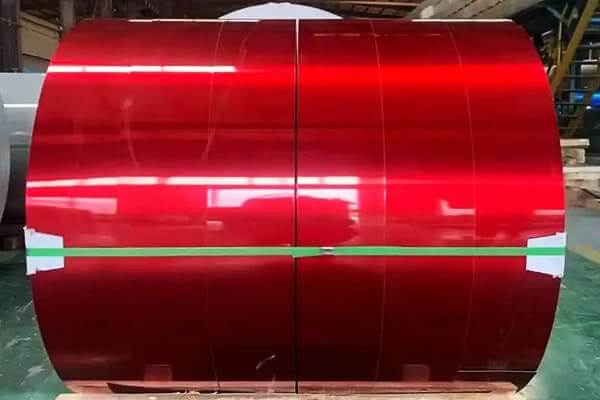
Huawei Red 3003 Aluminum Strips Display
The manufacturing process of color coated aluminum strips involves substrate preparation, surface pretreatment, coating application, curing, slitting, and final inspection.
Each stage affects the coating adhesion, surface appearance, and dimensional accuracy of the finished product.
Production begins with aluminum coils made from suitable alloys, such as 1050, 1060, 3003, 3105, or 5052.
The substrate is selected according to the required strength, formability, thickness, and application.
Before coating, the aluminum surface is inspected for scratches, oil contamination, and other defects.
The aluminum strip is cleaned to remove rolling oils, dust, and contaminants.
Chemical pretreatment may then be applied to improve coating adhesion and corrosion protection.
Proper surface preparation helps prevent coating peeling and premature deterioration.
A primer may be applied to improve adhesion and provide additional protection.
The selected topcoat, such as PE, PVDF, or FEVE, is then applied to achieve the required color, gloss, and surface performance.
The coating system depends on the intended application and environmental conditions.
The coated strip passes through a curing oven under controlled conditions to develop the required coating properties. It is then cooled before further processing.
Proper curing is essential for achieving consistent adhesion, flexibility, and surface durability.
The coated aluminum coil is slit into the required widths using precision slitting equipment.
The strips are recoiled with controlled tension to maintain consistent winding and reduce edge damage.
Width tolerance and edge quality are particularly important for automated stamping and roll-forming applications.
Finished strips are inspected for coating thickness, color consistency, surface defects, and dimensional accuracy according to the agreed specifications.
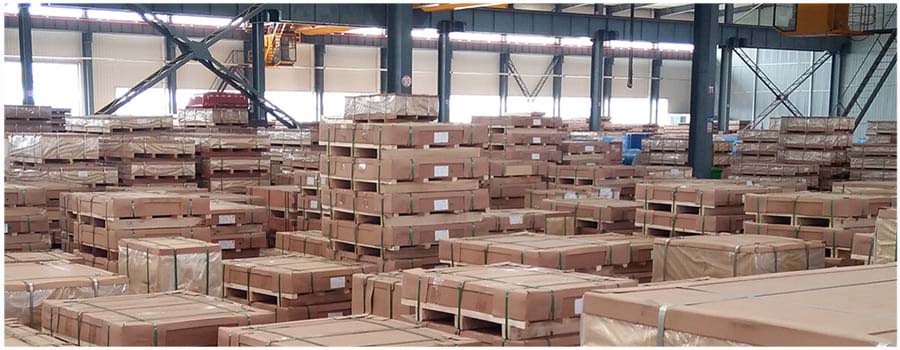
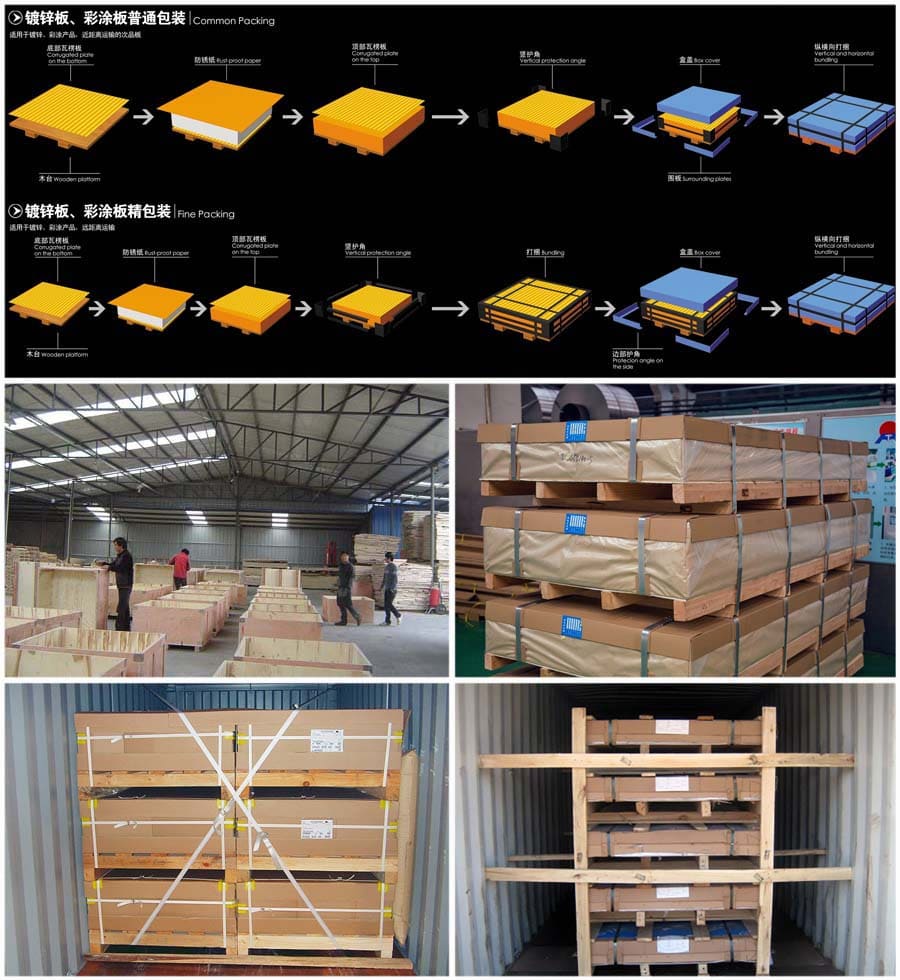
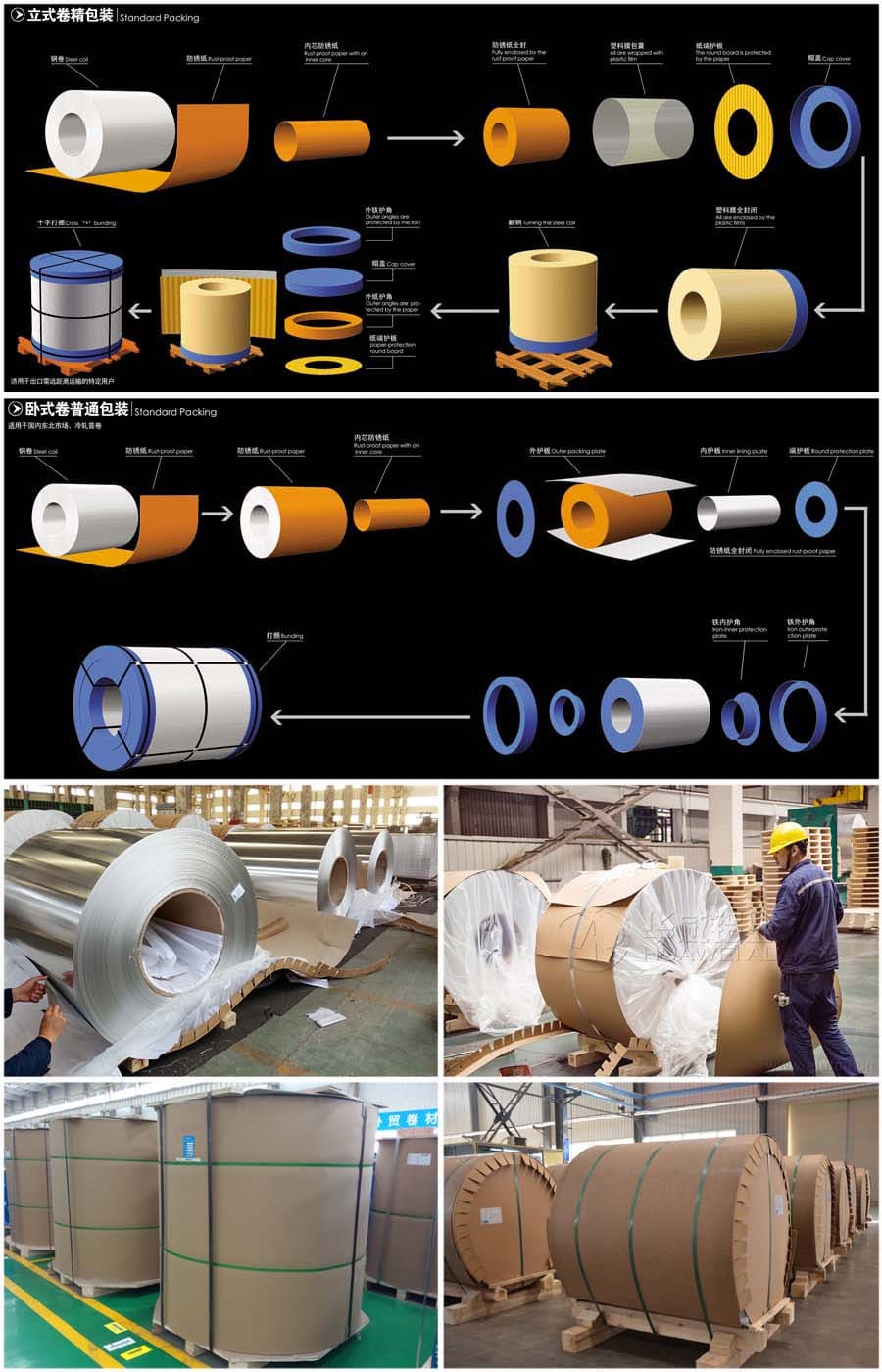
Protective packaging helps prevent scratches, moisture exposure, and damage during storage and transportation.
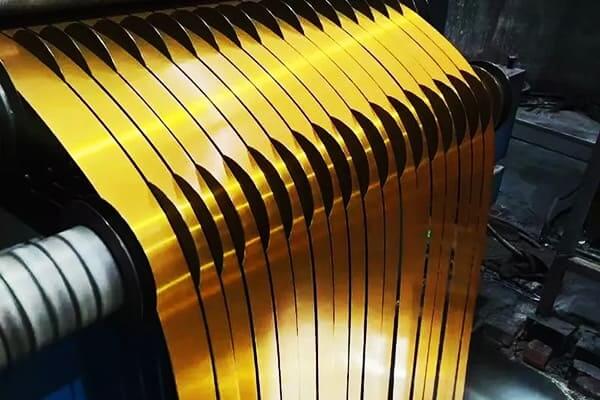
Slitting of Gold Aluminum Strip
Color coated aluminum strips are available in different alloy grades, dimensions, coating systems, and surface finishes.
Since requirements vary by application, buyers should confirm the complete specification before ordering.
| Parameter | Typical specification options |
|---|---|
| Product | Color coated aluminum strip |
| Aluminum alloys | 1050, 1060, 1100, 3003, 3105, 5052 |
| Tempers | O, H14, H16, H18, H24, as applicable |
| Thickness | Customized according to application |
| Width | Customized according to slitting requirements |
| Coating types | PE, PVDF, FEVE, epoxy-based systems, or laminated film |
| Coating configuration | Single-sided or double-sided |
| Color | RAL, Pantone, or customer-approved sample |
| Surface finish | Glossy, matte, textured, or metallic |
| Coil inner diameter | Customized to processing equipment |
| Coil weight | Customized according to handling and production requirements |
| Packaging | Protective export packaging or customer-specified packaging |
The table presents common options rather than guaranteed stock dimensions. Actual thickness, width, temper, and coating availability should be confirmed with the supplier.
Color coated aluminum strips combine the lightweight properties of aluminum with the protective and decorative benefits of surface coatings.
Their performance depends on the aluminum alloy, temper, coating system, and operating environment.
Aluminum has a density of approximately 2.70 g/cm³, making it significantly lighter than steel.
This helps reduce component weight, simplify handling, and improve transportation and installation efficiency.
Aluminum naturally forms a protective oxide layer, while the applied coating provides an additional barrier against moisture and environmental contaminants.
Properly selected coating systems can improve durability in many indoor and outdoor applications.
Suitable coatings help maintain color and surface appearance under sunlight, rain, and changing temperatures.
PVDF and certain FEVE systems are commonly selected for demanding exterior applications, while PE coatings are often used for general-purpose applications.
Color coated aluminum strips can be bent, stamped, and roll-formed when the alloy, temper, and coating are suitable.
The coating must withstand the required deformation without excessive cracking, peeling, or loss of adhesion.
Continuous coating processes provide a wide range of colors, gloss levels, and finishes.
With proper process control, manufacturers can achieve consistent surface quality across production batches.
Depending on the coating formulation, color coated aluminum strips can offer resistance to scratches, surface contamination, and certain chemicals.
A suitable finish also makes routine cleaning easier.
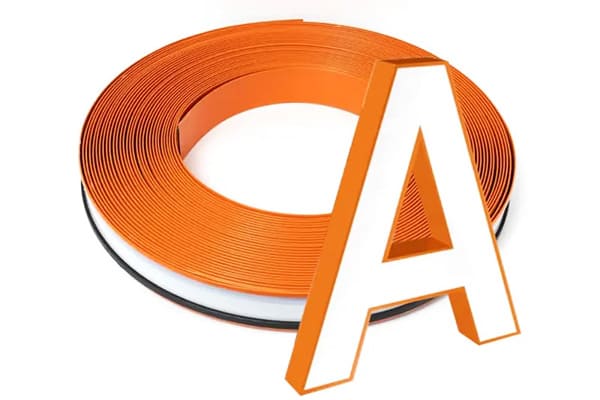
Color Coated Aluminum Strips for Lettering
Color coated aluminum strips are used in various industries because they combine a lightweight substrate with customizable surface finishes.
The appropriate alloy, temper, and coating depend on the component’s forming requirements, exposure conditions, and expected service performance.
Color coated aluminum strips are used in architectural accessories and building components where appearance, weather resistance, and ease of fabrication are important.
Their lightweight construction supports handling and installation, while the coating provides a choice of colors and surface finishes.
Typical applications:
Aluminum’s electrical conductivity and low density make certain alloy grades suitable for electrical and electronic components.
Color coated strips may also be used for housings or decorative parts where a specified surface appearance is required.
However, organic coatings are generally electrically insulating. Applications requiring electrical contact or conductivity must account for the coating and any exposed contact areas.
Typical applications:
Color coated aluminum strips can be used in selected HVAC accessories and formed components where low weight, surface protection, and consistent appearance are beneficial.
Typical applications:
Appliance manufacturers use pre-coated metal materials when consistent color and surface quality are important.
Color coated aluminum strips can be processed into narrow decorative or functional components.
Typical applications:
Aluminum is widely used in lighting products because of its low weight and thermal conductivity.
Color coated strips can serve decorative or protective functions in selected lighting assemblies.
Typical applications:
Color coated aluminum strips may be used in selected transportation components where weight reduction, appearance, and corrosion protection are important.
Typical applications:
Industrial manufacturers may use color coated aluminum strips to produce components that require a defined appearance and a protected metal surface.
Typical applications:
Color coated aluminum strips are widely used in construction, appliance manufacturing, decorative components, and industrial fabrication.
However, their performance and suitability vary compared with plain aluminum strips, color coated steel strips, stainless steel strips, and plastic materials.
Understanding these differences helps buyers select the most appropriate material for their applications.
| Comparison factor | Color Coated Aluminum Strips | Plain Aluminum Strips | Color Coated Steel Strips | Stainless Steel Strips | Plastic Strips |
|---|---|---|---|---|---|
| Base material | Aluminum alloy with an applied coating | Aluminum alloy | Steel with an applied coating | Stainless steel alloy | Polymer materials |
| Weight | Lightweight | Lightweight | Generally heavier than aluminum | Generally heavier than aluminum | Often lightweight |
| Strength | Depends on alloy, temper, and thickness | Depends on alloy, temper, and thickness | Generally high stiffness and strength | Often high strength, depending on grade | Varies by polymer and reinforcement |
| Corrosion resistance | Aluminum substrate plus coating protection | Depends on alloy and environment | Depends on coating integrity and steel protection | Depends on grade and exposure conditions | Generally resistant to many forms of corrosion |
| Surface appearance | Wide range of colors and finishes | Natural metallic appearance unless treated | Wide range of colors and finishes | Metallic, polished, or treated finishes | Available in many colors and textures |
| Formability | Depends on alloy, temper, and coating flexibility | Depends on alloy and temper | Depends on steel grade and coating | Depends on grade and temper | Depends on polymer type and processing |
| Weather resistance | Depends on coating system and environment | Depends on alloy and exposure | Depends on coating and substrate protection | Depends on grade and environment | Depends on polymer, additives, and UV stabilization |
| Maintenance | Often low with a suitable coating | May require additional finishing depending on use | Coating maintenance may be needed if damaged | Depends on grade and surface condition | Depends on material and exposure |
| Electrical conductivity | Aluminum substrate is conductive, but organic coatings are generally insulating | Generally conductive | Conductive steel substrate | Conductive stainless steel substrate | Generally electrically insulating |
| Thermal conductivity | Relatively high | Relatively high | Lower than aluminum in general | Lower than aluminum in general | Generally low |
| Typical applications | Decorative building parts, appliance trim, formed components | Electrical, industrial, and fabrication uses | Roofing, panels, and industrial components | Equipment, industrial parts, and corrosion-resistant components | Insulation, decorative parts, and lightweight components |
Note: These are general material characteristics. Actual performance depends on grade, thickness, coating formulation, manufacturing quality, and operating conditions.
Quality control is essential for ensuring that color coated aluminum strips meet dimensional, mechanical, and surface-performance requirements.
A reliable inspection process should evaluate both the aluminum substrate and the finished coating system.
The substrate should be checked for alloy composition, temper, thickness, width, and mechanical properties.
These factors determine whether the strip can withstand the intended forming process and meet the finished component’s requirements.
Dimensional inspection also helps prevent feeding problems during stamping, slitting, and roll forming.
Coating thickness should be verified against the agreed specification. Color and gloss measurements help maintain consistent appearance across production batches.
When color matching is critical, the buyer and supplier should approve a reference sample and define acceptable color-difference limits before mass production.
Adhesion testing evaluates how well the coating remains attached to the aluminum substrate.
Flexibility testing helps determine whether the coating can withstand bending or deformation without unacceptable damage.
These tests are particularly important for strips used in roll forming, stamping, and other applications involving substantial deformation.
Depending on the application, inspection may include pencil hardness, scratch resistance, corrosion resistance, humidity resistance, and UV-weathering performance.
Not every test is required for every product. The inspection plan should reflect the intended environment, coating type, and customer’s technical requirements.
| Standard | Main purpose |
|---|---|
| EN 1396:2023 | Specifications for coil-coated aluminum sheet and strip for general applications |
| EN 485-1 | Technical conditions for inspection and delivery of aluminum sheet, strip, and plate |
| EN 485-4 | Dimensional and form tolerances for cold-rolled aluminum sheet, strip, and plate |
| EN 13523-1 | Measurement of organic coating thickness |
| EN 13523-2 | Measurement of specular gloss |
| EN 13523-3 | Instrumental color-difference measurement |
EN 1396:2023 covers general-purpose coil-coated aluminum sheet and strip, generally up to 3.0 mm thick.
It addresses substrate properties, dimensional tolerances, coating requirements, inspection, and delivery.
The applicable requirements and test methods should be agreed upon for the specific product.
Henan Huawei Aluminum Co., Ltd. provides customized aluminum strip solutions for various industrial and commercial applications.
With over 20 years of experience in aluminum production and sales, we help customers select suitable materials, dimensions, and surface finishes for their projects.
Our customization options include:
To receive a suitable quotation, please provide your required alloy, temper, strip dimensions, coating type, color, order quantity, and intended application.
Our team can help you evaluate the appropriate specifications for your project.
Color coated aluminum strips combine the lightweight properties of aluminum with customizable colors, surface finishes, and coating-based protection.
Their suitability for construction, appliances, industrial fabrication, and other applications depends on selecting the right alloy, temper, dimensions, and coating system.
Before purchasing, buyers should evaluate formability, corrosion resistance, color consistency, coating adhesion, and dimensional tolerances.
Clear technical specifications and appropriate quality testing help reduce production risks and maintain consistent finished-product quality.
Working with an experienced supplier also helps buyers coordinate material selection, customization, inspection, and export packaging.
Huawei Aluminum welcomes inquiries for aluminum products tailored to different industrial and commercial requirements.
What are color coated aluminum strips used for?
They are widely used in construction, HVAC systems, electrical enclosures, appliances, lighting components, and industrial fabrication.
Which aluminum alloys are commonly used?
Common options include 1050, 1060, 1100, 3003, 3105, and 5052. The appropriate alloy depends on strength, formability, and application requirements.
What is the difference between PE and PVDF coatings?
PE coatings are suitable for general-purpose applications, while PVDF coatings are often preferred for exterior applications requiring better weather resistance and color retention.
Can color coated aluminum strips be bent or roll-formed?
Yes. They can be processed using suitable bending and roll-forming methods. Formability depends on the aluminum alloy, temper, coating system, and processing conditions.
Are color coated aluminum strips corrosion-resistant?
Yes, aluminum naturally resists corrosion, and the coating provides additional surface protection. Actual performance depends on the alloy, coating, and service environment.
Can Huawei Aluminum provide customized strips?
Yes. Customized thickness, width, alloy, temper, coating type, color, and packaging can be discussed according to project requirements.
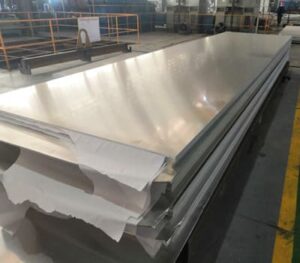
In general, aluminum sheet that is thicker than 6mm (0.25 inches) is considered to be thick.
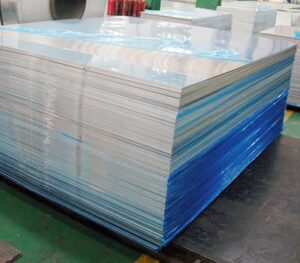
1070 aluminum alloy belongs to the 1000 series pure aluminum with an aluminum content of 99.7%. It is widely used in electronics, electricity, construction, aerospace and other fields.
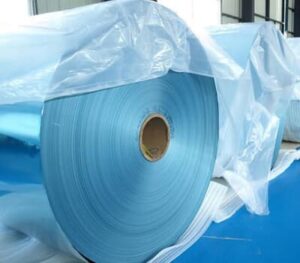
Hydrophilic aluminum foil is obtained by coating the surface of aluminum foil with hydrophilic coating, the purpose is to improve the hydrophilic (water-attracting) performance of the aluminum foil, and it has higher heat transfer efficiency and corrosion resistance.
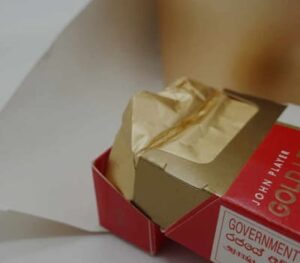
Cigarette aluminum foil has properties such as moisture-proof, anti-oxidation, and heat insulation. It is mainly used to protect the quality of cigarettes and maintain the humidity of cigarettes.
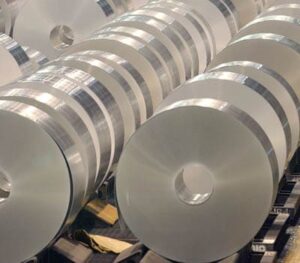
Aluminum strip for transformer means that aluminum strip is used as conductive material in the high and low voltage windings of dry-type transformers and oil-immersed transformers.
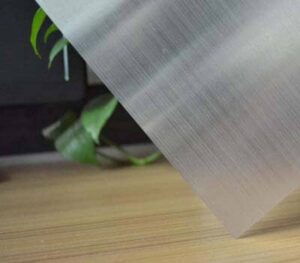
Brushed aluminum plate is a flat piece of aluminum material that has been treated with a brushing process to produce a uniform, unidirectional texture on its surface.
No.52, Dongming Road, Zhengzhou, Henan, China
Henan Huawei Aluminum Co., Ltd, One Of The Biggest Aluminum Supplier In China Henan,We Are Established In 2001,And We Have rich experience in import and export and high quality aluminum products
Mon – Sat, 8AM – 5PM
Sunday: Closed
© Copyright © 2023 Henan Huawei Aluminium Co., Ltd

Latest Comments
We need some t111 aluminium plate. We are looking for quarter inch by 4'x8' sheets
Aluminum 5754 H111 หนา 8 mm กว้าง x ยาว : 4 x 6 ฟุต
سلام بسیار عالی ،،من از ایران تماس میگیرم فویل طلا ۱۲میکرون عرض ۶۱سانت نیاز داریم حدودا هرماه ۳۵هزار متر
Dear Sales Team, I hope you are doing well. We are looking to source aluminum products from your company and would appreciate receiving your best quotation for the following: Aluminum Sheets Thickness: 2 mm, 3 mm, 4 mm, and 5 mm Please provide your available standard sheet sizes. Kindly quote the price per sheet and the price per metric ton. Aluminum Coils Thickness: 2 mm, 3 mm, 4 mm, and 5 mm Please provide your available coil widths, standard coil weights, and inner diameter specifications. Kindly quote the price per metric ton. For both sheets and coils, please include: Available alloys (e.g. 1050, 3003, 5052) Temper options Mill finish or other available surface finishes Minimum Order Quantity (MOQ) Production lead time Payment terms Please provide your quotation based on: CIF Jebel Ali Port, UAE (including sea freight), or alternatively provide both FOB China and CIF Jebel Ali Port, UAE prices. If available, please also send: Product catalogue Mill Test Certificate (MTC) sample Photos of the products and packaging. We are interested in establishing a long-term business relationship. Our initial purchase volume is expected to be 100+ metric tons, with the potential for larger and recurring orders if your pricing, quality, and service meet our requirements. Thank you for your time. We look forward to receiving your quotation and hope to build a successful long-term partnership. Best regards, Eng.Yousef
アルミハニカムパネルについてお聞きしたいのですが L1500×W700×厚みで曲げに対して200kgg耐えられるには厚みはどのくらいでしょうか ※簡単に言いますと約1000mmの側溝に渡して真ん中で200kg耐えられるかという事になります 又、そのような製品があるようでしたらその重量、価格をおしえていただけますか 現在はコンパネ板を使用してますが腐ると折れてしまい人が側溝に落ちてけがをしてます 出来ましたらメールでお返事をいただけますか