In-depth guide to 5083 marine aluminium sheet—chemical composition, mechanical strength, corrosion resistance, welding performance, and marine applications.


5083 marine aluminium sheet is a high-magnesium, non-heat-treatable wrought alloy developed and optimized for marine service.
It combines excellent corrosion resistance in seawater, high strength among Al–Mg alloys, good formability and excellent low-temperature toughness — characteristics that make it a first-choice material for hull plating, offshore structures, decks and other maritime applications.
Marine structures operate in one of the harshest materials environments: cyclic wet/dry exposure, salt spray, biofouling, mechanical impacts, and repetitive stress from wave and docking loads.
Materials selected for these applications must resist corrosion, retain strength after welding, be formable to complex hull shapes and provide predictable fatigue behavior.
5083 marine aluminium sheet was developed to meet these needs: a 5xxx series (Al–Mg) alloy widely standardized and accepted by classification societies and shipyards for small craft, ferries, fast patrol boats, offshore topsides and certain subsea and cryogenic uses.
5083 marine aluminium sheet
5083 is a member of the 5xxx (Al–Mg) family. Its strength and marine corrosion resistance derive primarily from relatively high magnesium in solid solution plus controlled additions of Mn and Cr to control grain structure and recrystallization.
| Element | Typical range (wt%) | Role / comment |
|---|---|---|
| Al (balance) | — | Matrix |
| Mg | 4.0 – 4.9 | Primary strengthening agent (Mg₂Si not present — Mg remains in solid solution) |
| Mn | 0.4 – 1.0 | Grain structure control, strengthens by dispersion |
| Cr | 0.05 – 0.25 | Controls recrystallization and improves corrosion resistance |
| Fe | ≤ 0.40 | Impurity — kept low to avoid intermetallics that reduce corrosion resistance |
| Si | ≤ 0.40 | Impurity — controlled for good rolling/forming behavior |
| Cu | ≤ 0.10 | Minimized because Cu can reduce seawater corrosion resistance |
| Zn | ≤ 0.25 | Residual |
| Ti | ≤ 0.15 | Grain refiner (when present) |
| Other each / total | ≤ 0.05 / ≤ 0.15 | Residuals, controlled |
Practical notes
5083 is supplied as sheet and plate, and in tempers tailored to marine use:
2mm thickness 5083 H111 aluminium sheet
5083 is a non-heat-treatable alloy: its strength is obtained by solid-solution strengthening (Mg) and by work hardening; tempers and thickness strongly affect mechanical values.
| Temper (typical marine forms) | Typical yield strength (0.2% offset) | Typical ultimate tensile strength (UTS) | Typical elongation (A, % on 50 mm gauge) | Notes |
|---|---|---|---|---|
| O (annealed) | ~120 – 170 MPa | ~240 – 300 MPa | ≥ 20% (very ductile) | Used for heavy forming, where the highest ductility is required |
| H111 / H112 (strain-hardened) | ~150 – 200 MPa | ~260 – 320 MPa | ~12 – 18% | Common general-purpose marine plate temper |
| H116 (strain-relieved, marine grade) | ~200 – 230 MPa | ~300 – 360 MPa | ~10 – 16% | Widely used for hull plating; good exfoliation / SCC resistance in marine service |
| H321 (stabilized) | ~180 – 220 MPa | ~290 – 350 MPa | ~10 – 16% | Used where dimensional stability after heating/welding is important |
These are engineering-use physical constants and typical thermal/electrical properties that designers need when sizing panels, running thermal/structural analyses, and estimating weights.
| Property | Representative value | Units | Practical relevance |
|---|---|---|---|
| Density (ρ) | ≈ 2.66 – 2.70 | g·cm⁻³ (≈ 2,660 – 2,700 kg·m⁻³) | Use to estimate panel weight (e.g., 5 mm plate ≈ 13.3 kg/m²) |
| Young’s modulus (E) | ≈ 69 – 71 | GPa | Elastic stiffness used in FEA for deflection/buckling |
| Shear modulus (G) | ≈ 26 | GPa | Relevant for torsion/shear design |
| Poisson’s ratio (ν) | ≈ 0.33 | — | Elastic coupling |
| Thermal conductivity (k) | ≈ 110 – 140 | W·m⁻¹·K⁻¹ (alloy & temp dependent) | Heat spreading on decks/topsides; lower than pure Al, still good |
| Specific heat (cₚ) | ≈ 880 – 910 | J·kg⁻¹·K⁻¹ | Thermal mass calculations |
| Coefficient of thermal expansion (CTE) | ≈ 23 – 24 ×10⁻⁶ | K⁻¹ | Thermal strain across long seams and dissimilar joints |
| Electrical conductivity | ~28–32 % IACS (approx.) | % IACS | Relevant for grounding and electrical bonding design |
| Melting / solidus range | ~550 – 650 | °C (approx.) | Welding and heat input windows — plate does not melt until high temp |

Aluminum sheet rolled billet
5083 marine aluminium sheet is regarded as one of the most reliable aluminium materials for seawater-exposed structures.
Its advantages stem from the unique combination of high magnesium content, controlled microalloying, and non-heat-treatable strengthening mechanisms.
One of the most significant advantages of 5083 aluminium sheet is its outstanding resistance to seawater corrosion, particularly to pitting and exfoliation.
The high magnesium content (typically 4.0–4.9%) promotes the formation of a stable and protective oxide layer that resists chloride attack in marine environments.
Compared to many aluminum alloys and carbon steels, 5083 requires minimal corrosion allowance, reducing structural weight and long-term maintenance costs.
Advantages of 5083 Marine Aluminium Sheet
5083 offers one of the highest strength levels among non-heat-treatable aluminum alloys while maintaining low density (~2.7 g/cm³).
This high strength-to-weight ratio allows:
This advantage is particularly critical for fast ferries, patrol vessels, offshore platforms, and luxury yachts.
5083 marine aluminium sheet exhibits excellent weldability, a key requirement for shipbuilding and offshore structures.
Unlike heat-treatable alloys, 5083 does not suffer from severe post-weld strength loss due to over-aging, making it especially suitable for large welded structures.
5083 aluminium maintains excellent toughness and ductility at sub-zero temperatures, unlike many steels that become brittle.
This property supports its use in polar research vessels, LNG carriers, and offshore structures operating in cold regions.
5083 aluminium sheet provides a favorable balance between strength and formability, especially in softer tempers (O, H111).
This fabrication flexibility reduces tooling complexity and shortens production cycles.
The combination of high strength, outstanding seawater corrosion resistance, excellent weldability, and good low-temperature toughness makes 5083 marine aluminium sheet a preferred material across a wide range of marine and offshore applications.

5083 Aluminium for Ship Hulls and Superstructures
5083 aluminium sheet is extensively used in the construction of ship hull plating, decks, bulkheads, and superstructures, particularly for aluminum vessels.
For high-speed craft, such as catamarans, hydrofoils, and rescue boats, 5083 aluminium sheet is a benchmark alloy.
5083 marine aluminium sheet is widely used in offshore platforms, walkways, helidecks, ladders, and access structures.
Offshore Structures and Platforms
Due to its excellent toughness at low temperatures, 5083 aluminium sheet is used in cryogenic and low-temperature marine environments.
5083 aluminium sheet is commonly applied to decking panels, accommodation modules, stairways, and internal partitions.
5083 aluminium sheet is also employed in marine transportation and port infrastructure, including:
While exact standards and clause numbers depend on region and application, procurement and design work should confirm compliance with:
Procurement tip: always request alloy temper, thickness tolerances, hardness, and full MTC traceability. Structural hull plates require certification for marine grade and classification approval where applicable.
| Property / Material | 5083 Aluminum | 5086 Aluminum | 5052 Aluminum | 6061-T6 Al | Stainless Steel 316 | Carbon Steel | GRP / CFRP |
|---|---|---|---|---|---|---|---|
| Density (g·cm⁻³) | 2.66–2.70 | 2.66–2.70 | 2.68–2.70 | 2.70 | ~7.90 | ~7.85 | ~1.5–2.0 |
| Yield strength (MPa) | ~120–230 (O–H116) | ~140–240 | ~110–200 | ~240–276 | ~200–300 | ~235–355 | Highly variable |
| UTS (MPa) | ~240–360 | ~260–350 | ~200–300 | ~290–310 | ~500–750 | ~400–550 | Highly variable |
| Thermal conductivity (W·m⁻¹·K⁻¹) | ~110–140 | ~110–140 | ~125–150 | ~140–160 | ~14–16 | ~45–60 | ~0.2–5 |
| Seawater corrosion resistance | Excellent | Excellent | Very good | Good | Excellent | Poor (needs coating) | Excellent |
| Weldability | Excellent | Excellent | Very good | Good (HAZ softening) | Excellent | Excellent | N/A (bonding) |
| Low-temperature toughness | Excellent | Excellent | Good | Moderate | Good | Moderate | Good |
| Formability | Good | Good | Excellent | Moderate | Moderate | Good | Excellent (molding) |
| Typical marine uses | Hulls, decks, offshore structures | Hulls, fast craft | Tanks, formed panels | Frames, machined parts | Tanks, fittings | Heavy structures | Hull shells, superstructures |
| Main advantages | Best marine corrosion + strength balance | Similar to 5083 | Easy forming, low cost | High machinability | Durability, stiffness | Low cost | Ultra-light, corrosion-free |
| Main limitations | Lower stiffness vs steel | Similar trade-offs to 5083 | Lower strength | Less seawater-resistant | Heavy | Corrosion maintenance | Fire, repair, cost |
| Relative material cost | Medium–High | Medium–High | Low–Medium | Medium | High | Low–Medium | Medium–High |
5083 marine aluminium sheet is a mature, widely accepted material for marine structures where seawater corrosion resistance, high strength, weldability and low-temperature toughness are required.
Its successful use depends on careful temper/product selection, correct forming and welding procedures, mitigation of galvanic couples, and adherence to classification and QC protocols.
For shipbuilders and naval architects seeking weight reduction and reliable performance in harsh environments, 5083 remains an outstanding option.
Always verify supplier MTCs, use qualified welding procedures (consider friction-stir welding for critical seams), and design for corrosion prevention and inspection access.
Q1 — What is the typical tensile strength of 5083 sheet?
A: Values depend on temper and thickness. Representative ranges for common marine tempers (e.g., H116 / H321) place ultimate tensile strength often in the ~300–360 MPa band and yield strength in the ~200–260 MPa band. Exact design values must come from supplier data and the chosen temperature.
Q2 — Is 5083 suitable for welding without special precautions?
A: Yes — 5083 welds readily with TIG/MIG using appropriate Al–Mg fillers (e.g., 5183, 5356). However, procedure qualification, pre-weld cleaning, control of heat input, and post-weld inspection are critical. For the highest joint integrity and lower distortion, friction-stir welding (FSW) is increasingly recommended.
Q3 — How does 5083 perform in saltwater compared with other aluminium alloys?
A: 5083 is among the best in the 5xxx family for seawater environments due to its Mg content and controlled impurities. With appropriate coatings and design details (avoid crevices, provide drainage), it achieves long service lives in marine exposure.
Q4 — Can 5083 be used for cryogenic tank applications?
A: 5083 has good low-temperature toughness and is used in some cold-service applications, but cryogenic tank design requires specialized grades, validated procedures and classification approval. Do not assume suitability without an engineering qualification and certification.
Q5 — What documentation should a buyer require for 5083 plate?
A: At minimum: Mill Test Certificate (chemical analysis, mechanical test results), thickness and flatness tolerances, temper designation, surface condition, and any classification society approvals required by the project. Also require WPS/PQR documentation for welding contractors.
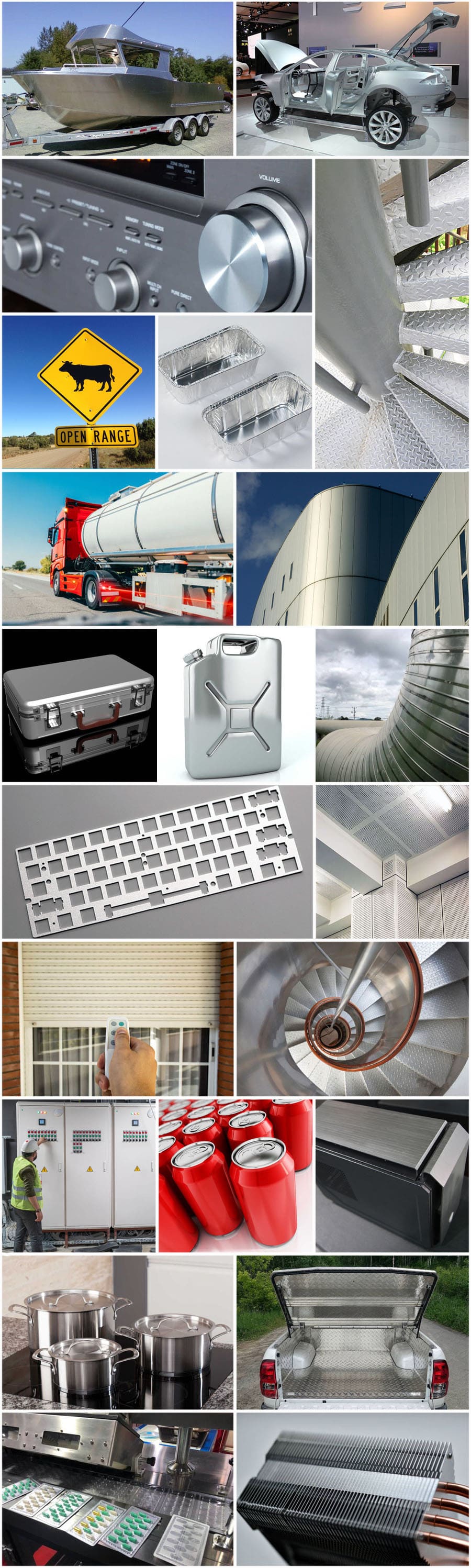
Same as 1050 aluminum sheet, 1060 aluminum sheet also belongs to 1 series pure aluminum sheet,Commonly used in lithium battery soft connection, bus bar, road sign, charging pile, aluminum gasket, billboard building exterior wall decoration,and so on.
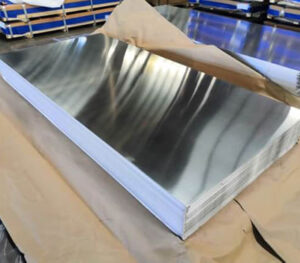
040 Aluminum Sheet is a type of aluminum sheet that has a thickness of 0.04 inches, which is equivalent to 1.016 millimeters. It is a thin and lightweight material
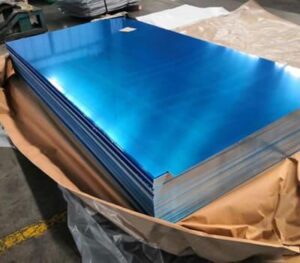
Aircraft grade aluminum sheet is a type of aluminum alloy that is specifically designed for use in aerospace applications. These sheets are made from high-strength aluminum alloys that are lightweight yet strong enough to withstand the stresses and strains of flight.
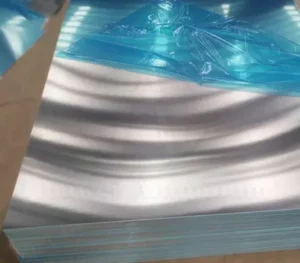
3104 aluminum sheet has suitable elongation, good corrosion resistance and good processability. Therefore, we can smelt it into alloys of different hardness according to different application requirements.
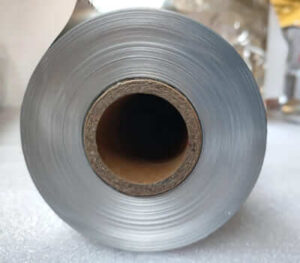
Aluminum foil for hookah is commonly used for preparing and using a hookah, also known as a shisha or water pipe. It serves a specific purpose in the preparation of the hookah, particularly in the placement and management of the charcoal and tobacco.

The 5052 anodized mirror plate is a type of aluminum sheet that has undergone an anodization process, resulting in a reflective surface. The material is primarily made from 5052 aluminum alloy, which is known for its excellent corrosion resistance and good formability.
No.52, Dongming Road, Zhengzhou, Henan, China
Henan Huawei Aluminum Co., Ltd, One Of The Biggest Aluminum Supplier In China Henan,We Are Established In 2001,And We Have rich experience in import and export and high quality aluminum products
Mon – Sat, 8AM – 5PM
Sunday: Closed
© Copyright © 2023 Henan Huawei Aluminium Co., Ltd

Latest Comments
Aluminum 5754 H111 หนา 8 mm กว้าง x ยาว : 4 x 6 ฟุต
سلام بسیار عالی ،،من از ایران تماس میگیرم فویل طلا ۱۲میکرون عرض ۶۱سانت نیاز داریم حدودا هرماه ۳۵هزار متر
Dear Sales Team, I hope you are doing well. We are looking to source aluminum products from your company and would appreciate receiving your best quotation for the following: Aluminum Sheets Thickness: 2 mm, 3 mm, 4 mm, and 5 mm Please provide your available standard sheet sizes. Kindly quote the price per sheet and the price per metric ton. Aluminum Coils Thickness: 2 mm, 3 mm, 4 mm, and 5 mm Please provide your available coil widths, standard coil weights, and inner diameter specifications. Kindly quote the price per metric ton. For both sheets and coils, please include: Available alloys (e.g. 1050, 3003, 5052) Temper options Mill finish or other available surface finishes Minimum Order Quantity (MOQ) Production lead time Payment terms Please provide your quotation based on: CIF Jebel Ali Port, UAE (including sea freight), or alternatively provide both FOB China and CIF Jebel Ali Port, UAE prices. If available, please also send: Product catalogue Mill Test Certificate (MTC) sample Photos of the products and packaging. We are interested in establishing a long-term business relationship. Our initial purchase volume is expected to be 100+ metric tons, with the potential for larger and recurring orders if your pricing, quality, and service meet our requirements. Thank you for your time. We look forward to receiving your quotation and hope to build a successful long-term partnership. Best regards, Eng.Yousef
アルミハニカムパネルについてお聞きしたいのですが L1500×W700×厚みで曲げに対して200kgg耐えられるには厚みはどのくらいでしょうか ※簡単に言いますと約1000mmの側溝に渡して真ん中で200kg耐えられるかという事になります 又、そのような製品があるようでしたらその重量、価格をおしえていただけますか 現在はコンパネ板を使用してますが腐ると折れてしまい人が側溝に落ちてけがをしてます 出来ましたらメールでお返事をいただけますか
アルミハニカムパネルについてお聞きしたいのですが L1500×W700×厚み で曲げに対して200kgg耐えられるには厚みはどのくらいでしょうか ※約1000mmの側溝に渡して200kg耐えられるかとなります その製品の重量、価格をおしえていただけますか